Archives for January 2024

More Data in Support of Buy and Hold Investing

The film Tune Out the Noise ended up as a story of how a small group of “data freaks” gathered and analyzed a huge amount of historical data early on in the digital revolution, and made a series of big realizations. The one that most people know is that an S&P 500 index fund does a good job harvesting the “market premium” (the higher return of stocks over bonds) at a very low cost. Vanguard became a juggernaut by offering rock-bottom cheap access to this market premium.

But DFA went further and focused on other discoveries in the data like the “size premium” (smaller-cap stocks tended to outperform larger-cap stocks) and the “value premium” (low price/book ratio stocks tended to outperform higher price/book ratio stocks). This is what DFA does, it digs deeper into the data and charges more for their interpretation of the results. I personally view these as less reliable than the market premium, and at a slightly higher cost. Will they be worth it? I don’t know, and that is why I only place a smaller bet on them. But it is important to remember that the idea of stocks returning more than bonds is also a bet. There is no guarantee.

However, it’s also very useful to know what type of stuff doesn’t work. In fact, a recent NY Times article In the Stock Market, Don’t Buy and Sell. Just Hold (full gift article) highlights a study – done by the same DFA company of “data freaks” – that dug deep into potential market timing methods.

Most of us are better off living with the reality that the stock market moves down as well as up, and that we can’t beat it. A new study provides fresh evidence of why it makes sense to strive for an absolutely middling return. And the study implies that a simple, unspectacular strategy — buying and holding the entire market through low-cost index funds — is probably the best bet for most people.

Here is a DFA article We Found 30 Timing Strategies That ‘Worked’ — and 690 That Didn’t and the actual academic paper on SSRN, Another Look at Timing the Equity Premiums. From the abstract:

We examine strategies that time the market, size, value, and profitability premiums in the US, developed ex US, and emerging markets based on three common timing approaches: valuation ratio, mean reversion, and momentum. Out of the 720 timing strategies we simulated, the vast majority underperformed relative to staying invested in the long side of the premiums. While 30 strategies delivered promising outperformance at first glance, further analysis shows that their outperformance is very sensitive to specific time periods and parameters for strategy construction. Our results highlight the opportunity cost of mistiming the premiums and the importance of discipline for capturing the premiums.

Basically, they looked at 720 different ways that you could perform market timing. To start out, only about 30 out of the 720 actually created excess returns:

But out of those 30, if you tweaked just one of the variables, they mostly fell apart. For example, they found one that got you an extra 5.5% a year. Wow! But if you changed the rebalance period from annual to monthly, the excess return plummeted to only 1.5%. If you changed from international stocks to US stocks, you actually lost 3.8% a year.
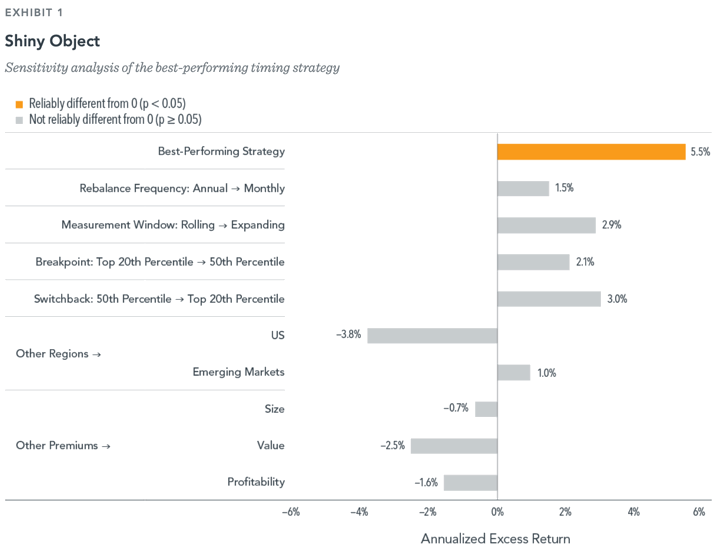
In the end, the researchers couldn’t find a single way to time the market that was reliable.

“Tune Out the Noise”: A Film about Index Funds and Dimensional Fund Advisors (DFA)

The film Tune Out the Noise is a documentary by Academy Award–winning director Errol Morris about the rise of academic finance, the computer analysis of market data, index funds, and the founding of Dimensional Fund Advisors (DFA). It appears that DFA commissioned this film, so it obviously will support their specific type of investing, but it should also explain the reasoning behind low-cost index funds and why high-expense active funds have been steadily losing market share over time.

Until 1/31, you can watch the film for free at film.dimensional.com/podcast with access code RATIONAL. They ask for name and e-mail, but don’t verify. This is offered through the Rational Reminder podcast, and you may also find interesting their interview with Errol Morris.

I learned about this through Paul Merriman’s newsletter:

Trust in the future of an investment may be the most important reason for most investors to stay the course for the long term. I formed a lasting trust in the academic work of Drs. Fama and French when I attended a 3 day workshop at Dimensional Fund Advisors in 1994.

That trust led our firm to use the DFA funds since the mid 90s. While I believe there are a lot of people who find our long term studies helpful, I’m not sure that all of those people understand that almost all of our studies, that go back to 1928, are based on the data from the academics who are associated with DFA. If you don’t already have a sense of trust about the source of our data, I think you will feel better if you watch the new documentary, “Turn Off the Noise.”

Here is a summary blurb about the film:

Tune Out the Noise is a documentary film about a group of unlikely upstarts who crossed paths at the University of Chicago in the middle of the 20th century, just as computers were first being used to analyze data. That serendipitous, monumental shift enabled them to develop, and then apply, research that turned Wall Street upside down, from its ineffectual investing methods to how those were sold to the public.

It’s a story about how finance became a science and challenged the traditional methods of investing. That, in turn, led to the invention of index funds, the founding of Dimensional Fund Advisors—an investment firm dedicated to implementing the science—and the evolution of client-focused financial advice. These advances have benefited generations of investors.

I am currently in the middle of watching the film (trying to finish before the free access ends), and it does have a very nice production quality while showing the backstory of many famous financial academics. It’s kind of nice to put a face with the names. I personally only invest a small portion of my portfolio into DFA and DFA-style funds (Avantis was started by former DFA executives), but I will watch the rest with an open mind and hope to learn some useful history.

Added after finishing the entire film: The film goes from the basic discoveries of efficient markets, the value of diversification, and the idea that a low-cost broad fund outperformed nearly all big investment trusts back then. It’s important to know that DFA takes the academic “backtesting” further than Vanguard. I enjoyed the history of CRSP and how all these data nerds got together. They did pretty much gloss over Vanguard with “Wells Fargo just handed the retail index fund concept to Bogle on a FREE silver platter”.

Vanguard is more about the big stuff. Diversification from holding the entire market and thousands of stocks, not just 100 or less. Lower expense ratio costs. Lower trading costs. Lower costs from not attempting and failing at market timing or chasing recent performance. But it’s all an algorithm of some sort, based on looking back at the historical data. The S&P 500 is an algorithm, just a simpler one that works well at a 0.05% expense ratio.

DFA is a more actively managed algorithm, but still keeps the broad diversification and lower expenses (they are still lowest quartile in expenses). They also focus on the Fama/French academically-found factors like size, value, quality. Again, historically small value stocks have outperformed on average for long periods of time. Will they keep doing so? I don’t know.

Is the DFA method better? Is the the DFA higher-return possibility worth more than the higher expenses they charge? In the past, you could only go through a financial advisor, which added yet another layer of fees, so my answer was an easier “no”. But DFA and Avantis have finally released ETFs which anyone can buy, and I have as a bet on about 10% of my portfolio (the part that bets on size and value anyway). I don’t bet the whole farm on it. I think lower costs and market-cap weighting are much more reliable. But if you want to know why, the film gives you an idea. Is it a commercial for DFA? Sure. But a documentary about index funds would also serve as a commercial for Vanguard, no?

Callan Periodic Table of Investment Returns 2023 Year-End Update

Another year, another batch of bold predictions that are always based on recent past performance. The most common one this year is “Why not just own 100% US stocks? Why bother with international stocks? Why even bother with bonds?” Humility may not get you a lot of social media followers, but it’s a better long-term bet at making and keeping you wealthy.

Callan Associates updates a “periodic table” annually with the relative performance of 8 major asset classes over the last 20 years. You can find the most recent one at their website Callan.com. The best performing asset class is listed at the top, and it sorts downward until you have the worst performing asset. Above is the most recent snapshot of 2004-2023 (click to enlarge). I find it easiest to focus on a specific Asset Class (Color) and then visually noting how its relative performance bounces around.

The Callan Periodic Table of Investment Returns conveys the strong case for diversification across asset classes (stocks vs. bonds), capitalizations (large vs. small), and equity markets (U.S. vs. global ex-U.S.). The Table highlights the uncertainty inherent in all capital markets. Rankings change every year. Also noteworthy is the difference between absolute and relative performance, as returns for the top-performing asset class span a wide range over the past 20 years.

The best you can do is to identify assets that are a good long-term investment, with the acceptance that the short-term ride will be unpredictable and it won’t be at the top every single year. On the other hand, many of the recent losers will eventually come back. Look at the orange and maroon squares from 2005 to 2010 – Emerging Markets Equity and REITs had some crazy-awesome years in the past, and everyone wanted to own them. These days, you rarely hear anything. The same could easily end up being true for what has been doing well in the last 5 years – Large Cap Equity. Something to consider.

Robinhood IRA Transfer and 401k Rollover 3% Bonus Match (No Cap)

Robinhood Gold subscribers have the standard feature of a 3% match on all eligible annual IRA contributions. However, this bonus is somewhat limited as the annual IRA contribution limits are relatively low. 3% of $6,000 is $180, but Gold costs $60 a year. The primary benefit of Robinhood Gold is 5% interest on your cash sweep (otherwise it is only 1.5%). Here is their IRA match FAQ.

For a limited-time, Robinhood Gold has improved the offer to include a 3% match on IRA transfers and 401k/403b/457 account rollovers between January 17, 2024 and April 30, 2024, with no limit on the amount of match earned. You should open or have an open Traditional or Roth IRA (even if empty) with Robinhood and then transfer into the proper IRA container (pre-tax or Roth).

For folks with big IRAs or 401ks, this can be very significant bonus. A $100,000 IRA or 401k rollover would get you $3,000. $35,000 would get you over $1,000. $350,000 would get you over $10,000. Now that $60 a year for Robinhood Gold doesn’t seem as much of a hurdle!

The catch? You must keep the funds in your Robinhood IRA for at least 5 years to keep the match, and be a Robinhood Gold subscriber for 1 year after the first deposit that earns the 3% match. Details on the 3% limited-time offer here.

I’m certainly considering this offer, as I don’t think I’ve ever seen a bonus this large offered on a 401k rollover. However, I also think of Robinhood as amongst the “leanest” in customer service. I’ve done several ACAT transfers before, and they can spend a certain amount of time in “limbo” where your stocks have been taken out of the origination account, and hasn’t quite shown up in the destination account. It can be a bit nerve-wracking and I wouldn’t want to deal with Robinhood if something was lost in transit.

How long does it take for IRA transfers and 401(k) rollovers to complete?
For IRA transfers, after we receive an account transfer request, it typically takes 5-7 business days for the transfer to be completed in your Robinhood account. Check out Transfers and rollovers for more info. For 401(k) rollovers, this process can typically take 2-4 weeks for deposits to complete.

When will I get the match?
We’ll deposit your earned match after the eligible contributions settle in your account. For transfers, you’ll get the match as soon as they settle. For rollovers, you’ll get the match upon settlement, which is typically within 5-7 business days of receipt.

Along those same lines, I’m also not sure I want to keep my IRA there for 5 years. Most other brokerage transfer offers don’t have such a long hold time requirement.

Either way, I hope the idea of paying for IRA transfers catches on with some other brokers. Brokers fighting for assets works out especially well if you are a buy-and-hold investor. Robinhood says that transfers and rollovers will still earn a 1% match after 4/30/24. That’s actually still pretty good historically.

Best 0% APR Balance Transfer Credit Cards – Updated 2024

0aprLooking to pay off any remaining credit card debt? 📈 Shopping around for the best balance transfer offer can save you thousands of dollars in interest. Below is a freshly updated list of the best 0% APR balance transfer offers. I try to include both the big banks and lesser-known credit unions with easy membership requirements.
Best No Balance Transfer Fee 0% APR Offers

Fairwinds CU Cash Back Card0% Introductory APR for 12 months on purchases and balance transfers and no balance transfer fees. After the intro APR offer ends, a variable APR will apply. You must be an Fairwinds Credit Union member to obtain this card, but membership is open to everyone. You must also keep a nominal $5 in a share savings account. Also earns 1.5% cash back on purchases. No annual fee.

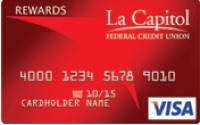
La Capital FCU Rewards Card0% Introductory APR for 12 months on balance transfers and no balance transfer fee during the first 90 days after account opening. After the intro APR offer ends, a variable APR will apply. You must be an La Capitol Federal Credit Union member to obtain this card, but membership is open to everyone who joins a partner organization for as little as $20 (Louisiana Association for Personal Financial Achievement). You must also keep a nominal amount (usually around $5) in a share savings account. No annual fee.

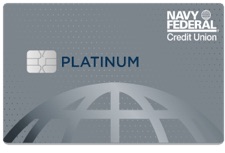
Navy Federal CU Platinum Card0.99% Introductory APR for 12 months on balance transfers during the first 60 days after account opening and no balance transfer fees. (This is not 0%, but ~1% is still quite rare in the current interest rate environment.) After the intro APR offer ends, a variable APR will apply. You must be an Navy Fedral Credit Union member to obtain this card, and membership is limited to those with a military affiliation, although it does include anyone whose immediate family member serves or has ever served in the military. You must also keep a nominal amount (usually around $5) in a share savings account. No annual fee.

Comparing a shorter no-fee balance transfer vs. a longer one with a modest fee. As of January 2024, the average credit card interest rate is roughly 24% APR (!). If you are paying 24% APR, that’s like paying 2% on your balance every month (!). Paying a 3% upfront fee for an 21 month period of 0% would be like paying your current interest rate for 1.5 months and then getting 0% interest for the remaining 19.5 months. That may be preferable to 12 months at 0% with no balance transfer fee, especially if you spread out your payments over the entire period and use that additional time to pay it all off by the end. Here is an example comparison.

  • $5,000 balance, 24% APR, 12 month payoff = $472 per month for 12 months. ($5,673 total paid)
  • $5,000 balance, 0% APR + No BT fee, 12 month payoff = $417 per month for 12 months. ($5,000 total paid)
  • $5,000 balance, 24% APR, 21 months payoff = $293 per month for 21 months. ($6,172 total paid)
  • $5,000 balance, 0% APR + 3% BT fee, 21 month payoff = $245 per month for 21 months. ($5,150 total paid)
  • $5,000 balance, 0% APR + no BT fee, 21 month payoff = $238 per month for 21 months. ($5,000 total paid) ** not an available offer **

I can see how one might prefer the $245 per month for 21 months, even thought it results in a slightly higher total amount paid than the $417 per month for 12 months. Especially if this creates an attainable plan that the end of 21 months, you are debt-free and you saved over $1,000 in interest ($6,172 vs. $5,150). Even if there was no balance transfer fee for 21 months (which unfortunately isn’t an option), the difference would only be $7 per month.

If you are sure you can pay it all off within the shorter 0% period, then you should pick the no balance transfer fee option.

Best Low Fee, Longer-Term 0% APR Balance Transfer Offers

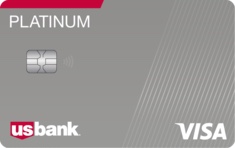
US Bank Visa Platinum Card  – 0% Intro APR on purchases and balance transfers for 21 billing cycles. After the intro APR offer ends, a variable APR will apply. There is a 3% balance transfer fee ($5 minimum). Side perk of up to $600 in cell phone protection. No annual fee.

Citi Simplicity® Card – 0% Intro APR on balance transfers for 21 months from date of first transfer. All transfers must be completed in first 4 months. This unique card has no late fees and no penalty interest rate. You also get 0% Intro APR on purchases for 12 months from date of account opening. After the intro APR offer ends, a variable APR will apply. There is a 3% balance transfer fee ($5 minimum). No annual fee.

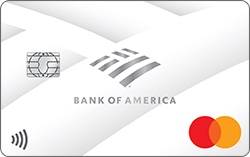
BankAmericard Credit Card – 0% Intro APR for 18 billing cycles for purchases and balance transfers made in the first 60 days of opening your account. After the intro APR offer ends, a variable APR will apply. There is a 3% balance transfer fee. No annual fee.

Wells Fargo Reflect Card – 0% Intro APR on balance transfers and purchases for 21 months from date of account account opening. Balance transfers must be made within 120 days from account opening There is 5% balance transfer fee (min $5). No annual fee.

Wells Fargo Reflect Card – 0% Intro APR for 18 months for purchases and balance transfers. After the intro APR offer ends, a variable APR will apply. There is a 3% balance transfer fee ($5 minimum) for balance transfers made in the first 60 days of opening your account. No annual fee.

Consistently Investing $850 a Month x 10 Years = $160,000 (2014-2023)

Instead of only looking at year-to-date or last year’s return numbers that are often quoted in the media, I always try to also take a longer-term perspective (especially on down years) by looking back over a longer period. How would a steady investor have done over the last decade?

Target date funds. The Vanguard Target Retirement 2045 Fund is an all-in-one fund that is low-cost, globally-diversified, and available both inside many employer retirement plans and to anyone that funds an IRA. It currently holds over $75 billion in assets. When you are younger (up until age 40 for those retiring at 65), this fund holds 90% stocks and 10% bonds. It is a solid default choice in a world of mediocre, overpriced options. This is also a good benchmark for others that use low-cost index funds.

The power of consistent, tax-advantaged investing. For the last decade, the maximum allowable annual contribution to a Traditional or Roth IRA has been roughly $5,000 per person. The maximum allowable annual contribution for a 401k, 403b, or TSP plan has been over $10,000 per person. If you have a household income of $67,000, then $10,000 is right at the 15% savings rate mark. Therefore, I’m going to use $10,000 as a benchmark amount. This round number also makes it easy to multiply the results as needed to match your own situation. Save $5,000 a year? Halve the result. Save $20,000 a year? Double the numbers, and so on.

The real-world payoff from a decade of saving $833 a month. What would have happened if you put $10,000 a year into the Vanguard Target Retirement 2045 Fund, every year, for the past 10 years? With the interactive tools at Morningstar and a Google spreadsheet, we get this:

Investing $10,000 every year ($833 a month, or $384 per bi-weekly paycheck) for the last decade would have resulted in a total balance of approximately $159,000. That’s $100,000 in steady contributions and $59,000 in investment gains.

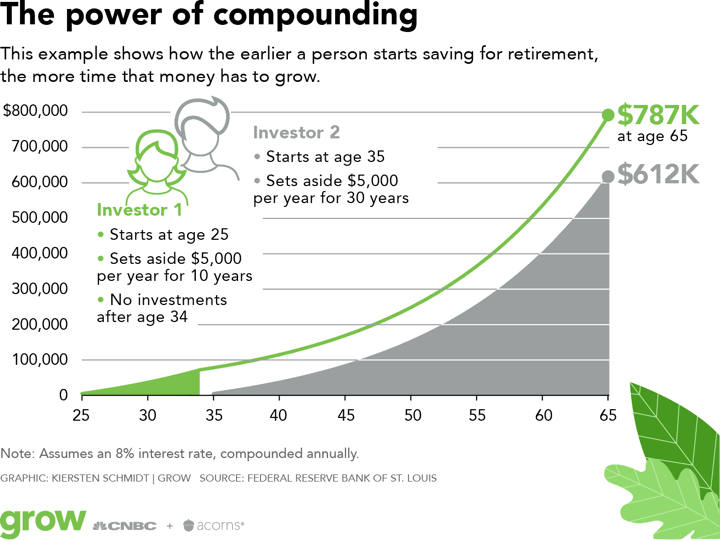
Early + Steady is better. There is a popular example of the power of compound interest that shows how someone who started saving at age 25, saves and invests for 10 years but then stops and never saves a penny again still beats someone who starts saving at 35 and keeps on saving for 30 years. Acorns provides a nice illustration:

Early + Steady + Longer is even better. The “Rule of 72” shows us that with just 7.2% annual returns, your money will double every decade from now on. After another 10 years, every $100k will be $200k. After another 10 years, that $200k will be $400k. Once you have that initial momentum, it just keeps going.

Now throw in half of your annual salary increases, and you’ll be honestly surprised at what it grows to after 20 years.

Here are my previous “Saving for a decade” posts:

Bottom line. Over time, with consistency and starting early, the yearly investment return swings smooth out. You can truly build serious wealth with something as accessible and boring as automated investments in a IRA/401k plan buying a Vanguard Target Retirement fund (or a simple collection of low-cost index funds).

Ally Bank Deposit Bonus: 0.50% of New Deposits, Up to $125 (New Customers via Referral Only)

Ally Bank is one of my favorite banks in terms of user interface, practical features, and reliability. They were my primary checking account for years. Unfortunately, their savings account rates have been lagging the top rates by about 1% recently. Despite that, I still keep some active accounts there because I use them as my central hub connecting all my many different bank accounts.

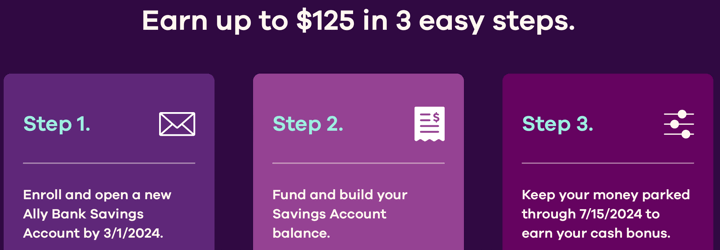
Ally is running a new up to $125 deposit bonus by referral only (that’s mine). You get a 0.50% cash bonus on new money deposited (3/29/24 to 7/15/24) on top of their standard interest rate. Here are the details, direct from the offer page:

  • Enroll and open a new Ally Bank Savings Account by 3/1/2024. Enter your name and email address below to start your enrollment in the program. Be sure to open your Savings Account with the same email address you enroll with by 3/1/2024.
  • Fund and build your Savings Account balance. Deposit new money from another financial institution to your newly opened Savings Account by 3/25/2024. You can make multiple funding transactions between the account opening date and 3/25/2024, however your account must be funded within 30 days of opening, or it will be closed. You are eligible to receive a 0.50% cash bonus on the new money you deposit, up to $25,000 (max $125 cash bonus).
  • Keep your money parked through 7/15/2024 to earn your cash bonus. You will receive a 0.50% cash bonus, up to $125, on the new money you deposit into your Savings Account by 3/25/2024 as long as you retain your funds from 3/25/2024 through 7/15/2024. Your cash bonus will be deposited into your Savings Account on or by 7/31/2024.

Napkin math. You have to open by 3/1/24, but there is no minimum balance and you don’t need to make the qualifying deposit until 3/25. The minimum hold period is thus from 3/25 to 7/15, which is 112 days. If we round up to 120 days, then the 0.5% bonus works out to an extra 1.5% annualized yield during that hold period.

If you assume the current interest rate of 4.35% APY holds during the minimum hold period, your total annualized yield would be 4.35 + 1.5 = 5.85% APY. This is a net profit from the current top rate but isn’t an amazingly high number, so I probably wouldn’t do this deal unless you wanted an Ally Savings Account as a long-term account for other reasons beyond highest yield. Ally has done other deposit promos in the past that benefited existing customers. (I wonder if they’ve been losing a lot of deposits recently.)

$6,500 IRA Contribution Bonus Challenge: $5,444 in Bonuses (2023 Year End)

Final totals for 2023. Each year, I challenge myself to earn the equivalent of the maximum annual IRA contribution limit (up to $6,500 for 2023) using the profits from various finance promotions alone. In 2021, I reached $5,592 in bonuses. In 2022, I reached $6,259 in bonuses. I just went back and tallied up the totals so far for 2023.

I consider it a profitable hobby with serious potential if you add in some disciplined investing. If you had put $6,000 into your IRA every year for the recent 10 year period (2013-2022) and invested in a simple Target Date retirement fund, you would have turned small, weekly deals into a $104,000+ nest egg. You didn’t need to be an investing genius. Another example of Focus + Long attention span = Surprising results.

That’s worth repeating: An extra 100 grand has been the real-world result of playing this game and investing $500 a month in proceeds for the last 10 years! Not to mention, a couple could double these numbers.

Ground rules: Real-world results for one real person only. Following with My Money Blog tradition, this will track my personal, real-world results. It would be quite easy to list a bunch of promotions that add up to $6,000, but these will be promotions that I personally sign up for and complete the requirements (even though I’ve already opened 100+ bank accounts, credit cards, and brokerage accounts over the years). I will track my individual results only, although my partner does also participate on a more selective basis. Nearly all of them have been documented in real-time in the Deals and Offers category, Top 10 credit cards list, and brokerage bonus list.

2023 bonuses and promotions list. The 💵 symbol means I have received and/or cashed out the bonus successfully. The ⌛ symbol means that the promo is still in progress. “Still live” means the offer is still available but the values may have gone up or down.

Total for 2023: If I assume that all bonuses for which I have completed the required activity will eventually post (just a couple left worth under $200), the total tally so far is $5,444, which is 84% of the $6,500 annual IRA contribution limit for 2023. My progress stalled significantly towards the end of 2023; I didn’t apply to any new credit cards at all this quarter, which usually do the bulk of the work. Mostly picked a few low-hanging fruit here and there.

Honorable mention #1: Johnson & Johnson. I did make a $1,350 profit over only 10 calendar days from the Johnson & Johnson odd lot tender play. This did require a $17,000 commitment to buy 99 shares (the max allowed as an individual small investor) before the odd lot tender, but the lockup time was very short.

Honorable mention #2: Microsoft/Activision. I also participated in a merger-arbitrage deal involving Microsoft and Activision. My net profit on my $10,040 initial investment was $2,534, which is $1,177 more than the $1,357 that I could have earned from owning the S&P 500 over the same time period of about 17 months.

This is a personal challenge/game that I like to play (and have played for a long time now). It’s not for everyone. I happen to enjoy trying out new apps and services. I also like my hobbies to be profitable – not gonna lie – but I don’t like to waste my time either. I look for a solid return based on the time commitment required. I tend to avoid speculative bets, bonuses that are hard to convert to real cash-equivalent value, and anything that requires driving to stores where things may or may not be in stock. The deals that I post often last only a few days, but it’s a bit like value investing where you have to be ready to get off your butt and take decisive action when an opportunity shows up, because they won’t last forever.

Many things I have to skip simply because I’ve already done them. For those new to this hobby, I would first grab the best overall cards like the Chase Sapphire Preferred or the Chase Sapphire Reserve and build up a nice stash of flexible Ultimate Rewards points. After that, I would recommend looking at the Citi Premier (ThankYou points), Capital Venture X (Capital One Miles), and American Express Gold (AmEX Membership Rewards points) to jumpstart your points stashes.

In terms of the top current bonus, I would pick the Chase Aeroplan Card that offers the chance to earn 100,000 Aeroplan points that can be used to offset $1,250 of any travel purchases charged on the card.

Exclusions. Importantly, this list ignores the additional interest earned from otherwise optimizing my existing cash balances, as well as everyday credit card rewards like 2% to 2.6% cash back on all purchases and 5% cash back on specific categories or 1% or better cash back on rent.

I am also excluding small-business deals like big Chase Ink Business Cash card bonuses, big business checking bonuses, and so on.

Best Interest Rates on Cash – January 2024

If you’re leaving your cash in a checking account at most major banks, you’re probably earning zero interest. With an online application, you could earn a lot more money while keeping the same level of safety by moving to another FDIC-insured bank or NCUA-insured credit union.

Here’s my monthly roundup of the best interest rates on cash as of January 2024, roughly sorted from shortest to longest maturities. There are often lesser-known opportunities available to individual investors. Check out my Ultimate Rate-Chaser Calculator to see how much extra interest you could earn from switching. Rates listed are available to everyone nationwide. Rates checked as of 1/8/2024.

TL;DR: Rates are dropping at longer maturities, in expectation of future Fed rate drops. Still 5%+ savings accounts, but no more 5-year CDs at 5% APY. Compare against Treasury bills and bonds at every maturity, taking into account state tax exemption.

Fintech accounts
Available only to individual investors, fintech companies often pay higher-than-market rates in order to achieve fast short-term growth (often using venture capital). “Fintech” is usually a software layer on top of a partner bank’s FDIC insurance.

  • 5.32% APY ($1 minimum). Raisin lets you switch between different FDIC-insured banks and NCUA-insured credit unions easily without opening a new account every time, and their liquid savings rates currently top out at 5.32% APY. See my Raisin review for details. Raisin does not charge depositors a fee for the service.
  • 5.36% APY (before fees). MaxMyInterest is another service that allows you to access and switch between different FDIC-insured banks. You can view their current banks and APYs here. As of 12/6/23, the highest rate is from Customers Bank at 5.36% APY. However, note that they charge a membership fee of 0.04% per quarter, or 0.16% per year (subject to $20 minimum per quarter, or $80 per year). That means if you have a $10,000 balance, then $80 a year = 0.80% per year. This service is meant for those with larger balances. You are allowed to cancel the service and keep the bank accounts, but then you may lose their specially-negotiated rates and cannot switch between banks anymore.

High-yield savings accounts
Since the huge megabanks STILL pay essentially no interest, everyone should have a separate, no-fee online savings account to piggy-back onto your existing checking account. The interest rates on savings accounts can drop at any time, so I list the top rates as well as competitive rates from banks with a history of competitive rates and solid user experience. Some banks will bait you with a temporary top rate and then lower the rates in the hopes that you are too lazy to leave.

Short-term guaranteed rates (1 year and under)
A common question is what to do with a big pile of cash that you’re waiting to deploy shortly (plan to buy a house soon, just sold your house, just sold your business, legal settlement, inheritance). My usual advice is to keep things simple and take your time. If not a savings account, then put it in a flexible short-term CD under the FDIC limits until you have a plan.

  • No Penalty CDs offer a fixed interest rate that can never go down, but you can still take out your money (once) without any fees if you want to use it elsewhere. Raisin has a 5-month No Penalty CD at 5.40% APY with $1 minimum deposit and 30-day minimum hold time. CIT Bank has a 11-month No Penalty CD at 4.90% APY with a $1,000 minimum deposit. Ally Bank has a 11-month No Penalty CD at 4.55% APY for all balance tiers. Marcus has a 13-month No Penalty CD at 4.70% APY with a $500 minimum deposit. Consider opening multiple CDs in smaller increments for more flexibility.
  • CIBC Agility Online has a 12-month CD at 5.51% APY. Reasonable 30-day penalty if you withdraw your CD funds before maturity.

Money market mutual funds + Ultra-short bond ETFs*
Many brokerage firms that pay out very little interest on their default cash sweep funds (and keep the difference for themselves). * Money market mutual funds are regulated, but ultimately not FDIC-insured, so I would still stick with highly reputable firms. I am including a few ultra-short bond ETFs as they may be your best cash alternative in a brokerage account, but they may experience losses.

  • Vanguard Federal Money Market Fund is the default sweep option for Vanguard brokerage accounts, which has an SEC yield of 5.29% (changes daily, but also works out to a compound yield of 5.42%, which is better for comparing against APY). Odds are this is much higher than your own broker’s default cash sweep interest rate.
  • The PIMCO Enhanced Short Maturity Active Bond ETF (MINT) has a 5.49% SEC yield and the iShares Short Maturity Bond ETF (NEAR) has a 5.30% SEC yield while holding a portfolio of investment-grade bonds with an average duration of ~6 months.

Treasury Bills and Ultra-short Treasury ETFs
Another option is to buy individual Treasury bills which come in a variety of maturities from 4-weeks to 52-weeks and are fully backed by the US government. You can also invest in ETFs that hold a rotating basket of short-term Treasury Bills for you, while charging a small management fee for doing so. T-bill interest is exempt from state and local income taxes, which can make a significant difference in your effective yield.

  • You can build your own T-Bill ladder at TreasuryDirect.gov or via a brokerage account with a bond desk like Vanguard and Fidelity. Here are the current Treasury Bill rates. As of 1/8/24, a new 4-week T-Bill had the equivalent of 5.39% annualized interest and a 52-week T-Bill had the equivalent of 4.83% annualized interest.
  • The iShares 0-3 Month Treasury Bond ETF (SGOV) has a 5.45% SEC yield and effective duration of 0.10 years. SPDR Bloomberg Barclays 1-3 Month T-Bill ETF (BIL) has a 5.21% SEC yield and effective duration of 0.08 years.

US Savings Bonds
Series I Savings Bonds offer rates that are linked to inflation and backed by the US government. You must hold them for at least a year. If you redeem them within 5 years there is a penalty of the last 3 months of interest. The annual purchase limit for electronic I bonds is $10,000 per Social Security Number, available online at TreasuryDirect.gov. You can also buy an additional $5,000 in paper I bonds using your tax refund with IRS Form 8888.

  • “I Bonds” bought between November 2023 and April 2024 will earn a 5.27% rate for the first six months. The rate of the subsequent 6-month period will be based on inflation again. More on Savings Bonds here.
  • In mid-April 2023, the CPI will be announced and you will have a short period where you will have a very close estimate of the rate for the next 12 months. I will have another post up at that time.

Rewards checking accounts
These unique checking accounts pay above-average interest rates, but with unique risks. You have to jump through certain hoops which usually involve 10+ debit card purchases each cycle, a certain number of ACH/direct deposits, and/or a certain number of logins per month. If you make a mistake (or they judge that you did) you risk earning zero interest for that month. Some folks don’t mind the extra work and attention required, while others would rather not bother. Rates can also drop suddenly, leaving a “bait-and-switch” feeling.

  • OnPath Federal Credit Union pays 7.00% APY on up to $10,000 if you make 15 debit card purchases, opt into online statements, and login to online or mobile banking once per statement cycle. Anyone can join this credit union via $5 membership fee to join partner organization. You can also get a $100 Visa Reward card when you open a new account and make qualifying transactions.
  • Credit Union of New Jersey pays 6.00% APY on up to $25,000 if you make 15 debit card purchases, opt into online statements, and make at least 1 direct deposit, online bill payment, or automatic payment (ACH) per statement cycle. Anyone can join this credit union via $5 membership fee to join partner organization.
  • Pelican State Credit Union pays 6.05% APY on up to $20,000 if you make 15 debit card purchases, opt into online statements, log into your account at least once, and make at least 1 direct deposit, online bill payment, or automatic payment (ACH) per statement cycle. Anyone can join this credit union via partner organization membership.
  • Orion Federal Credit Union pays 6.00% APY on up to $10,000 if you make electronic deposits of $500+ each month (ACH transfers count) and spend $500+ on your Orion debit or credit card each month. Anyone can join this credit union via $10 membership fee to partner organization membership.
  • All America/Redneck Bank pays 5.30% APY on up to $15,000 if you make 10 debit card purchases each monthly cycle with online statements.
  • Find a locally-restricted rewards checking account at DepositAccounts.

Certificates of deposit (greater than 1 year)
CDs offer higher rates, but come with an early withdrawal penalty. By finding a bank CD with a reasonable early withdrawal penalty, you can enjoy higher rates but maintain access in a true emergency. Alternatively, consider building a CD ladder of different maturity lengths (ex. 1/2/3/4/5-years) such that you have access to part of the ladder each year, but your blended interest rate is higher than a savings account. When one CD matures, use that money to buy another 5-year CD to keep the ladder going. Some CDs also offer “add-ons” where you can deposit more funds if rates drop.

  • United States Senate Credit Union has a 60-month CD at 4.86% APY with $1,000 minimum. Jumbo CDs have slightly higher rates ($100k+, $200k+). The early withdrawal penalty is 360 days of interest. Anyone can join this credit union via partner organization.
  • BMO Alto has a 5-year CD at 4.60% APY. 4-year at 4.60% APY. 3-year at 4.60% APY. 2-year at 4.75% APY. 1-year at 5.50% APY. No minimum. The early withdrawal penalty (EWP) for CD maturities of 1 year or more is 180 days of interest. For CD maturities of 11 months or less, the EWP is 90 days of interest. Note that they reserve the right to prohibit early withdrawals entirely. Online-only subsidiary of BMO Bank.
  • You can buy certificates of deposit via the bond desks of Vanguard and Fidelity. You may need an account to see the rates. These “brokered CDs” offer FDIC insurance and easy laddering, but they don’t come with predictable early withdrawal penalties. Right now, I see a 5-year non-callable CD at 4.05% APY (callable: no, call protection: yes). Be warned that now both Vanguard and Fidelity will list higher rates from callable CDs, which importantly means they can call back your CD if rates drop later.

Longer-term Instruments
I’d use these with caution due to increased interest rate risk, but I still track them to see the rest of the current yield curve.

  • Willing to lock up your money for 10 years? You can buy long-term certificates of deposit via the bond desks of Vanguard and Fidelity. These “brokered CDs” offer FDIC insurance, but they don’t come with predictable early withdrawal penalties. You might find something that pays more than your other brokerage cash and Treasury options. Right now, I see a 10-year CDs at 3.8% (callable: no, call protection: yes) vs. 4.01% for a 10-year Treasury. Watch out for higher rates from callable CDs where they can call your CD back if interest rates drop.

All rates were checked as of 1/8/2023.

Photo by micheile henderson on Unsplash

Ink Business Cash® Credit Card Review: Up to $750 Cash Bonus, 5% Back Categories, No Annual Fee

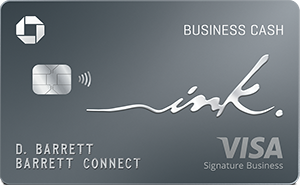
The Ink Business Cash® Credit Card has a sign-up promotion offering up to a $750 total cash bonus (75,000 Ultimate Rewards points) for new cardholders that meet the spending requirements, along with 5% cash back and 2% cash back on select small business categories, all with no annual fee. Here are the details:

  • Up to $750 total bonus. Earn $350 when you spend $3,000 on purchases in the first three months and an additional $400 when you spend $6,000 on purchases in the first six months after account opening.
  • 5% cash back (or 5X Ultimate Rewards per dollar) on the first $25,000 spent in combined purchases at office supply stores and on internet, cable and phone services each account anniversary year.
  • 2% cash back (or 2X Ultimate Rewards per dollar) on the first $25,000 spent in combined purchases at gas stations and restaurants each account anniversary year.
  • 1% cash back on all other card purchases with no limit to the amount you can earn.
  • Free additional cards for employees.
  • No annual fee.
  • Member FDIC

Ultimate Rewards points. The cash sign-up bonus actually comes in the form of Ultimate Rewards points at 1 point = 1 cent in cash. 75,000 points = $750 cash. This is similar to the situation with the Chase Freedom Unlimited.

If you have also have the Chase Sapphire Preferred, Chase Sapphire Reserve, or Ink Business Preferred Card, then you can pool all of your Ultimate Rewards points together (even with your spouse/partner as an authorized user) and either use the airline/hotel transfer partners or redeem using the new “Pay Yourself Back” tool for a 25% to 50% boost in value.

Leveraging the 5% back bonus categories. Putting all of your small business cell phone, landline, and internet bills on the card and getting 5% back is pretty handy. For example, even just $200 a month x 12 months x 5% back is $120 back a year without changing your spending habits. Now let’s take the office supply store category and the fact that you can buy gifts cards to Amazon.com and other retailers at such office supply stores like Staples and OfficeMax… now you can effectively discount many of your other purchasing needs by 5% as well. Putting those purchases on such gift cards upfront can also help you meet the spending requirement for the bonus.

10% Business Relationship Bonus details. If you have the Ink Business Cash card plus a Chase Business Checking account on your first card anniversary, you’ll earn a one-time 10% bonus of all eligible cash back earned in your first year. Offer is only available for Ink Business Cash cards opened between March and November 2024.

Many people aren’t aware of the fact that they can apply for business credit cards, even if they are not a corporation or LLC. The business type is called a sole proprietorship, and these days many people are full-time or part-time consultants, freelancers, eBay/Amazon/Etsy sellers, or other one-person business owners. This is the simplest business entity, but it is fully legit and recognized by the IRS. On a business credit card application, you should use your own legal name as the business name, and your Social Security Number as the Tax ID.

Note that Chase has an unofficial rule that they will automatically deny approval on new credit cards if you have 5 or more new credit cards from any issuer on your credit report within the past 2 years (aka the 5/24 rule). This rule is designed to discourage folks that apply for high numbers of sign-up bonuses. This rule applies on a per-person basis, so in our household one applies to Chase while the other applies at other card issuers.

Bottom line. The Ink Business Cash® Credit Card has a large sign-up bonus and ongoing features of 5X/2X categories with no annual fee. This card is best if you have significant expenses in the special 5% and 2% categories above. If you have certain other Chase credit cards, you can transfer Ultimate Rewards points over to those cards and increase your value.

Also see: Top 10 Best Small Business Card Bonus Offers.

MMB Portfolio Dividend & Interest Income Update – Year-End 2023

Here’s my quarterly income update as a companion post to my MMB Portfolio Year-End 2023 performance update. I prefer to track the income produced as an alternative metric to performance. The total income goes up much more gradually and consistently than the number shown on brokerage statements (market price), which helps encourage consistent investing. Here’s a related quote from Jack Bogle (source):

The true investor will do better if he forgets about the stock market and pays attention to his dividend returns and to the operating results of his companies. – Jack Bogle

Here is the historical growth of the S&P 500 total dividend, which tracks roughly the largest 500 stocks in the US, updated as of Q3 2023 (via Yardeni Research):

That is a much smoother ride than the price index. I imagine my portfolio as a factory that churns out dollar bills, or a tree that gives dividend fruit.

More details on dividends. Stock dividends are a portion of profits that businesses have decided to distribute directly to shareholders, as opposed to reinvesting into their business, paying back debt, or buying back shares. The dividends may suffer some short-term drops, but over the long run they have grown faster than inflation.

In the US, the dividend culture is somewhat conservative in that shareholders expect dividends to be stable and only go up. Thus the starting yield is lower, but grows more steadily with smaller cuts during hard times. Here is the historical growth of the trailing 12-month (ttm) dividend paid by the Vanguard Total US Stock ETF (VTI) via StockAnalysis.com.

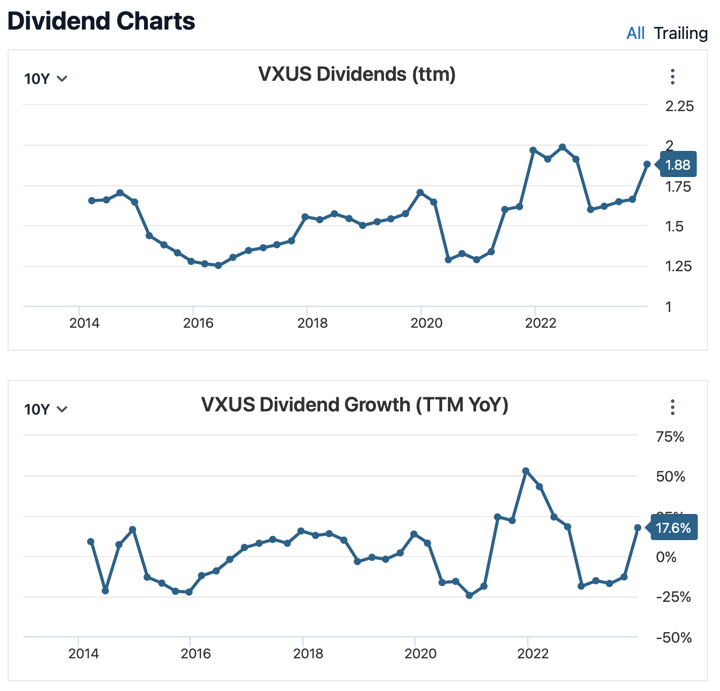
European corporate culture tends to encourage paying out a higher (sometimes fixed) percentage of earnings as dividends, but that also means the dividends move up and down with earnings. The starting yield is currently higher but may not grow as reliably. Here is the historical growth of the trailing 12-month (ttm) dividend paid by the Vanguard Total International Stock ETF (VXUS).

The dividend yield (dividends divided by price) also serve as a rough valuation metric. When stock prices drop, this percentage metric usually goes up – which makes me feel better in a bear market. When stock prices go up, this percentage metric usually goes down, which keeps me from getting too euphoric during a bull market.

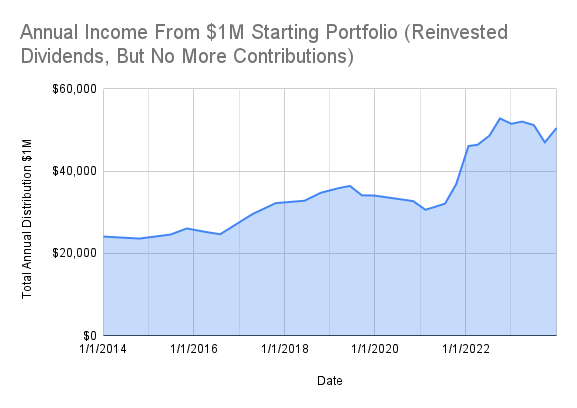
My portfolio income history. I started tracking the income from my portfolio in 2014. Here’s what the annual distributions from my portfolio look like over time:

  • $1,000,000 invested in my portfolio as of January 2014 would started out paying ~$24,000 in annual income over the previous 12 months. (2.4% starting yield)
  • If I reinvested the dividends/interest every quarter but added no other contributions, as of January 2024 it would have generated ~$50,000 in annual income over the previous 12 months.
  • If I spent all the dividends/interest every quarter and added no other contributions, as of January 2024 it would have generated ~$37,000 in annual income over the previous 12 months.

This chart shows how the annual income generated by my portfolio has increased over time and with dividend reinvestment.

Isn’t that a more pleasant way to track your progress?

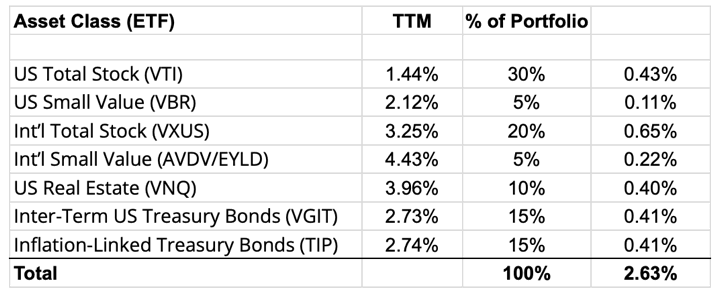
TTM income yield. To estimate the income from my portfolio, I use the weighted “TTM” or “12-Month Yield” from Morningstar (checked 1/5/24), which is the sum of the trailing 12 months of interest and dividend payments divided by the last month’s ending share price (NAV) plus any capital gains distributed (usually zero for index funds) over the same period.

My ttm portfolio yield is now roughly 2.63%, about the same as last quarter’s value. That means if my portfolio had a value of $1,000,000 today, I would have received $26,300 in dividends and interest over the last 12 months.

What about the 4% rule? For goal planning purposes, I support the simple 4% or 3% rule of thumb, which equates to a target of accumulating roughly 25 to 33 times your annual expenses. I would lean towards a 3% withdrawal rate if you want to retire young (closer to age 50) and a 4% withdrawal rate if retiring at a more traditional age (closer to 65). I truly believe too much time is spent debating this number. It’s just a quick and dirty target to get you started, not a number sent down from the heavens!

During the accumulation stage, your time is better spent focusing on earning potential via better career moves, improving in your skillset, and/or looking for entrepreneurial opportunities where you can have an ownership interest.

As a semi-retired investor that has been partially supported by portfolio income for a while, I find that tracking income makes more tangible sense in my mind and is more useful for those who aren’t looking for a traditional retirement. Our dividends and interest income are not automatically reinvested. They are another “paycheck”, as our other paychecks now vary much more than before. Then, as with a traditional paycheck, we can choose to either spend it or invest it again to compound things more quickly. Even if we spend the dividends, this portfolio paycheck will still grow over time. You could use this money to cut back working hours, pursue a different career path, start a new business, take a sabbatical, perform charity or volunteer work, and so on.

Right now, I am trying to fully appreciate the “my kids still think I’m cool and want to spend time with me” period of my life. It won’t last much longer. Whenever I ask for a hug, I get one! (I’m actually dreading when I have to delete this sentence from my updates!) I am consciously choosing to work when they are at school but also consciously turning down work that doesn’t fit my priorities and goals. This portfolio income helps me do that.

iPhone 6/7/SE Performance Slowdown Class Action Settlement

Update January 2024: It took over 3 years, but if you received a $92.17 deposit in your bank account with the description “IN RE APPLE INC Payouts”, it is your payment for this settlement. It’s always best to assume it will take a few years for these payouts to show up, and choose your payment method accordingly. For example, if you move a lot, don’t pick paper check. If you switch bank accounts a lot, pick one you always keep.

Original post from July 2020:

Apple settled a class action lawsuit claiming that they secretly throttled the performance of iPhones using software in order to offset battery problems. Some users claimed that if Apple did this openly, they could have simply replaced the batteries in their old phones instead of replacing the entire phone. If you owned one of the following devices and experienced diminished performance, you can make a claim here.

  • iPhone 6, 6 Plus, 6s, 6s Plus, and/or SE device that ran iOS 10.2.1 or later before December 21, 2017, or
  • iPhone 7 or 7 Plus device that ran iOS 11.2 or later before December 21, 2017

The estimated cash payment is $25, but the final amount may go up or down depending on the number of claimants.

Apple will provide a cash payment of approximately $25 per eligible device, provided that Apple will not pay more than $500 million in aggregate to the Settlement Class Members. If the total value of approved claims submitted exceeds the $500 million Ceiling, the value of each approved claim (per eligible device) will be reduced on a pro rata basis. Additionally, under the proposed settlement, if the total value of approved claims submitted by Settlement Class Members does not exceed the $310 million Floor, the value of each approved claim (per eligible device) may be increased on a pro rata basis, up to a maximum of $500 per device.

You will need to provide your iPhone serial number. If their search tool does not work, here are other ways to find your iPhone’s serial number:

  • If you have your phone, go to Setting > General > About > Serial Number.
  • Under your Apple ID account > Devices at appleid.apple.com.
  • Look on the outside of the original box, near the barcode.
  • On your original paper or online receipt.
  • On your Applecare documentation (if you bought this).