Archives for June 2021

Coinbase Interest Account: Earn 4% APY on USDC Stablecoin Deposits, Backed By Coinbase

Coinbase just announced its Coinbase Savings account product which pays 4% APY on USDC stablecoin deposits. There are several competitors in this area designed to compete against traditional bank savings accounts, even though they aren’t FDIC insured. The important difference here is that Coinbase is the most established and well-capitalized crypto exchange platform in the world. Let’s see how that changes things.

I’ve already explored the potential risks of high-interest stablecoin accounts, but they boil down to:

  • Stablecoin price risk. Every US dollar stablecoin is supposed to be backed with $1 of real US dollars and/or cash equivalents in a regulated custodial account, so that you can sell it for $1.00. Stablecoin providers hire independent auditing companies to attest that there are actually enough dollars in bank accounts. Tether is an example of a stablecoin with what I feel is questionable collateral backed by a group that has already lied in the past. USD Coin is partially controlled by Coinbase itself and has a far cleaner history as far as I can tell. You can view the USDC audit reports here done by Grant Thornton LLP.
  • Counterparty risk. At an FDIC-insured bank, you give them your dollars and the bank lends it out, but the government promises you’ll get your money back even if the bank fails. There is no FDIC insurance on this account. The guarantee is from Coinbase itself, and the positive news is that Coinbase is the largest cryptocurrency exchange platform in the world and a publicly-listed company on the Nasdaq (ticker COIN) with has a current market cap of $50 billion.

Coinbase also claims that they are safer than the competition because their lending practices are more sound:

We have recently seen the rise of crypto interest accounts that offer attractive rates on customers’ assets. While the high interest rates are appealing, they can present varying levels of risk. When you read the full terms and conditions, you may find that your assets are loaned to unidentified third parties and subject to their credit risk, which could result in a total loss of your crypto holdings.

Coinbase Borrow lets verified owners borrow up to $20,000 backed by their Bitcoin holdings as collateral, with no fees or credit checks. You are allowed to borrow up to 40% of your Bitcoin value at an interest rate of 7.9% APY. Theoretically, that means BTC could drop 60% before the outstanding principal exceeds the collateral, and as long as Coinbase sells before then, Coinbase won’t lose any money. However, that’s not the most important part. You’re not just a asset-backed lender. Coinbase itself as a $50 billion company is also guaranteeing your USDC deposits in the Coinbase Lend program.

Altogether, this makes the Coinbase Lend interest account one of the “safest” stablecoins held and guaranteed by one of the “safest” crypto exchanges. But is that safe enough? Each person will have to decide for themselves. It’s definitely not the same as an FDIC-insured bank, and I like my cash to be as safe and liquid as possible. At the same time, many folks are okay with giving up FDIC-insurance for only 1.35% APY from car demand notes backed by Toyota’s leasing arm. It’s not a question of
“Is it 100% safe?” as much as “Is it safe enough for 4% APY interest?”.

Currently, there is high demand for cash to enter the crypto-world as traditional banks are still avoiding that role, so you may decide to enjoy the arbitrage opportunity while it lasts. Note: “Pre-enrollment is currently available to eligible US residents except those residing in HI & NY.”

New users can open a Coinbase account and get $5 in free Bitcoin after your photo ID is verified. You can even earn $28+ in more free crypto when you learn more about different cryptocurrencies. More are added over time. I would view these as lottery tickets, as perhaps one of them will skyrocket in value. You can do these activities even if you skip the interest account.
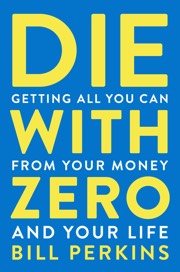
Die With Zero: How to Spend (All) Your Money

You might be saving too much money right now! You need to spend more! That is the unconventional message of the book Die With Zero by Bill Perkins. Some delayed gratification can be a good thing, but it can be a very bad thing if you simply end up dying with a big pile of money. Life is about having as many positive experiences as possible, and dying with more than zero means you wasted potential experiences.

The main problem is that our incomes, free time, and health vary differently with age. Incomes generally rise with age. Yet, our health and physical ability generally drops with age. Free time is a bit different, as you tend to have more free time when you are either quite young or quite old.

Therefore, the idea that we should save all the money we can in order to spend it in retirement isn’t ideal. Certain experiences are best during certain seasons of life, and you should spend your money at the times when it has the most impact. That also means you shouldn’t save much money in your 20s, as that is the best time for many of those “valuable” experiences. Here are some suggestions from the book about how to fill those “time buckets” (click to enlarge):

While I agree with many of the messages in this book, the tone often rubbed me the wrong way. Too put it bluntly, this book felt written by a “really rich guy” for his really rich friends. The author lives in a different world. In one example, he was proud that he threw a party in the Caribbean island of St. Barts which involved flying out all the attendees, renting out an entire hotel, and hiring Natalie Merchant for a private concert. Huh?

When you write a book, you ask your friends to leave an Amazon review. Perfectly reasonable. But read this:

I have to start off by saying that I know Bill Perkins personally, and that is going to make my review biased. With that being said, in my 1 year of knowing Bill, Ive had the most amazing experiences of my life. Everything from travelling around the world to playing chess with Sir Richard Branson on his private island.

🤔

via GIPHY

My primary criticism is the implicit assumption that “valuable” experiences have to cost a lot of money. Hiring celebrities to sing for you. Dropping $100,000 on a birthday party. Is it really a great tragedy if someone doesn’t end up skiing in the Swiss Alps? I’m pretty sure I’m going to die without sailing the Amalfi coast, because I have no idea where that is!

Today, my three kids went to their great-grandmother’s and great-aunt’s house. My wife spent her youth climbing a large lemon tree in the yard. Her grand-aunt is 93 years old and the kids got to help her pick the lemons and made (very messy and sticky) lemonade together. My wife reminisced about how she used to do the exact same thing (including the messy and sticky part) with her late grandmother. That was also a priceless memory, but it has little to do with money. It was about love and making an effort to spend time together.

My secondary criticism is that the book doesn’t actually teach you how to “Die with Zero”. I was honestly hoping for some insights about spending down an investment portfolio in order to accomplish “maximum spending”. Unfortunately, the book contains little practical investment advice. There is only a quick mention to “look into” annuities, and to use a longevity estimator.

There was no rebuttal to the fact that with nearly every investment, you’ll need to leave yourself some wiggle room because you don’t know how long you’ll live, future expenses, future investment returns, future interest rates, and future inflation. The only safe solution might be a TIPS ladder, which would require a lot more money than what you might need with stocks.

Let’s end on a positive note. Here are the best takeaways from this book.

  1. The most valuable things in life are experiences shared with loved ones.
  2. Each stage of your life is special and unique.
  3. Make a list of truly valuable experiences that you want at each stage. Think about why they are different for each stage (health, free time).
  4. Make them a priority. If it costs money to make it happen, then spend it happily and consciously.

Some things can wait, and others can’t. Maybe you want to learn how to surf, raise a huge family, start a nonprofit, or move somewhere warm and breezy. However, I would reiterate that I do not equate “valuable” with “expensive” or “rare”. Here are the most valuable memories that I can thing of:

  • Early 20s: I met my future wife, who is my best friend and inspires me every day. Finding the right life partner was so important to my happiness.
  • Early 20s: I did backpack around Europe and stay in hostels as a single person. The total cost was probably a couple thousand dollars and I paid cash (no debt). It was fun, but I would have also had amazing memories hiking the Appalachian Trail or teaching English in Japan.
  • Early 20s: I quit a well-paying job to take a risk and try to switch careers. It didn’t work out as I imagined, but it did work out.
  • Late 20s and early 30s: Once we had things lined up, we “spent” our energy mostly on many hours of work and high saving rates. No regrets as it set us up for the rest of our lives.
  • Mid-30s to Early-40s: We “spent” some of our money by choosing to work less and be able to raise our young children. I will never have to say the words “I wish I spent more time with them while they were young, and less time working”. We still work but our saved money gives us flexibility and the ability to choose what we work on. I am able to exercise and socialize regularly.
  • So what’s left? In my 20s, I wish I spent more time with my friends doing simple things like hanging out at bars. Today, I wish I kept in touch with them better as well. This book has strengthened my resolve to take the effort to meet up with them soon. It’s hard with everyone’s work schedules, families, etc. Something simple like go-karts, hiking, or bowling. We probably won’t stumble into Richard Branson, but who knows?

Looking back, it was more about constructing a daily life of purpose and happiness, rather than a bucket list of limited experiences. My “must haves” are based on the components of happiness, where I use money so that I can say things like:

  • I consistently lead a purposeful and meaningful life. I spend my time on things that are important.
  • I consistently become absorbed in what I am doing. Time seems to pass quickly when I am working.
  • I am in excellent health and am satisfied with my level of health.
  • I consistently receive help and support from others when I need it.
  • I am consistently excited and interested in things.
  • I rarely feel lonely.
  • I consistently feel loved.

It’s a good message not to hoard your money forever. We do have some bucket-list items like travel destinations, but honestly checking them off won’t change our lives from “good” to “awesome”. Our personal concept of financial freedom leads to a ideal lifestyle that wouldn’t change much if you were to give me more money to spend. We have “enough”.

Announcement: NEW New E-mail Newsletter Service!

As previously mentioned, Feedburner/Google is shutting down their e-mail service permanently as of July 1st, 2021 (very very soon!). I thought that switching over to a new provider would be easy (and free), but I was mistaken. After additional testing and feedback, I have decided against using Follow.it and instead am switching to the paid Feedblitz service instead, which includes no banner ads and faster updates. Email updates will now come directly from “jonathan@mymoneyblog.com”.

For existing Feedburner e-mail subscribers, I have already imported your e-mails to the new Feedblitz service. In fact, you should be receiving this post via Feedblitz. Ideally, this means you don’t won’t have to do anything and things will simply keep working as they did before.

If you use RSS, please update your feeds to https://www.mymoneyblog.com/feed for unfiltered direct access.

If you signed up for Follow.it, you will need to re-subscribe to the Feedblitz service below. I have deleted the Follow.it list completely and you should no longer receive any e-mails from them. I don’t even have access to the e-mails myself. I apologize for the inconvenience.

If you are receiving this e-mail and have previously unsubscribed and/or I have added you in error, please accept my sincere apologies!! 😞 I did a manual export and crossed my fingers. This is the first and only time that I have exported my e-mail list to another service in the 16+ years of this blog’s existence, and I hope to not have to do it for another 16 years! 😅 Unsubscribing is easy and quick. There should be a link at the bottom of every single e-mail to “Safely Unsubscribe”.

Free Updates via E-mail
If you’d like to be automatically sent an e-mail when a new post is published (roughly every weekday), please enter your e-mail address in the form below (or click here). I’ll never use your email address for any other purpose, and you can unsubscribe at any time.

As always, thank you for reading. I truly believe that I have some of the most intelligent, discerning finance readers in the world, and I have learned so much through our interactions throughout the years.

p.s. I know that some of you also get e-mails directly from WordPress, and that should continue to work for those that wish to keep using it, but please know that unfortunately the WordPress service does NOT send out an email if it is a previously-published post that I have updated with new information. For that reason, WordPress not my recommended option. The Feedblitz service includes both my updated and refreshed posts.

IRS Tools to Track and Manage Enhanced Child Tax Credit Payments (Starts July 15th)

The American Rescue Plan Act (ARPA) of 2021 “enhances” the Child Tax Credit, increasing it to up to $3,600 for each child under 6 and $3,000 for each one under age 18. Eligible parents will receive half in advance via direct payments spread out equally over the last 6 months of 2021 (starting July 15th). The other half will be received when you file your tax return. This breaks down to:

  • For each qualifying child under age 6, six monthly payments of up to $300 each ($1,800 total, half of $3,600).
  • For each qualifying child over age 6 and under age 18, up to six monthly payments of up to $250 each ($1,500 total, half of $3,000).

The IRS released the following new tools to help you manage this process:

These advance payment amounts begin to be reduced if your modified adjusted gross income (MAGI) exceeds:

  • $150,000 if married and filing a joint return or if filing as a qualifying widow or widower;
  • $112,500 if filing as head of household; or
  • $75,000 if you are a single filer or are married and filing a separate return.

Kiplinger has a calculator if you’re that phase-out area. You may still be eligible for the “standard” child tax credit when you file your 2021 tax return. These tax credits are now also fully refundable, which is important for those with lower incomes that can’t fully take advantage of these tax credits otherwise.

It’s quite likely you won’t need to use any of these tools, although I still used them to confirm our eligibility. For most households, the payments will automatically be sent to the bank account and/or address used for your previous tax returns. Just be on the lookout around July 15th, 2021. These tools are meant for those that don’t file tax returns, their tax situation has changed significantly since their last return, or otherwise need help updating how their payments are handled.

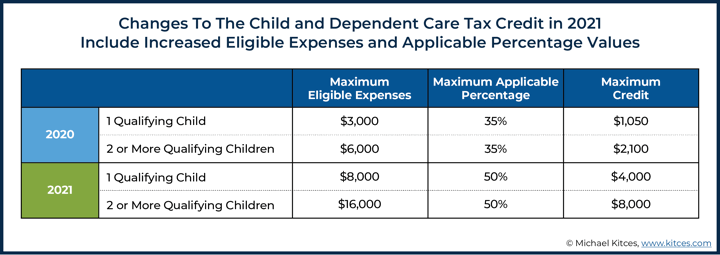
Also: Expanded Child and Dependent Care Tax Credit. A reminder that there is also an increased tax credit towards childcare/dependent care for 2021.

  • For 2021, now worth up to $4,000 for one qualifying individual or $8,000 for two or more. More expenses are eligible, at a higher percentage. The net increase in value could be worth up to $5,900 (see chart below).
  • Now fully refundable.
  • Qualifying children are under the age of 13 for the entire year.

Alliant Credit Union Visa Signature Card Review: Up to 2.5% Cash Back, But With Some Hoops

New rules as of July 2021. Alliant Credit Union, the 5th largest US credit union by assets, is changing up the terms of their Alliant Visa Signature Credit Card (again) as of July 2021. There are now additional hurdles to achieving the full 2.5% cash back, but the good news is that the previous $99 annual fee is going away for everyone. There are now two separate “tiers” of cash back rewards:

Tier 1: Up to 2.5% cash back

  • 2.5% cash back on up to $10,000 in qualifying purchases per billing cycle. On purchases above that $10,000 cap, you get 1.5% cash back.
  • For existing cardholders or if you open this card by 7/13/21, you automatically get Tier 1 for the July, August and September 2021 billing cycles.
  • In order to qualify for Tier 1 for October-December 2021, you must meet the requirements for an Alliant High-Rate Checking account each month of the third calendar quarter (July, August and September of 2021), AND maintain an average daily balance of $1,000 or more in their Alliant High-Rate Checking account for the last two months of the calendar quarter
    (August and September of 2021).
  • Qualification for Tier 1 repeats every future quarter in the same manner. Keep everything up for Q4 2021, and you get Tier 1 for Q1 2022, and so on.
  • No annual fee.

Tier 2: Flat 1.5% cash back

  • If you do not meet the requirements listed above, you default to Tier 2.
  • 1.5% flat cash back on all qualifying purchases.
  • No annual fee.

Redeem cash back rewards via a credit card statement credit (takes up to two billing cycles) or as a deposit into your Alliant checking or savings. Must first accrue $50 in cash back rewards.

Requirements for Alliant High-Rate Checking account

  • Must opt-in to free online statements.
  • Must have at least one monthly electronic deposit posted to your checking account in each calendar month. An electronic deposit is defined as a direct deposit, payroll deposit, ATM deposit, mobile check deposit OR transfer from another financial institution.

Competition. Please read my card-specific reviews for details.

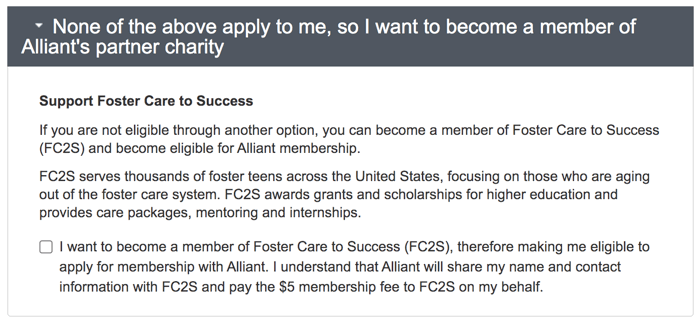
Alliant CU membership eligibility. If you start the online membership application, it does a good job of walking you through their various eligibility options. If you don’t otherwise qualify, anyone can join as a member of the Foster Care to Success (FC2S) charity group, and Alliant will now pay that $5 fee on your behalf. In other words… now anyone can join for free.

My take. Overall, I think this is a smart and practical move on their part. Historically, any credit card paying above 2% cash back with no annual fee has not been sustainable on its own. The only way to make it profitable is to offer it as part of a greater “relationship” with the financial institution. For example, Bank of America has its Preferred Rewards program to encourage additional bank and brokerage holdings. Here, Alliant is now requiring you to maintain a certain level of activity on their checking account. The one monthly direct deposit (can be a simple ACH bank-to-bank transfer) and $1,000 minimum balance is relatively easy to achieve when compared to competitors that require a payroll direct deposit or 12+ debit card transactions per month.

In exchange, earning an extra 0.5% cash back on up to $120,000 in purchases annually is worth potentially an extra $600 a year in cash back over a flat 2% card, although I’d run your own estimate as very few households will charge that much. Some people will value the simplicity of keeping a single credit card with excellent cash back on almost everything and no categories to track.

I would skip the Tier 2 option completely. At 1.5% cash back for the tier with no checking account, it’s just another ho-hum average credit card.

Bottom line. The Alliant Visa Signature Credit Card offers up to 2.5% cash back on up to $10,000 on all qualifying purchases per month (no categories) with no annual fee, but you’ll need an active Alliant High-Rate Checking account amongst other requirements. Membership is easy and free.

HM Bradley Credit Card Review: 3-2-1 Cash Back, Saving Tier APY Boost

Update December 2021: On December 15th, 2021, HMBradley announced upcoming changes to their interest rate that will become effective February 1st, 2022, along with changes to their credit card boosts that are effective January 1st, 2022. See my HM Bradley review for additional commentary.)

Original post (will be outdated as of 1/1/2022):

I’ve reviewed the HM Bradley Checking account as a new bank option offering interest rates of up to 3% APY on balances up to $100,000, depending on factors like savings rate and direct deposit. Last week, I finally managed to qualify for their HM Bradley credit card, which offers additional advantages when used with their banking product:

  • Savings Tier Boost: Get boosted to the next highest Savings Tier APY when you spend at least $100 each monthly cycle on the HM Bradley credit card AND have a least $2,500 in monthly direct deposits for each month of the previous quarter. If you are already at the highest Savings Tier, they will increase your APY by another 0.5% APY. (Currently, this makes it a possible 3.5% APY.)
  • Savings Tier Protection: When you pay your HMBradley Credit Card with your deposit account, it won’t count against your Savings Tiers.
  • Annual fee waived for the first year, then $60 (charged as $5 per month?).

3-2-1 Cashback rewards on credit card purchases details:

  • 3% cash back on your top eligible spending category each monthly statement cycle
  • 2% cash back on your next eligible spending category each monthly statement cycle
  • 1% cash back on everything else.

How do I apply for the HM Bradley credit card? I can’t find the application. As someone who already had a sizable amount deposited at HM Bradley, I was definitely interested in that 0.5% APY boost. However, I couldn’t find an application link anywhere! This is what they tell you to do:

With an active HMBradley account, you just need to opt into One Click Credit, and we will automatically notify you if you are eligible for the HMBradley Credit Card. We send offers at the beginning of every month, so be sure to check your account and email to see if you qualify. With One Click Credit, you authorize us to make a soft inquiry on your credit report each month for twelve months to determine if you are eligible for the HMBradley Credit Card. The inquiry does not affect your credit score and is not an application for credit.

I followed their directions have been opted in to “One Click Credit” for several months. Yet, what I didn’t know was that they also screen people based on income (not only credit score), AND they estimate your income based on your direct deposits to HM Bradley. I split my direct deposit many different ways, so they thought my income was too low.

It turns out the magic number for me was about $2,500 in direct deposits within a month. As soon as my HMB direct deposit was higher than that threshold, I was invited with an email subject “You have a new credit offer!”. This also happens to match their ongoing requirements, but I can’t be sure that this is the same number for everyone. I’m just reporting my own experience.

Alternatively, if you click on the “Insights” tab on the left, you can also self-report your income now in order to help you qualify for this credit card. Again, I am not sure what minimum income they are looking for, but the range looks to be above a minimum of roughly $35,000 per year.

List of eligible categories. Taken from their fine print:

• Education
• Motor Vehicle
• Pets
• Groceries
• Utilities
• Financial
• Gas
• Shopping
• Entertainment
• Alcohol & Bars
• Dining
• Healthcare & Childcare
• Professional Services
• Health & Fitness
• Home
• Furniture
• Personal Care
• Business Services
• Electronics & Software
• Air Travel
• Ground Transportation
• Lodging
• Sporting Goods

My take and a warning. Their 3-2-1 cash back rewards structure includes some unique categories that I don’t see on other credit cards, and another positive factor is a lack of a cap on earned rewards. Thus, if you happen to make large credit card purchases in specific niche categories like Education or Healthcare/Childcare, then the 3% cash back may be attractive. Otherwise, you may be better off with a flat 2% cash back on everything with no annual fee, especially given that HMB will charge a $60 annual fee after the first year.

More significant to me was the Savings Tier Boost. As I’m already at the 3% APY tier, earning an additional 0.5% APY could be worth up to hundreds of dollars a year. $10,000 at 0.50% APY would be another $50 a year, almost covering that eventual $60 annual fee. $50,000 at 0.5% APY would be $250 in additional interest per year. $100,000 at 0.5% APY would be $500 in additional interest per year. Definitely a nice ongoing perk to encourage me to use their bank and credit card frequently.

However, I just noticed this line in their fine print about the Saving Tier Boost promo: “Offer expires December 31, 2021.” That was a surprise. I don’t like the idea of promoting something as a headline credit card feature when you already plan on having it expire in less than 7 months. I do hope they extend it, as without this feature I would not have applied for this card.

Bottom line. The HM Bradley credit card offers a unique set of perks that currently mesh really well with their banking product. Be aware that you must maintain an certain minimum monthly direct deposit into their HM Bradley checking account in order to be invited to apply (roughly $2,500 a month for me). Before applying, be aware that the Savings Tier Boost feature is set to end on December 31, 2021.

Amazon Prime Day 2021: Citi/Discover/Chase Points Promos, 23andMe 50% Off, $10 Gift Card Bonus (Updated)

Prime Day is live. Amazon Prime Day 2021 is on June 21st and 22nd (Monday and Tuesday). I’ll try to keep this post updated with the most recent offers, as there will be many deals in the days leading up to it as well. There are usually many opportunities to save some money without buying stuff you don’t need (and thus offset a chunk of that membership fee).

As the name suggests, most deals require a Prime membership. New members can sign up for a 30-day free trial. If you’ve already done the trial, you can simply buy a month of Prime for $12.99 ($5.99 with EBT or Medicaid card).

(Note: If you are reading this in an email/RSS reader, I am not allowed to include any Amazon affiliate links in e-mails, so they have been removed. Just click here to view the links. Sorry!)

“Shop with Points” Promos (Targeted)

Just Added

Deals

DIY Inflation-Protected Pension: Fewer Retirees Claiming Social Security at Age 62

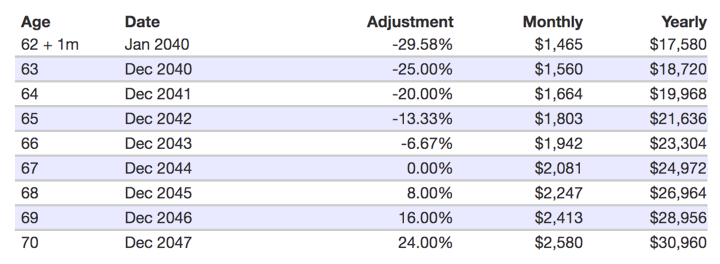
An important lever in building your retirement income is timing when you start claiming your Social Security benefits. While you can start as early as age 62, your monthly benefit increases each year that you delay claiming (up until age 70). For example, here is what my payout would be at various claiming ages if I stopped working today*:

By forgoing the potential income during those initial years, I can “buy” a larger Social Security benefit for the rest of my life – essentially an inflation-adjusted lifetime annuity that happens to be backed the US government, as opposed to an insurance company that has a small-but-nonzero chance of failure. There is a big different between $100 a month and $100 month always adjusted for CPI inflation for the next 30 to 40 years. From this WSJ article:

“The very best annuity you can buy is to delay Social Security,” says Steve Vernon, an actuary who is a consulting research scholar at the Stanford Center on Longevity. Mr. Vernon, 67 years old, is himself working part time so he can delay claiming Social Security until age 70.

Did you know that there are now zero insurance companies that sell new annuities that pay lifetime income linked to inflation (CPI)? You can find some with fixed annual increases, but none will guarantee the increases to track inflation. Not a single for-profit company wants to take on the risk of future inflation. Think about that.

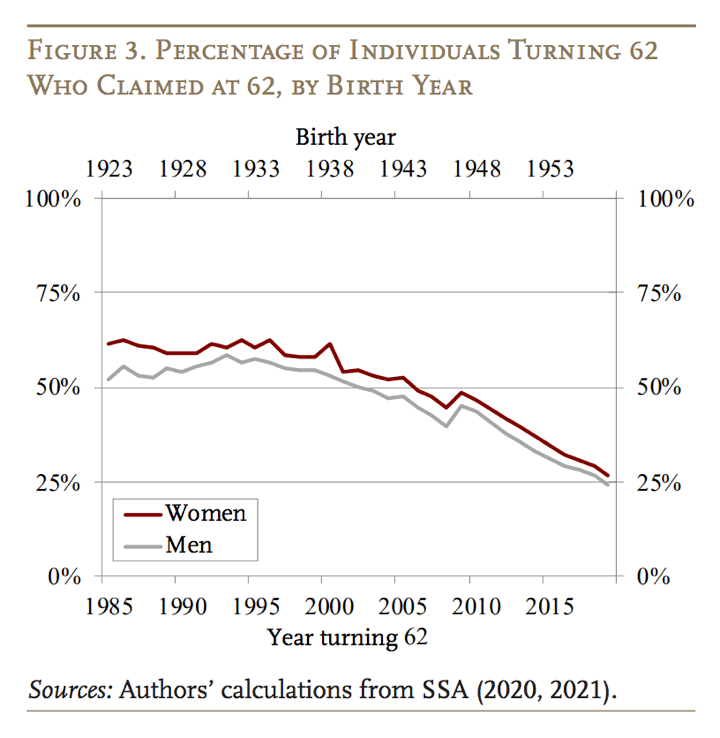
For a long time, the most common age of claiming was age 62, as soon as possible. However, this chart from the Center for Retirement Research at Boston College shows that the current trend is that fewer and fewer people are doing that, especially in the last 10 years (hat tip Abnormal Returns). The curve tracks the percentage of people turning 62 that start claim age 62. (This is different than percentage of all claimants, because there is a growing number of 62-year-olds overall.)

I haven’t found any official surveys about the reason for this trend, but here are some possibilities:

  • Fewer people “need” Social Security income right away, because they are healthier and/or able to find work for longer.
  • The stock market has been going up pretty consistently over the last 10 years, so fewer people need the income to start right away.
  • Fewer people “want” Social Security right away, because they expect to live longer or have been educated about the potential benefits of delayed claiming. They want the higher paycheck and are willing to wait.

There are definitely more free tools out there to help you make this decision. My payout chart above was based on mySocialSecurity.gov and SSA.tools and other free calculator is OpenSocialSecurity.com. OpenSocialSecurity actually told me that the optimal choice was for one of us to claim at 62 and the other to wait until 70, so early claiming isn’t always a bad thing.

* Wait, I’m less than 20 years from being able to claim Social Security?! 😱

Hotels.com Rewards Visa Card Review: 2 Free Reward Nights (Worth up to $250)

The Hotels.com Rewards Visa credit card is a no-annual-fee travel rewards credit card for folks who don’t have loyalty to a specific hotel chain. Instead, you earn free nights from the Hotels.com loyalty program (detail below). Right now, they are running a limited-time offer for new cardholders – 2 free rewards nights worth $250 total ($125 max value each). Here are the highlights:

  • Limited Time Offer: Get 2 reward nights worth $250 total (max $125 per night)*, when you spend $1,000 on purchases in the first 3 months. *Excludes taxes and fees. If a night costs less than $125, you won’t get the difference.
  • Collect 1 stamp each time you spend $500 on purchases with your card. You also get 1 stamp for every night you stay at any eligible property booked on Hotels.com. When you collect 10 stamps, you’ll get 1 reward night to redeem on future bookings through Hotels.com. Choose from over 500,000 properties in 200+ countries around the world.
  • Free Hotels.com Reward Silver tier status for the first 12 months, including perks such as free breakfast, airport transfers, free WiFi and more at select properties.
  • Pay your monthly cell phone bill with your card and get up to $600 protection against damage or theft (subject to a $25 deductible).
  • No annual fee.

Bonus Rewards Nights details. The redemption value of each bonus reward night as part of this sign-up bonus is limited to $125 per night. If the night costs less than $125, you don’t get any refund. If the night costs more than $125, you just pay any difference. Note the following fine print about how it doesn’t cover taxes and fees. The limited-time offer is for 2 free nights, but the standard offer is only 1 free night.

If you choose a reward night room, apartment, or other equivalent accommodation that costs more than $125, you pay the difference and you are responsible for taxes, fees, and other charges. If you choose a room, apartment, or other equivalent accommodation that costs less than $125, the redemption value of the bonus reward night is limited to the cost of the accommodation before taxes, fees, and other charges. You cannot combine the bonus rewards nights’ values or apply the difference to any other reward night. There will be no cash refunds for any residual amounts.

Hotels.com Rewards program overview. This hotel program tries to make it more straightforward to get a free hotel night. Each night you book through Hotels.com at an eligible property, you get a “stamp”. Collect 10 stamps and you get a free night. The value of that reward night is based on the average cost of the nights you booked. So if you booked all $100 per night hotels, then the free night would be worth $100. If you booked all $500 per night hotels, then the free night would be worth $500. Fair enough.

The rewards from this credit card are meant to mix in seamlessly with your paid hotel nights. Every $500 you spend on this card, you will get another “stamp”, as if you stayed a night at a $110 per night hotel. So if you charged $5,000 on this card over time, via credit card spending alone you would have collected 10 stamps at $110/night and earned a free Reward Night worth $110. That works out to 2.2% back on purchases (110 divided by 5,000) when redeemed for a hotel night reward at full value or higher (just pay any difference).

The stamps also help you get “VIP status” with Hotels.com. Their Silver tier is free for the first year with this card, but otherwise requires 10 stamps in a year and includes perks like price matching, free breakfast, and free Wi-Fi at participating VIP Access properties. Their Gold tier requires 30 stamps in a year and includes free room upgrades at VIP Access properties.

Pros: Hotel room flexibility and no annual fee. An important factor is that this free night applies at at any of 500,000 hotel rooms worldwide, not just restricted to a specific chain and whatever inventory they decide to release. As long as there is a hotel room that is being sold for $110 and you have a $110 Reward night, you can book it, even if it is not a “standard room”. This card also has no annual fee. Wells Fargo is the issuer, which may make it easier to qualify for if you already have cards from the other major issuers like Chase and American Express.

Cons: Not enough premium over cash. Even though this card offers the equivalent of 2.2% back in value towards a very flexible hotel room, it is still not as easy to redeem as cash back. So you have to compare with straightforward 2% cash back, or possibly getting better than 2.2% value from a specific co-branded hotel credit cards like Hyatt or Hilton. If I was already a Hotels.com Rewards program user, then I might take the 2.2% value as it is even better than a 2% cash back card. If I was a Hyatt loyalist or didn’t stay at hotels frequently, then it wouldn’t be worth the added complications. When you book a hotel through Hotels.com (or similar site like Priceline or Expedia), you don’t earn chain-specific loyalty points on the stay.

Bottom line. The Hotels.com Rewards Visa credit card is a great fit if you already use the Hotels.com Rewards program instead of being loyal to a specific chain. You can earn 1 stamp per $500 spent on the card, which will help you get free hotel nights at a solid rate (2.2% value back) and also help you reach the next tier of VIP Rewards status. The limited-time sign-up bonus of 2 free nights worth up to $250 value is relatively strong for a card with no annual fee.

Single Family Rental Homes: Asset Class with 8.5% Historical Returns

How about this housing market? A few weeks ago, the CEO of Redfin shared a viral Twitter thread about what he was seeing. Here’s just a snippet:

It has been hard to convey, through anecdotes or data, how bizarre the U.S. housing market has become. For example, a Bethesda, Maryland homebuyer working with @Redfin included in her written offer a pledge to name her first-born child after the seller. She lost.

Inventory is down 37% year over year to a record low. The typical home sells in 17 days, a record low. Home prices are up a record amount, 24% year over year, to a record high. And still homes sell on average for 1.7% higher than the asking price, another record.

What about single-family homes as an investment asset class? Larry Swedroe points to a recent academic study about the historical total returns of single family rentals. Here are some highlights from the paper:

  • The study covers the nearly 30-year period from 1986 to 2014, including zip codes across the largest 15 US metro areas.
  • Total return is broken down into two components: rental income (net of expenses) and house price appreciation, similar to the dividend income and price appreciation of stocks.
  • Across all cities, the total returns were approximately the same: 8.5% total annualized return. On average, this broke down to 4.2% rental income + 4.3% price appreciation.
  • In higher-priced cities, the total returns were composed of lower rental yields but higher price appreciation.
  • In lower-priced cities, the total returns were composed of higher rental yields but lower price appreciation.
  • On average, they found that net rental income is about 60% of gross rental income. In other words, for every $1,000 of gross rent, $400 was eaten up by operating expenses like maintenance, repairs, property taxes, etc.
  • Single family rentals represent 35% of all rented housing units in the US, and have a market value of approximately $2.3 trillion.

According to Swedroe, during the same period the S&P 500 returned 10.7% annualized but with more volatility.

I definitely acknowledge rental properties are the way that many people have built wealth. As individuals can combine cheap leverage from government-subsidized mortgages along with that 8.5% annualized return, that could make the overall return even better than stocks.

I’ve thought about purchasing a rental property (or four) as well, but I’ve always ended up using my time and life energy in other ways. In the end, I look at managing rental properties as more similar to running your own business. If you have the right personality and skillset, then managing rental properties is a great business and a great way to build wealth in terms of return on invested time. But for me, I’d much rather work on online businesses, what I call “digital real estate”. With excess cash from work, I invest in completely passive shares of businesses (stocks) and REITs which require zero ongoing work. When I am fully retired, the dividend checks will simply show up in my brokerage account. I don’t need to screen tenants, hassle them about late rent, argue about security deposits, or worry about evicting a family during hard times.

What about simply buying an REIT that owns single-family rentals? It appears the two biggest are Invitation Homes (INVH) with 80,000 single-family homes and American Homes 4 Rent (AMH) with 50,000 single-family homes. As you might expect, their recent returns have also been quite hot. The 5-year average return for AMH is 17.45%, per Morningstar, but it’s too young to have a 10-year return history. However, the current forward dividend yields of 1.80% (INVH) and 1.02% (AMH) aren’t terribly exciting.

Here’s a 5-year historical performance chart of American Homes 4 Rent alongside some other REITs and the S&P 500, from YCharts. Buying a specific REIT, even if it owns thousands of properties, can still result in a wide range of results.

If you own the broad Vanguard Real Estate ETF (VNQ), you’ll find that 14% of its portfolio is invested in residential REITs. This includes apartments, student housing, manufactured homes, and single-family homes. INVH is about 1.2% and AMH is about 0.65% portfolio weight in VNQ. The mutual fund version of VNQ is VGSLX, and has a 10.5% annualized average return since inception in 2001. That’s not too bad, either, and I’ve been pretty satisfied with my VNQ holding.

But again, single-family real estate is one of the original “side hustles” that helped folks build their own wealth over time. Sometimes, I wonder if I should work on building the required skills and knowledge base, just to keep my future options open and have something to teach my children.

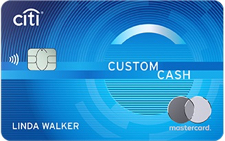
Citi Custom Cash Card Review: 5% Cash Back On $500 For Single Category Each Month

The Citi Custom Cash Card is a newly-launched rewards credit card which offers 5% cash back on your top eligible spending category up to $500 spent each month. This card will again compete against the other 5% cash back cards on the market, as did their now-discontinued Citi Dividend card. Highlights:

  • Earn $200 cash back after you spend $1,500 on purchases in the first 6 months of account opening. This bonus offer will be fulfilled as 20,000 ThankYou(R) Points, which can be redeemed for $200 cash back.
  • 5% cash back (5X Thank You points) on your top eligible spending category up to $500 spent each monthly billing cycle. 1% cash back on all other purchases.
  • No rotating bonus categories to sign up for – as your spending changes each billing cycle, your earn adjusts automatically when you spend in any of the eligible categories.
  • Citi will only issue one Citi Custom Cash(SM) Card account per person.
  • No annual fee.

This is a new card, but note the following:

Citi will only issue one Citi Custom CashSM Card account per person. You will qualify for the bonus offer only if you have not received a bonus offer for opening a new Citi Custom CashSM Card in the past 48 months.

List of eligible categories. Taken from their fine print:

  • Restaurants. Includes purchases at cafes, bars, lounges and fast food restaurants. Excludes purchases at bakeries, caterers, restaurants located inside another business (such as hotels, stores, stadiums, grocery stores, or warehouse clubs) and third party dining delivery services.
  • Gas Stations. Excludes gasoline purchases at warehouse clubs, discount stores, convenience stores or other merchants that do not use the gas station merchant category code.
  • Grocery Stores. Includes purchases at supermarkets, meat/seafood stores, dairy stores, bakeries, and miscellaneous food/convenience stores. Excludes purchases at general merchandise/discount superstores; wholesale/warehouse clubs; candy, nut and confectionery stores. Purchases made at online supermarkets or with grocery delivery services also do not qualify if the merchant does not classify itself as a supermarket by using the supermarket merchant category code.
  • Select Travel. Includes airline, hotel, cruise line and travel agency purchases. Excludes timeshares, boat leases and rentals, campgrounds and trailer parks, and real estate agencies.
  • Select Transit. Includes car rentals, ferries, commuter railways, subways, taxis/limousines/car services, passenger railways, bridge and road tolls, parking lots/garages, bus lines, and motor home and recreational vehicle rentals. Excludes bike/scooter rentals, auto clubs and insurance companies.
  • Select Streaming Services. Includes the following cable, satellite, and streaming providers: Amazon Prime Video, Amazon Music, Apple Music, CBS All Access, Disney+, AT&T TV NOW, ESPN+, fuboTV, HBO Max, NBA League Pass, Netflix, Pandora, Showtime, Sling TV, Spotify, Starz, SiriusXM, Vudu, YouTube Red, YouTube TV, and Tidal.
  • Drugstores
  • Home Improvement Stores
  • Fitness Clubs
  • Live Entertainment

Thank You points. As with the Double Cash card, this card technically earns Thank You points, which you can then convert to a statement credit or direct deposit into your bank account. So you really earn “5 ThankYou Points for each $1 you spend in your highest spend category each billing cycle up to the first $500 spent in that category.” 2,500 Thank You points = $25 statement credit, and so on.

You can’t convert your points to airline miles with this card, but if you also have the Citi Premier Card, that card does allow you to convert miles in various programs on a 1:1 basis including JetBlue, Cathay Pacific, EVA Air, Etihad, Flying Blue by Air France and KLM, Singapore Airlines, and Thai Airways. For example, with the Premier card, you could convert 20,000 TY points into 20,000 Singapore Airlines KrisFlyer miles.

My take. This is a minor variation of the other cards that offer 5% cash back on rotating categories every quarter. Those cards usually offer 5% cash back on a couple of specific categories on up to $1,500 of spending each quarter (3 months). This makes the maximum cash back via 5% categories the same: $25 a month, or $300 a year.

As wit the other 5% cards, since you only earn 1% cash back on every other purchase, you can easily get better rewards elsewhere. For example, if you had the Citi Double Cash card, you could be earning 2% cash back on every other purchase. You could put all your small purchases on the Citi Rewards+ card, which rounds up rewards to the nearest 10 points. If Citi really wanted to shake things up, they would have combined the 5% cash back on up to $500 and the 2% cash back on everything else, instead of making us keep two different cards going. That would have been a slam dunk.

As a rewards optimizer, the best use for this card would be to only use it for a specific category all year long (up to $500 a month). If you wished you could just pick a category and just stick with it all year, this card lets you do that. You could put only gas on the card. You could put only restaurants on the card, and so on. Use another card for your other purchases, even a 1.5% cash back card is better. Of course, Citi is hoping you won’t do that, making your overall cash back rate much lower, possibly even lower than 2%.

Bottom line. The Citi Custom Cash Card is a newly-launched rewards credit card which offers 5% cash back on your top eligible spending category up to $500 spent each month. Since you only earn 1% cash back on everything else, you should pair it with a 2% cash back card like the Citi Double Cash card.

Vanguard 10-year Asset Class Return Projections 2021

The advisor-facing parts of brokerage firms are often of interest to DIY investors. In the June 2021 Market Perspectives article of Vanguard’s advisor site, they included their asset class return projections for the next 10 years:

Our 10-year, annualized, nominal return projections, as of March 31, 2021, are shown below. Please note that the figures are based on a 1.0-point range around the rounded 50th percentile of the distribution of return outcomes for equities and a 0.5-point range around the rounded 50th percentile for fixed income.

These projections should not be used for market timing! GMO offers similar outlooks. Here’s how well their 7-year projections turned out from 2013-2020:

  • GMO forecast in 2013: US Large Cap equities will have a -2.3% annualized real return from July 2013 to July 2020. Reality today: The S&P 500 ETF (VOO) had an annualized real return of +9.9% from July 2013 to July 2020.
  • GMO forecast in 2013: Emerging Markets equities will have a +6.8% annualized real return from July 2013 to July 2020. Reality today: The Emerging Market ETF (VWO) had an annualized real return of +2.3% from July 2013 to July 2020.

That is a huge difference in real-world cumulative returns after 7 years! If you fully believe the forecast, you might have sold all your stocks. If the forecast was correct, that $100,000 would have shrunk to $75,000. Instead, every $100,000 invested in the S&P 500 ETF (VOO) turned into $223,000 during that 7-year time frame. (Source: ETFReplay, SmartAsset)

Limited takeaways. There is some value in these predictions, but not that much:

  • For equities, these outlooks partially assume that valuations will revert back toward their historical averages. Right now, valuations are higher than average due to low interest rates, and thus future returns for US stocks are lower than expected to be lower than average. Temper your expectations. Be prepared for both higher returns than the high end and lower returns than the low end.
  • For bonds, current yields are the best predictor of future returns, and they are low. The possible range is much smaller. You’re just trying to barely keep up and get return of principal after inflation.

In the end, I am mostly posting this for historical reference. Vanguard’s estimate at least offers a range to help illustrate that it’s only slightly better than a wild guess (but about the best anyone can do). I hope to check back in after another 10 years and see how things panned out.