Archives for November 2021

Amazon: Pay with Chase Ultimate Rewards Points, Get Up to 50% Off (Targeted)

Check again to see if targeted for newest discount. If you have Ultimate Rewards points from Chase credit cards, you can use them to buy eligible items at Amazon.com. The redemption rate is 1 Ultimate Rewards points = 1 cent at Amazon, which is the same rate as their statement credit redemptions. However, here are targeted promotions where you can save money after redeeming just 1 single MR point (a penny’s worth). (To see the link, you may need to visit this page on the internet if viewing this via e-mail or RSS.)

  • Get 50% off (max discount $15), valid on items shipped and sold by Amazon. Must redeem at least 1 Chase Ultimate Rewards point. You may be eligible even if you’ve done similar promos before.

Here are some additional tips:

  • If you haven’t linked yet, you can link your Ultimate Rewards points balance to your Amazon account here.
  • If you have already linked your cards and aren’t targeted, you may consider removing your Chase card from your account completely, and then linking it again after a day, and then checking the offer page(s) again after another day.
  • Items must be marked as both sold AND shipped by Amazon.com.
  • Be sure to select your Chase credit card as your payment method and redeem at least 1 point or $0.01 in value of Ultimate Rewards points.
  • Savings should be reflected on the final order checkout page, before you commit to purchase.

Keep in mind that you have options to earn 25% more value (1.25 cents per Ultimate Rewards point) from travel redemptions via the Chase portal and the Pay Yourself Bank tools if you have the Chase Sapphire Preferred, and 50% more value (1.5 cents per UR point) with the Chase Sapphire Reserve. You can transfer over any UR points earned elsewhere from the Chase Freedom and Chase Freedom Unlimited. You may get even better value by converting them to frequent flier miles like United Airlines or hotel points like Hyatt.

MyPanera Coffee + American Express Card: 6 Months of Free Unlimited Hot or Iced Coffee

American Express is offering all their cardholders a free 6-month subscription to MyPanera+. You must redeem via that link and sign into your AmEx account. Many of us have had MyPanera free trials before, but hopefully this can land us another 6 months.

Highlights of MyPanera+:

  • Valid for any size cup of light roast, dark roast, hazelnut, decaf, iced coffee, or hot tea.
  • Get one cup up to every two hours, with free unlimited refills of the same beverage in-store.
  • Excludes cold brew, espresso drinks, and iced tea.
  • One subscription per person.

Be aware that you will start to get charged $8.99 a month once those free 6 months are up. You should set a calendar reminder to cancel if you don’t want to get charged.

How to cancel your MyPanera+ Coffee subscription:

To cancel your subscription online, visit the Subscription section at http:/www.panerabread.com/MyPaneraCoffee or on the Panera Bread app. You can also call Panera Customer Service at 1-855-372-6372 to cancel your subscription.

The regular price of $8.99 per month works out to about 30 cents per cup if you got one per day. Panera has admitted that this is a loss leader and they hope you also buy a breakfast sandwich, muffin, etc. while you are there. However, you can always order via app and use their contactless curbside service (or drive-thru where available).

Nice to see another free AmEx perk. AmEx cardholders can also get a free 6-month trial of Audible Plus if you are a new customer.

My two “keeper” consumer American Express cards are the Amex EveryDay Card (keeps my Membership Rewards points active with no annual fee, helps qualify for various Amazon promotions) and the Blue Cash Preferred from AmEx (6% cash back on US supermarkets, up to $6,000 annually).

Best Interest Rates on Cash – November 2021 Update

via GIPHY

Here’s my monthly roundup of the best interest rates on cash as of November 2021, roughly sorted from shortest to longest maturities. I look for lesser-known opportunities earning more than most “high-yield” savings accounts and money market funds while still keeping your principal FDIC-insured or equivalent. Check out my Ultimate Rate-Chaser Calculator to see how much extra interest you’d earn by moving money between accounts. Rates listed are available to everyone nationwide. Rates checked as of 11/3/2021.

Fintech accounts
Available only to individual investors, fintech companies often pay higher-than-market rates in order to achieve fast short-term growth (often using venture capital). “Fintech” is usually a software layer using a different bank’s FDIC insurance. These do NOT require a certain number debit card purchases per month. Read about the types of due diligences you should do whenever opening a new bank account.

  • 3% APY on up to $100,000. The top rate is still 3% APY for October through December 2021 (can be 3.5% APY with their credit card), and they have not indicated any upcoming rate drop. HM Bradley requires a recurring direct deposit every month and a savings rate of at least 20%. Due to high demand, you must currently use a referral link to join. If you have any available to share (you get 3), please drop it in the comments of my HM Bradley review.
  • 3% APY on 10% of direct deposits + 1% APY on $25,000. One Finance lets you earn 3% APY on “auto-save” deposits (up to 10% of your direct deposit, up to $1,000 per month). Separately, they also pay 1% APY on up to another $25,000 with direct deposit. New customer $50 bonus via referral. See my One Finance review.
  • 3% APY on up to $15,000. Porte requires a one-time direct deposit of $1,000+ to open a savings account. New customer $50 bonus via referral. Important note: Porte is adding additional restrictions in January 2022. See my Porte review.
  • 1.20% APY on up to $50,000. You must maintain a $500 direct deposit each month for this balance cap, otherwise you’ll still earn 1.20% on up to $5,000. See my OnJuno review.

High-yield savings accounts
While the huge megabanks pay essentially no interest, I think every should have a separate, no-fee online savings account to accompany your existing checking account. The interest rates on savings accounts can drop at any time, so I list the top rates as well as competitive rates from banks with a history of competitive rates. Some banks will bait you with a temporary top rate and then lower the rates in the hopes that you are too lazy to leave.

  • T-Mobile Money is still at 1.00% APY with no minimum balance requirements. The main focus is on the 4% APY on your first $3,000 of balances as a qualifying T-mobile customer plus other hoops, but the lesser-known fact is that the 1% APY is available for everyone. Thanks to the readers who helped me understand this. Unfortunately, some readers have reported their applications being denied.
  • Evangelical Christian Credit Union (ECCU) is offering new members 1.01% APY on up to $25,000 when you bundle a High-Yield Money Market Account & Basic Checking. (Existing members can get 0.75% APY.) To join this credit union, you must attest to their statement of faith.
  • There are several other established high-yield savings accounts at closer to 0.50% APY. Marcus by Goldman Sachs is on that list, and if you open a new account with a Marcus referral link (that’s mine), they will give you and the referrer a 0.50% boost on top of the current interest rate for 3 months. You can then extend this by referring others to the same offer. Right now, Marcus is paying 0.50% APY, so with the offer you’d get 1.00% APY currently for your first 3 months.

Short-term guaranteed rates (1 year and under)
A common question is what to do with a big pile of cash that you’re waiting to deploy shortly (plan to buy a house soon, just sold your house, just sold your business, legal settlement, inheritance). My usual advice is to keep things simple and take your time. If not a savings account, then put it in a flexible short-term CD under the FDIC limits until you have a plan.

  • No Penalty CDs offer a fixed interest rate that can never go down, but you can still take out your money (once) without any fees if you want to use it elsewhere. CFG Bank has a 13-month No Penalty CD at 0.62% APY with a $500 minimum deposit. Ally Bank has a 11-month No Penalty CD at 0.50% APY for all balance tiers. Marcus has a 7-month No Penalty CD at 0.45% APY with a $500 minimum deposit. You may wish to open multiple CDs in smaller increments for more flexibility.
  • USALLIANCE Financial Credit Union has a 12-month CD at 0.85% APY ($500 minimum new money) with an early withdrawal penalty of 6 months interest. You must join the credit union first, but anyone can join via American Consumer Council (ACC).

Money market mutual funds + Ultra-short bond ETFs
Many brokerage firms that pay out very little interest on their default cash sweep funds (and keep the difference for themselves). Unfortunately, money market fund rates are very low across the board right now. Ultra-short bond funds are another possible alternative, but they are NOT FDIC-insured and may experience short-term losses at times. These numbers are just for reference, not a recommendation.

  • The default sweep option is the Vanguard Federal Money Market Fund which has an SEC yield of 0.01%. Vanguard Cash Reserves Federal Money Market Fund (formerly Prime Money Market) currently pays 0.01% SEC yield.
  • Vanguard Ultra-Short-Term Bond Fund currently pays 0.33% SEC yield ($3,000 min) and 0.43% SEC Yield ($50,000 min). The average duration is ~1 year, so your principal may vary a little bit.
  • The PIMCO Enhanced Short Maturity Active Bond ETF (MINT) has a 0.26% SEC yield and the iShares Short Maturity Bond ETF (NEAR) has a 0.40% SEC yield while holding a portfolio of investment-grade bonds with an average duration of ~6 months.

Treasury Bills and Ultra-short Treasury ETFs
Another option is to buy individual Treasury bills which come in a variety of maturities from 4-weeks to 52-weeks. You can also invest in ETFs that hold a rotating basket of short-term Treasury Bills for you, while charging a small management fee for doing so. T-bill interest is exempt from state and local income taxes. Right now, this section isn’t very interesting as T-Bills are yielding close to zero!

  • You can build your own T-Bill ladder at TreasuryDirect.gov or via a brokerage account with a bond desk like Vanguard and Fidelity. Here are the current Treasury Bill rates. As of 11/3/2021, a new 4-week T-Bill had the equivalent of 0.05% annualized interest and a 52-week T-Bill had the equivalent of 0.17% annualized interest.
  • The Goldman Sachs Access Treasury 0-1 Year ETF (GBIL) has a -0.07% SEC yield and the SPDR Bloomberg Barclays 1-3 Month T-Bill ETF (BIL) has a -0.09% (!) SEC yield. GBIL appears to have a slightly longer average maturity than BIL.

US Savings Bonds
Series I Savings Bonds offer rates that are linked to inflation and backed by the US government. You must hold them for at least a year. If you redeem them within 5 years there is a penalty of the last 3 months of interest. The annual purchase limit for electronic I bonds is $10,000 per Social Security Number, available online at TreasuryDirect.gov. You can also buy an additional $5,000 in paper I bonds using your tax refund with IRS Form 8888.

  • “I Bonds” bought between November 2021 and April 2022 will earn a 7.12% rate for the first six months. The rate of the subsequent 6-month period will be based on inflation again. Details here.
  • In mid-April 2022, the CPI will be announced and you will have a short period where you will have a very close estimate of the rate for the next 12 months. I will have another post up at that time.
  • See below about EE Bonds as a potential long-term bond alternative.

Prepaid Cards with Attached Savings Accounts
A small subset of prepaid debit cards have an “attached” FDIC-insured savings account with exceptionally high interest rates. The negatives are that balances are severely capped, and there are many fees that you must be careful to avoid (lest they eat up your interest). There is a long list of previous offers that have already disappeared with little notice. I don’t personally recommend nor use any of these anymore, as I feel the work required and risk of messing up exceeds any small potential benefit.

  • Mango Money pays 6% APY on up to $2,500, if you manage to jump through several hoops. Requirements include $1,500+ in “signature” purchases and a minimum balance of $25.00 at the end of the month.

Rewards checking accounts
These unique checking accounts pay above-average interest rates, but with unique risks. You have to jump through certain hoops which usually involve 10+ debit card purchases each cycle, a certain number of ACH/direct deposits, and/or a certain number of logins per month. If you make a mistake (or they judge that you did) you risk earning zero interest for that month. Some folks don’t mind the extra work and attention required, while others would rather not bother. Rates can also drop suddenly, leaving a “bait-and-switch” feeling.

  • Quontic Bank is offering 1.01% APY on balances up to $150,000. This is best for people who have high balances, as the rate is not as high as other rewards checking accounts. You need to make 10 debit card point of sale transactions of $10 or more per statement cycle required to earn this rate.
  • (Balance caps will drop as of 11/17/2021) The Bank of Denver pays 2.00% APY on up to $10,000 (down from $25,000 as of 11/17/21) if you make 12 debit card purchases of $5+ each, receive only online statements, and make at least 1 ACH credit or debit transaction per statement cycle. The rate recently dropped. If you meet those qualifications, you can also link a Kasasa savings account that pays 1.00% APY on up to $25k (down from $50k as of 11/17/21). Thanks to reader Bill for the updated info.
  • Presidential Bank pays 2.25% APY on balances up to $25,000, if you maintain a $500+ direct deposit and at least 7 electronic withdrawals per month (ATM, POS, ACH and Billpay counts).
  • Evansville Teachers Federal Credit Union pays 3.30% APY on up to $20,000. You’ll need at least 15 debit transactions and other requirements every month.
  • Lake Michigan Credit Union pays 3.00% APY on up to $15,000. You’ll need at least 10 debit transactions and other requirements every month.
  • Find a locally-restricted rewards checking account at DepositAccounts.

Certificates of deposit (greater than 1 year)
CDs offer higher rates, but come with an early withdrawal penalty. By finding a bank CD with a reasonable early withdrawal penalty, you can enjoy higher rates but maintain access in a true emergency. Alternatively, consider building a CD ladder of different maturity lengths (ex. 1/2/3/4/5-years) such that you have access to part of the ladder each year, but your blended interest rate is higher than a savings account. When one CD matures, use that money to buy another 5-year CD to keep the ladder going. Some CDs also offer “add-ons” where you can deposit more funds if rates drop.

  • Abound Credit Union has a 59-month Share Certificate at 1.35% APY ($500 min). Early withdrawal penalty is 1 year of interest (and only with the consent of the credit union, so be aware). Anyone can join this credit union via partner organization ($10 one-time fee).
  • NASA Federal Credit Union has a special 49-month Share Certificate at 1.60% APY ($10,000 min of new funds). Early withdrawal penalty is 1 year of interest. Anyone can join this credit union by joining the National Space Society (free). However, NASA FCU will perform a hard credit check as part of new member application.
  • Lafayette Federal Credit Union has a 5-year CD at 1.26% APY ($500 min). Early withdrawal penalty is 6 months of interest. Anyone can join this credit union via partner organization ($10 one-time fee).
  • You can buy certificates of deposit via the bond desks of Vanguard and Fidelity. You may need an account to see the rates. These “brokered CDs” offer FDIC insurance and easy laddering, but they don’t come with predictable early withdrawal penalties. Right now, I see a 5-year CD at 1.15% APY. Be wary of higher rates from callable CDs listed by Fidelity.

Longer-term Instruments
I’d use these with caution due to increased interest rate risk, but I still track them to see the rest of the current yield curve.

  • Willing to lock up your money for 10 years? You can buy long-term certificates of deposit via the bond desks of Vanguard and Fidelity. These “brokered CDs” offer FDIC insurance, but they don’t come with predictable early withdrawal penalties. You might find something that pays more than your other brokerage cash and Treasury options. Right now, I see a 10-year CD at 2.00% APY vs. 1.53% for a 10-year Treasury. Watch out for higher rates from callable CDs from Fidelity.
  • How about two decades? Series EE Savings Bonds are not indexed to inflation, but they have a unique guarantee that the value will double in value in 20 years, which equals a guaranteed return of 3.5% a year. However, if you don’t hold for that long, you’ll be stuck with the normal rate which is quite low (currently 0.10%). I view this as a huge early withdrawal penalty. But if holding for 20 years isn’t an issue, it can also serve as a hedge against prolonged deflation during that time. Purchase limit is $10,000 each calendar year for each Social Security Number. As of 11/3/2021, the 20-year Treasury Bond rate was 2.01%.

All rates were checked as of 11/3/2021.

Synchrony Premier World Mastercard Review: 2% Cash Back + Free Cell Phone Protection

The Synchrony Premier World Mastercard is a rewards credit card that earns 2% cash back on every purchase with no annual fee. There are no rotating categories, activation deadlines, no earning caps, or miles/points to redeem. It was previously invite-only, but is now open to public applications subject to credit approval.

Here are a few minor but notable ways that make this 2% cash back card unique from the competition.

Cash back is credited automatically to your statement every month. Other competitors may require you to accrue either a minimum like $25 before you can redeem, or require you to manually request the rewards. With this card, your cash back gets credited to your statement every month, automatically. You don’t have to do anything.

World Mastercard perks. As a “World Mastercard” – a notch above the standard Mastercard – it includes a few unique benefits that most other 2% cash back cards don’t have. These include cell phone protection, DoorDash, Lyft, and Shoprunner benefits. Details at the World Mastercard official page, but here the perks I found most useful:

  • Cell phone protection. World Mastercard comes with $1,000 in yearly coverage ($600 max per claim, 2 claims per year) should your cell phone get stolen or need certain repairs. Simply pay for your cell phone bill with your World Mastercard to activate coverage. There is a $50 deductible.
  • DoorDash DashPass perks. Get free delivery, reduced fees and exclusive offers with DashPass, the monthly subscription service from DoorDash. New members get 3 free months of membership. In addition, World Mastercard DashPass members get $5 off their first 2 orders per month until 9/30/2022. Details.

If you aren’t into chasing bonuses or maximizing the value of points and miles, I recommend that everyone get some sort of flat 2% cash back credit card. Many people I know who prefer simplicity use a debit card with at most 1% cash back, while they could be earning double the cash back while getting better consumer fraud protections and still paying off the balance each month. For example, $2,000 in credit card spending a month is easily calculated at $40 month in cash back rewards, or $480 a year.

If you do like juggling multiple rewards cards, it’s still good to have a 2% cash back card as your “catch-all” back-up card. Traditional, for me this has been my Citi Double Cash card.

Bottom line. The Synchrony Premier World Mastercard offers 2% cash back on every purchase with no annual fee. This simple, flat structure minimizes any work on your end – even the cash back is automatically credited to your statement every month.

Kids and Money: Start Your First Business Early

Listening to the old Berkshire Hathaway shareholder meetings in podcast format is a form of treasure hunting. Much of it is familiar and repetitive, but every so often there is a little bit that is new.
This week’s tiny gold nugget is that Buffett quotes a book that found that one of the best indicators of future financial success is the age at which the child started their first business. Of course, this was perfect for Warren Buffett who was already buying a six-pack of Coke for 25 cents and selling each bottle for 5 cents as a pre-teen. He delivered newspapers himself, making the equivalent of a $1,000 a month in today’s dollars, all before he started school each morning. Of course, he then quickly moved on to “owning” newspaper routes but farming out the work to other kids. He owned pinball machines. I’m sure there is more.

Around 2011, Buffett helped create a cartoon for kids called Secret Millionaire Club in which he was the mentor of kids learning life lessons through entrepreneurship. You can watch the episodes on YouTube. Back in 2015, I even reviewed a copy of the companion book How To Start Your Very First Business.

The difference today is that my kids are nearly getting to the age where people advise you to start teaching them about money. I’m still not really convinced by the “bend the rules to give your 9-year-old some earned income and put it a Roth IRA” strategy. However, I can get on board with having them start a business. If they happen to earn some income, great. But even if they don’t, consider what they could learn in the process:

  • Reliability
  • Honesty
  • Social skills
  • Attention to detail
  • Patience and tolerance
  • Failure and perseverance

Sounds like an excellent ROI to me.

Savings I Bonds November 2021 Interest Rate: 7.12% Inflation Rate

November 2021 rate confirmed at 7.12%. The variable inflation-indexed rate for I bonds bought from November 1, 2021 through April 30th, 2022 will indeed be 7.12% as predicted. Every single I bond will earn this rate eventually for 6 months, depending on the initial purchase month.

The fixed rate (real yield) is also 0% as predicted, but realize that the real yield on a 5-year TIPS right now is about negative 1.7%. There is significant demand for inflation protection right now. See you again in mid-April for the next early prediction for May 2022. Don’t forget that the purchase limits are based on calendar year, if you still wish to max out for 2021.

Original post 10/13/2021:

Savings I Bonds are a unique, low-risk investment backed by the US Treasury that pay out a variable interest rate linked to inflation. With a holding period from 12 months to 30 years, you could own them as an alternative to bank certificates of deposit (they are liquid after 12 months) or bonds in your portfolio.

New inflation numbers were just announced at BLS.gov, which allows us to make an early prediction of the November 2021 savings bond rates a couple of weeks before the official announcement on the 1st. This also allows the opportunity to know exactly what a October 2021 savings bond purchase will yield over the next 12 months, instead of just 6 months. You can then compare this against a November 2021 purchase.

New inflation rate prediction. March 2021 CPI-U was 264.877. September 2021 CPI-U was 274.310, for a semi-annual increase of 3.56%. Using the official formula, the variable component of interest rate for the next 6 month cycle will be 7.12%. You add the fixed and variable rates to get the total interest rate. If you have an older savings bond, your fixed rate may be up to 3.60%.

Tips on purchase and redemption. You can’t redeem until after 12 months of ownership, and any redemptions within 5 years incur an interest penalty of the last 3 months of interest. A simple “trick” with I-Bonds is that if you buy at the end of the month, you’ll still get all the interest for the entire month – same as if you bought it in the beginning of the month. It’s best to give yourself a few business days of buffer time. If you miss the cutoff, your effective purchase date will be bumped into the next month.

Buying in October 2021. If you buy before the end of October, the fixed rate portion of I-Bonds will be 0%. You will be guaranteed a total interest rate of 0.00 + 3.54 = 3.54% for the next 6 months. For the 6 months after that, the total rate will be 0.00 + 7.12 = 7.12%.

Let’s look at a worst-case scenario, where you hold for the minimum of one year and pay the 3-month interest penalty. If you theoretically buy on October 31st, 2021 and sell on October 1st, 2022, you’ll earn a ~3.87% annualized return for an 11-month holding period, for which the interest is also exempt from state income taxes. If you theoretically buy on October 31st, 2021 and sell on January 1, 2023, you’ll earn a ~4.57% annualized return for an 14-month holding period. Comparing with the best interest rates as of October 2021, you can see that this is much higher than a current top savings account rate or 12-month CD.

Buying in November 2021. If you buy in November 2021, you will get 7.12% plus a newly-set fixed rate for the first 6 months. The new fixed rate is officially unknown, but is loosely linked to the real yield of short-term TIPS, and is thus very, very, very likely to be 0%. Every six months after your purchase, your rate will adjust to your fixed rate (set at purchase) plus a variable rate based on inflation.

If you have an existing I-Bond, the rates reset every 6 months depending on your purchase month. Your bond rate = your specific fixed rate (set at purchase) + variable rate (total bond rate has a minimum floor of 0%). So if your fixed rate was 1%, you’ll be earning a 1.00 + 7.12 = 8.12% rate for six months.

Buy now or wait? Given that the current I bond rate is already much higher than the equivalent alternatives, I would personally buy in October to lock in the high rate for the longest possible time. Who knows what will happen on the next reset? Either way, it seems worthwhile to use up the purchase limit for 2021 either in October or November. You are also getting a much better “deal” than with TIPS, as the fixed rate is currently negative with short-term TIPS.

Unique features. I have a separate post on reasons to own Series I Savings Bonds, including inflation protection, tax deferral, exemption from state income taxes, and educational tax benefits.

Over the years, I have accumulated a nice pile of I-Bonds and consider it part of the inflation-linked bond allocation inside my long-term investment portfolio.

Annual purchase limits. The annual purchase limit is now $10,000 in online I-bonds per Social Security Number. For a couple, that’s $20,000 per year. You can only buy online at TreasuryDirect.gov, after making sure you’re okay with their security protocols and user-friendliness. You can also buy an additional $5,000 in paper I bonds using your tax refund with IRS Form 8888. If you have children, you may be able to buy additional savings bonds by using a minor’s Social Security Number.

Note: Opening a TreasuryDirect account can sometimes be a hassle as they may ask for a medallion signature guarantee which requires a visit to a physical bank or credit union and snail mail. Don’t expect to be able to open an account in 5 minutes on your phone.

Bottom line. Savings I bonds are a unique, low-risk investment that are linked to inflation and only available to individual investors. Right now, they promise to pay out a higher fixed rate above inflation than TIPS. You can only purchase them online at TreasuryDirect.gov, with the exception of paper bonds via tax refund. For more background, see the rest of my posts on savings bonds.

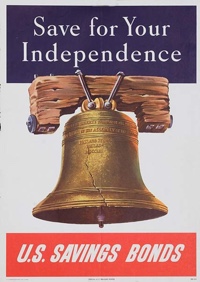
[Image: 1950 Savings Bond poster from US Treasury – source]