 This is a bit of an “inside baseball” topic appealing only to serious DIY investors, but I found this FT article about Vanguard’s unique tax-efficient fund structure quite interesting. Apparently, Vanguard has both a patent and special SEC permission that allows it have have a mutual fund and ETF version of the identical underlying portfolio, just as different share classes. The patent expires in 2023, but the SEC may not give other fund providers the special permission:
Vanguard’s “exchange traded fund-as-a-share-class” structure allows the Pennsylvanian powerhouse to operate a mutual fund and a sister ETF as essentially the same vehicle, generating superior tax efficiency and economies of scale.
As we saw with the Vanguard Target Retirement fund fiasco, if a mutual fund has to sell shares a whole, it can generate a lot of taxable capital gains that get distributed to all individual mutual fund holders even if they didn’t sell themselves. The article explains how ETFs have a different tax structure that allows more separation, and how sharing a portfolio with ETFs benefits Vanguard mutual fund holders.
The arrangement has provided clear tax deferral benefits for investors, however, due to a quirk in US capital gains tax regulations.
When mutual fund investors redeem, the sale of underlying holdings in a “cash” transaction potentially triggers a tax liability for all investors, even those not redeeming.
In contrast, the in-kind transactions that ETFs typically engage in means trading activity occurs outside of the fund so there is no tax “pass-through”.
By bolting together a mutual fund and an ETF, Vanguard is able to siphon securities that have appreciated out of the mutual fund into the ETF and dispose of them via an AP, so the tax liability is not triggered.
“That was the origin of the Vanguard plan. They started this because they had an awful lot of capital gains build up and thought ‘can we not kick it out?’” Pershkow said.
This did make me wonder about the flip side – are ETF investors even a little bit exposed to the mutual fund side? If there was a market crisis severe enough that a huge amount of mutual fund assets were suddenly sold off, might that create a large enough capital gain that the ETFs could not “absorb” it through their structure? Could ETF holders then still be stuck with a shared capital gains distribution?
ETFs and mutual funds now have different expense ratios. Vanguard launched their first index ETF, the Vanguard Total Stock Market ETF (VTI), back in 2001. For many years, Vanguard kept the expense ratio of the (admiral) mutual fund and ETF share classes exactly the same. However, these days there is a slight differential. It seems obvious to me that ETFs are cheaper for Vanguard to manage, and they are trying to avoid the ETF holders having to subsidize the mutual fund holders. A few examples:
- Vanguard Total Stock Market: ETF 0.03% vs. Mutual Fund 0.04%
- Vanguard Total International Stock: ETF 0.07% vs. Mutual Fund 0.11%
- Vanguard Total Bond Market: ETF 0.04% vs. Mutual Fund 0.05%
- Vanguard Total International Bond: ETF 0.07% vs. Mutual Fund 0.11%
Tax-free mutual fund to ETF conversions. This leads back to an actionable reminder. If held at Vanguard, these 18 mutual funds [pdf] can be converted to ETFs in a tax-free conversion and leave you with a lower expense ratio. Unfortunately, I couldn’t find a a way to do this online. You may need to test out Vanguard’s phone customer service.
The PDF covers a few of the pros and cons of mutual funds vs. ETFs.
Each mutual fund and its corresponding ETF carry the same degree of risk because—as 2 share classes of the same fund—they invest in identical portfolios of underlying stocks and bonds. The most noticeable differences are:
– ETFs have much lower investment minimums because you only have to buy 1 share at a time, not meet a $3,000 (or higher) minimum.
– ETFs are priced in real time throughout the trading day, whereas mutual funds are priced once, at the end of the day.
I would also add:
- Buying a mutual fund used to be a lot simpler than buying an ETF if you just wanted to buy a fixed amount like $500 worth, but with many brokerages offering fractional shares, it’s less of an issue now. However, Vanguard itself does not support fractional shares. All things equal, I still enjoy the relative ease of dollar-based purchases of mutual funds at Vanguard.
- When you buy an ETF, you may buy at a premium or discount to net asset value (NAV). In contrast, mutual fund purchases and redemptions are always done exactly at end-of-day NAV. In some cases, the difference may be larger than any expense ratio differences. Of course, the random intraday fluctuations may be greater than the NAV premium/discount as well.
One partial (but more complicated) solution is to occasionally convert your holding ETFs if you accumulate a sizable amount such that the expense ratio difference is significant. But for new purchases, use the mutual fund as long as you can meet the initial minimums. This way, most of your holdings will be the ETFs at the lower expense ratio.
In the end, these are relatively small differences in expense ratio. 0.01% ER difference times $100,000 = $10 a year. You will need to accumulate a sizable portfolio before the values are in the hundreds of dollars per year.
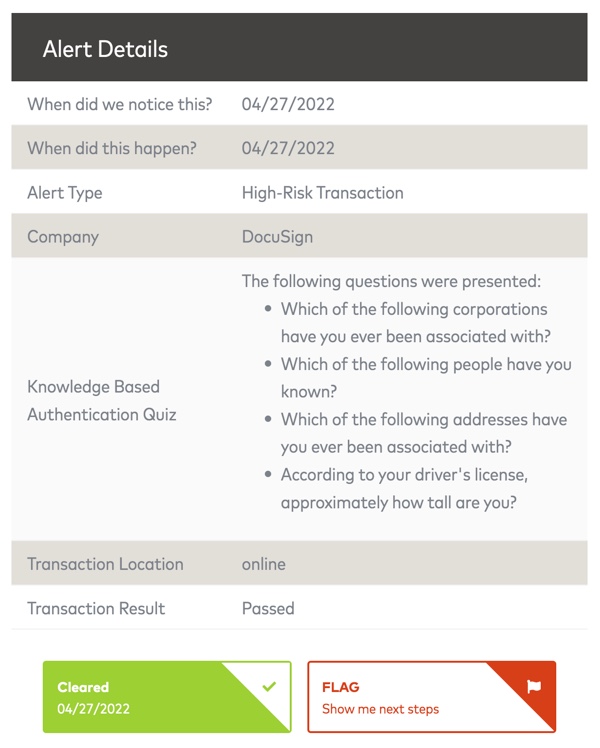
 Data breaches are scary fact of life these days. If you have a Mastercard, did you know that they offer a
  Nothing like a
  Vanguard is based right outside of Philadelphia, so the Philadelphia Inquirer often provides helpful insights on the company. Their new article
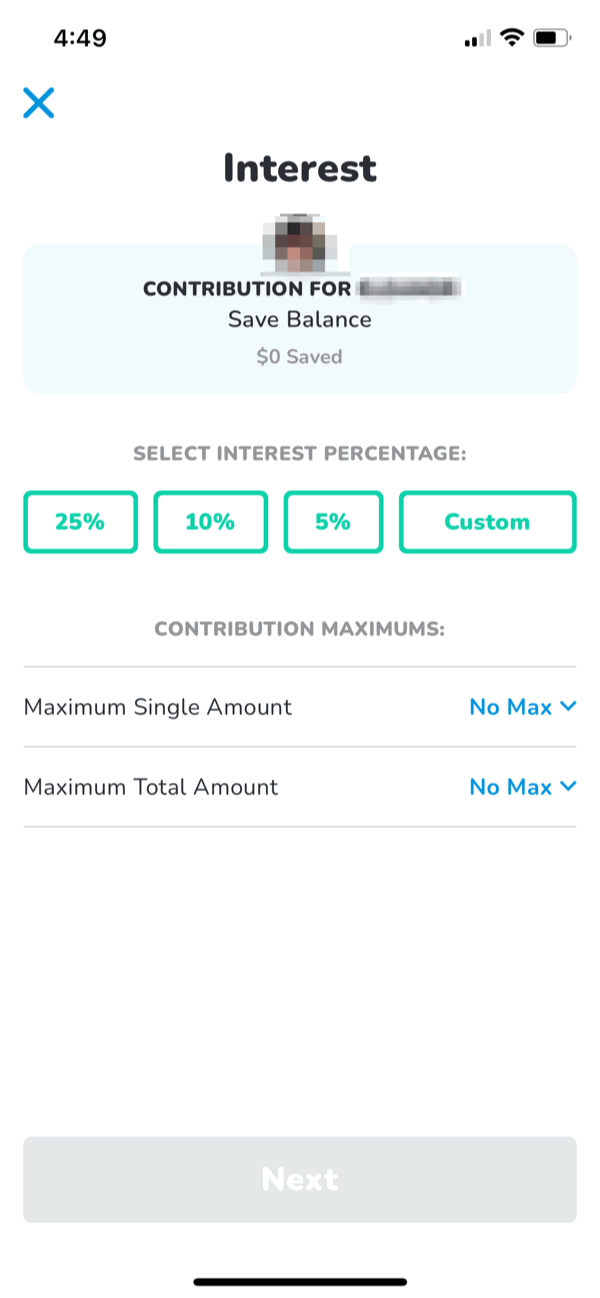
 There are many apps in the “reloadable debit card for kids” category, where parents can transfer money into their account and kids can spend it. However, I have been looking for a better app that can illustrate the power of compound interest and deferred gratification.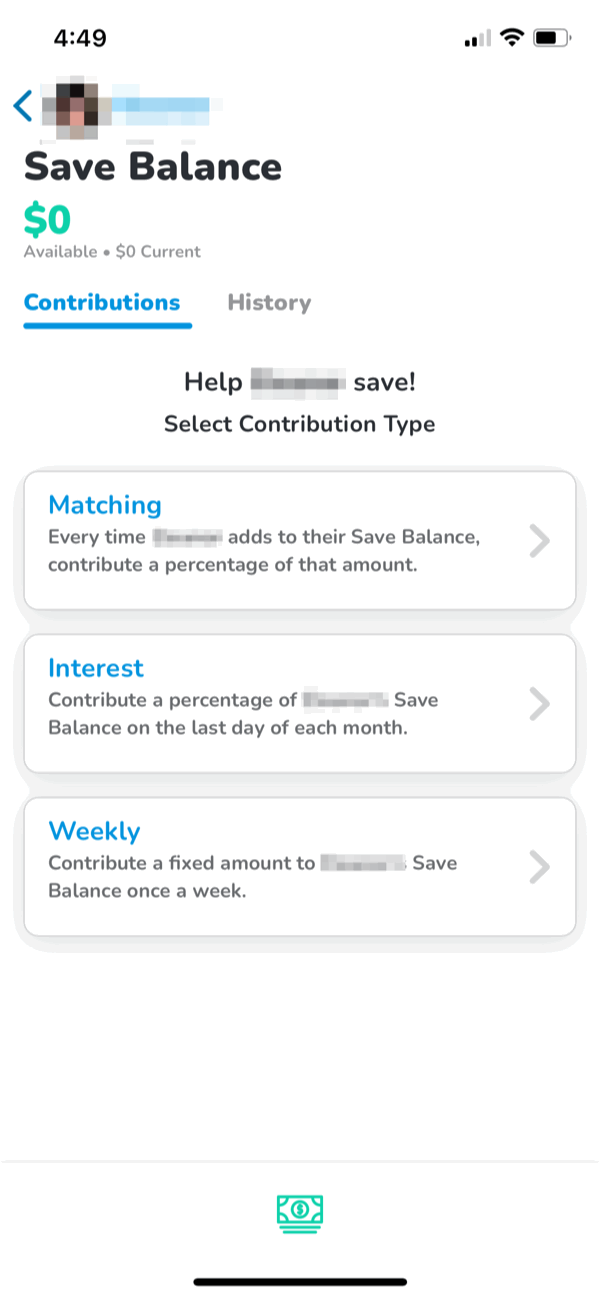



 The 2022 Berkshire Hathaway Annual Shareholder Meeting will be held

 I had to double-check the date when I received the press release for this product to make sure it wasn’t April 1st. 🤯


 Wells Fargo has a $1,500 bonus offer if you open a new business checking account in a physical branch with a
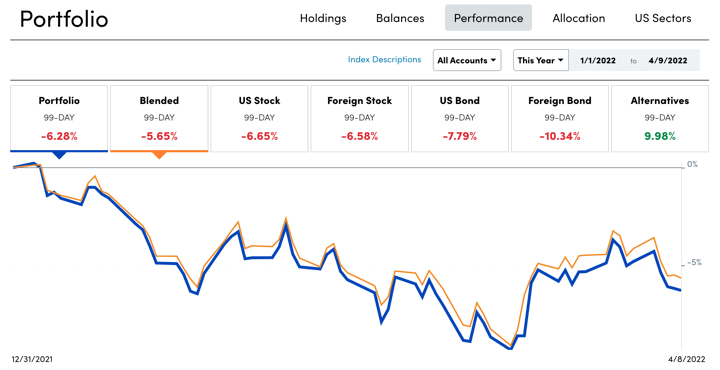
  Here’s my quarterly update on my current investment holdings as of 4/8/22, including our 401k/403b/IRAs and taxable brokerage accounts but excluding a side portfolio of self-directed investments. Following the concept of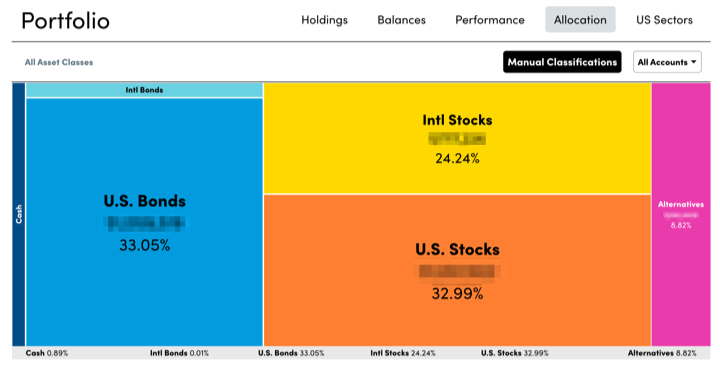
 Here’s my monthly roundup of the best interest rates on cash as of April 2022, roughly sorted from shortest to longest maturities (useful for both cash reserves and as possible bond substitutes). I look for lesser-known opportunities available to individuals while still maintaining FDIC insurance or equivalent. Check out my
  The Best Credit Card Bonus Offers – 2026
 Big List of Free Stocks from Brokerage Apps
 Best Interest Rates on Cash - 2026
 Free Credit Scores x 3 + Free Credit Monitoring
 Best No Fee 0% APR Balance Transfer Offers
 Little-Known Cellular Data Plans That Can Save Big Money
 How To Haggle Your Cable or Direct TV Bill
 Big List of Free Consumer Data Reports (Credit, Rent, Work)