 At every annual shareholder meeting, Berkshire Hathaway publishes an official reading list and sells discounted copies through a local Omaha bookstore called The Bookworm. Both Warren Buffett and Charlie Munger have consistently attributed a significant part of their success to their constant reading:
“I insist on a lot of time being spent, almost every day, to just sit and think. That is very uncommon in American business. I read and think. So I do more reading and thinking, and make less impulse decisions than most people in business. I do it because I like this kind of life.” – Warren Buffett
“In my whole life, I have known no wise people (over a broad subject matter area) who didn’t read all the time—none. Zero. You’d be amazed at how much Warren reads—and how much I read. My children laugh at me. They think I’m a book with a couple of legs sticking out.” – Charlie Munger
Here is the 2019 annual meeting handout. Since they don’t archive these handouts and books are removed each year, I decided to track the changes here. I just bought a used copy of the Lowenstein biography of Warren Buffett and a copy of the Secret Millionaire’s Club (For Kids) from Amazon and the 50th anniversary book direct from Berkshire.
New additions for 2019
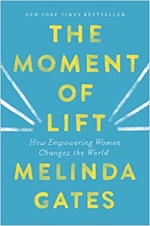 The Moment of Lift: How Empowering Women Changes the World by Melinda Gates. From the Amazon page: For the last twenty years, Melinda Gates has been on a mission to find solutions for people with the most urgent needs, wherever they live. Throughout this journey, one thing has become increasingly clear to her: If you want to lift a society up, you need to stop keeping women down. In this moving and compelling book, Melinda shares lessons she’s learned from the inspiring people she’s met during her work and travels around the world. As she writes in the introduction, “That is why I had to write this book?to share the stories of people who have given focus and urgency to my life. I want all of us to see ways we can lift women up where we live.”
 Letters to Doris – One Woman’s Quest to Help Those with Nowhere Else to Turn. From the Amazon page: The Letters Foundation is a foundation of last resort that provides humanitarian grants to people experiencing a crisis when no other options exist. These one-time grants provide a hand-up to individuals as they work to stabilize their lives. Established by siblings Warren and Doris Buffett, the Letters Foundation reads and replies to letters from individuals living within the United States.
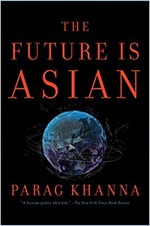 The Future Is Asian: Commerce, Conflict, and Culture in the 21st Century by Parag Khanna. (Charlie’s Pick) From the Amazon page: There is no more important region of the world for us to better understand than Asia – and thus we cannot afford to keep getting Asia so wrong. Asia’s complexity has led to common misdiagnoses: Western thinking on Asia conflates the entire region with China, predicts imminent World War III around every corner, and regularly forecasts debt-driven collapse for the region’s major economies. But in reality, the region is experiencing a confident new wave of growth led by younger societies from India to the Philippines, nationalist leaders have put aside territorial disputes in favor of integration, and today’s infrastructure investments are the platform for the next generation of digital innovation.
 Saudi America: The Truth about Fracking and How It’s Changing the World by Bethany McLean. (Charlie’s Pick) From the Amazon page: Investigative journalist Bethany McLean digs deep into the cycles of boom and bust that have plagued the American oil industry for the past decade, from the financial wizardry and mysterious death of fracking pioneer Aubrey McClendon, to the investors who are questioning the very economics of shale itself. McLean finds that fracking is a business built on attracting ever-more gigantic amounts of capital investment, while promises of huge returns have yet to bear out. Saudi America tells a remarkable story that will persuade you to think about the power of oil in a new way.
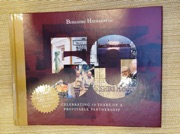 Berkshire 50th Anniversary
- The Berkshire Hathaway 50th Anniversary Celebration Book – You can find this book on eBay for $25 with free shipping. The listing states that this is a direct purchase from Berkshire Hathaway itself.
About Warren Buffett
- Berkshire Beyond Buffett: The Enduring Value of Values by Lawrence Cunningham
- Berkshire Hathaway Letters to Shareholders: 1965-2014, collected by Max Olson. (2018 Kindle version)
- 50 Years of Berkshire Hathaway Poster by Max Olson
- Buffett: The Making of an American Capitalist, Second Edition by Roger Lowenstein
- Buffett’s Bites: The Essential Investor’s Guide to Warren Buffett’s Shareholder Letters by Laura Rittenhouse
- The Essays of Warren Buffett, Lessons for Corporate America, 4th Edition, collected by Lawrence Cunningham
- A Few Lessons for Investors and Managers from Warren E. Buffett by Peter Bevelin
- My Warren Buffett Bible: A Short and Simple Guide to Rational Investing: 284 Quotes from the World’s Most Successful Investor by Robert Bloch
- The Oracle & Omaha: How Warren Buffett and His Hometown Shaped Each Other by Steve Jordan
- Tap Dancing to Work: Warren Buffett on Practically Everything, Carol Loomis
- Warren Buffett on Business: Principles from the Sage of Omaha by Richard Connors
- Warren Buffett’s Ground Rules: Words of Wisdom from the Partnership Letters of the World’s Greatest Investor by Jeremy C. Miller
- Warren Buffett Speaks: Wit and Wisdom from the World’s Greatest Investor, Second Edition, by Janet Lowe
About Charlie Munger
- Charlie Munger: The Complete Investor by Tren Griffin
- Damn Right!: Behind the Scenes with Berkshire Hathaway Billionaire Charlie Munger by Janet Lowe
- Poor Charlie’s Almanack: The Wit and Wisdom of Charles T. Munger, Third Edition, edited by Peter Kaufman
On Investing
- Business Adventures: Twelve Classic Tales from the World of Wall Street by John Brooks
- Common Sense on Mutual Funds – Updated, 10th Anniversary Edition by John Bogle
- The Great Crash: 1929 by John Kenneth Galbraith
- The Intelligent Investor: The Classic Text on Value Investing by Benjamin Graham
- The Intelligent Investor by Benjamin Graham, revised edition by Jason Zweig
- Investing Between the Lines: How to Make Smarter Decisions by Decoding CEO Communications by Laura Rittenhouse
- The Little Book of Common Sense Investing: The Only Way to Guarantee Your Fair Share of Stock Market Returns, 10th Anniversary Edition by John C. Bogle
- The Outsiders: Eight Unconventional CEOs and Their Radically Rational Blueprint for Success by William Thorndike
- Strategic Value Investing: Practical Techniques of Leading Value Investors by Stephen Horan, Robert Johnson and Thomas Robinson
- The Ten Commandments for Business Failure by Donald R. Keough
- Where Are the Customers’ Yachts? Or a Good Hard Look at Wall Street by Fred Schwed, Jr.
General Interest
- All I Want to Know is Where I’m Going to Die so I’ll Never go There: Buffett and Munger: A Study in Simplicity and Uncommon, Common Sense by Peter Bevelin
- Dear Chairman: Boardroom Battles and the Rise of Shareholder Activism by Jeff Gramm
- Dream Big by Cris Correa
- Forty Chances: Finding Hope in a Hungry World by Howard G. Buffett
- Getting There: A Book of Mentors by Gillian Zoe Segal
- Giving It All Away: The Doris Buffett Story by Michael Zitz
- Influence: The Psychology of Persuasion by Robert Cialdini
- Life Is What You Make It: Find Your Own Path to Fulfillment by Peter Buffett
- Limping on Water: My 40-year Adventure with One of America’s Outstanding Communications Companies by Phil Beuth
- The Oracle’s Fables: Life Lessons for Children Inspired by the Oracle of Omaha by John Prescott
- Our 50-State Border Crisis: How the Mexican Border Fuels the Drug Epidemic Across America by Howard Buffett
- Personal History by Katharine Graham
- Pre-Suasion: A Revolutionary Way to Influence and Persuade by Robert Cialdini
- Seeking Wisdom: From Darwin to Munger by Peter Bevelin
- Shoe Dog: A Memoir by the Creator of Nike by Phil Knight
- The Warren Buffett Shareholder: Stories from Inside the Berkshire Hathaway Annual Meeting edited by Lawrence Cunningham and Stephanie Cuba
Books from past lists, likely removed due to space constraints.
- The Real Warren Buffett: Managing Capital, Leading People by James O’Loughlin
- Of Permanent Value: The Story of Warren Buffett by Andrew Kilpatrick
- Warren Buffett: An Illustrated Biography of the World’s Most Successful Investor by Ayano Morio
- The Warren Buffett Way, Third Edition, by Robert G. Hagstrom
- Clash of the Cultures: Investment vs. Speculation by John Bogle
- The Go-Go Years: The Drama and Crashing Finale of Wall Street’s Bullish 60s by John Brooks
- Once in Golconda: A True Drama of Wall Street 1920-1938 by John Brooks
- The End of Alchemy: Money, Banking, and the Future of the Global Economy by Mervyn King
- Foods You Will Enjoy: The Story of Buffett`s Store by Bill Buffett
- Habit of Labor – Lessons from a Life of Struggle and Success by Stef Wertheimer
- The Women of Berkshire Hathaway: Lessons from Warren Buffett’s Female CEOs and Directors by Karen Linder
- The Secret Millionaires Club (For Kids): Warren Buffett’s 26 Secrets to Success in the Business of Life by Andy & Amy Heyward
Here are my own posts related to the books listed above:
- Warren Buffett’s Ground Rules: Do-It-Yourself Investing Guidelines
- Warren Buffett’s Ground Rules: Shared Concepts with Low-Cost Index Funds
- Charlie Munger: The Complete Investor Book Notes
- Damn Right! Biography of Charlie Munger Book Notes
- Poor Charlie’s Almanack: Wisdom of Charlie Munger – Book Review
- Shoe Dog by Nike Founder Phil Knight: A Great Audiobook
 The most depressing thing I read today was
 Here’s my monthly roundup of the best interest rates on cash for June 2019, roughly sorted from shortest to longest maturities. Things are pretty dull this month – mostly small rate drops on CDs due to the inverted yield curve. Check out my
  The Barclaycard Arrival Plus World Elite MasterCard® is a travel rewards card that has just increased their sign-up bonus to 70,000 points (worth $700 towards any travel), and the annual fee is also waived for the first year ($89 annual fee after that). This is the highest total incentive ever for this card. Here are the highlights:
 The
The 
 The Best Credit Card Bonus Offers – 2026
 Big List of Free Stocks from Brokerage Apps
 Best Interest Rates on Cash - 2026
 Free Credit Scores x 3 + Free Credit Monitoring
 Best No Fee 0% APR Balance Transfer Offers
 Little-Known Cellular Data Plans That Can Save Big Money
 How To Haggle Your Cable or Direct TV Bill
 Big List of Free Consumer Data Reports (Credit, Rent, Work)