 I recently read (and re-read) a post at Philosophical Economics titled Diversification, Adaptation, and Stock Market Valuation, which serves both as an educational resource and an interesting argument for a new shift in stock investing. It’s rather lengthy and not written for novices, but it doesn’t require a finance or math degree either. I recommend reading it in full, but here are my notes.
#1 Diversification is good. Buying a single stock exposes you to the risk of your investment going to zero. Lots of companies have gone to zero. For a long-time, most people either bought individual stocks or bought funds that owned a limited number of individuals stocks. High risk leads to lower valuations and thus higher expected returns.
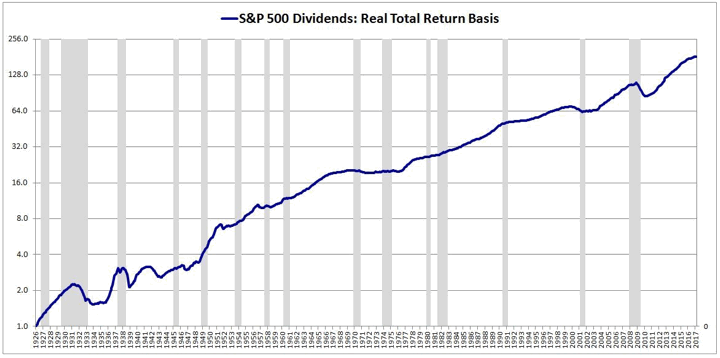
Buying a diversified basket of stocks provides good returns with greatly minimized risk of permanent capital loss. Here’s the dividend history of the S&P 500 from 1926-2016, adjusted for inflation:
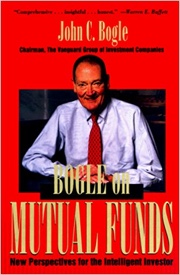
#2 People are realizing that diversification is good. When Jack Bogle published Bogle on Mutual Funds in 1993, Vanguard was considered a big success after reaching $100 billion in assets. (I recently bought a first edition for my collection.) Today, Vanguard manages over $4 trillion in assets. Yes, 40 times as much.
In 2000, under 10% of asset were in index funds. Today, roughly 25% of the US stock market is now held in index funds with no signs of retreat. Nearly everyone has the ability to buy a basket of 500 to 3,000 stocks for just $5 a year per $10,000 invested.

#3 We are also seeing higher average equity valuations. Correlation or causation? If everyone starts to agree that low-cost index funds (and “closet” index funds) makes investing less risky, then shouldn’t lower expected risk lead to higher valuations, and thus lower future expected returns? It won’t be a straight line, but it could be a powerful overall trend.
A couple of excerpts:
My argument here is that the ability to broadly diversify equity exposure in a cost-effective manner reduces the excess return that equities need to offer in order to be competitive with safer asset classes. In markets where such diversification is a ready option–for example, through low-cost indexing–valuations deserve to go higher. But that doesn’t mean that they actually will go higher.
To summarize: over time, markets have developed an improved understanding of the nature of long-term equity returns. They’ve evolved increasingly efficient mechanisms and methodologies through which to manage the inherent risks in equities. These improvements provide a basis for average equity valuations to increase, which is something that has clearly been happening.
Definitely food for thought.

 People always argue about how “efficient” the market truly is. Only academic, ivory-tower geeks believe in efficient markets right? My longstanding opinion is that no, markets are not 100% efficient, but it’s a tough, cutthroat world out there. Especially over the long run. Here’s yet another reminder to put in the anecdote folder.
 Barron’s has released their


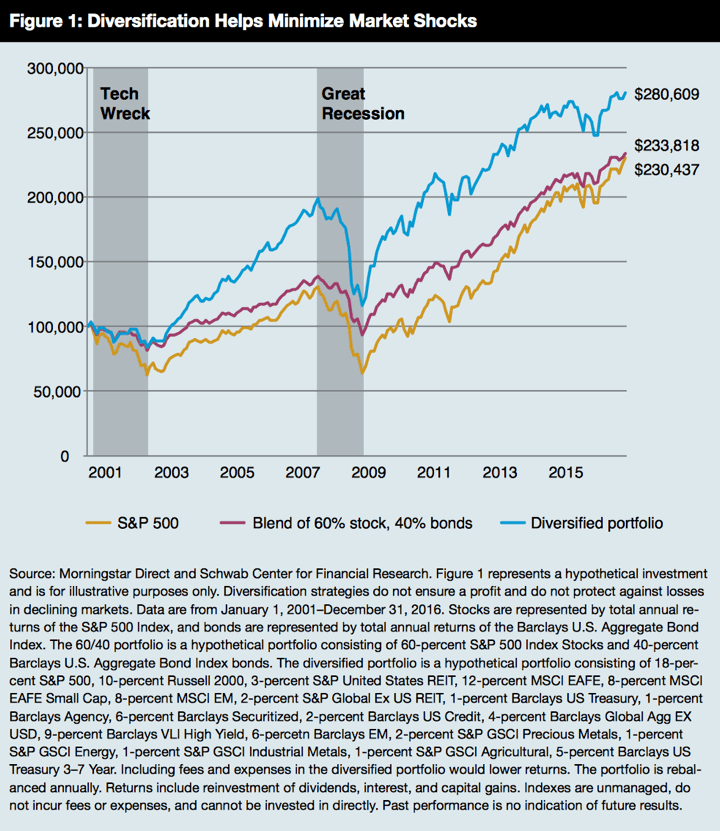
 We’ve all been told that past performance is no guarantee of future returns, but it’s still hard to buy an investment that has been performing poorly. We need to remember the historical power of diversification and that even though something may look horrible now, good news may be just around the corner.
 If you have an older Mac OS or iOS device, it may be nice to know that Apple has made their
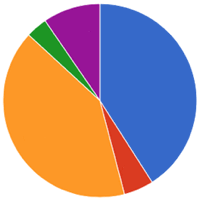

 Updated. Automated portfolio management services like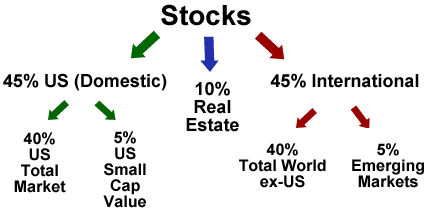
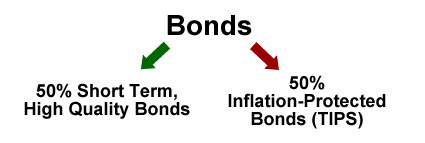
 Savings I Bonds are a low-risk investment backed by the US Treasury that pay out a variable interest rate linked to inflation. You could own them as a replacement for cash reserves (they are liquid after 12 months) or bonds in your portfolio. New inflation numbers were just announced at
  The Best Credit Card Bonus Offers – 2026
 Big List of Free Stocks from Brokerage Apps
 Best Interest Rates on Cash - 2026
 Free Credit Scores x 3 + Free Credit Monitoring
 Best No Fee 0% APR Balance Transfer Offers
 Little-Known Cellular Data Plans That Can Save Big Money
 How To Haggle Your Cable or Direct TV Bill
 Big List of Free Consumer Data Reports (Credit, Rent, Work)