Archives for November 2022

The Best Health Savings Accounts (HSA) Providers: Fidelity and Lively/Schwab

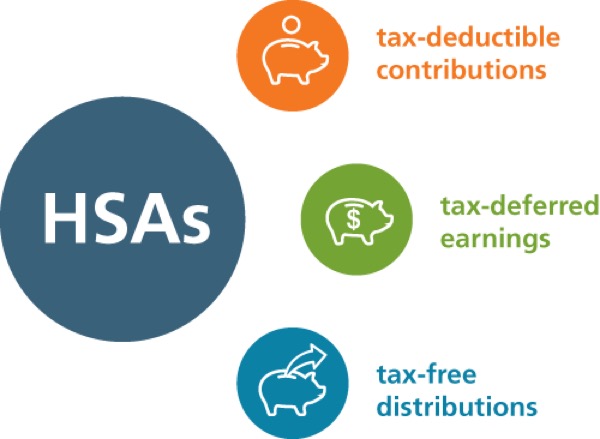
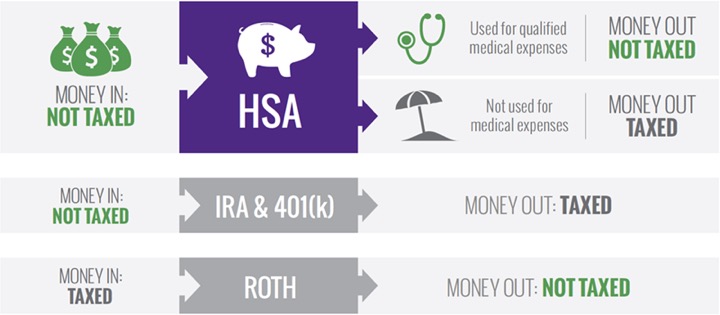
Updated for 2022. It’s open enrollment season, and there is better than a 50/50 chance that you will enroll in a high-deductible health plan. That means that you are also eligible to contribute to a Health Savings Account (HSA), which has triple-tax-free benefits: tax-deductible contributions, tax-free earnings growth, and tax-free withdrawals when used for qualified medical expenses (image source). This makes them better than even Traditional and Roth IRAs (image source).
Are you an HSA spender or HSA investor? As a spender, you contribute to the HSA, grab the tax-deduction, and then treat it like a piggy bank and spend it down whenever you have a qualified healthcare expense. You don’t have that annoying “use-it-or-lose-it” feature of Flexible Spending Accounts (FSA), and most offer FDIC insurance on your cash.

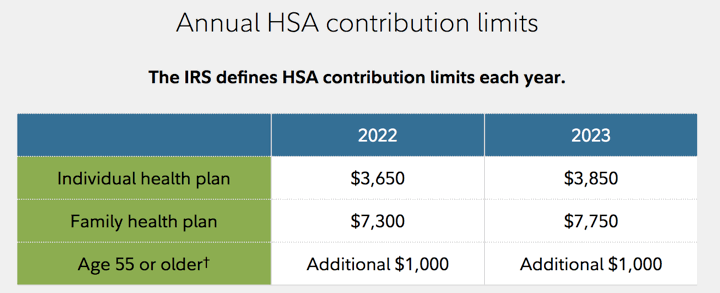
As an investor, you are trying to maximize the tax benefits of HSAs by contributing as much as possible, investing in growth assets like stocks, and then avoiding withdrawals until retirement. If you have the financial means, you would max out the contribution limits ($3,850 for individual and $7,300 for family coverage in 2022, slightly more if age 55+) and then pay for your healthcare expenses out-of-pocket instead of withdrawing from the HSA. You should keep a “forever” digital PDF copy of all your healthcare expenses. Technically, you can still withdraw the amounts of all those expenses tax-free at any time in the future, even decades later.
You can pick your own HSA provider, and some are much worse than others! Morningstar has updated their 2022 Health Savings Account landscape report (e-mail required). After reading through the entire thing, my take is that you really only need to consider the two best HSA plans: Fidelity HSA and Lively HSA.

Similar to IRAs, you don’t need to use the default provider that your employer recommends. As long as you are covered by an HSA-eligible health plan on the first of the month, you can open an account with any provider. From the Lively site:

My health insurance or employer is offering an HSA. Do I need to go with the option they provide?

No. Because an HSA is an individual account, you are free to choose whichever HSA provider you want to work with (e.g., Lively).

Source: “Publication 969 (2018), Health Savings Accounts and Other Tax-Favored Health Plans.”

In addition, you can transfer the balance in an existing HSA to another HSA provider at any time, even if no longer covered by an HSA-eligible health plan.

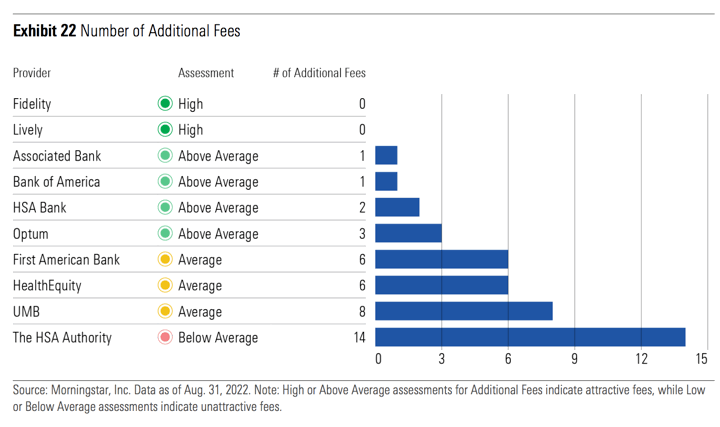
Fidelity and Lively HSA for spenders. Both have the least fees and a safe place for your cash. Others HSAs have maintenance fees, minimum balance requirements, and more “annoyance” fees.

  • No minimum balances.
  • No maintenance fees.
  • No paper statement fees.
  • No account closing fee.
  • FDIC-insured cash balances.

Fidelity offers the best potential interest rate on cash via the Fidelity® Government Cash Reserves money market fund (FDRXX) as a core position, which currently pays more than their FDIC cash sweep option. Note that this money market fund is very conservative but is not FDIC-insured.

Fidelity and Lively HSA for investors. Both feature a low-cost way to invest your contributions for long-term growth:

  • No minimum balance required in spending account in order to invest.
  • Offers access to all core asset classes.
  • Offers free self-directed access to ETFs, individual stocks, bonds, and mutual funds.
  • Offers “guided portfolios” for automated investing.

Fidelity quietly offers the institutional shares of their Fidelity Freedom Index “target date” mutual fund line-up with a very low expense ratio of ~0.08%. It’s a bit confusing as you must choose the self-directed “Fidelity HSA” option to access this auto-pilot fund. The self-directed option has no annual fee and also includes access to ETFs, individual stocks, bonds, and mutual funds. Be aware that the Fidelity HSA sign-up page may try to steer you towards the different “Fidelity Go HSA” for guided investing, but that robo-advisor charges an annual advisory fee of 0.35% per year for balances of $25,000 and above (no advisory fee while your balance is under $25,000).

Lively also has similar “guided portfolio” robo-advisor option that charges a 0.50% annual advisory fee. Morningstar dinged Lively for this, but Lively also offers a self-directed brokerage window with Schwab. That means you can invest in any ETF with zero commissions at Schwab including building your own DIY portfolio using index ETFs, mutual funds, individuals stocks, or individual bonds. (Previously TD Ameritrade, but Schwab bought TD Ameritrade.) The Schwab brokerage option has no annual fee with a $3,000 minimum balance, otherwise if you are under $3,000 it costs $24 a year. If you already have your own financial advisor connected to Schwab, you can allow them to manage your HSA as well.

A simple Vanguard ETF portfolio might be 50% US Stocks (VTI), 30% International Stocks (VXUS), 20% US Bonds (BND). The total weighted expense ratio of such a portfolio would be less than 0.05% annually and fully customizable for the DIY investor. Both accounts can cost basically nothing above the expense ratio of the cheapest ETFs you can find – you really can’t ask for more than that!

Fidelity and Lively have the least amount of extra and/or hidden fees:
How do Fidelity and Lively make money then? Your employer has to pay a fee to HSA providers. It’s still much cheaper for them than your old full-price health insurance premium, of course.

Bottom line. Both Fidelity HSA and Lively HSA are excellent options for your Health Savings Account funds. If you want auto-pilot investing, the cheapest option is the Fidelity Freedom Index Institutional shares. Alternatively, Lively is an independent HSA provider with a modern feel and a good history of customer-friendly fee practices and service. DIY investors can use the Lively/Schwab brokerage window to invest in a mix of Vanguard or other index ETFs.

(Disclosures: I am not an affiliate of Fidelity, although I would if they had such a program. I am an affiliate of Lively and may receive a commission if you open an account through my link. Thanks for your support of this site.)

Giving Tuesday 2022: Matching Donations and Finding the Right Charity

givingtuesdayTuesday, November 29th is Giving Tuesday 2022, an international day about giving support through charities and nonprofits by donating money or volunteering your time. In case you aren’t inundated with mailings already, this time of year is a big deal for charities, with 40% of donations occurring in the last six weeks of the year. Here are some ways you can “double your impact” with a matching donation.

Facebook/Meta Match. Facebook has again committed $7 million towards matching donations, but they have changed up their criteria this year. The match is only good for a recurring donation. You must sign up for a recurring donation at a charity via their Facebook page between November 15, 2022 and December 31, 2022. Then, after you make your second donation, Meta will match it up to $100.

Double Up Drive (delayed until 12/6/22). Check out the vetted, spotlighted charities at Double Up Drive where your donation up to $10,000 can be matched dollar-for-dollar:

At Double Up Drive, we believe that public giving influences greater generosity and that resulting donations carry more impact. We raise money and awareness for highly effective charities by hosting matching drives that collect up-front pledges from large donors, to provide 1:1 matches for smaller contributors.

Note that this year the drive has been delayed until Tuesday, December 6th:

Due to an unexpected last-minute and critical bug, we have decided to delay our 2022 Match Drive until Tuesday the 6th of December.

Check for an employer match. Try this lookup tool from DoubleTheDonation. Most of these programs don’t require you to actually give on a specific day, but you may want to start the process today so you don’t forget in the holiday rush.

Individual charities. Many charities are organizing their own matching program for #GivingTuesday. Here are some large charities have organized their own matches in the past, but I would check to make sure.

* Side note: If you are an economics geek, check out this paper on how Feeding America used markets to allocate donated food:

Feeding America allocates about 300 million pounds of food a year to over two hundred food banks across the United States. It does so in an unusual way: in 2005, it switched from a centralized queuing system, where food banks would wait their turn, to a market-based mechanism where they bid daily on truckloads of food using a “fake” currency called shares.

Of course, this is a great time to check in with your favorite local community nonprofits. GivingTuesday.org has some additional ideas.

Having trouble deciding where to give? Here are some charity comparison sites that will help you pick where to send your help.

  • CharityNavigator – Largest and well-publicized charity rating site, provides a 4-star rating based primarily on financial criteria.
  • GiveWell – Tries to identify the best charities, not rate them all. Focused primarily on charities working internationally that “save or improve lives the most per dollar”. Examples are treating malaria and parasitic infections in developing countries.
  • GreatNonProfits – Allows clients, volunteers, and funders to post personal reviews based on their experiences. Lots of reviews of smaller, local charities.
  • GuideStar – Tries to be a one-stop shop for both financial data and in-depth analysis of charities. Must register (free) to see a lot of things, and pay a subscription fee for premium data (aimed at industry insiders).

Looking to volunteer your time? Check out Feeding America and VolunteerMatch to find a volunteer opportunity near you.

Amazon Black Friday / Cyber Monday 2022: Free Amazon Credit Promos

Hope you had a nice Thanksgiving weekend! Enjoyed a little break before the holiday chaos begins. Here are a few low-hanging fruit that caught my eye as I jump back in. Must visit on website to see links.

All Cyber Week gift card deals (scroll down)

Get up to $15 in Amazon promo credit with select gift card purchases. Examples:

  • $100 Apple Gift Card, get $15 Amazon credit
  • $100 Apple eGift Card, get $15 Amazon credit
  • $100 Nordstrom eGift Card, get $15 Amazon credit
  • $50 Gap / Old Navy / Banana Republic eGift Card, get $11 Amazon credit
  • $50 Dominos Pizza eGift Card, get $10 Amazon credit

Get $10 Amazon credit when you made Discover your default payment method. This is a separate offer from the “shop with points” promo below.

Get $15 off $15+ order when you pay with a Citi credit card (targeted). Try using the promo code CITI2022 and/or 22CITI10 and check out with a Citi credit card even if it says you’re ineligible.

Shop with points (check again if targeted). I’ve gotten hundreds of dollars in easy savings with these Amazon Pay-with-Points promotions. Whenever something I buy regularly is “Shipped and Sold by Amazon.com”, I take note to use with this promo.

Side deal: $50 off a $500 Southwest Airlines gift cards (10% off) at Costco.

Discount Magazines Black Friday Sale 2022

The annual DiscountMags.com Black Friday Sale is one of the few times where they post their lowest prices for the year. The Black Friday sale actually lasts through Monday 12/5, but the Cyber Monday Bulk Sale only lasts through Wednesday 11/30.

This is time of year that I either order some gifts or just lock-in cheap pricing for multiple years. Maybe I’m just old, but I still enjoy the curation and physical nature of magazines. (My daughter enjoys NatGeo Kids as well.) Many issues cost barely more than a stamp. Here are some examples:

  • Consumer Reports $15.99/year ($1.23/issue)
  • Forbes $4.89/year ($0.61/issue)
  • The Economist Print & Digital $74.99/year ($1.47/issue)
  • The Economist Digital Only $57.99/year ($1.14/issue)
  • Outside $4.99/year ($0.83/issue)
  • Bon Appetit: $4.99/year ($0.50/issue)
  • National Geographic Kids $15.95/year ($1.59/issue)
  • Food Network $6.49/year ($0.81/issue)
  • Car and Driver $6.99 for 2 years ($0.35/issue)

Importantly, DiscountMags does NOT require auto-renewal, where they charge your credit card automatically at the end of the subscription period at the full regular (higher) price. Watch out for this “feature” elsewhere! This mean you never have to call in to cancel, and makes it easier to shop for another deal later. They do have an optional “Subscription Lock” feature where they will auto-renew ONLY if the price is the same again. Otherwise, it will not auto-renew.

Many magazines are now available digitally through your local library system, but I still prefer the physical magazine format.

Amazon App: Spin & Win Instant Win Game

Amazon is running a “Spin & Win” Instant Win game (link available online) that only works on the Amazon app and gives you the chance to win a $5-$20 Amazon credit. You can spin once a day through Monday 11/28/22.. I usually don’t care for sweepstakes-style contests, but this seems simple enough.

NO PURCHASE NECESSARY. Open only to legal U.S. residents of the fifty (50) United States and D.C who are 18 years of age or older with a free Amazon account. Promotion begins on or about 11/21/22 at 12:01 a.m. PT and ends on 11/28/22 at 11:59 p.m. PT. Promotion consists of 8 daily instant win entry periods and 8 daily sweepstakes drawings. By participating, you agree to receive marketing and promotional materials from Amazon. See Official Rules for complete details, including additional eligibility restrictions, limits, entry periods, odds, prize descriptions/restrictions/ARVs. Sponsor: Amazon.com Services LLC.

Reader Question: Higher Interest Rates on Cash Without Internet Access or Cell Phone?

Here’s a reader question that I found interesting regarding “low-tech” retirees:
Hi – my 82 year-old father-in-law does not own a cell phone or a computer. He has very little “visibility” on the internet because he was a self-employed craftsman for the last 40 years. But he has money to invest, and it is sitting in a near-zero savings account. For the reasons listed above, he cannot qualify for any of the high-yield savings accounts that are out there. Their methods of identifying customers require a cell phone and some kind of documentable internet presence. Maybe he is an extreme example, but I am guessing there are others in similar situations. Any thoughts on how such a person can obtain a higher yield? Thanks.

I am empathetic to this problem as I am frequently helping older relatives navigate modern life without internet access. I’m also a fan of low-tech as a backup form of resilience and emergency preparedness. What would happen if the power went down for an extended period? What would happen if you passed away suddenly and nobody could figure out your passwords?

This question specifically addresses low interest rates on cash. It is not an accident that NONE of the three biggest banks by branch size (Bank of America, Chase, and Wells Fargo) offer a decent interest rate on their basic checking and savings accounts. (Even Citibank only offers their high-yield Accelerate savings account in states where they have no physical branches.) If they made it easy to sign up for a “high-yield savings account”, they would lose many millions in profit as all the offline folks would happily switch over their deposits earning 0.01% APY. My 94yo great-aunt will dilute her dish soap until it comes back on sale at the local grocery store. You can bet she would walk right into her local branch to sign up for a savings account paying 3% APY instead of 0.02% APY!

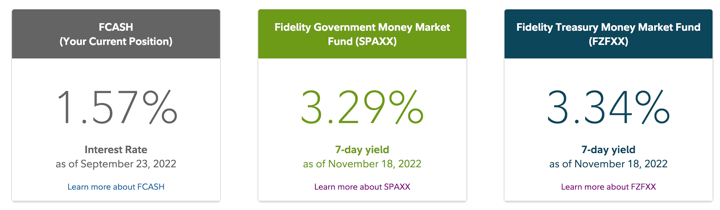
My first thought is that I would open an account with Fidelity Investments, as they have solid history as a traditional broker with a fully-staffed customer service phone line. Fidelity would still run just fine if there was only snail-mail envelopes and rotary phones. This Fidelity Core Positions page is a handy bookmark to see the current interest rates (screenshot below taken 11/18/2022) on the various options for your core position (default for uninvested cash). As you can see, the rates are quite competitive with online banks. Money market funds are not FDIC-insured, but they are very close (and even closer after recent regulations). I personally don’t lose a bit of sleep on my Fidelity money market funds and I also snail mail them large checks every year for my Solo 401k plan.

In addition, Fidelity has a decent branch network (“Investor Centers”) at major metro areas nationwide. Finally, Fidelity offers a solid inventory for brokered CDs and access to Treasury bills and bonds if you were willing to lock up your money for a higher rate.

Why don’t I include Vanguard? While Vanguard money market funds are excellent and usually pay even higher interest rates than Fidelity money market funds, I have heard far too many customer complaints about hour-long hold times for phone customer service. Vanguard also does not have a physical branch network. I try my best to only use Vanguard for simple index fund transactions and nothing complicated. Meanwhile, TD Ameritrade and Schwab do have some money market options and physical branches, but you must make every transaction manually while the default is a sad cash sweep program paying less than 0.50% APY. This is why I’d pick Fidelity over the others. (No, Fidelity did not pay me to say any of this. Unfortunately…)

Another option would be a local credit union that is looking for loan growth (which requires deposit growth) and thus is offering high interest rates. You would want to find one that has a physical branch in your area, and the best resource for this is DepositAccounts.com which allows you to search by zip code. Make sure to uncheck the “Web Only” box and check the “Local Branches” box.

This will hopefully let you find a physical branch nearby that will offer a decent rate. Oftentimes, the good rates only show up in certificates of deposit (which allow them to match maturities) but you could simply ladder even 1-year CDs over time to maintain a solid rate with decent liquidity. Many of the military-affiliated credit unions have a larger branch network and a history of competitive products, and some of them can be joined without military status. Good luck and thanks for helping others!

Stockholm Banco vs. FTX: Creating Money From Nothing in 1661 vs. 2022

As with the rest of the finance world, I’ve been following the collapse of FTX and Sam Bankman-Fried (SBF). There are many explainers (Matt Levine is my fav, but paywall?), while new details keep emerging. Crypto the newborn currency is growing up and finding out the hard way why traditional finance has all the rules it has. Central bank? FDIC insurance? Independently-audited financials? A board of directors? Not being allowed to buy personal houses with company money and having other expenses approved with emojis? 💸 From the most recent bankruptcy filing and written by the new FTX CEO of less than a week:

Never in my career have I seen such a complete failure of corporate controls and such a complete absence of trustworthy financial information as occurred here. From compromised systems integrity and faulty regulatory oversight abroad, to the concentration of control in the hands of a very small group of inexperienced, unsophisticated and potentially compromised individuals, this situation is unprecedented.

As a fitting follow-up to the idea of timeless financial wisdom, Doomberg (also paywall) brings us historical perspective from Stockholm Banco, which in 1661 was the first European bank to print banknotes. I found this detailed history of Stockholm Banco [pdf] on the website of Sveriges Riksbank. A single person was granted great and unsupervised power to effectively create unlimited currency. What could go wrong?

In 1656, Johan Palmstruch was finally granted the country’s first bank charter by the King of Sweden after multiple rejections. (His proposal only succeeded after he promised half the profits to the Crown.) At the time, people had to use cumbersome copper and silver currency (see above) that fluctuated in value based on industrial demand for those metals. The slab of copper above was “10 dalers” and the size of two sheets of letter paper and weighed 43 pounds!

It was the inconvenience of copper plate money that the exchange bank would remedy. Institutions and the general public could deposit their plate money in the bank in exchange for a receipt, which could then be used in transactions with other parties. This was a great relief for commerce. In the bank charter, Karl X Gustav emphasised ‘the good convenience our subjects thereby obtain, that in this way they are rid of much subtraction and addition, hauling and dragging and other trouble that the copper coin entails in its handling’. The weighty plates boded well for the success of the exchange bank.

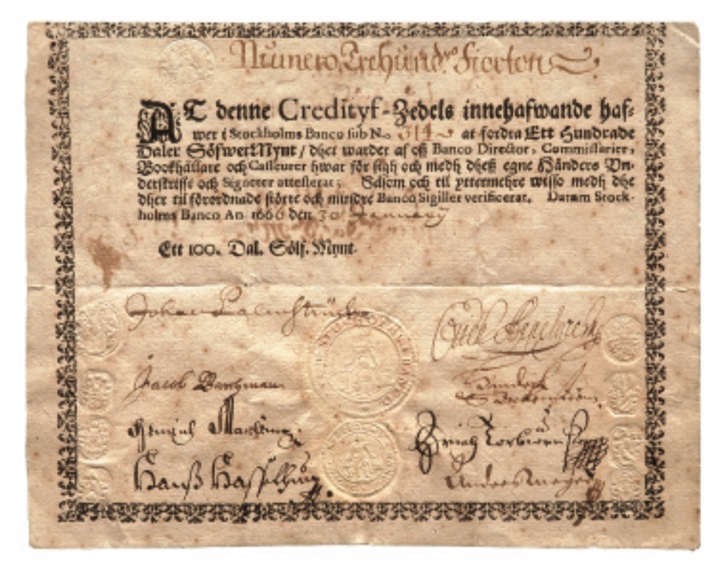
A simple piece of paper could now represent any amount of dalers (100 daler note below):

The charter allowed the creation of an exchange bank. People could deposit their slabs of copper and silver at the bank, and instead receive a paper note promising that it could be redeemed back again at any time. Convenient! The charter also allowed the creation of a loan bank. The bank lent out money, and charged interest. The exchange bank and the loan bank were supposed to be separate. But look at all those pretty deposits just sitting there!

The charters treated the exchange bank and the loan bank as separate entities but this was not observed in practice. Although the exchange bank was no more than a depository for its clients’ money, which could be withdrawn without notice, the Bank started to lend its holdings. This state of affairs continued until 1664.

Soon the deposits were all lent out. But people still wanted loans! There was money to be made! If only there was a way to keep the whole things spinning…

Palmstruch found a solution. According to Erik Appelgren, a bank commissioner, ‘Not long afterwards, credit notes became a supplement invented by Herr Director for the shortage of money’. The bank would issue notes declaring that the holder had a claim on Stockholms Banco for a specified sum of money; the Bank would redeem the notes in exchange for cash. […]

This was a novelty in European banking. Earlier attempts to introduce notes had invariably tied them to deposits. Such certificates of deposit could be transferred as a token of value to business associates, who in turn could pass them on in the same way. In contrast, Palmstruch’s notes were not backed by particular deposits; instead, they relied on public confidence that the Bank would redeem them on demand. The system relied on the Bank’s credibility.

Success! Print as much money as you want! Expansion! Even the Crown and other high-ranking officials borrowed money.

Thanks to the credit notes, lending by the Bank ceased to be dependent on deposits. Loans could be provided for as much as the Bank was prepared to issue notes. After a tentative start, the flood gates were opened during 1663. The Crown borrowed 500,000 d km, Chancellor De la Gardie took a total of 255,000 d km for himself, the tar company borrowed 200,000 d km. More and more loans were unsecured. The business flourished; branches were opened in Abo, Falun and Goteborg; in Skane (ceded to Sweden by Denmark in 1658) the three upper Estates requested a separate branch in either Malmo or Landskrona.

What if… something spooked the customers… and people actually wanted all their deposits back?

However, reality soon caught up. On 12 September 1663, Joachim Schuttehielm, a bank secretary, reported to Palmstruch, who was away in Vasteras, that so much money had been withdrawn that the Bank had less than 4,000 d km in ready cash. To make matters worse, a depositor had announced that he wished to withdraw 10,000 d km. Schuttehielm asked Palmstruch to send money as soon as he could but the Director had nothing to send.

The bank collapsed after only six years. During the cleanup, audits revealed tons of missing money. Palmstruch was sentenced first to execution (later reduced to jail), and died only a year after his eventual release.

The Court of Appeal was not impressed. On 22 July 1668 Palmstruch was dismissed as director and sentenced to the loss of his privileges. He was banished for life and ordered to compensate within six months for ‘all the deficiency and shortage in the Bank that can demonstrably be proven’. If he failed to pay what he owed, he would be executed.

Let’s compare to the current FTX situation. Started out with a simple idea and got out of control very fast. FTX is less than 4 years old. Everyone was easily distracted by getting rich, all greased by the political donations and naming rights that spread the money around and the “effective altruism” that the media loved. The power to create unlimited currency for a while – FTX claimed billions of SRM and FTT tokens as assets – essentially things that FTX made out of thin air and knew it. Eventually, the desperate loaning out (aka stealing) of $10 billion in customer deposits to help themselves out of a jam. The panicked discovery. The coming criminal proceedings.

Individual investors are again reminded why FDIC and NCUA insurance exists – counterparty risk is real. It doesn’t matter what you own if you let the wrong place hold it for you.

Frontier Airlines Go Wild Pass: $599 for 12 Months of Unlimited Flights

Update: $599 sale ends at 11:59 PM Mountain Time on November 18, 2022. International destinations also added to offer.

Frontier has discounted their Go Wild Pass to only $599 for a limited time for the first year. Retail and Renewal Price is $1,999/yr. You can only get a confirmed seat the day before any given flight, which makes roundtrips possibly tricky. (Isn’t this similar to how standby for airline employees works?) Doesn’t start until May 2023. The details:

  • Flights must be booked at flyfrontier.com
  • Flights will be available to book and fly starting May 2, 2023
  • Flights can be booked and confirmed the day before flight departure for domestic travel and starting 10 days before flight departure for international travel
  • Flights are subject to blackout periods:
    2023: May 25, 26, 29; June 29, 30; July 1-5, 8, 9; August 31; September 1, 4; October 5, 6, 9; November 18, 22, 24-27; December 16, 17, 22-24, 26-31;
    2024: January 1, 15; February 15, 16, 19; March 3, 10, 15-17, 22-24, 29-31; April 5-7, 12-14. Blackout dates for May 2024 and beyond will be posted in advance of accepting any enrollments for pass periods which cover those dates.
  • Flights do not include any add-on products (like bags or seats), you can still customize your travel
  • Taxes, fees, and charges apply at the time of booking. (Current government and airport taxes, fees and charges start at approximately $14.60 per person, per flight.)
  • A fare of $0.01 will be charged for each segment booked
  • Flights and seats are subject to availability; last seat availability is not guaranteed
  • Travel not eligible to earn miles or status
  • Travel qualifies as activity and will extend your FRONTIER Miles expiration
  • The GoWild! Pass is non-transferable. The pass holder is the only allowed passenger to travel with GoWild! Pass privileges.
  • Your Pass will automatically renew for successive one-year terms unless you cancel

Later added:

CAN I BOOK INTERNATIONAL FLIGHTS USING GOWILD! PASS?
Yes, international flights can be booked using the GoWild! Pass starting 10 days before flight departure. Passholders are responsible for complying with all international travel and immigration requirements including, but not limited to, providing evidence of confirmed return or onward travel where applicable. Codeshare travel is not available using the GoWild! Pass. Please see below for more details on passholder responsibilities for taxes, fees, and charges applicable at the time of booking.

An interesting promotion for people with very flexible schedules and that live near an airport serviced by Frontier Airlines (or can just keep hopping anywhere as digital nomads). Note that the taxes and fees will add up to about $15-$20 per US flight segment and possibly over $100 per international flight, plus any baggage/seat selection fees. See Frontier route map.

Contemporary Art vs. S&P 500: Paul Allen’s $1.6 Billion Art Sale

The trend in many alternative asset classes is to make previously illiquid and high-value investments like art, collectibles, farmland, and music royalties more accessible to us common folk by offering fractional ownership. From the comfort of my smartphone, I can buy a $250 fractional share of a Shelby Mustang and hope to sell my equivalent of a turn signal stalk at a tidy profit in the future.

Masterworks does this for art, letting you invest as little as $500 into multi-million dollar works of art by artists like Basquiat, Picasso, and Banksy. The pitch is pretty direct:

Contemporary art has outperformed the S&P for the past 25 years, but there has been no way to invest in it. Masterworks is the first company to offer investment products within the art market.

The Masterworks website claims that the Contemporary Art asset class has returned 13.8% annualized from 1995-2021, much more than the 10.2% from the S&P 500. This data “reflects value-weighted price appreciation for all Contemporary Art (works produced after 1945) sold at least twice at public auction.”

In addition, this chart from a 2022 Citi Art Market report shows that Contemporary Art had a very low or even slightly negative historical correlation with stocks (Developed Equities, -0.04) and bonds (Investment Grade Fixed Income, 0.15).

Here’s what Citi says about future art prices:

Citi Private Bank’s proprietary strategic asset allocation methodology does not address art. We instead approach art primarily from the collector perspective of the clients whom we serve rather than strictly as an investment. In any case, art does not lend itself to an objective cash flow-based analysis as equities, fixed income, and real estate do. In this regard, it has more in common with commodities. As such, rigorous estimates of future long-term returns are not possible.

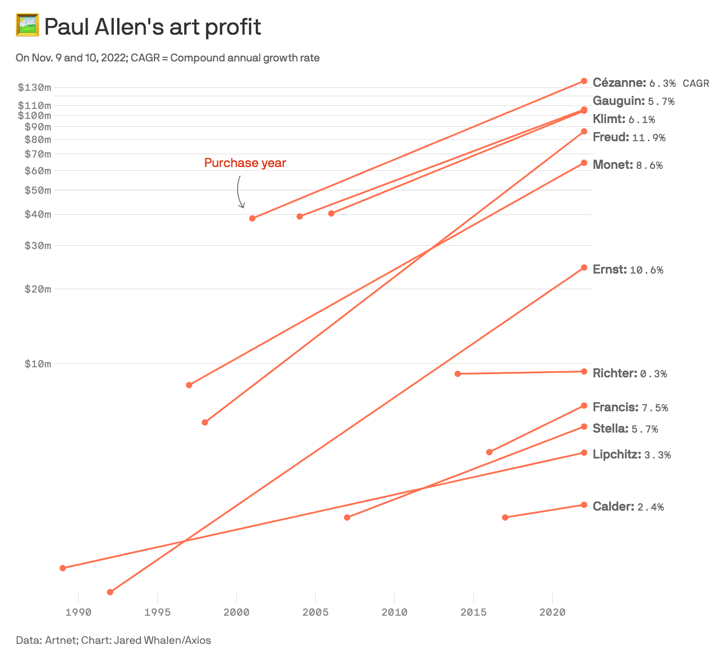
Alright, how about some more data points then? Recently, the estate of Paul Allen sold off a record-breaking $1.6 billion of art, most of which was also both bought and sold at a public auction. This gives us both the purchase and sell prices and the ability to calculate annualized return. This Axios article included an analysis and created the chart below.

Some sales are impressive, like a Cézanne that was bought for ~$38 million and sold for ~$138 million less than 20 years later. A cool $100 million profit ain’t too shabby. However, once you calculate the overall return including the holding periods, the annualized return was only 6.2% annualized over an average holding period of 18 years. Axios notes that the S&P 500 grew at 8.9% annualized over the past 18 years, which allows them to drop this zinger:

The bottom line: Allen would have made more money just buying an S&P 500 index fund.

I can see art as as an asset class having positive long-term returns in the future, and I can see it having a relatively low correlation to stocks, but I suppose that I have a hard time seeing it return something amazing and consistently better than the S&P 500. Especially for any basket of specific pieces, it may return 4% more than the S&P 500 annually, or it may return 4% less than the S&P 500 annually. This would be more of a fun, amusing thing – “I own a flower petal from that Monet!” – that might retain permanent value in the future.

(I can’t tell a Stella from a Seurat, so I have no personal investment in Masterworks.)

Reading List: Timeless Financial Wisdom From 100 to 2,000 Years Ago

Morgan Housel has an excellent post about Cumulative vs. Cyclical Knowledge, which points out how humans don’t seem to be able to solve behavioral financial problems like living below your means, asset bubbles, overuse of leverage, and more. In a nutshell:

Reading old finance articles makes you feel like the ancient past was no different than today – the opposite feeling you get reading old medical commentary.

The article lists several quotes from 100+ year-old sources – but not always full sources – so I felt the need to track them down to create a “timeless advice reading list”. Some have already been mentioned here previously, others have not. Book links are Amazon affiliate links (may need to visit this post at mymoneyblog.com to see them), although the really old books are free on Kindle due to copyright expiration.

The Quest of the Simple Life by William J. Dawson is a book from 1907 that talks about escaping the grind and spending less money to create a simpler life (sound familiar?). My review and highlights: The Quest of the Simple Life: Escaping The Work Grind in 1907 vs. Today. Here is a sample quote on the cost of “keeping up appearances”:

Money may be bought at too dear a rate. The average citizen, if he did but know it, is always buying money too dear. He earns, let us say, four hundred pounds a year; but the larger proportion of this sum goes in what is called ‘keeping up appearances.’ He must live in a house at a certain rental; by the time that his rates and taxes are paid he finds one-eighth of his income at least has gone to provide a shelter for his head. A cottage, at ten pounds a year, would have served him better, and would have been equally commodious. He must needs send his children to some private ‘academy’ for education, getting only bad education and high charges for his pains; a village board-school at twopence a week would have offered undeniable advantages. He must wear the black coat and top-hat sacred to the clerking tribe; a tweed suit and cap are more comfortable, and half the price. At all points he is the slave of convention, and he pays a price for his convention out of all proportion to its value. At a moderate estimate half the daily expenditure of London is a sacrifice to the convention or imposture of respectability.

The Snows in Kilimanjaro by Ernest Hemingway. There is a famous exchange between F. Scott Fitzgerald and Ernest Hemingway where Fitzgerald is quoted as saying “The rich are different from you and me” and Hemingway is quoted as responding with “Yes, they have more money.” The following passage from this book is the original source, but read about the full story behind this legend here.

The rich were dull and they drank too much, or they played too much backgammon. They were dull and they were repetitious. He remembered poor Scott Fitzgerald and his romantic awe of them and how he had started a story once that began, ‘The very rich are different from you and me.’ And how some one had said to Scott, Yes, they have more money. But that was not humorous to Scott. He thought they were a special glamorous race and when he found they weren’t it wrecked him as much as any other thing that wrecked him.

The Great Depression: A Diary by Benjamin Roth. Benjamin Roth was a lawyer in Youngstown, Ohio during the Great Depression and kept a regular diary of his impressions during the era. The diary was required reading for his son who also became a lawyer at the firm he started, in order to understand what their clients went through. My full review here.

In normal times the average professional man makes just a living and lives up to the limit of his income because he must dress well, etc. In times of depression he not only fails to make a living but has no surplus capital to buy stocks and real estate. I see now how important it is for the professional man to build up a surplus in normal times. […] His practice suffers and he has no chance of rising above the level of the ordinary practitioner who lives from day to day and from hand to mouth.

Bubble in the Sun by Christopher Knowlton. A narrative history of the massive Florida real estate boom in the 1920s (not the 2000s!) and how it helped trigger the Great Depression (not the Great Financial Crisis!). Repeating cycles indeed. Even now, how can “Buy Now, Pay Later” be considered a new invention when it’s simply more consumer debt?

From 1919 to 1929, both forms of personal debt – mortgages and installment credit – soared. The volume of home mortgages more than tripled, and the amount of outstanding installment debt more than doubled. Other kinds of credit became widely available, such as that offered through credit finance companies and department stores.

Seneca: A Life by Emily Wilson. (Listing is weird, the US version might be The Greatest Empire: A Life of Seneca by Emily Wilson.) This should be an interesting biography for many FIRE devotees, as Seneca was both a Stoic philosopher and someone who amassed a huge amount of wealth doing questionable things. Oh, and he died nearly 2,000 years ago.

The life and works of Seneca pose a number of fascinating challenges. How can we reconcile the bloody tragedies with the prose works advocating a life of Stoic tranquility? How are we to balance Seneca the man of principle, who counseled a life of calm and simplicity, with Seneca the man of the moment, who amassed a vast personal fortune in the service of an emperor seen by many, at the time and afterwards, as an insane tyrant?

From this Emily Wilson Guardian article:

We might then label Seneca a hypocrite, since he failed to be ethically rich by his own criteria. But most of us, including those who would call themselves middle class rather than fat cats, would have to say the same, if we were fully honest with ourselves. We buy things we don’t need. We get caught up in consumerist desire and lose track of what we might really want in life.

“The more things change, the more they stay the same” – Bon Jovi.

Amazon Prime: Link Venmo, Get $10 Credit (Targeted)

Amazon is offering select Amazon Prime members a $10 Amazon credit for linking their Venmo account as a payment method. You don’t have to actually purchase anything with Venmo. The terms says it’s targeted, but I did not receive an e-mail about the offer and I was able to get the $10 credit immediately after linking and without issue. It may be easier to click on the offer link on your smartphone to verify instantly via the Venmo app. (You may need to read this post online and not in e-mail to see the link.)

Add a Venmo account to Amazon account Promotion (the “Promotion”). This is a limited time offer (the “Offer”) that will end on 12/31/2022 at 11:59 p.m. (PT) or while supplies last. Offer only valid for invited Amazon customers who have received this offer directly from Amazon through email or online display advertisements. To claim the promotion credit (the “Credit”), complete the following actions: 1.) Sign in to your Amazon.com account, 2.) Click on the advertisement or email regarding this Promotion; and 3.) Follow the instructions on screen to complete the process. Upon successfully adding a Venmo account to your Amazon account, the Credit will be applied to your Amazon.com account.

4% Guaranteed Withdrawal Rate (Inflation-Adjusted) with TIPS Ladder

Retirement income planning would be so much easier if you could buy a known amount of guaranteed lifetime income that automatically adjusted for inflation. However, the reality is that not a single insurance company in the entire world is willing to take on that long-term inflation risk. The only possibility left is to ladder inflation-linked bonds (TIPS) so that each year you would cash out some bonds and interest to create your own DIY inflation-adjusted income.

Thanks to the rising real yields of TIPS, you can now create a 30-year TIPS ladder that will create effectively a 4% guaranteed real withdrawal rate. If you put $1,000,000 into a 30-year TIPS ladder right now, you will get $40,000+ income for year 1 and then another $40,000 adjusted for inflation (CPI-U) annually for the next 29 years. All backed by the US government.

Allan Roth did the hark work and bought a 30-year TIPS ladder x 4.3% real withdrawal rate using $100,000 of his own money on the secondary market. He also introduced me to eyebonds.info, which has a lot of helpful spreadsheets for the hardcore DIY TIPS and Savings I bond investor.

Such a TIPS ladder will only go for 30 years, and you end up with nothing at the end, so it does have some limitations. If you retire at 65 and spend your 4% every year, this portfolio will be completely depleted by age 95. If you start at 55, it will end at 85. Therefore, this tool would work best as a supplement to your Social Security benefits and perhaps keeping some stocks for potential upside…

Now, Allan Roth also wrote about the “No Risk” portfolio where you put most of your money in zero coupon bonds that will guarantee you don’t lose any dollars but put the rest in stocks for upside potential. It feels good to know you’ll both start and end with at least, say $100,000. However, the reality is that you are still exposed to inflation risk, as $100,000 in 10 years may be worth a lot less than $100,000 today.

What if you simply replaced those traditional-style bonds with TIPS as your super-safe base? You’d remove the inflation risk while still keeping minimal credit risk. Enter the concept of Upside Investing by Lawrence Kotlikoff (author of Money Magic).

Upside Investing, as I described in recent Forbes and Seeking Alpha columns, is simple as pie.

– You invest in the S&P and TIPS/I-Bonds and specify a period during which you’ll convert your stocks to TIPS/I-Bonds.

– You build a base living standard floor assuming all stock investments are lost.

– You increase your living standard floor only when and if you convert stocks to TIPS/I-Bonds.

If you can lock in your TIPS ladder at a decent real yield, you could have an intriguing combination of a very safe base income, while still giving you a very good chance of a higher income with stock returns anywhere close to historical averages.

In rough terms, what if a 75% TIPS/25% stock portfolio offered a minimal guaranteed withdrawal rate of 3% real for 30 years (only this low if stocks go to zero!) with the good probability that you would likely be able to withdrawal 4% and quite possibly more. For a conservative investor, knowing you have a rock-solid safe floor would allow you to spend freely with the rest. 🥳 Something to investigate further while TIPS real yields are decent again.