Archives for July 2022

Target Deal Days 2022: 5% Off Gift Cards Through 7/13

Target is having their Target Deal Days at the same time as Amazon Prime Day again. The online-only sale is “3 days of show-stopping savings with no membership fees.”. Hopefully you can find a discount on something you were already looking to buy.

If you are a member of Target Circle (free to join), you can also get 5% off Target Gift Cards:

• Offer valid for one-time use purchase online only
• Transaction can include multiple Target GiftCard items up to $500 ($25 maximum discount)
• GiftCards can be delivered via Mail, Email or Text
• Offer excludes Visa Gift Cards, Mastercard Gift Cards, American Express Gift Cards and gift cards issued by other retailers such as dining, lifestyle and entertaining gift cards

The 5% discount is not as good as the 10% off in previous years, but the $500 purchase limit is higher. This does not stack with the 5% off with Target RedCard, so use another cashback earning credit card to stack the discount.
MMB Humble Portfolio 2022 2nd Quarter Update: Asset Allocation & Performance

portpie_blank200Here’s my quarterly update on my current investment holdings as of 7/8/22, including our 401k/403b/IRAs and taxable brokerage accounts but excluding real estate and side portfolio of self-directed investments. Following the concept of skin in the game, the following is not a recommendation, but just to share an real, imperfect, low-cost, diversified DIY portfolio. The goal of this “Humble Portfolio” is to create sustainable income that keeps up with inflation to cover our household expenses.

“Never ask anyone for their opinion, forecast, or recommendation. Just ask them what they have in their portfolio.” – Nassim Taleb

TL;DR changes: Went from 67/33 stocks/bonds ratio to 64/36, so buying more US and International Stocks with available cashflow.

How I Track My Portfolio
I’m often asked how I track my portfolio across multiple brokers and account types. (Morningstar also recently discontinued free access to their portfolio tracker.) I use both Personal Capital and a custom Google Spreadsheet to track my investment holdings:

  • The Personal Capital financial tracking app (free, my review) automatically logs into my different accounts, adds up my various balances, tracks my performance, and calculates my overall asset allocation daily.
  • Once a quarter, I also update my manual Google Spreadsheet (free, instructions) because it helps me calculate how much I need in each asset class to rebalance back towards my target asset allocation. I also create a new tab each quarter, so I have snapshot of my holdings dating back many years.

July 2022 Asset Allocation and YTD Performance
Here are updated performance and asset allocation charts, per the “Allocation” and “Holdings” tabs of my Personal Capital account.

Target Asset Allocation. I call this my “Humble Portfolio” because it accepts the repeated findings that individuals cannot reliably time the market, and that persistence in above-average stock-picking and/or sector-picking is exceedingly rare. Costs matter and nearly everyone who sells outperformance, for some reason keeps charging even if they provide zero outperformance! By paying minimal costs including management fees and tax drag, you can actually guarantee yourself above-average net performance over time.

I own broad, low-cost exposure to productive assets that will provide long-term returns above inflation, distribute income via dividends and interest, and finally offer some historical tendencies to balance each other out. I have faith in the long-term benefit of owning publicly-traded US and international shares of businesses, as well as the stability of high-quality US Treasury and municipal debt. My stock holdings roughly follow the total world market cap breakdown at roughly 60% US and 40% ex-US. I add some “spice” to the vanilla funds with the inclusion of “small value” ETFs for US, Developed International, and Emerging Markets stocks as well as additional real estate exposure through US REITs.

I strongly believe in the importance of knowing WHY you own something. Every asset class will eventually have a low period, and you must have strong faith during these periods to truly make your money. You have to keep owning and buying more stocks through the stock market crashes. You have to maintain and even buy more rental properties during a housing crunch, etc. A good sign is that if prices drop, you’ll want to buy more of that asset instead of less. I don’t have strong faith in the long-term results of commodities, gold, or bitcoin – so I don’t own them.

I do not spend a lot of time backtesting various model portfolios, as I don’t think picking through the details of the recent past will necessarily create superior future returns. Usually, whatever model portfolio is popular in the moment just happens to hold the asset class that has been the hottest recently as well.

Find productive assets that you believe in and understand, and just keep buying them through the ups and downs. Mine may be different than yours.

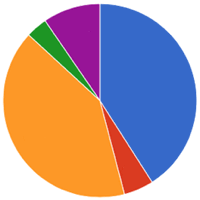
I have settled into a long-term target ratio of roughly 70% stocks and 30% bonds (or 2:1 ratio) within our investment strategy of buy, hold, and occasionally rebalance. This is more conservative than most people my age, but I am settling into a more “perpetual income portfolio” as opposed to the more common “build up a big stash and hope it lasts until I die” portfolio. My target withdrawal rate is 3% or less. Here is a round-number breakdown of my target portfolio.

  • 30% US Total Market
  • 5% US Small-Cap Value
  • 20% International Total Market
  • 5% International Small-Cap Value
  • 10% US Real Estate (REIT)
  • 20% High-Quality bonds, Municipal, US Treasury or FDIC-insured deposits
  • 10% US Treasury Inflation-Protected Bonds (or I Savings Bonds)

Commentary. According to Personal Capital, my portfolio down about 16% for 2022 YTD. My US and International stocks have dropped enough that all new cashflow is being placed into buying more of those asset classes. Simple as that. Keep on truckin’.

Since that was so short and boring, here a quick fact that I keep in my head. Using the “Rule of 72”, we know that if your portfolio returns 7% a year, it will double roughly every 10 years. $10,000 invested for 10 years will double to $20,000. However, $10,000 invested for 20 years will quadruple into $40,000. $10,000 invested for 30 years will octuple into $80,000. That provides a sense of the power of compounding and how it starts slow but kicks into turbo mode later on. I’ve been investing for about 20 years, so I’m getting to the good part! 😉

I’ll share about more about the income aspect in a separate post.

Best Interest Rates on Cash – July 2022 Update

Here’s my monthly roundup of the best interest rates on cash as of July 2022, roughly sorted from shortest to longest maturities. We all need some safe assets for cash reserves or portfolio stability, and there are often lesser-known opportunities available to individual investors. Check out my Ultimate Rate-Chaser Calculator to see how much extra interest you’d earn by moving money between accounts. Rates listed are available to everyone nationwide. Rates checked as of 7/6/2022.

TL;DR: 4% APY on up to $6,000 for liquid savings at Current with no direct deposit requirement. BrioDirect 1.80% APY liquid savings. 1-year CD 2.50% APY. 5-year CD 3.64% APY. Treasury bond rates worth a comparison. 9.62% Savings I Bonds still available if you haven’t done it yet.

Fintech accounts
Available only to individual investors, fintech companies often pay higher-than-market rates in order to achieve fast short-term growth (often using venture capital). “Fintech” is usually a software layer on top of a partner bank’s FDIC insurance.

  • 4% APY on $6,000. Current offers 4% APY on up to $6,000 total ($2,000 each on three savings pods). No direct deposit required. $50 referral bonus for new members with $200+ direct deposit with promo code JENNIFEP185. Please see my Current app review for details.
  • 3% APY on up to $100,000, but requires direct deposit and credit card spend. HM Bradley pays up to 3% APY if you open both a checking and credit card with them, and maintain $1,500 in total direct deposit each month and make $100 in credit card purchases each month. Please see my updated HM Bradley review for details.
  • 3% APY on 10% of direct deposits + 1% APY on $25,000. One Finance lets you earn 3% APY on “auto-save” deposits (up to 10% of your direct deposit, up to $1,000 per month). Separately, they also pay 1% APY on up to another $25,000 with direct deposit. New customer $50 bonus via referral. See my One Finance review.
  • 3% APY on up to $15,000, requires direct deposit and credit card transactions. Porte requires a one-time direct deposit of $1,000+ to open a savings account. Porte then requires $3,000 in direct deposits and 15 debit card purchases per quarter (average $1,000 direct deposit and 5 debit purchases per month) to receive 3% APY on up to $15,000. New customer bonus via referral. See my Porte review.

High-yield savings accounts
Since the huge megabanks pay essentially no interest, I think every should have a separate, no-fee online savings account to accompany your existing checking account. The interest rates on savings accounts can drop at any time, so I list the top rates as well as competitive rates from banks with a history of competitive rates. Some banks will bait you with a temporary top rate and then lower the rates in the hopes that you are too lazy to leave.

Short-term guaranteed rates (1 year and under)
A common question is what to do with a big pile of cash that you’re waiting to deploy shortly (plan to buy a house soon, just sold your house, just sold your business, legal settlement, inheritance). My usual advice is to keep things simple and take your time. If not a savings account, then put it in a flexible short-term CD under the FDIC limits until you have a plan.

  • No Penalty CDs offer a fixed interest rate that can never go down, but you can still take out your money (once) without any fees if you want to use it elsewhere. CFG Bank has a 13-month No Penalty CD at 1.70% APY with a $500 minimum deposit. Ally Bank has a 11-month No Penalty CD at 1.00% APY for all balance tiers. Marcus has a 13-month No Penalty CD at 1.25% APY with a $500 minimum deposit. You may wish to open multiple CDs in smaller increments for more flexibility.
  • Bread Financial has a 12-month certificate at 2.50% APY. Early withdrawal penalty is 180 days of interest.

Money market mutual funds + Ultra-short bond ETFs*
Many brokerage firms that pay out very little interest on their default cash sweep funds (and keep the difference for themselves). * Money market mutual funds are regulated, but ultimately not FDIC-insured, so I would still stick with highly reputable firms. I am including a few ultra-short bond ETFs as they may be your best cash alternative in a brokerage account, but they may experience short-term losses.

  • Vanguard Federal Money Market Fund is the default sweep option for Vanguard brokerage accounts, which has an SEC yield of 1.42%. Compare with the Fidelity Government Money Market Fund (SPAXX), Fido’s sweep option which charges a higher expense ratio and thus only offers a 0.99% SEC yield.
  • Vanguard Ultra-Short-Term Bond Fund currently pays 2.40% SEC yield ($3,000 min) and 2.50% SEC Yield ($50,000 min). The average duration is ~1 year, so your principal may vary a little bit.
  • The PIMCO Enhanced Short Maturity Active Bond ETF (MINT) has a 2.21% SEC yield and the iShares Short Maturity Bond ETF (NEAR) has a 1.80% SEC yield while holding a portfolio of investment-grade bonds with an average duration of ~6 months.

Treasury Bills and Ultra-short Treasury ETFs
Another option is to buy individual Treasury bills which come in a variety of maturities from 4-weeks to 52-weeks and are fully backed by the US government. You can also invest in ETFs that hold a rotating basket of short-term Treasury Bills for you, while charging a small management fee for doing so. T-bill interest is exempt from state and local income taxes.

  • You can build your own T-Bill ladder at TreasuryDirect.gov or via a brokerage account with a bond desk like Vanguard and Fidelity. Here are the current Treasury Bill rates. As of 7/5/2022, a new 4-week T-Bill had the equivalent of 1.29% annualized interest and a 52-week T-Bill had the equivalent of 2.77% annualized interest.
  • The Goldman Sachs Access Treasury 0-1 Year ETF (GBIL) has a 0.87% SEC yield and the SPDR Bloomberg Barclays 1-3 Month T-Bill ETF (BIL) has a 0.77% SEC yield. GBIL appears to have a slightly longer average maturity than BIL.

US Savings Bonds
Series I Savings Bonds offer rates that are linked to inflation and backed by the US government. You must hold them for at least a year. If you redeem them within 5 years there is a penalty of the last 3 months of interest. The annual purchase limit for electronic I bonds is $10,000 per Social Security Number, available online at TreasuryDirect.gov. You can also buy an additional $5,000 in paper I bonds using your tax refund with IRS Form 8888.

  • “I Bonds” bought between May 2022 and October 2022 will earn a 9.62% rate for the first six months. The rate of the subsequent 6-month period will be based on inflation again. More on Savings Bonds here.
  • In mid-October 2022, the CPI will be announced and you will have a short period where you will have a very close estimate of the rate for the next 12 months. I will have another post up at that time.
  • See below about EE Bonds as a potential long-term bond alternative.

Prepaid Cards with Attached Savings Accounts
A small subset of prepaid debit cards have an “attached” FDIC-insured savings account with exceptionally high interest rates. The negatives are that balances are severely capped, and there are many fees that you must be careful to avoid (lest they eat up your interest). There is a long list of previous offers that have already disappeared with little notice. I don’t personally recommend nor use any of these anymore, as I feel the work required and the fees charged if you mess up exceeds any small potential benefit.

  • Mango Money pays 6% APY on up to $2,500, if you manage to jump through several hoops. Requirements include $1,500+ in “signature” purchases and a minimum balance of $25.00 at the end of the month.
  • NetSpend Prepaid pays 5% APY on up to $1,000 but be warned that there is also a $5.95 monthly maintenance fee if you don’t maintain regular monthly activity.

Rewards checking accounts
These unique checking accounts pay above-average interest rates, but with unique risks. You have to jump through certain hoops which usually involve 10+ debit card purchases each cycle, a certain number of ACH/direct deposits, and/or a certain number of logins per month. If you make a mistake (or they judge that you did) you risk earning zero interest for that month. Some folks don’t mind the extra work and attention required, while others would rather not bother. Rates can also drop suddenly, leaving a “bait-and-switch” feeling.

  • The Bank of Denver pays 2.00% APY on up to $10,000 if you make 12 debit card purchases of $5+ each, receive only online statements, and make at least 1 ACH credit or debit transaction per statement cycle. If you meet those qualifications, you can also link a Kasasa savings account that pays 1.00% APY on up to $25k. Thanks to reader Bill for the updated info.
  • Presidential Bank pays 2.25% APY on balances between $500 and up to $25,000, if you maintain a $500+ direct deposit and at least 7 electronic withdrawals per month (ATM, POS, ACH and Billpay counts).
  • Evansville Teachers Federal Credit Union (soon Liberty FCU) pays 3.30% APY on up to $20,000. You’ll need at least 15 debit transactions and other requirements every month.
  • Lake Michigan Credit Union pays 3.00% APY on up to $15,000. You’ll need at least 10 debit transactions and other requirements every month.
  • (I’ve had a poor customer service experience with this CU, but the rate is still good.) Lafayette Federal Credit Union is offering 2.02% APY on balances up to $25,000 with a $500 minimum monthly direct deposit to their checking account. No debit transaction requirement. They are also offering new members a $100 bonus with certain requirements. Anyone can join this credit union via partner organization ($10 one-time fee).
  • Find a locally-restricted rewards checking account at DepositAccounts.

Certificates of deposit (greater than 1 year)
CDs offer higher rates, but come with an early withdrawal penalty. By finding a bank CD with a reasonable early withdrawal penalty, you can enjoy higher rates but maintain access in a true emergency. Alternatively, consider building a CD ladder of different maturity lengths (ex. 1/2/3/4/5-years) such that you have access to part of the ladder each year, but your blended interest rate is higher than a savings account. When one CD matures, use that money to buy another 5-year CD to keep the ladder going. Some CDs also offer “add-ons” where you can deposit more funds if rates drop.

  • Lafayette Federal Credit Union (LFCU) has a 5-year certificate at 3.64% APY ($500 min), 4-year at 3.39% APY, 3-year at 3.13% APY, and 2-year at 2.88% APY. Note that the early withdrawal penalty for the 5-year is a relatively large 600 days of interest. Anyone nationwide can join LFCU by joining the Home Ownership Financial Literacy Council (HOFLC) for a one-time $10 fee.
  • You can buy certificates of deposit via the bond desks of Vanguard and Fidelity. You may need an account to see the rates. These “brokered CDs” offer FDIC insurance and easy laddering, but they don’t come with predictable early withdrawal penalties. Right now, I see a 5-year CD at 3.35% APY. Be wary of higher rates from callable CDs listed by Fidelity.

Longer-term Instruments
I’d use these with caution due to increased interest rate risk, but I still track them to see the rest of the current yield curve.

  • Willing to lock up your money for 10 years? You can buy long-term certificates of deposit via the bond desks of Vanguard and Fidelity. These “brokered CDs” offer FDIC insurance, but they don’t come with predictable early withdrawal penalties. You might find something that pays more than your other brokerage cash and Treasury options. Right now, I see a 10-year CD at 3.80% APY vs. 2.93% for a 10-year Treasury. Watch out for higher rates from callable CDs where they can call your CD back if interest rates rise.
  • How about two decades? Series EE Savings Bonds are not indexed to inflation, but they have a unique guarantee that the value will double in value in 20 years, which equals a guaranteed return of 3.5% a year. However, if you don’t hold for that long, you’ll be stuck with the normal rate which is quite low (currently 0.10%). I view this as a huge early withdrawal penalty. But if holding for 20 years isn’t an issue, it can also serve as a hedge against prolonged deflation during that time. Purchase limit is $10,000 each calendar year for each Social Security Number. As of 7/5/2022, the 20-year Treasury Bond rate was 3.31%.

All rates were checked as of 7/6/2022.

Pentagon Federal CD Specials: 2-Year 2.75% APY, 5-Year 3.50% APY (Ends 7/7)

PenFed has some July 4th CD specials with competitive rates. They call their CDs “money market certificates”. NCUA-insured (the credit union equivalent of FDIC-insured). The minimum opening deposit is $1,000.

Here are the early withdrawal penalties.

For certificates opened/rolled-over after May 2, 2015, the following penalties apply for certificate redemption prior the maturity.

6-month/182-day certificates: Loss of the most recent 90 days of dividends earned.

12-, 15-, 18-, 24-, 36-, 48-, 60- and 84-month certificates: Within 365 days from the open date of the certificate, the penalty will be the last 365 days of dividends earned. After 365 days from the open date of the certificate have elapsed, the penalty will be 30% of gross amount of dividends that would have been earned if the certificate had reached maturity.

Membership at PenFed is very easy now and open to anyone – you just need to deposit and maintain $5 in your Savings/Share Account.

I have had a PenFed account for over a decade now, they seem to come out with competitive CD rates at least once every few years when they need more deposits. As someone who tries to maintain a CD ladder using the top rates available, this has worked out well for me.

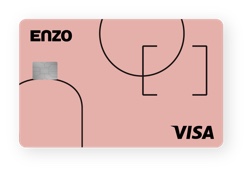
Enzo Fintech App: 2% Cash Back on Rent (Up to $150/Year), Special APY and Equity For Early Members

Updated July 2022. Enzo is another fintech app with the catchy feature of 2% cash back on rent, but unfortunately the earning caps are much more modest than initially promised. They are also dangling the possibility of higher interest rates and owning shares in the actual company to the first 25,000 members.

Cashback on spending. From their disclosures (emphasis mine):

Eligible accounts that meet the minimum requirements can earn 10% cashback on Uber, 5% on DoorDash, 2% on rent or mortgage payments, and 1% on everything else, limited to $20 per calendar month and $150 per calendar year. Once the monthly and/or annual limits have been reached, you will continue to earn 0.25% on all of your card spend. The maximum total cashback you can earn in a calendar year is $2,500.

Cashback on rent or mortgage payments is limited to one transaction per month. Enzo reserves the right to request additional documentation providing proof that the payments are bona fide rent or mortgage payments if it suspects unusual activity. Terms are subject to change. Cashback will be credited to your account the following month for qualifying transactions made the previous month.

If you only put rent on your debit Visa card, then you would max out the $20 monthly limit at a monthly rent of $1,000. However, you would max out the annual $150 cash back limit at a monthly rent of $625. Both are below the US average rent of $1,100 a month for a 1 bedroom apartment. Is what works out to $12.50 a month ($150/12) worth it?

Checking account APY on savings. 1.49% APY as of 6/16/2022. This is above average for most online savings accounts. Banking services provided by Blue Ridge Bank N.A.; Member FDIC.

In a strange move, they have already announced that they “plan to raise the interest rate on the Enzo Checking Account to 2.15% effective August 1st, 2022.” As a fine print reader, I know that “plan” leaves them an out. It’s just a “maybe”. Why not just increase it now?

They also “plan” to raise it to 3.10% APY for the first 25,000 Enzo customers. As of 7/4/22, there are at 6,090 members. Track the numbers here.

As a reward for your support, once we reach 25,000 Enzo Customers, we plan to reward all our Founding Members by raising the interest rate to 3.10% on the Enzo Checking Account.

Investing. Very few details on this so far, beyond “$0 fee trading” which nearly every other broker already offers.

Equity in the company? Here’s what they say:

Enzo is committed to helping you create wealth over time. That’s why we are granting equity to our early members and reserving a piece of the company to permanently be owned by you.

From the disclosures:

All Enzo Waitlist members will be eligible to receive Enzo equity, and can earn additional equity by referring friends.

And curiously:

Equity is subject to terms and conditions and does not require opening an Enzo account. Terms for receiving equity available upon request.

After multiple “request” e-mails, I received a little more info at this link:

To receive Enzo stock you must be registered on the Enzo waitlist. You’ll be issued one share of Enzo stock initially. You’ll get one additional share of Enzo stock for every three referrals that sign up for the Enzo waitlist. You can earn a maximum of 250 Enzo shares for qualified referrals.

Total shares under the Waitlist Equity Program (“WEP”) shall not exceed 100,000. WEP is subject to terms and conditions and does not require opening an Enzo account. Enzo reserves the right to modify the program at any time. Terms for receiving equity will be available soon upon request.

Honestly, the likelihood of this equity actually paying out is very low, but you never know. I am old enough to have gotten free TravelZoo shares that actually materialized during the dot-com boom.

I couldn’t find much media coverage about Enzo. In November 2021, this article announced a seed round with a modest $3 million in funding.

Shrug. I still signed up on the waitlist with my e-mail since it is free with no commitment (that is my link). This is a very young startup and we’ll see if it can pull it off.

SoFi Personal Loan $300 Bonus (No Fees)

SoFi is offering a $300 personal loan bonus via referral if you take out a SoFi Personal loan offer, which has a minimum amount of $5,000. SoFi charges no fees, so no application fee, no origination fee, no prepayment (early payoff) fee. You will get a hard pull on your credit report.

If you wanted, you could get the $5,000, pay a day or two’s worth of interest (a few dollars), and then pay off the loan completely. Take the $300 bonus into your SoFi Checking and Savings account (which has its own $325 bonus) and walk away with a tidy profit.

Here is the rate I was offered during the pre-approval process. You can see the rate before proceeding with the application (before the hard credit check).

Note the additional fine print:

Offer not available to residents of Vermont or Ohio. You must keep your loan active and in good standing for at least 90 days to receive the $300 bonus.

The easiest way to manage this with minimum interest paid is to pay down as much of your loan as possible (i.e. make a one-time $4,985 payment) and leave a small balance of $15 to keep the loan active and good standing. Don’t pay it completely off until 90 days have passed. Also, don’t leave $10 or less balance because they may either make that the minimum payment or even “forgive” you the rest which will end up with the loan being closed early. This only costs you a tiny bit in extra interest.

(Note: There was a limited-time $600 offer sent to SoFi users in the past. Some comments below may refer to this previous offer.)