Archives for April 2021

Are You Unknowingly a Time Billionaire?

The 2021 Berkshire Hathaway shareholder meeting is streaming live on Yahoo Finance this weekend, and I am reminded of a lesser known quote from Warren Buffett about what is truly valuable. I believe he has said this elsewhere, but I found it repeated in a 2020 commencement speech (YouTube link) at the University of Nebraska:

There is nobody I would rather be than a young person graduating from the University of Nebraska today. […] I would say this to the current year’s class: ‘I would love to trade places with any of them.’ They feel they’re going out into an uncertain world and all of that, but there’s never been a better time.

During a Tim Ferriss podcast, investor Graham Duncan discussed the concept of a “time billionaire” and how it is hard to understand the magnitude difference between a billion and a million.

Graham Duncan: I was listening to a guy introduced a speaker a while ago. And he was saying people don’t really understand the difference between billionaires and millionaires. He said a million seconds is like 11 days. A billion seconds is 31 years.

This means a 20-year old is technically a time multi-billionaire. If you’re in your 40s or even early 50s, the odds are likely that you still have a billion seconds left as well. Have you considered how valuable that is? One of the richest people in the world would gladly trade places with you. I’m betting that nearly anyone with a billion dollars would trade it for a billion more seconds.

This Pomp Letter article and Wealest article both expand upon this idea of appreciating the value of time, including how young people should use this time to their advantage. Don’t take for granted the ability to throw yourself at something nonstop. I think short periods of crazy 100-hours-a-week focus is underrated. Take your shot. If you fail, so what?

If you fail, you have nothing, which is the same position you’re in right now.

You have no mortgage to pay, no family to support, and nothing to lose.

This makes you powerful. Your upside is many times greater than your downside.

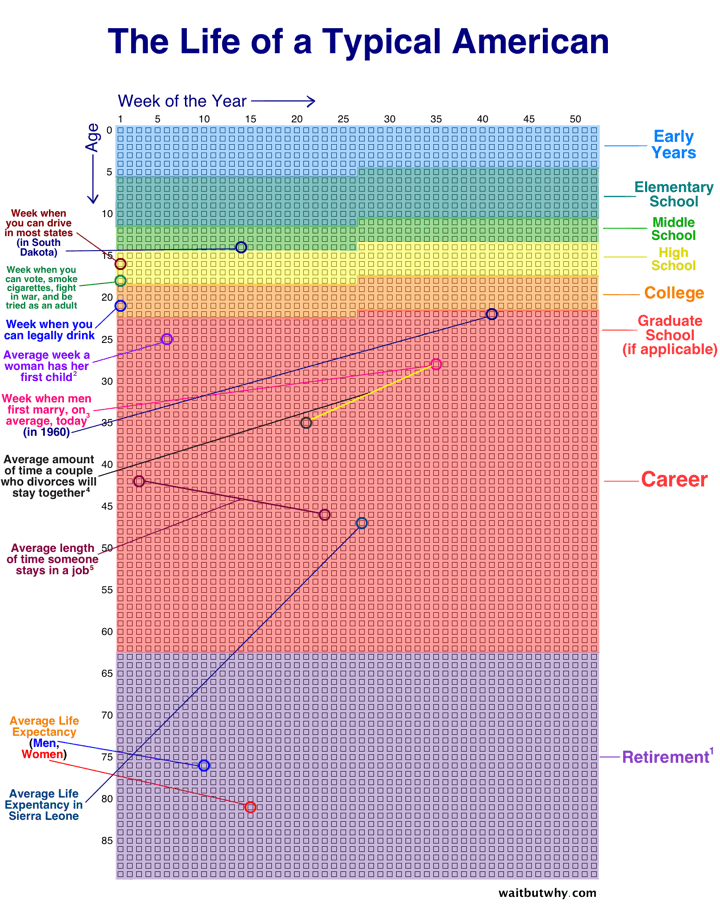
Also mentioned is the Life in Weeks calendar from WaitButWhy.
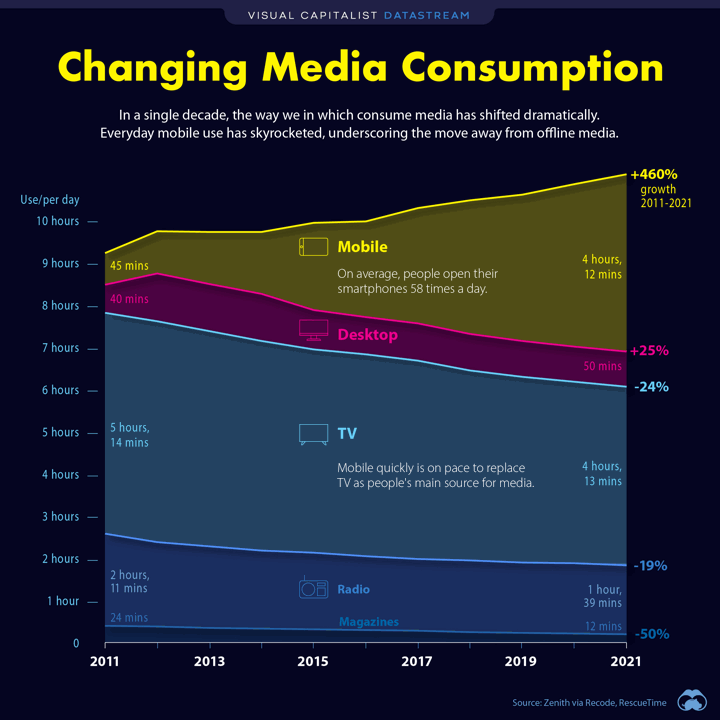
Time is a limited resource, and just like with money, you have to spend it wisely and consciously. Don’t waste it without intention. Look at how many hours we spend on consuming media, via Visual Capitalist.
Bottom line. We can look up to certain wealthy people for knowledge and wisdom, but there are other important resources beyond money. Yes, it’s a cliché, but it is still so easily forgotten in this busy, competitive, stressful world. Many of us are extraordinarily wealthy in time, wealthy in love and relationships, and/or wealthy with a healthy mind and body. Someone out there would pay billions of dollars for what you have. I must remind myself to appreciate my wealth in all forms, and use it intentionally. I worry about running of out money, but also running out of time.
Historical Asset Class Correlations: Which Have Been the Best Portfolio Diversifiers?

When talking about constructing an investment portfolio, you’ll often hear about diversification and buying low-correlation or non-correlated assets.

  • A positive correlation means that the assets tended to move in the same direction. A value of 1 is perfect positive correlation.
  • A negative correlation means that they tended to move in opposite directions. A value of -1 is perfect negative correlation.
  • A zero correlation means that they had no relationship.

Morningstar recently released its 2021 Diversification Landscape Report (free download with e-mail) which includes a lot of great information about the correlations between key asset classes from 2001-2020, including the March 2020 COVID-related market crash. I try not to look too finely at historical numbers, but noticing the overall historical trends can be helpful.

The lower the correlation between asset classes (the less they move in the same direction), the greater the reduction in volatility you get by combining assets. As long as you combine asset classes with correlations below 1, you get some degree of volatility reduction. This M* chart from the paper helps you visualize this:

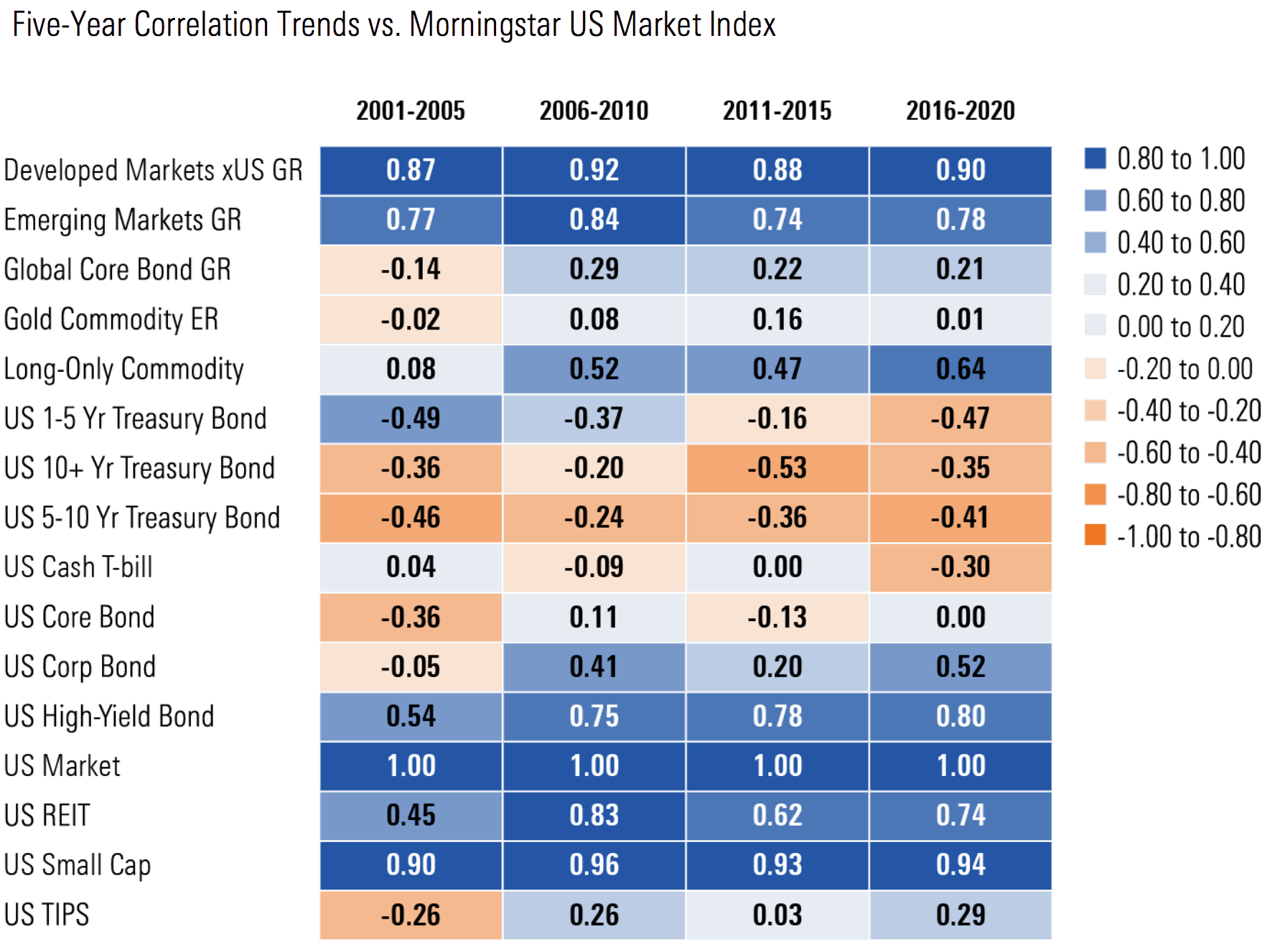
This handy M* table shows how the 5-year correlations between the total US stock market and other major asset classes have changed over the four separate periods of 2001-2005, 2006-2010, 2011-2015, and 2016-2020:

Some quick takeaways:

  • The best portfolio diversifiers for US stocks has consistently been US Treasury bonds. Short-term, medium-term, long-term Treasuries all have consistently negative correlations to US stocks. (There is some problem with the shading in the chart that doesn’t quite match the numbers.)
  • International developed country stocks, Emerging Markets stocks, and US REITs have high correlations with US stocks (which is somewhat expected), but the correlation is still below 1 (roughly 0.80 or so) such that it still offers a little diversification benefit over time.
  • High-yield “junk” bonds are highly-correlated with US stocks. They are just as highly-correlated as international and emerging market stocks, so watch out if you are chasing higher yield with riskier bonds.
  • Gold has been a pretty good and consistent diversifier as well, but only on par with cash (T-bills) not as good as US Treasuries. You just need to believe that the long-term return of gold is high enough to warrant inclusion. These days, gold actually looks better to me than in the past because I figure it will match inflation, and that’s actually better than most cash and bonds right now. Also see: Gold as a Hedge Against Bonds During Low Interest Rates

The Intriguing History of the 30-Year Fixed Rate Mortgage

As part of a complete personal finance education, I submit that the longread article Financing the American Home by Marc Rubenstein should also be required reading. I learned a lot of important facts about the history and meaning behind the 30-year fixed-rate fully prepayable mortgage:

From the consumer’s perspective, it’s an amazing product. It’s a simple loan that offers stable repayments, kept low because they are spread out over such a long period of time. Its kicker is a free option to prepay, which shields the borrower from interest rate risk. If rates go up, borrowers can commend themselves on a great bargain; if they go down, stay calm—the loan can be refinanced without penalty. Win/win.

You’ll only find it in the United States (except for one small European country):

Yet, with the exception of Denmark, it doesn’t exist anywhere else in the world. Even baseball exists in more countries.

Which leads to an interesting observation:

To many, the idea that the US, a beacon of the free market, should support its mortgage market so directly seems odd. The former Governor of the Bank of England, Mervyn King, once remarked: “You Americans are so strange. Most countries have socialised healthcare and a private market in mortgages. You have socialised mortgages and a private market in healthcare.

The article goes on to explore how individual homeownership as a widespread goal has been widely accepted in the US for hundreds of years. Yet, every time the US government tries to shift the mortgage market back towards free-market capitalism, there are no takers. The 30-year fixed mortgage is a clear example of government subsidization (even though they try to obscure it). If the government were to exit the market today and remove their backstop guarantee, mortgage rates (and home values) would have to find a new market-based equilibrium. In other words: tighter lending standards, higher interest rates, and thus at least somewhat lower home values.

So we should be really happy that we have the 30-year fixed mortgage and never pay it off, right? Cheap, dependable leverage forever! I happen to also be reading the book How I Invest My Money by Joshua Brown and Brian Portnoy, where “25 finance experts reveal how they save, spend, and invest”. I’m only about six interview in, but you know what every. single. person. has in common so far? They own their primary home, outright with no mortgage! So even with all of the potential financial benefits of low interest rates, tax deductions, and refinance optionality, they felt the psychological benefits outweighed all of that. Wow. These familiar names that I’ve read and linked to many times, including Joshua Brown, Morgan Housel, Christine Benz, and Bob Seawright (with more to add I’m sure) – they’ve all gotten “the letter” that we got when we paid off our mortgage:

So what’s the best move? Here’s my two cents. If you want to own a home and live in it for the foreseeable future, then buy one for both psychological and financial reasons. Use that nifty 30-year fixed mortgage, but don’t necessarily borrow the max that they’ll allow. Then roughly time the mortgage payoff with your retirement date. Love your awesome job and want to work until 65? Then take your time. Serious about early financial independence? Then refinance or prepay principal to shorten the term, and pay it off as part of one of your final retirement goals. I have to agree that a paid-off primary residence offers well-being benefits that are hard to put a price upon.

Potential Risks of High Interest Stablecoin Savings Accounts

As an extension of High-Yield Crypto Accounts: 6% Interest in Bitcoin or 9% Interest on Stablecoin, I’m trying to better understand the potential scenarios that might cause loss of principal. Even if you’re tired of crypto talk, you should be aware that newer “savings account” apps exist that advertise high interest rates to mainstream customers while playing down their lack of FDIC-insurance and reliance on cryptocurrency markets.

Traditional bank lender model. You deposit your cash into a bank. The bank lends that money out for things like business loans and mortgages, charging them interest. The bank passes on some of the interest to you, and keep the rest as profits for itself. However, if the bank makes enough bad loans, it may not be able to pay the interest or even return all of your deposits. Even so, FDIC insurance will cover deposits up to $250,000 per titled account. This means we don’t have the burden of independently evaluating the quality of every bank. This safety net is critical.

Stablecoin lender model. Traditional banks will not loan out money to people want to put up Bitcoin as collateral. However, there is heavy demand by people with bitcoin/crypto to access cash without actually selling their bitcoin/crypto. Since the big banks are not competing and it’s a risky business, the interest rates charged are high. They have to pay you 8% interest because it’s the only way they can come up with enough cash to fund these loans. If they could get it cheaper elsewhere, don’t you think they would?

For example, BlockFi requires you to put up $200 of BTC for every $100 that you borrow (50% loan-to-value). The idea is that if they don’t pay back the loan on time, BlockFi can just sell the BTC. BlockFi may also sell the BTC anyway if the value drops enough and you don’t post more collateral:

If the value of your collateral significantly decreases, a crypto margin call may occur. Crypto margin calls are calculated based on the LTV (loan-to-value) rate outlined in your loan agreement. A margin call can happen when the value of your collateral drops, increasing the LTV of your loan.

In the event of a margin call, you will have to add more collateral to your account to maintain a healthy LTV ratio. The first margin call occurs at a 70% LTV. At this point, you have 72 hours to take action by posting additional collateral or paying down the loan balance. We will keep you informed if your LTV starts to near the 70% mark so you can take action preemptively.

If your LTV reaches the 80% mark, BlockFi will automatically sell a portion of your crypto collateral to bring your LTV back to a 70% LTV.

Loss scenario: Rapid BTC price drop. BTC prices might drop so steeply (more than 50%) and suddenly (no market liquidity) that BlockFi is unable to liquidate the BTC collateral in time. If they recover less than the original loan amount, and the total losses across their loans are great enough, and they don’t get other backup funding, they may not have the funds to pay back your cash deposits. The price of 1 BTC is $50,000 today, but less than a year ago it was under $10,000, so such a drop is not inconceivable (source):

Loss scenario: Stablecoin price dropping below $1. Stablecoins are supposed to be backed by an equal amount of real money held in a trust account. Right now, the trading price of 1 USDC = $1.00. USDC is issued by Coinbase (now a large publicly-traded company) and is audited monthly by well-known US auditor Grant Thornton LLP that their dollar balances are at least equal to the number of USDC outstanding. However, in the past Tether (USDT), another stablecoin, has had credibility issues regarding its reserves and its price has dropped to as low as $0.88 in the past. Tether was accused of quietly using its cash reserves to help shore up its other struggling businesses. For any stablecoin, if there is even a perceived risk that it is not fully backed by actual US dollars, the price of a stablecoin may drop below the $1.00 peg, which means a loss of principal if you have to sell/withdraw at that price.

Loss scenario: Hacking, accidental loss, and/or internal fraud. There are has been a long history of hacks that have resulted in the theft of many millions of dollars in crypto. Any major loss could bankrupt a company, with obviously some being more vulnerable than others. Coincheck was hacked for $500 million. Per CNBC, the “Canadian crypto exchange QuadrigaCX went bankrupt after its CEO died in 2019, resulting in millions of dollars’ worth of digital assets being trapped in a digital wallet.” This type of thing is why traditional banks don’t want to deal with holding actual cryptocurrency keys. You could view BlockFi’s role as being paid to take on the risk of hacked wallets, lost passwords, and liquidity crunches. As a stablecoin depositor, you are also indirectly making your interest by taking on these risks.

Loss scenario: Drop in interest spreads. This NotBoring longread by Packy McCormick explains in detail why hedge funds are using BlockFi to leverage up their Bitcoin futures arbitrages. This results in a huge demand by these large institutions and a willingness to pay high interest rates. However, as times goes on, these arbitrages will eventually dry up. In the best-case scenario, this will just result in a gradual lowering of interest rates. In a worst-case scenario, a rapid loss of revenue could lead to business failure.

Loss scenario: Sudden government regulation. While part of the allure of cryptocurrencies is the lack of direct government control, the regulation of cryptocurrencies still matters greatly. Just last week, Turkey banned the use of cryptocurrencies for purchasing goods and services. Immediately afterward, Turkish crypto exchange Thodex shut down and $2 billion of investor funds are allegedly missing. Regulation could directly impact these businesses by banning their operations, or indirectly impact them by affecting the price of Bitcoin and other cryptocurrencies.

Due to the lack of FDIC insurance as a backstop, where you keep your stablecoin deposits matters (if you decide to play the game). You’ll want to find a place with a history of strong risk management, security protocols, good financial base, and access to additional capital. For example, BlockFi doesn’t hold private keys, uses Gemini Trust as custodian (one of the most reputable, 95% in cold storage, and regulated by New York state), and most recently raised $350 million at a $3 billion valuation from major venture capital firms. I’m not saying they are 100% safe, but I did look into it pretty deeply considering the small amount of Bitcoin that I hold.

None of these things are a concern if you put your cash in an FDIC-insured bank account. You don’t have to worry about how your bank deals with bad loans, hacking attempts, competitors, or government regulations. This is why I am not moving my cash reserves over to a stablecoin interest account. Cash is for safety, liquidity, sleeping well, and for buying assets on the cheap after any crashes.

Amazon Explore: Virtual Live Travel Experiences (First Free for Prime Members, Up to $50 Value)

Amazon Explore allows you to virtually “travel” and explore a new place with your own personal tour guide. There are tours, educational classes, interactive shows, and personal shoppers. For the tours, it appears that you get the equivalent of a Zoom/FaceTime/WebEx call with someone who actually lives in Australia/Venice/Tokyo and they take you around in an interactive experience. Currently, Prime members can get their first live virtual experience free (up to $50 value) with promo code FREEFUN.

You pick the specific time and date at the time of purchase. Since it is live, be aware that your experience may be in a very different time zone. Here are some quick links that caught my eye:

I hope the kids like their private magic show!

Hat tip to Doctor of Credit.

Free Character Traits Test: Identify Your Signature Personality Strengths

I’m now in Week 5 of the free Yale Happiness Course, which focuses on finding things that truly make you happy, as opposed to the 5 Surprising Things That Don’t Make You As Happy As You Think.

For example, instead of equating a “good job” with high income, you should redefine a good job as one that allows you to express many of your “signature personality strengths”. When regularly using their specific signature strengths in daily life, people reported higher levels or happiness and lower levels of depressive symptoms. In another study, being able to use your strengths at work resulted in higher productivity and job satisfaction.

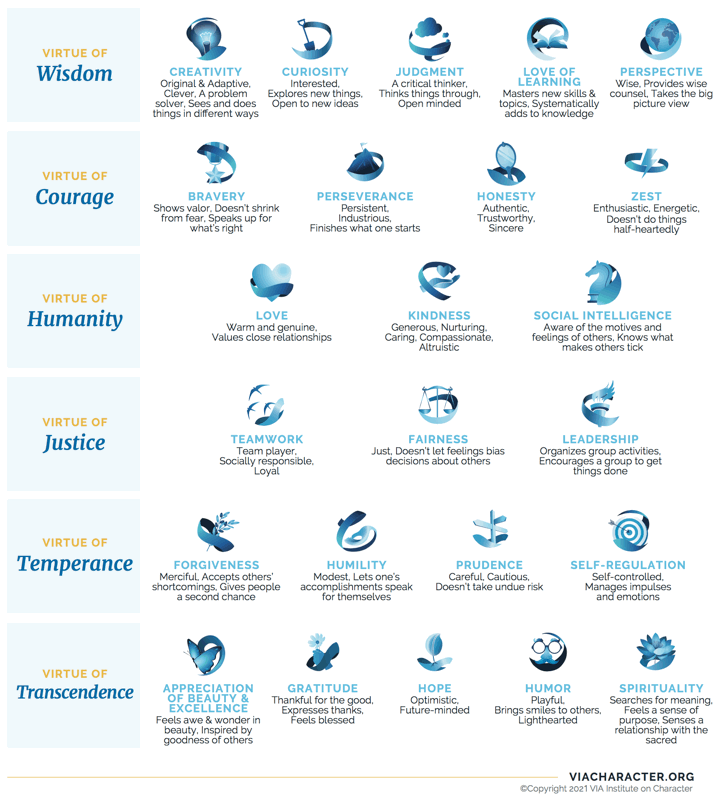
In the early 2000s, something groundbreaking occurred in the social sciences: Scientists discovered a common language of 24 character strengths make up what’s best about our personality. Everyone possesses all 24 character strengths in different degrees, so each person has a truly unique character strengths profile. Each character strength falls under one of these six broad virtue categories, which are universal across cultures and nations.

How can you identify your signature personality strengths? The VIA Institute on Character offers a free Character Strengths Profile that takes about 10 minutes and will list your strengths from highest to lowest based on your self-assessment answers. Here are the six broad “core virtues” and the 24 character traits that they measure:

  • Wisdom: creativity, curiosity, open-mindedness, love of learning, perspective
  • Courage: bravery, persistence, honesty, zest
  • Humanity: love, kindness, social intelligence
  • Justice: teamwork, fairness, leadership
  • Temperance: forgiveness, humility, prudence, self-regulation
  • Transcendence: appreciation of beauty and excellence, gratitude, hope, humor, spirituality

Everyone likes a nice graphic, so here’s one that adds a short explanation (source .zip file):

Character strengths are the core personality traits that define your unique identity and make you feel authentic, alive and engaged in life. Your free Character Strengths Profile below lists your strengths from highest to lowest based on the positive qualities that are strongest in you! Research shows learning about your strengths and how to express them can make you happier, less stressed, more productive at work and better connected to others. Interested in exploring the best parts of yourself? Check out our personalized, in-depth Total 24 or Top 5 Reports and use your strengths to build your best life.

Out of my top 5 character strengths, two were from Temperance, two were from Wisdom, and one was from Courage. The self-assessment does require you to be honest about your weaknesses, even if it may not feel great to admit them. I didn’t pay for a premium report, but I printed out the results and hopefully can incorporate them better in my daily life.

This activity reminds me of the #1 Thing People Regret The Most On Their Deathbeds:

I wish I’d had the courage to live a life true to myself, not the life others expected of me.

Influence: How Salespeople Use Your Mental Shortcuts Against You

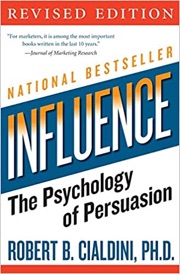
Although not technically a “personal finance” book, Influence: The Psychology of Persuasion by Robert Cialdini should be required reading if they ever create a standardized curriculum for personal finance. In addition to being a professor of psychology, the author was hired into several jobs where sales professionals have carefully honed the ability to use your own psychological tendencies for their benefit:

For nearly three years, then, I combined my experimental studies with a decidedly more entertaining program of systematic immersion into the world of compliance professionals—sales operators, fund-raisers, recruiters, advertisers, and others.

While a NYT Bestseller and on Warren Buffet’s reading list, I put it off as it seemed a little bit stuffy and dry, and besides I’d probably read about all the things discussed already, right? I was wrong! This book contained enough new and valuable information that I plan on making my kids read it as soon as they can. The amount of carefully-targeted marketing being thrown at them is only increasing.

These six psychological principles (mental shortcuts) have been used recently to influence your purchases, donations, and votes. I’ll still do my own brief summary below to help me remember the highlights, and there are many other summaries of the book online, but I recommend reading the entire thing in the original form. The book is older, so there are lots of copies at my library.

1. Reciprocation. If I do a favor for you, then you will feel the urge to repay me by doing me a favor in return. This tendency helps us work together in positive ways, but it can also be exploited.

  • Free in-home trials with “no obligation”.
  • Free samples at Costco.
  • Free custom mailing labels or even a nickel/dime in charity mailer.
  • “Free rewards” if you leave an Amazon product review.
  • “Free” steak dinners when selling expensive insurance products.
  • Upfront sign-up bonuses for trying out a credit card. (Ahem)

As a marketing technique, the free sample has a long and effective history. In most instances, a small amount of the relevant product is provided to potential customers for the stated purpose of allowing them to try it to see if they like it. And certainly this is a legitimate desire of the manufacturer—to expose the public to the qualities of the product. The beauty of the free sample, however, is that it is also a gift and, as such, can engage the reciprocity rule.

The confidential Amway Career Manual then instructs the salesperson to leave the BUG with the customer “for 24, 48, or 72 hours, at no cost or obligation to her. Just tell her you would like her to try the products…. That’s an offer no one can refuse.” At the end of the trial period, the Amway representative returns and picks up orders for those of the products the customer wishes to purchase.

For instance, the Disabled American Veterans organization reports that its simple mail appeal for donations produces a response rate of about 18 percent. But when the mailing also includes an unsolicited gift (gummed, individualized address labels), the success rate nearly doubles to 35 percent.

Defense? Mentally, you must redefine any “trial” or “gift” as a sales device. It is not a gift, and thus you owe them nothing in return. Choose to use a product or service on its own merits only.

2. Consistency. We are strongly wired to be (and to appear) consistent with what we have already done.

If you must leave your laptop in a library or valuables on the beach temporarily, your best bet would be to ask a single person directly “Will you please watch my things?”. Once that person has committed to that responsibility, your stuff becomes pretty safe, as indicated by experiment:

In these incidents, before taking his stroll, the accomplice would simply ask the subject to please “watch my things,” which each of them agreed to do. Now, propelled by the rule for consistency, nineteen of the twenty subjects became virtual vigilantes, running after and stopping the thief, demanding an explanation, and often restraining the thief physically or snatching the radio away.

Once you state something publicly, it becomes very hard for you to back down from it, even if later you realize your statement is wrong and refuted by nearly all evidence. Even worse, small wrong commitments can also open the door to larger wrong commitments. Answering “yes” to something as innocuous as “Are you a spontaneous person?” can get you do later do some stupid and dangerous things. “Why not do [dangerous thing]? You said you were spontaneous!”

What the Freedman and Fraser findings tell us, then, is to be very careful about agreeing to trivial requests. Such an agreement can not only increase our compliance with very similar, much larger requests, it can also make us more willing to perform a variety of larger favors that are only remotely connected to the little one we did earlier. It’s this second, general kind of influence concealed within small commitments that scares me.

Defense? Be very careful before agreeing to anything (even if it is small), especially publicly (like on social media). Don’t let a small commitment automatically lead you to more extreme commitments.

3. Social Proof. We tend to look to and follow the behavior of others, especially if we are unsure and/or they seem similar to us.

  • Infomercials will always have someone else come up and show an enthusiastic response.
  • During a sales presentation, there will usually be “plants” in an audience with a rehearsed response.
  • Immediately after a high-profile suicide, overall suicide rates will rise.

Bartenders often “salt” their tip jars with a few dollar bills at the beginning of the evening to simulate tips left by prior customers and thereby to give the impression that tipping with folding money is proper barroom behavior.

Defense? This shortcut can makes sense at times (Yelp/TripAdvisor/Amazon reviews), but be aware that sometimes it may be artificially generated. Also, be aware of how this tendency will affect others around you:

I have been sufficiently affected by these statistics to begin to take note of front-page suicide stories and to change my behavior in the period after their appearance. I try to be especially cautious behind the wheel of my car. I am reluctant to take extended trips requiring a lot of air travel.

4. Liking. We tend to say “yes” to people we like. We tend to like physically attractive people, as well as people that appear similar and familiar to ourselves, even though those factors may have nothing to do with why you should vote for them or buy a car from them.

The clearest illustration I know of the professional exploitation of the liking rule is the Tupperware party, which I consider the quintessential American compliance setting. Anybody familiar with the workings of a Tupperware party will recognize the use of the various weapons of influence we have examined so far: reciprocity (to start, games are played and prizes won by the partygoers; anyone who doesn’t win a prize gets to reach into a grab bag for hers so that everyone has received a gift before the buying begins), commitment (each participant is urged to describe publicly the uses and benefits she has found in the Tupperware she already owns), and social proof (once the buying begins, each purchase builds the idea that other, similar people want the product; therefore, it must be good).

Defense? Acknowledge this tendency, and try to focus solely on the merits of the situation.

5. Authority. We tend to follow symbols of authority as a mental shortcut, for example titles, uniforms, business suits, and celebrities. The problem is we do this even in situations where it shouldn’t be applicable. Why should an athlete tell me what life insurance to buy? Think of the many instances of abuse and harassment performed by people in positions of authority.

Planes have crashed because the junior pilot didn’t want to question the senior pilot. In one study, nurses were convinced to administer a lethal dose of a drug by an unknown stranger that simply firmly and urgently claimed to be a doctor over the phone.

There were four excellent reasons for a nurse’s caution in response to this order: (1) The prescription was transmitted by phone, in direct violation of hospital policy. (2) The medication itself was unauthorized; Astrogen had not been cleared for use nor placed on the ward stock list. (3) The prescribed dosage was obviously and dangerously excessive. The medication containers clearly stated that the “maximum daily dose” was only ten milligrams, half of what had been ordered. (4) The directive was given by a man the nurse had never met, seen, or even talked with before on the phone. Yet, in 95 percent of the instances, the nurses went straightaway to the ward medicine cabinet, where they secured the ordered dosage of Astrogen and started for the patient’s room to administer it. It was at this point that they were stopped by a secret observer, who revealed the nature of the experiment.

Defense? Don’t shortcut your own thinking and power by allowing the authority figure to take over. Question authority. Sometimes, it is your duty to be a safety check and protect others.

6. Scarcity. Simply being scarce makes something more desirable. This may also be linked to loss aversion – we hate losing something more than we like gaining something. “While supplies last.” “Limited-time offer.” No matter what time you land on the website, the sale will always be “ending in only 23:54 hours!”

For similar reasons, department stores holding a bargain sale toss out a few especially good deals on prominently advertised items called loss leaders. If the bait, of either form, has done its job, a large and eager crowd forms to snap it up. Soon, in the rush to score, the group becomes agitated, nearly blinded, by the adversarial nature of the situation. Humans and fish alike lose perspective on what they want and begin striking at whatever is being contested.

Defense? Question the actual amount of scarcity, especially in high-pressure environments like a live auction, Black Friday, or car sales department. Buy now or lose it forever? In reality, another train may arrive shortly.

Final thoughts. An important point in the book is that these tactics won’t always work, but they will alter the odds of success. The tactics will often be used in combination with each other for added strength. Finally, we are more likely to fall back on these mental shortcuts without thinking when we are stressed, rushed, tired, or hungry. Hopefully, the ability to identify these tactics in action will help us avoid making poor decisions, including financial ones.

OhmConnect: Get Paid For Saving Energy One Hour Per Week ($25 Sign-Up Bonus, CA Only)

Updated, new limited-time $25 bonus. OhmConnect works with consumers and their local utilities to lower energy costs and save money together. Before reading any further, it appears that cash payments are only for customers of PG&E, SDG&E or Southern California Edison in California. Here’s how it works:

  • Get notified: The utility lets us know that a time of intense demand is coming up and we notify you about it via an email or SMS. This is usually one hour a week between 5-9 pm when solar energy is not available.
  • Reduce: OhmConnect community members reduce our energy usage by turning off lights, giving our thermostats a break and not using electronics. (The easiest way to do this is by having your thermostat connected and smart plugs attached to your home’s biggest energy hogs.)
  • Get rewarded: The utility saves money by avoiding having to turn on their dirty and expensive “peaker plants”. The utility pays OhmConnect, which in turn passes on 80% to you.

Rewards include cash via PayPal, Amazon gift cards, and/or Target gift cards. Supposedly, you can earn $100 to $300 a year. If you connect any smart home devices like a Nest thermostat or an electric vehicle, you can earn extra bonuses and also automate your participation. OhmConnect participation is free and does not affect your existing utility service.

If you are a California resident and customer of PG&E, SDG&E or Southern California Edison, sign up for OhmConnect here and link your account and get a $25 bonus. This is a limited-time offer during April 2021 (Earth Month), as their usual bonus is only $10. You will also be able to then refer others for a $50 bonus if they open a new account and link a utility. That is my referral link, thanks if you use it.

Seems like a reasonably win-win-win arrangement if you reduce pollution while you’re at it. I wrote about this first back in 2017, but just got the e-mail about the limited-time Earth Month bonus boost. Please feel free to share your experiences with OhmConnect if you’ve used them for a while.

Fidelity Spire App $100 Bonus, Fidelity Go Roboadvisor Warning

Updated, including new bonus and tax warning. Fidelity Spire is Fidelity’s new mobile app, which adds fintech-y features and is separate from their main Fidelity app. You can link your external accounts, track balances, and set financial goals. (Fidelity acquired fintech startup eMoney in 2015, and is using that technology for account aggregation.) You can also link up “real” Fidelity accounts like their brokerage accounts and perform commission-free trades within the app.

New $100 Fidelity account bonus. If you open a new, eligible Fidelity account via the Spire app or fidelity.com/spire and maintain an automatic monthly deposit of $25+ for 6 months, you can get a $100 bonus. Hat tip to DoC.

  • You must open via the Fidelitiy Spire app or specific link above, not anywhere else.
  • Eligible accounts include The Fidelity Account®, Fidelity® Cash Management account, Fidelity Roth IRA, or a Fidelity traditional IRA.
  • You must establish a monthly Fidelity Automatic Account Builder (FAAB) plan, an automated deposit feature, on your newly established account for at least $25. First deposit must be within 45 days of opening, and must come from an external, non-Fidelity source. The automatic monthly deposit must remain in effect for at least 6 months (or 6 monthly deposits of at least $25).
  • Bonus limited to $100 per individual in 2021.

Fidelity doesn’t offer bonuses very often, so even though it is not that big, it’s still something if you were planning on opening an account anyway.

While not eligible for the bonus, they are also offering their new Fidelity Go robo-advisor service that automatically invests for you, with no minimum to start and the following fee structure:

  • $10,000 or less: No advisory fee
  • $10,000 to $49,999: Flat $3 a month
  • $50,000 or more: 0.35% annually

The flat fee structure for assets under $50,000 is interesting. At $10,000 in assets, $36 dollars a year = 0.36% annually. At $49,999 in assets, $36 dollars a year = 0.07% annually.

In addition, the underlying mutual funds also offer zero expense ratios. Fidelity actually created a new line of mutual funds called Fidelity Flex Funds for their managed accounts, similar to their other passive and actively-managed mutual funds but with zero expense ratios. For example, there is a Fidelity Flex 500 Fund and a Fidelity Flex International Index fund. However, this special also comes with a drawback.

As with other roboadvisors, the portfolio they choose will be based on you filling out a relatively short online questionnaire. If you aren’t sure about the resulting asset allocation, I recommend going back and change your answers to see the effects. With Fidelity Go, you do not gain access to financial advice from a human advisor. However, you will still gain access to their phone/live chat customer service, which has traditionally been rated highly.

Warning: If you decide to move your money out of Fidelity Go in a taxable account, they will force you to sell all your proprietary Flex fund shares and potentially incur capital gains taxes. If you just owned regular ETFs or mutual funds, you should be able to export the shares “in-kind” without selling and maintain your cost basis. I know you can do this with Betterment and Wealthfront. Depending on how much your account grew, you could consider this a significant “exit fee”.

This is why I still prefer to DIY and construct a portfolio using “high-quality interchangeable parts” that I can keep forever. You can still use Fidelity as I think they are reputable firm with overall good customer service, but instead just buy something like Vanguard Total US Market ETF (VTI) or iShares Core Total US (ITOT).

With free trades now available nearly everywhere, the primary “cost” is the hassle of doing the trades yourself. This is why I recommend also looking at M1 Finance, as they will maintain your target asset allocation for free while still allowing your the ability to port out your investments at any time.

BBVA $250 Easy Bank Bonus: $200 Checking + $50 Savings (Back Again)

$250 bonus is back. In the current low interest rate world, easy bank bonuses have become more attractive way to boost your safe interest income. BBVA has brought back their popular $250 bonus promotion for a limited-time.

  • $200 bonus for opening a new BBVA Free Checking account between April 12-26 and receive a qualifying direct deposit of $500+ by June 30th, 2021.
  • Additional $50 bonus by adding a new BBVA Savings account between April 12-26 and having a savings balance of at least $1,000 on June 30th, 2021.

If you want the entire $250 bonus, be sure to check the boxes for both offers on the promotion landing page. You must keep the account open for at least 12 months, otherwise they may claw back the bonus. You must be a new BBVA consumer checking customer who has not had a BBVA consumer checking account open within the last 36 months or closed due to negative balance to be eligible for the bonus. The promo code should be automatically applied, but it is SBOL2021. Note the following state restrictions:

For accounts opened online, eligible accounts include BBVA Free Checking and BBVA Easy Checking. BBVA Free Checking and Easy Checking are only available in Alabama, Arizona, California, Colorado, Florida, New Mexico, and Texas.

BBVA Free Checking account details:

  • No monthly service charge. No ongoing minimum balance.
  • Minimum opening deposit is $25.
  • No ATM fees at BBVA USA ATMs.
  • Free online and paper statements.

Savings account bonus details:

You must first meet stipulations for the $200 Checking Bonus to be eligible for the $50 Savings Bonus. The savings account must be opened at the same time as the checking account through this landing page using the “Open Bundle Now Button”.

Online Savings account details:

  • No monthly service charge. No ongoing minimum balance.
  • Minimum opening deposit is $25.
  • Currently interest rate is 0.01% APY.
  • You will automatically receive a paper account statement by mail for a fee of $3 per month. However, you can opt for free electronic account statements and eliminate the $3 Paper Statement Fee when you turn off paper statements through Online Banking. Don’t forget to opt out!

The good thing is that this bonus doesn’t require a lot of money to be tied up – you need to switch over a single direct deposit of $500+ by the end of June 2021 and move over $1,000 in the savings account by the end of June 2021. There are no ongoing monthly fees or minimum balances, it can be only entirely online, and the timeline is reasonable. For comparison, you’d have to keep $50,000 at 0.50% APY for an entire 12 months to get $250 in interest.

MMB Portfolio Update April 2021: Dividend and Interest Income

dividendmono225

While my April 2021 portfolio asset allocation is designed for total return, I also track the income produced. Stock dividends are the portion of profits that businesses have decided they don’t need to reinvest into their business. The dividends may suffer some short-term drops, but over the long run they have grown faster than inflation. Here is the historical growth of the S&P 500 absolute dividend (source):

This is true despite the fact that the S&P 500 yield percentage are again near historical lows, along with interest rates (source):

I track the “TTM” or “12-Month Yield” from Morningstar, which is the sum of the trailing 12 months of interest and dividend payments divided by the last month’s ending share price (NAV) plus any capital gains distributed over the same period. I prefer this measure because it is based on historical distributions and not a forecast. Below is a rough approximation of my portfolio (2/3rd stocks and 1/3rd bonds).

Asset Class / Fund % of Portfolio Trailing 12-Month Yield (Taken 4/11/21) Yield Contribution
US Total Stock
Vanguard Total Stock Market Fund (VTI, VTSAX)
25% 1.37% 0.36%
US Small Value
Vanguard Small-Cap Value ETF (VBR)
5% 1.59% 0.08%
International Total Stock
Vanguard Total International Stock Market Fund (VXUS, VTIAX)
25% 2.13% 0.53%
Emerging Markets
Vanguard Emerging Markets ETF (VWO)
5% 1.86% 0.09%
US Real Estate
Vanguard REIT Index Fund (VNQ, VGSLX)
6% 3.50% 0.24%
Intermediate-Term High Quality Bonds
Vanguard Intermediate-Term Treasury ETF (VGIT)
17% 1.43% 0.26%
Inflation-Linked Treasury Bonds
Vanguard Short-Term Inflation-Protected Securities ETF (VTIP)
17% 1.37% 0.20%
Totals 100% 1.73%


Trailing 12-month yield history. Here is a chart showing how this 12-month trailing income rate has varied since I started tracking it in 2014.

Portfolio value reality check. One of the things I like about using this number is that when stock prices drop, this percentage metric usually goes up – which makes me feel better in a bear market. When stock prices go up, this percentage metric usually goes down, which keeps me from getting too euphoric during a bull market.

Here’s a related quote from Jack Bogle (source):

The true investor… will do better if he forgets about the stock market and pays attention to his dividend returns and to the operating results of his companies.

This quarter’s trailing income yield of 1.73% is the lowest ever since 2014. This is nearly a full 1% lower than what it was in late 2018. At the same time, my portfolio value is also bigger than ever. If you retired back in say, 2015, your absolute income from dividends and interest is much higher in 2021, even though your yield percentage is lower. You had a good run right after retirement.

However, this is not necessarily good news if you are retiring today. There are countless articles debating this topic, but I historically support a 3% withdrawal rate as a reasonable target for planning purposes if you want to retire young (before age 50) and a 4% withdrawal rate as a reasonable target if retiring at a more traditional age (closer to 65). However, nobody is guaranteeing these numbers and flexibility may be required if there is a bad stock run right after retirement. The “good ole’ days” included the ability to put your money in a CD or high-quality bond and still keep up with inflation…

If you are not close to retirement, there is not much use worrying about it now. Your time is better spent focusing on earning potential via better career moves, investing in your skillset, and/or looking for entrepreneurial opportunities where you own equity in a business asset.

How we handle this income. Our dividends and interest income are not automatically reinvested. I treat this money as part of our “paycheck”. Then, as with a real paycheck, we can choose to either spend it or invest it again. Even if still working, you could use this money to cut back working hours, pursue new interests, start a new business, travel, perform charity or volunteer work, and so on.

MMB Portfolio Update April 2021: Asset Allocation & Performance

portpie_blank200

Here’s an update on my current investment holdings as of April 2021, including our 401k/403b/IRAs, taxable brokerage accounts, and savings bonds but excluding our house, cash reserves, and a small portfolio of self-directed investments. Following the concept of skin in the game, these are my real-world holdings and what I’ll be using to create income to fund our household expenses. We have no pensions or other sources of income.

Actual Asset Allocation and Holdings
I use both Personal Capital and a custom Google Spreadsheet to track my investment holdings. The Personal Capital financial tracking app (free, my review) automatically logs into my different accounts, adds up my various balances, tracks my performance, and calculates my overall asset allocation. Once a quarter, I also update my manual Google Spreadsheet (free, instructions) because it helps me calculate how much I need in each asset class to rebalance back towards my target asset allocation.

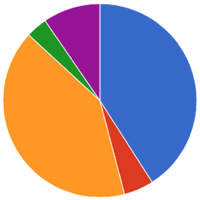
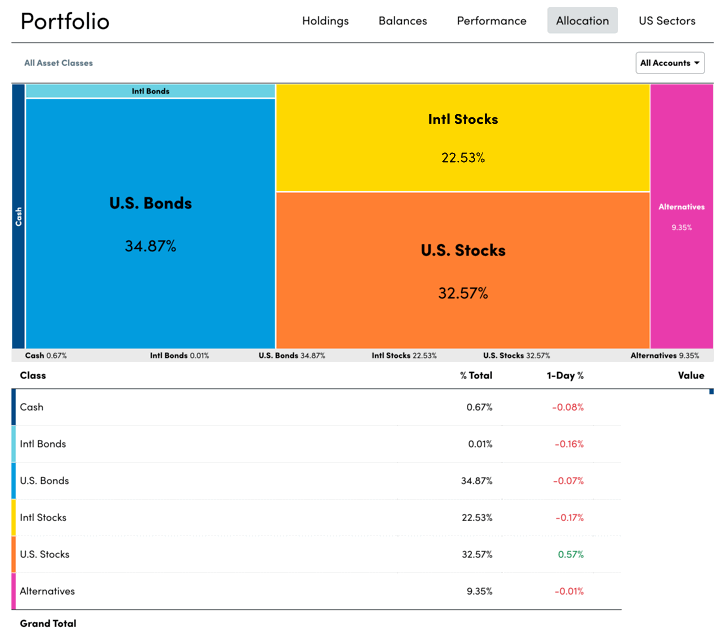
Here are updated performance and asset allocation charts, per the “Allocation” and “Holdings” tabs of my Personal Capital account, respectively:

Stock Holdings
Vanguard Total Stock Market (VTI, VTSAX)
Vanguard Total International Stock Market (VXUS, VTIAX)
Vanguard Small Value (VBR)
Vanguard Emerging Markets (VWO)
Vanguard REIT Index (VNQ, VGSLX)

Bond Holdings
Vanguard Limited-Term Tax-Exempt (VMLTX, VMLUX)
Vanguard Intermediate-Term Tax-Exempt (VWITX, VWIUX)
Vanguard Intermediate-Term Treasury (VFITX, VFIUX)
Vanguard Inflation-Protected Securities (VIPSX, VAIPX)
Fidelity Inflation-Protected Bond Index (FIPDX)
iShares Barclays TIPS Bond (TIP)
Individual TIPS bonds
U.S. Savings Bonds (Series I)

Target Asset Allocation. I do not spend a lot of time backtesting various model portfolios, as I don’t think picking through the details of the recent past will necessarily create superior future returns. Usually, whatever is popular in the moment just happens to hold the asset class that has been the hottest recently as well.

Mainly, I try to own broad, low-cost exposure to asset classes that will provide long-term returns above inflation, distribute income via dividends and interest, and finally offer some historical tendencies to balance each other out. I make a small bet that US Small Value and Emerging Markets will have higher future long-term returns (along with some higher volatility) than the more large and broad indexes, although I could be wrong.

While you could argue for various other asset classes, I believe that it is important to imagine an asset class doing poorly for a long time, with bad news constantly surrounding it, and only hold the ones where you still think you can maintain faith through those fearful times. I simply don’t have strong faith in the long-term results of commodities, gold, or bitcoin. (In the interest of full disclosure, I do own tiny bits of gold and BTC amongst my self-directed investments.)

My US/international ratio floats with the total world market cap breakdown, currently at ~57% US and 43% ex-US. I’m fine with a slight home bias (owning more US stocks than the overall world market cap), but I want to avoid having an international bias.

Stocks Breakdown

  • 43% US Total Market
  • 7% US Small-Cap Value
  • 33% International Total Market
  • 7% Emerging Markets
  • 10% US Real Estate (REIT)

Bonds Breakdown

  • 33% High-Quality Nominal bonds, US Treasury or FDIC-insured
  • 33% High-Quality Municipal Bonds
  • 33% US Treasury Inflation-Protected Bonds

I have settled into a long-term target ratio of 67% stocks and 33% bonds (2:1 ratio) within our investment strategy of buy, hold, and occasionally rebalance. I will use the dividends and interest to rebalance whenever possible in order to avoid taxable gains. I plan to only manually rebalance past that if the stock/bond ratio is still off by more than 5% (i.e. less than 62% stocks, greater than 72% stocks). With a self-managed, simple portfolio of low-cost funds, we minimize management fees, commissions, and taxes.

Holdings commentary. Overall, all these numbers keep going up since the March 2020 drop, but I remain anxious about the future. There seems to be lots of money and optimism sloshing around, but there are also so many people still struggling. All I can do is listen to the late Jack Bogle and “stay the course”. I remain optimistic that capitalism, human ingenuity, human resilience, and our system of laws will continue to improve things over time.

In specific terms, I seem to be a little overweight REITs and underweight International Stocks. I may rebalance within tax-deferred accounts if this continues.

I have also been following with interest the new ETFs from both Dimensional Fund Advisors and Avantis (started by former DFA employees). Right now, I don’t need to rebalance out of anything, but in the future I may purchase the DFA Emerging Core Equity Market ETF (DFAE) and Avantis U.S. Small Cap Value ETF (AVUV) instead of my current holdings.

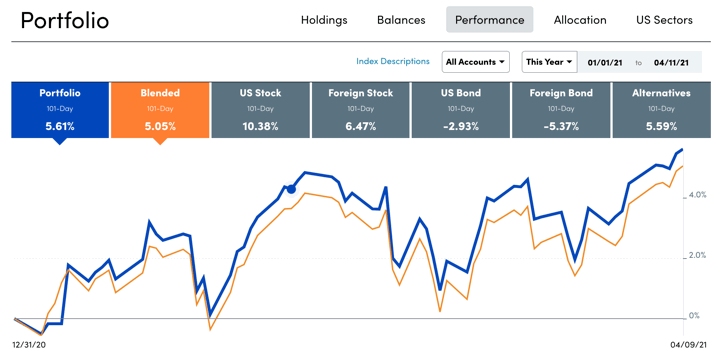
Performance numbers. According to Personal Capital, my portfolio is already up +5.6% since the beginning of 2021. Wow. I rolled my own benchmark for my portfolio using 50% Vanguard LifeStrategy Growth Fund and 50% Vanguard LifeStrategy Moderate Growth Fund – one is 60/40 and the other is 80/20 so it also works out to 70% stocks and 30% bonds. That benchmark would have a total return of +5.2% for 2020 YTD as of 4/9/2021.

The goal of this portfolio is to create sustainable income that keeps up with inflation to cover our household expenses. I’ll share about more about the income aspect in a separate post.