Archives for October 2024

How to Convert Vanguard Mutual Funds to Vanguard ETF Equivalents Online 2024

Earlier this year, I discussed why I decided to convert my Vanguard mutual fund to ETFs. I don’t regret the decision, and some of those portable Vanguard ETFs later went to Robinhood for a $8,000 payday 💰 (that offer is back again this week…). At the time, the only way to convert was to call into Vanguard and listen to a lot of disclosures over the phone. As of late 2024, you can again convert Vanguard mutual funds to their ETF equivalent directly on the Vanguard.com brokerage website.

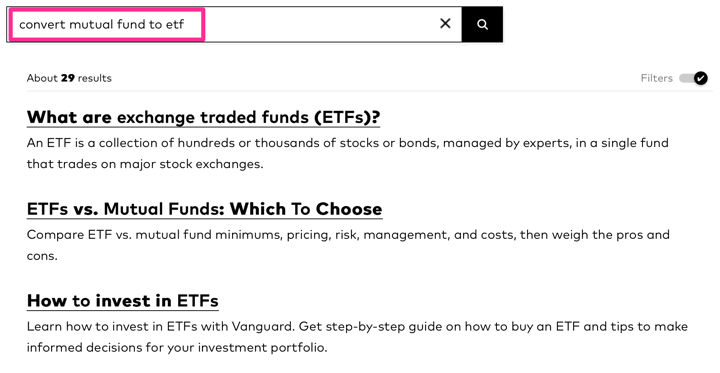
However, the feature is somewhat hidden, as a search for “convert mutual funds to ETF” does not come up with a useful answer, even those it comes up as a predicted search request:
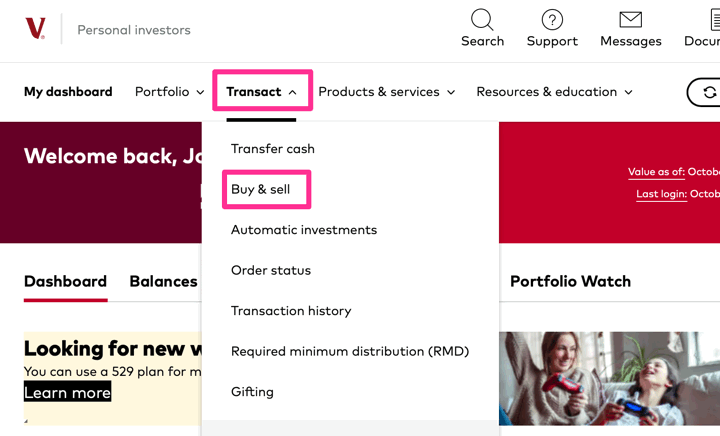
Hopefully this quick how-to will spare you some wasted time. After you log in to your Vanguard account, look for the “Transact” menu option on the top search bar. See screenshot. After that, click on “Buy & Sell”. (It won’t show up as an option under the “Transact” option in other parts of the site.)
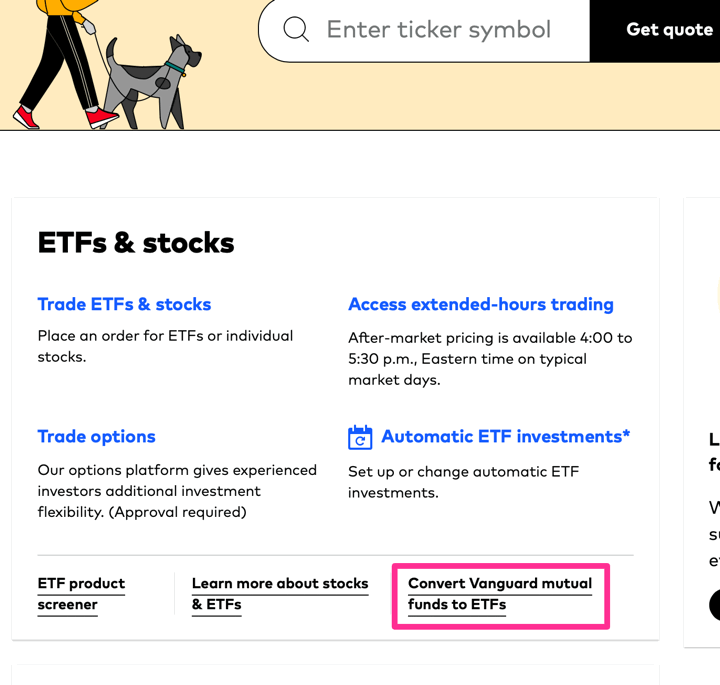
After that, you have to look for a smaller text link that says “Convert Vanguard mutual funds to ETFs”.
This should bring you finally to the main conversion page:
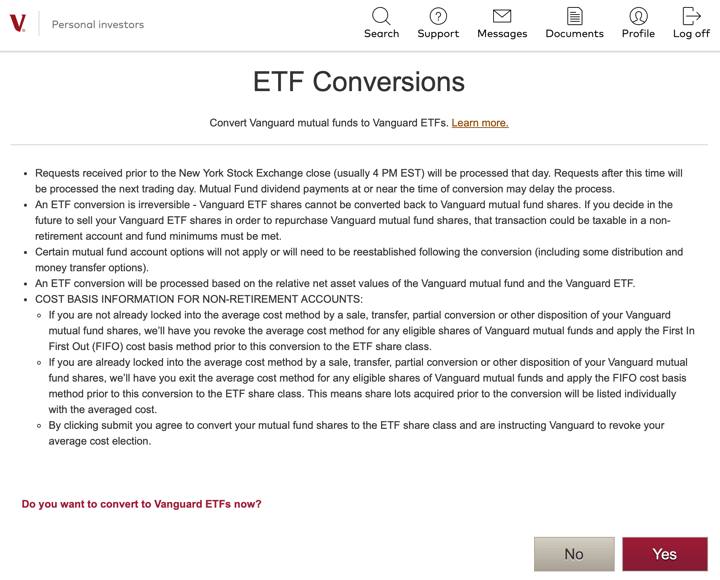
There are some disclosures; I have copied them below for reference. After that, you will locate the mutual funds you want to convert. The conversion should happen either same-day or next-day. Afterward, I would double-check to make sure your cost basis is carried over properly.

– Requests received prior to the New York Stock Exchange close (usually 4 PM EST) will be processed that day. Requests after this time will be processed the next trading day. Mutual Fund dividend payments at or near the time of conversion may delay the process.

– An ETF conversion is irreversible – Vanguard ETF shares cannot be converted back to Vanguard mutual fund shares. If you decide in the future to sell your Vanguard ETF shares in order to repurchase Vanguard mutual fund shares, that transaction could be taxable in a non-retirement account and fund minimums must be met.
Certain mutual fund account options will not apply or will need to be reestablished following the conversion (including some distribution and money transfer options).

– An ETF conversion will be processed based on the relative net asset values of the Vanguard mutual fund and the Vanguard ETF.

COST BASIS INFORMATION FOR NON-RETIREMENT ACCOUNTS:
– If you are not already locked into the average cost method by a sale, transfer, partial conversion or other disposition of your Vanguard mutual fund shares, we’ll have you revoke the average cost method for any eligible shares of Vanguard mutual funds and apply the First In First Out (FIFO) cost basis method prior to this conversion to the ETF share class.

– If you are already locked into the average cost method by a sale, transfer, partial conversion or other disposition of your Vanguard mutual fund shares, we’ll have you exit the average cost method for any eligible shares of Vanguard mutual funds and apply the FIFO cost basis method prior to this conversion to the ETF share class. This means share lots acquired prior to the conversion will be listed individually with the averaged cost.

– By clicking submit you agree to convert your mutual fund shares to the ETF share class and are instructing Vanguard to revoke your average cost election.

Here’s what is inside the “Learn More” link:

– Vanguard Brokerage is required to send you an ETF prospectus for each mutual fund converted to an ETF. The prospectuses will be sent according to your mailing preferences.

– There is no fee for Vanguard Brokerage clients to convert Vanguard mutual fund shares to Vanguard ETFs of the same holding.

– Vanguard will apply the IRS default method of FIFO to ETF holdings. With this method, the shares you bought first will automatically be the first shares relieved.

– If you are already invested in the ETF share class for the fund to which you are converting your mutual fund shares, and you have elected a cost basis method other than FIFO the shares you receive as result of this conversion will follow that election.
– If you are not already invested in the ETF share class for the fund to which you are converting, Vanguard will apply the default method of FIFO for new ETF shares you receive as a result of this conversion. You can select a different cost basis method after the conversion.

*Noncovered shares: The average cost method will carry over to the ETF for the non-covered shares, but you are free to report the shares using another method on your tax form. The cost basis of noncovered shares is sent to you for informational purposes only and will not be reported to the IRS by Vanguard. You are responsible for reporting the sale of noncovered shares.

S&P 500 Return Components: P/E Ratio Expansion vs. Earnings Growth

The S&P 500 has been on a great run recently, up around 30% over the last 12 months! Most of us are probably pretty satisfied with our brokerage accounts right now. (I know I am.) But where is it coming from? The total return of the S&P 500 can be broken down into three components:

Total Return = Earnings Growth + Dividend Yield ± P/E Multiple Changes

In other words, business profits could go up (or down), the dividends that get mailed out could go up or down, and how much investors are willing to pay for each bit of profit could change. This last one, the P/E “Multiple” is rather fickle, and P/E ratios can go up and down, but rarely stays highly elevated for extended periods of time.

Above is the historical S&P 500 P/E ratio chart from Multpl. The last time I wrote a post like this was when the screenshot said the P/E ratio rounded off to 35. Today it is 30. So the P/E ratio has been even higher in the recent past… but it also didn’t stay that high for very long.

Here is a very handy chart that breaks down the S&P 500 return over the last few years. Credit to @Sonusvarghese via Abnormal Returns.

The chart itself says “profit growth has been driving returns” and definitely that is true over the longer run, but it is also important to appreciate how much P/E ratio changes can affect future returns, even if profit growth continues. This is because the effect of P/E ratio doesn’t just go to zero when our collective optimism cools a bit – it has the same power in reverse.

Take all of 2024 year-to-date. Yes, profit growth added 11%, but multiple growth added 10%. The P/E ratio went from ~25 to ~30. If for the next 9 months, profits kept growing at the same positive pace, but the P/E ratio simply went back to where it was at the beginning of 2024, then your total return would be only 1% over that time period. The +10% boost comes back as a -10% haircut.

If for the next 9 months, profits kept steady, but the P/E ratio simply went back to where it was at the beginning of 2024, then your total return would be negative 10% over that time period.

Or the P/E ratio could zoom off to 35 again. Who knows. I’m not talking about market timing, and I remain a buy-and-hold investor that avoids daily market noise, but I do poke my head up once in a while. Mostly, I use these check-ins to stay calm when things get a little fizzy or a little panicky.

See also: S&P 500 Returns by Components 1900-2020

Best Interest Rates on Cash Roundup – October 2024

Here’s my monthly roundup of the best interest rates on cash as of October 2024, roughly sorted from shortest to longest maturities. There are lesser-known opportunities available to individual investors, often earning more money while keeping the same level of safety by moving to another FDIC-insured bank or NCUA-insured credit union. Check out my Ultimate Rate-Chaser Calculator to see how much extra interest you could earn from switching. Rates listed are available to everyone nationwide. Rates checked as of 10/15/2024.

TL;DR: Rates are still dropping at all maturities, from savings accounts outward. Still some 5%+ savings accounts. Still some 4%+ APY 5-year CDs. Compare against Treasury bills and bonds at every maturity, taking into account state tax exemption. I no longer recommend fintech companies due to the possibility of loss due to poor recordkeeping and/or fraud.

High-yield savings accounts
Since the huge megabanks still pay essentially no interest, everyone should at least have a separate, no-fee online savings account to piggy-back onto your existing checking account. The interest rates on savings accounts can drop at any time, so I list the top rates as well as competitive rates from banks with a history of competitive rates and solid user experience. Some banks will bait you with a temporary top rate and then lower the rates in the hopes that you are too lazy to leave.

  • The top rates at the moment are from newcomers Pibank at 5.50% APY and TIMBR at 5.25% APY. I have no personal experience with either, but they are the top rates at the moment. Most others have dropped at least a little. For example, CIT Platinum Savings is now at 4.70% APY with $5,000+ balance.
  • SoFi Bank is at 4.30% APY + up to $325 new account bonus with direct deposit. You must maintain a direct deposit of any amount (even $1) each month for the higher APY. SoFi has historically competitive rates and full banking features. See details at $25 + $300 SoFi Money new account and deposit bonus.
  • Here is a limited survey of high-yield savings accounts. They aren’t the top rates, but a group that have historically kept it relatively competitive such that I like to track their history.

Short-term guaranteed rates (1 year and under)
A common question is what to do with a big pile of cash that you’re waiting to deploy shortly (plan to buy a house soon, just sold your house, just sold your business, legal settlement, inheritance). My usual advice is to keep things simple and take your time. If not a savings account, then put it in a flexible short-term CD under the FDIC limits until you have a plan.

  • No Penalty CDs offer a fixed interest rate that can never go down, but you can still take out your money (once) without any fees if you want to use it elsewhere. Marcus has a 7-month No Penalty CD at 4.20% APY with a $500 minimum deposit. Farmer’s Insurance FCU has 9-month No Penalty CD at 4.50% APY with a $1,000 minimum deposit. Consider opening multiple CDs in smaller increments for more flexibility.
  • Langley Federal Credit Union has a 10-month certificate special at 5.25% APY ($500 min, $50,000 max). This is a promo for new members only. Anyone can join this credit union nationwide; you must maintain $5 in their share savings account. Early withdrawal penalty is 90 days of interest.

Money market mutual funds
Many brokerage firms that pay out very little interest on their default cash sweep funds (and keep the difference for themselves). Note: Money market mutual funds are highly-regulated, but ultimately not FDIC-insured, so I would still stick with highly reputable firms.

  • Vanguard Federal Money Market Fund (VMFXX) is the default sweep option for Vanguard brokerage accounts, which has an SEC yield of 4.80% (changes daily, but also works out to a compound yield of 4.91%, which is better for comparing against APY). Odds are this is much higher than your own broker’s default cash sweep interest rate.
  • Vanguard Treasury Money Market Fund (VUSXX) is an alternative money market fund which you must manually purchase, but the interest will be mostly (80% for 2023 tax year) exempt from state and local income taxes because it comes from qualifying US government obligations. Current SEC yield of 4.86% (compound yield of 4.97%).

Treasury Bills and Ultra-short Treasury ETFs
Another option is to buy individual Treasury bills which come in a variety of maturities from 4-weeks to 52-weeks and are fully backed by the US government. You can also invest in ETFs that hold a rotating basket of short-term Treasury Bills for you, while charging a small management fee for doing so. T-bill interest is exempt from state and local income taxes, which can make a significant difference in your effective yield.

  • You can build your own T-Bill ladder at TreasuryDirect.gov or via a brokerage account with a bond desk like Vanguard and Fidelity. Here are the current Treasury Bill rates. As of 10/15/24, a new 4-week T-Bill had the equivalent of 4.80% annualized interest and a 52-week T-Bill had the equivalent of 4.19% annualized interest.
  • The iShares 0-3 Month Treasury Bond ETF (SGOV) has a 5.08% SEC yield and effective duration of 0.10 years. SPDR Bloomberg Barclays 1-3 Month T-Bill ETF (BIL) has a 4.85% SEC yield and effective duration of 0.08 years.

US Savings Bonds
Series I Savings Bonds offer rates that are linked to inflation and backed by the US government. You must hold them for at least a year. If you redeem them within 5 years there is a penalty of the last 3 months of interest. The annual purchase limit for electronic I bonds is $10,000 per Social Security Number, available online at TreasuryDirect.gov.

  • “I Bonds” bought between May 2024 and October 2024 will earn a 4.28% rate for the first six months. The rate of the subsequent 6-month period will be based on inflation again. More on Savings Bonds here.
  • In mid-October 2024, the CPI will be announced and you will have a short period where you will have a very close estimate of the rate for the next 12 months. This is the mid-October post. I will have another post up at that time.

Rewards checking accounts
These unique checking accounts pay above-average interest rates, but with unique risks. You have to jump through certain hoops which usually involve 10+ debit card purchases each cycle, a certain number of ACH/direct deposits, and/or a certain number of logins per month. If you make a mistake (or they judge that you did) you risk earning zero interest for that month. Some folks don’t mind the extra work and attention required, while others would rather not bother. Rates can also drop suddenly, leaving a “bait-and-switch” feeling.

  • OnPath Federal Credit Union (my review) pays 7.00% APY on up to $10,000 if you make 15 debit card purchases, opt into online statements, and login to online or mobile banking once per statement cycle. Anyone can join this credit union via $5 membership fee to join partner organization. You can also get a $100 Visa Reward card when you open a new account and make qualifying transactions.
  • Genisys Credit Union pays 6.75% APY on up to $7,500 if you make 10 debit card purchases of $5+ each per statement cycle, and opt into online statements. Anyone can join this credit union via $5 membership fee to join partner organization.
  • Credit Union of New Jersey pays 6.00% APY on up to $25,000 if you make 12 debit card purchases, opt into online statements, and make at least 1 direct deposit, online bill payment, or automatic payment (ACH) per statement cycle. Anyone can join this credit union via $5 membership fee to join partner organization.
  • Andrews Federal Credit Union pays 6.00% APY on up to $25,000 if you make 15 debit card purchases, opt into online statements, and make at least 1 direct deposit or ACH transaction per statement cycle. Anyone can join this credit union via partner organization.
  • Pelican State Credit Union pays 6.05% APY on up to $20,000 if you make 15 debit card purchases, opt into online statements, log into your account at least once, and make at least 1 direct deposit, online bill payment, or automatic payment (ACH) per statement cycle. Anyone can join this credit union via partner organization membership.
  • Orion Federal Credit Union pays 6.00% APY on up to $10,000 if you make electronic deposits of $500+ each month (ACH transfers count) and spend $500+ on your Orion debit or credit card each month. Anyone can join this credit union via $10 membership fee to partner organization membership.
  • All America/Redneck Bank pays 4.65% APY on up to $15,000 if you make 10 debit card purchases each monthly cycle with online statements.
  • Find a locally-restricted rewards checking account at DepositAccounts.

Certificates of deposit (greater than 1 year)
CDs offer higher rates, but come with an early withdrawal penalty. By finding a bank CD with a reasonable early withdrawal penalty, you can enjoy higher rates but maintain access in a true emergency. Alternatively, consider building a CD ladder of different maturity lengths (ex. 1/2/3/4/5-years) such that you have access to part of the ladder each year, but your blended interest rate is higher than a savings account. When one CD matures, use that money to buy another 5-year CD to keep the ladder going. Some CDs also offer “add-ons” where you can deposit more funds if rates drop.

  • Synchrony Bank has a 5-year certificate at 4.00% APY (no minimum), 4-year at 4.00% APY, 3-year at 4.00% APY, 2-year at 3.90% APY, and 1-year at 4.40% APY. Early withdrawal penalty for the 4-year and 5-year is 365 days of interest.
  • Advancial Federal Credit Union has has a 5-year certificate at 4.09% APY (higher $50,000 min). Early withdrawal penalty for the 5-year is 365 days of interest. Anyone nationwide should be able to join via membership with partner organization US Dog Agility Association, but I would call or check first.
  • State Department FCU has a 60-month CD at at 3.91% APY ($500 min) or 4.11% APY (jumbo $100,000 min). Early withdrawal penalty for the 5-year is 360 days of interest. Membership is open nationwide by agreeing to join the American Consumer Council (ACC) membership. Try promo code “consumer” when signing up at ACC for a free membership.
  • You can buy certificates of deposit via the bond desks of Vanguard and Fidelity. You may need an account to see the rates. These “brokered CDs” offer FDIC insurance and easy laddering, but they don’t come with predictable early withdrawal penalties. Right now, I see a 5-year non-callable CD at 3.75 to 3.80% APY (callable: no, call protection: yes). Be warned that both Vanguard and Fidelity will list higher rates from callable CDs, which importantly means they can call back your CD if rates drop later. (Issuers have indeed started calling some of their old 5%+ CDs as of Fall 2024.)

Longer-term Instruments
I’d use these with caution due to increased interest rate risk (tbh, I don’t use them at all), but I still track them to see the rest of the current yield curve.

  • Willing to lock up your money for 10 years? You can buy long-term certificates of deposit via the bond desks of Vanguard and Fidelity. These “brokered CDs” offer FDIC insurance, but they don’t come with predictable early withdrawal penalties. You might find something that pays more than your other brokerage cash and Treasury options. Right now, I see a 10-year CDs at 3.75% (non-callable) vs. 4.03% for a 10-year Treasury. Watch out for higher rates from callable CDs where they can call your CD back if interest rates drop.

All rates were checked as of 10/15/2024.

Photo by Giorgio Trovato on Unsplash

Bank of America Credit Cards – 2% More Rewards Day on Thursday 11/7/2024

Update for 2024, promo is back again with limit of $50 extra per card. Bank of America has a one-day credit card promotion called “More Rewards Day” on Thursday, 11/7/24. Depending on your BofA credit card type (all consumer and business cards are all eligible), you can earn an additional 2% cash back or 2 points or miles/$1 spent on purchases made on 11/7/24 only (Eastern time zone!), up to a $50/5,000 point cap per unique credit card account. That’s on on top of the rewards you’re already earning. No enrollment required. Specifically:

  • Cash Back Credit Cards. Earn an additional 2% cash back for every $1 spent on purchases made on 11/7/24. This one-day offer is good for the first $2,500 in purchases up to $50 cash back. That’s on top of the rewards you’re already earning.
  • Points Rewards Credit Cards. Earn an additional 2 points for every $1 spent on purchases made on 11/7/24. This one-day offer is good for the first $2,500 in purchases up to 5,000 points. That’s on top of the rewards you’re already earning.
  • Miles Rewards Credit Cards. Earn an additional 2 Miles for every $1 spent on purchases made on 11/7/24 ET. This one-day offer is good for the first $2,500 in purchases up to 5,000 Miles. That’s on top of the rewards you’re already earning.
  • Non-Rewards and All Other Rewards Credit Cards. Earn 2% cash back in the form of a statement credit on purchases made on 11/7/24. This one-day offer is good for the first $2,500 in purchases up to $50 cash back.

You can get the bonus on each of your unique credit cards. Note that it expires 11:59pm in the Eastern time zone. It appears that somehow they can track the “transaction date” separately from when it posts to your statement. Note that some retail websites don’t actually charge you until a physical item ships.

Only Purchases that post to your account and appear on your statement with a transaction date of 11/07/2024 will qualify. Merchants may impact when a transaction will appear on your statement, particularly if they delay processing of the purchase. Transactions with delayed processing of 90 days or more will not be eligible to be included in the promotional offer.

This is an interesting promotion that could work out well if (1) you have a BofA rewards card (or multiples) with good rewards already, (2) you have the Preferred Rewards boost, (3) you have larger purchases planned in one of your customized bonus categories, or just any larger purchase really, and (4) it is the type of purchase that applies the same day (sometimes you don’t get charged until something ships). Max out that $2,500 in purchases for each card. Some possibilities:

  • Pay estimated income taxes at PayUSATax.com for only 1.82% fee.
  • Pay your insurance premiums upfront. My State Farm grouped monthly bill can also be timed using manual payment.
  • Pay your utilities, property taxes, phone bills, and other monthly bills upfront. Sometimes it just costs a one-time flat fee to pay by credit card, which can be worth if you are charging $1,000+.
  • Make your annual charitable contributions on 11/7/23 this year.
  • Gas and EV charging stations; online shopping, including cable, internet, phone plans and streaming; dining; travel; drug stores and pharmacies; or home improvement and furnishings are choices for your 3% category for the BofA Customized Cash card (up to 5.25% with Preferred Rewards) for a total of 7.25% cash back total with this promo. You can change your category this month in app and then max out the $2,500 quarterly limit using gift cards at Amazon (online shopping), Home Depot (home improvement), gas stations, and so on.

Robinhood HOOD Week Promo: 3% IRA, 2% Margin, 1% ACAT Bonus (10/16-10/27)

Robinhood brokerage app is jumping on the week-long promo trend and just teased Robinhood HOOD Week (“HOOD” is their stock symbol) from October 16, 2024 to October 27, 2024. The front page is vague but inside the full terms you can see exactly what they will be offering. They are still aggressively collecting assets, and are rolling back out some very competitive cash bonuses when you transfer in assets from external brokerages:

  • 1% bonus on ACATS transfers to your Robinhood joint or individual investing account from an external brokerage. Two-year minimum hold period.
  • 2% bonus on ACATS transfers with a margin balance of $10,000 or more to your Robinhood joint or individual investing account from an external brokerage. Two-year minimum hold period.
  • 3% on ACATS transfers to your Robinhood IRA with a Robinhood Gold subscription, excluding rollovers. Five-year minimum hold period.

Hodl on, though! Transfers must be initiated between 12 AM ET on October 16, 2024 and 11:59 PM ET on October 27, 2024.

Robinhood will also reimburse up to $75 in outgoing transfer fees with transfers of $7,500 or more. This is a one-time reimbursement per account type, per external brokerage.

The asset retention requirement requires that you maintain the transferred assets in your Robinhood account for at least 2 years for the 1% or 2% bonuses and 5 years for the 3% bonus. If you withdraw assets and the balance falls below the initial transfer amount, Robinhood reserves the right to reduce or revoke your bonus, in full or in part.

The 2% bonus with margin balances is an interesting new wrinkle, and it could very easily be worth it “create” a margin balance ahead of time in preparation for the promo week. You’d want to withdraw your cash, and then buy something on margin – even SGOV or another Treasury Bill ETF would work. Paying even 12% interest on $10,000 of margin for an entire month would only be $100 of interest. An extra 1% on $100,000 transferred is worth $1,000, an extra 1% of $1 million is $10,000, and so on.

I didn’t even know you were allowed to transfer margin balances, but apparently that is one of the features of the ACATS system. I suppose it’s like a balance transfer between credit cards, and Robinhood really wants your interest-accruing debt.

I’ve already written multiple articles about past flavors of these Robinhood promos, and I participated in the 3% IRA bonus previously. As always, read through the terms and understand that you’ll be locked into Robinhood for two to five years. Since I’m already partially locked-in, I am pondering that new 2% margin transfer bonus. 🤔

(Anyone understand the meaning of the cherry?)

October Deals Week: Amazon Prime Big Deal Days, Target Circle Week, Walmart Deals

I guess all the major retailers decided that we needed another big coordinated event in October, so here we are again. I looked through the sales and here are a few things that caught my eye. Amazon has refreshed some of their free trials and credits for this event, so check again if you are targeted. For some reason, a lot of stick vacuums on sale everywhere. (I do still love our Dyson stick vacuum…)

If you have the Pepper Gift Card app, this is a great opportunity to stack with their discounted gift cards at Amazon, Walmart, and Target. Remember, Sam’s Club gift cards can be used at Walmart. Pepper has continued to offer big flash discounts, and the gift cards can be redeemed instantly after purchase. New customers can still get double points for the first 15 days with my referral code 588494 on the first screen after downloading the app. I’ve stored up $1,000s of Amazon and Walmart gift card balances.

(Note: If you are reading this in an email/RSS reader, unfortunately I am not allowed to include any Amazon affiliate links in e-mails, so they have been removed. Please click here to view the links.)

Amazon Prime Big Deal Days

Amazon Free Trials

Amazon “Shop with Points” Promos (Check again if targeted)

Target Circle Week

Walmart Deals

Costco Member Savings Event

MMB Portfolio Dividend & Interest Income Update – October 2024 (Q3)

Here’s my quarterly income update as a companion post to my October 2024 asset allocation & performance update. I prefer to track the income produced as an alternative metric to performance. The total income goes up much more gradually and consistently than the number shown on brokerage statements (market price), which helps encourage consistent investing. Here’s a related quote from Jack Bogle (source):

The true investor will do better if he forgets about the stock market and pays attention to his dividend returns and to the operating results of his companies. – Jack Bogle

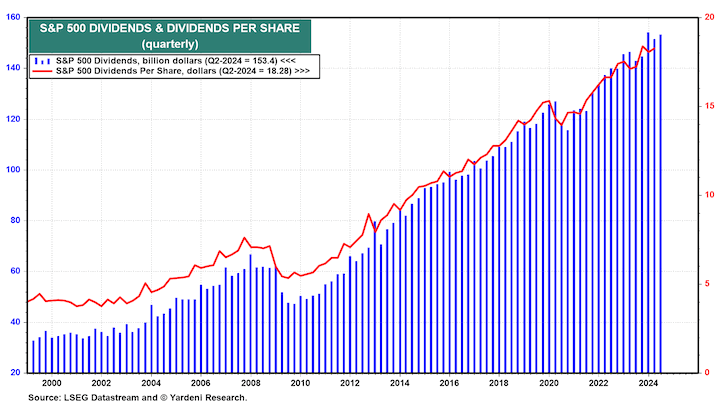
Here is the historical growth of the S&P 500 total dividend, which tracks roughly the largest 500 stocks in the US, updated after 2024 Q2 (via Yardeni Research):

That is a much smoother ride than the price index. I imagine my portfolio as a factory that churns out dollar bills, or a tree that gives dividend fruit.

Why I like tracking dividends in general. Stock dividends are a portion of profits that businesses have decided to distribute directly to shareholders, as opposed to reinvesting into their business, paying back debt, or buying back shares. They have explicitly decided that they don’t need this money to improve their business, and that it would be better to distribute to shareholders. The dividends may suffer some short-term drops, but over the long run they have grown faster than inflation.

In the US, the dividend culture is somewhat conservative in that shareholders expect dividends to be stable and only go up. Thus the starting yield is lower, but grows more steadily with smaller cuts during hard times. There is also a growing trend towards buybacks, partially because they are easier to discontinue. Here is the historical growth of the trailing 12-month (ttm) dividend paid by the Vanguard Total US Stock ETF (VTI) via StockAnalysis.com.

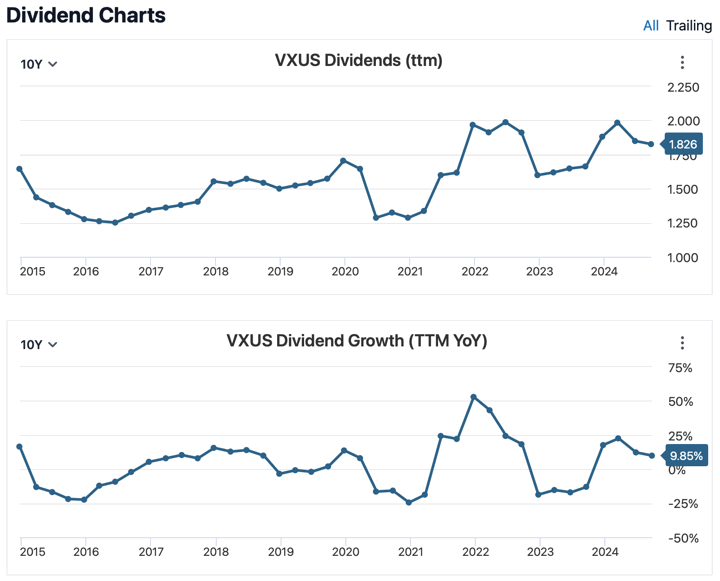
European corporate culture tends to encourage paying out a higher (sometimes fixed) percentage of earnings as dividends, but that also means the dividends move up and down with earnings. The starting yield is currently higher but may not grow as reliably. Here is the historical growth of the trailing 12-month (ttm) dividend paid by the Vanguard Total International Stock ETF (VXUS).

The dividend yield (dividends divided by price) also serve as a rough valuation metric. When stock prices drop, this percentage metric usually goes up – which makes me feel better in a bear market. When stock prices go up, this percentage metric usually goes down, which keeps me from getting too euphoric during a bull market.

In the case of REITs, they are legally required to distribute at least 90 percent of their taxable income to shareholders as dividends. Historically, about half of the total return from REITs is from this dividend income.

Finally, the last component comes from interest from bonds and cash. This will obviously vary with the prevailing interest rates, the real rates on TIPS, and the current rate of inflation. In 2024, we are finally back to getting paid a small percentage more than inflation on our cash.

Dividend and interest income from my specific asset allocation. To estimate the income from my portfolio, I use the weighted “TTM” or “12-Month Yield” from Morningstar (checked 10/7/24), which is the sum of the trailing 12 months of interest and dividend payments divided by the last month’s ending share price (NAV) plus any capital gains distributed (usually zero for index funds) over the same period. My TTM portfolio yield is now roughly 2.38%.

2.38% is the lowest TTM yield that my portfolio has been since 2021. So even though the value of my portfolio is much higher than a year or two ago, the actual amount of income distributed hasn’t kept up. As you can see from my total annual income tracker, my actual income from this portfolio has been mostly steady since mid-2022 (when interest rates started to rise again). Again, this keeps me from getting too euphoric from the market’s gains. A lot of it is just P/E ratio expansion, which can just as easily be followed by P/E ratio contraction.

What about the 4% rule? For big-picture purposes, I support the simple 4% or 3% rule of thumb, which equates to a target of accumulating roughly 25 to 33 times your annual expenses. I would lean towards a 3% withdrawal rate if you want to retire young (closer to age 50) and a 4% withdrawal rate if retiring at a more traditional age (closer to 65). Too much time is spent debating this number. It’s just a quick and dirty target to get you started, not a number sent down from the heavens!

During the accumulation stage, your time is better spent focusing on earning potential via better career moves, improving your skillset, networking, and/or looking for asymmetrical entrepreneurial opportunities where you have an ownership interest.

As a semi-retired investor that has been partially supported by portfolio income for a while, I find that tracking income makes more tangible sense in my mind. Our dividends and interest income are not automatically reinvested. They are simply another “paycheck”. As with our other variable paychecks, we can choose to either spend it or invest it again to compound things more quickly. You could use this money to cut back working hours, pursue a different career path, start a new business, take a sabbatical, perform charity or volunteer work, and so on. You don’t have to wait until you hit a huge magic number. FIRE is Life!

Vanguard Adds Automatic, Recurring Dollar-Based ETF Investments

Vanguard has rolled out the ability to make automatic, recurring purchases of Vanguard ETFs using fractional shares (dollar-based purchases, $1 minimum) inside their in-house brokerage account. Trade commissions are still zero. I know that some readers were waiting for this feature. I believe it should be available in all accounts – as of last week it showed as a “pre-release” feature in my account but now that message is gone.

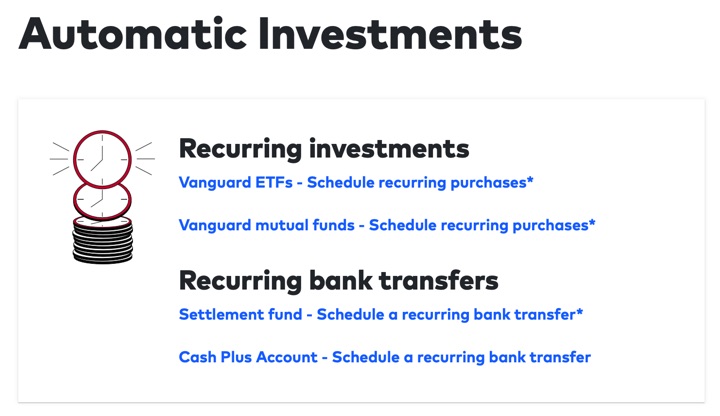
To find it, look for the “Automatic Investments” button on the main page after login. If you are already logged into Vanguard, you could try clicking this link.

You then see the option to schedule recurring purchases of ETFs in addition to mutual funds.

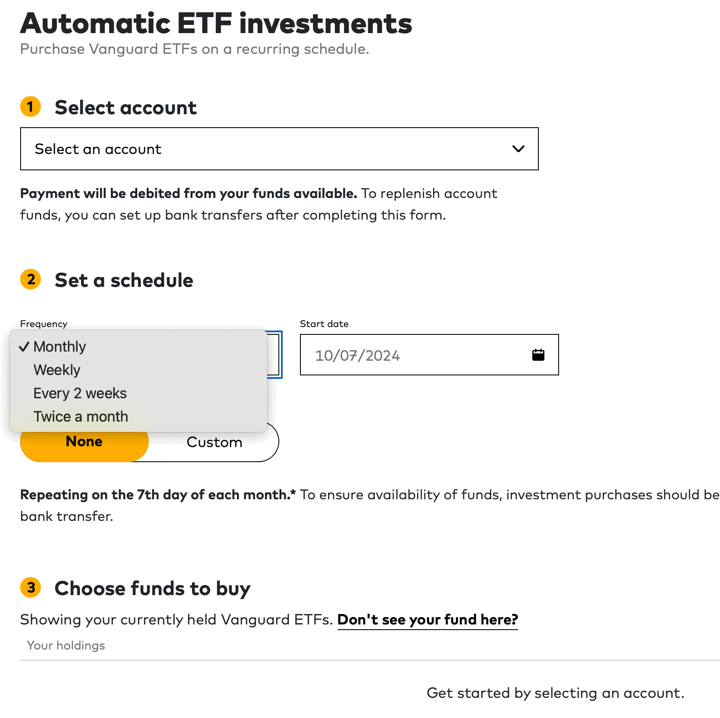
If you click on that, you can choose from weekly, weekly, bi-weekly, and twice a month frequencies. You can set it to repeat indefinitely, or set a fixed end date.

Note the following timing details:

If your automatic investment is scheduled outside of business or market hours (for example on a weekend or holiday), brokerage purchases will be processed on a prior business day. Monthly investments scheduled for the 29th, 30th, or 31st day will occur on the last day of the month during shorter months.

Here are some potential benefits of this new feature:

  • With fractional ETFs, you can invest with as little as $1. You don’t need to meet the $3,000 minimum initial purchase of some Vanguard mutual funds.
  • Vanguard ETFs often have a lower expense ratio than their mutual fund counterparts.
  • ETFs are a more portable form if you want to later switch brokerages.
  • In general, ETFs are more tax-efficient than mutual funds, but Vanguard ETFs and mutual funds have the exact same tax-efficiency due to their structure as different share classes.

For example, now you can automatically buy $100 of VTI every week, even though one share of VTI is over $200. To match up with this, you might set up a separate, weekly automatic transfer of $100 from your bank account into your brokerage account. I don’t know that you can set it to directly pull from your bank account.

Kudos App: $20 Referral Bonus, 20% Cash Back at PetSmart, 15% Back at VRBO, TripAdvisor, Booking.com

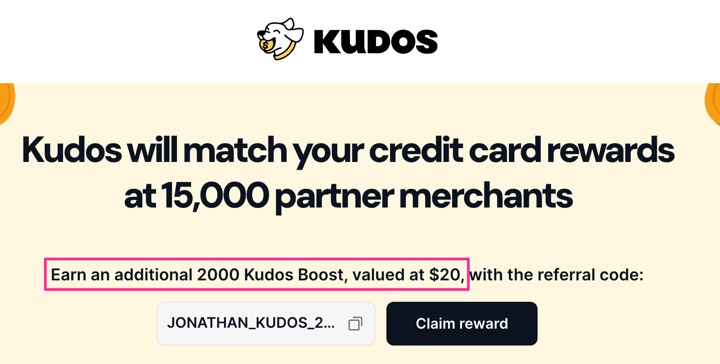
Updated with new 5X promo through October 31st. Kudos is a new mobile app and browser extension that aims to enhance your existing credit card rewards when shopping. It does this by tracking all your rewards credit cards and recommending the best one to use, recommending new credit cards (that’s how they make money), and doubling your credit card rewards when shopping through an affiliated Boost merchant (they are also a shopping portal). New members can get a $20 referral bonus, worth $20 in Amazon gift cards, after their first purchase on a Boost merchant site.

In my opinion, Kudos is not super-interesting unless they have a 5X “Flash Boost Sale”. The best scenario is when it combines with a 5X category from a rewards credit card. Right now they one running until October 31st, 2024. Official 5X October Promo details here.

If you just have a 2% flat cash back card, you can get a total of 10% back on any of the listed merchants (8% from Kudos, 2% from your card). But if you have a 5% cash back category, this turns to 25% total cash back (20% from Kudos, 5% from your card.)

Pet stores are a 5% category for the Chase Freedom/Freedom Flex card for 4th Quarter 2024, which means you can get up to 25% total back at PetSmart. In addition, you can stack this with 40% off your first Auto-Ship order (like Subscribe and Save with Amazon). We just got a new puppy and dogs are expensive, so I’ll take all the help I can get.

Another idea for this promo are to use any 3% back on Travel cards from Chase, BofA, Citi, etc. and get an additional 15% back on VRBO, TripAdvisor, or Booking.com. Those percentages are also better than standard cashback portals.

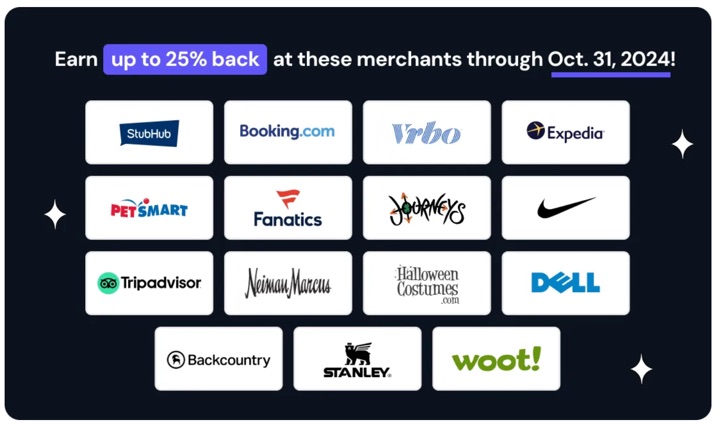
Get ready for a haunting good time with our biggest October Flash Boost sale yet! From October 1 through October 31, 2024, we’re conjuring up some frighteningly fantastic deals. We’re not just offering spine-tingling discounts – we’re multiplying your rewards by 5X at participating merchants. That means you could earn up to 25% in rewards, depending on your card! Here are the top retailers that we’re highlighting with this Flash Boost sale:

Stubhub
Booking.com
Vrbo
Expedia
Petsmart
Fanatics
Journeys
Nike
Tripadvisor
Neiman Marcus
Halloween Costumes
Dell
Backcountry
Stanley
Woot

Step-by-Step Walkthrough

  • Visit my Kudos referral link (I used Chrome Browser) and install their extension. Make sure the promo code JONATHAN_KUDOS_209109 is filled in when applicable to get the 2000 point ($20) referral bonus.
  • Add at least one rewards credit card and number. I recommend linking any Discover it card since it has 5% cash back cards that you hold.
  • After these various things as a new customer, it should be pretty simple to accumulate around 500 Kudos points (worth $5). However, to unlock the $20 referral bonus for myself, I need to make a purchase from a Boost merchant. For this promo, PetSmart would work great.
  • Make sure to turn off any potentially conflicting extensions, like the Capital One 360 Shopping plugin.
  • Chrome extension installed. Check. Card number saved. Check. Visited Boost Merchant from the Kudos site. Check.
  • During the Purchase process, look to the bottom right corner and click on the yellow dog. You should be presented with and click on the “Activate Boost” button. It should say “Boost Activated”.
  • During the Checkout process, I let Kudos fill in the card information.
  • When finished, the extension should confirm your rewards exactly.

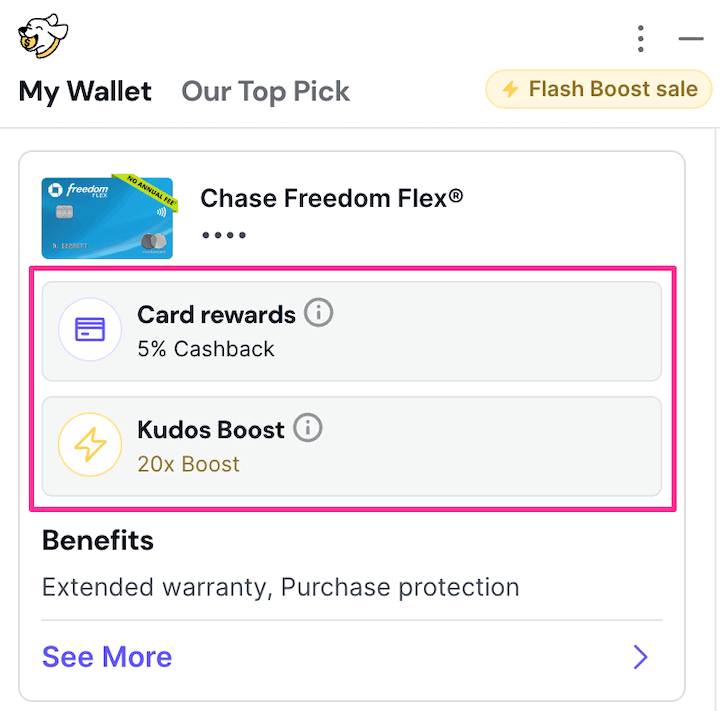
Here’s what you should see:

When Kudos says you’ll get “double your rewards”, that means your existing credit card rewards is 1X, and then will also match 1X. When Kudos says you’ll get 5X rewards, that means your existing credit card is 1X and they’ll add 4X. Like other shopping portals, the points will be pending for 60-120 days because it takes a while for them to get paid from the merchant internally, and also to make sure that you don’t return the item.

MMB Portfolio Asset Allocation & Performance Update – October 2024 (Q3)

Here’s my 2024 Q3 update for our primary investment holdings, including all of our combined 401k/403b/IRAs and taxable brokerage accounts but excluding our house and smaller side portfolio of self-directed investments. Following the concept of skin in the game, the following is not a recommendation, but a sharing of our real-world, imperfect, low-cost, diversified DIY portfolio.

“Never ask anyone for their opinion, forecast, or recommendation. Just ask them what they have in their portfolio.” – Nassim Taleb

How I Track My Portfolio
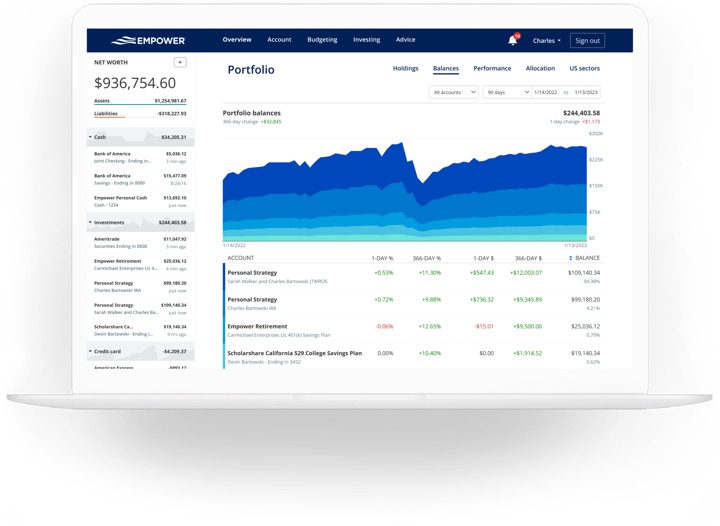
Here’s how I track my portfolio across multiple brokers and account types. There are limited free advanced options after Morningstar discontinued free access to their portfolio tracker. I use both Empower Personal Dashboard (previously known as Personal Capital) and a custom Google Spreadsheet to track my investment holdings:

  • The Empower Personal Dashboard real-time portfolio tracking tools (free) automatically logs into my different accounts, adds up my various balances, tracks my performance, and calculates my overall asset allocation daily. Formerly known as Personal Capital.
  • Once a quarter, I also update my manual Google Spreadsheet (free to copy, instructions) because it helps me calculate how much I need in each asset class to rebalance back towards my target asset allocation. I also create a new tab each quarter, so I have a personal archive of my holdings dating back many years.

2024 Q3 Asset Allocation and YTD Performance
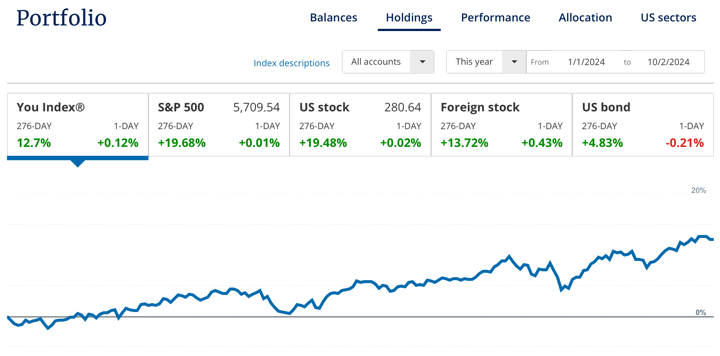
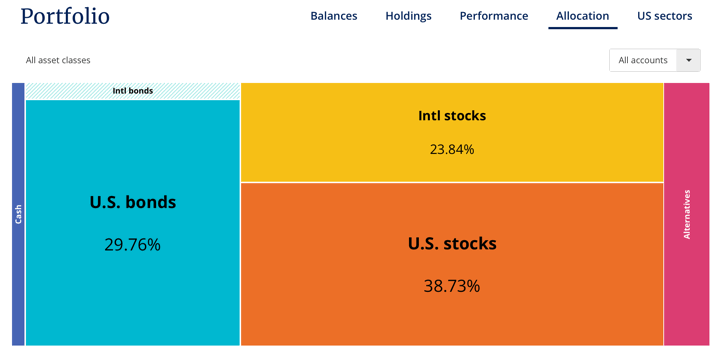
Here are updated performance and asset allocation charts, per the “Holdings” and “Allocation” tabs of my Empower Personal Dashboard.

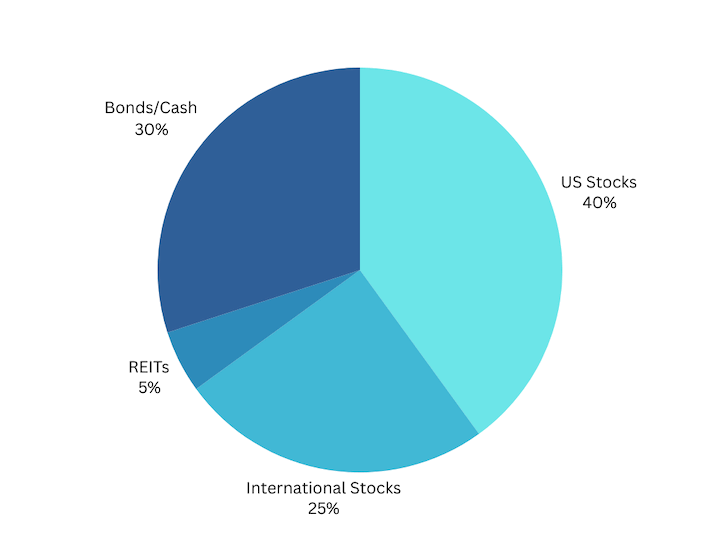
I own broad, low-cost exposure to productive assets that will provide long-term returns above inflation, distribute income via dividends and interest, and finally offer some historical tendencies to balance each other out. I have faith in the long-term benefit of owning businesses worldwide, as well as the stability of high-quality US Treasury debt. I let my stock holdings float with the total world market cap breakdown, currently at ~62% US and ~38% ex-US. I do add just a little “spice” to the broad funds with the inclusion of “small value” factor ETFs for US, Developed International, and Emerging Markets stocks as well as diversified real estate exposure through US REITs. But if you step back and look at the big picture, this is my simplified target portfolio:

By paying minimal costs including management fees, transaction spreads, and tax drag, I am trying to essentially guarantee myself above-average net performance over time.

The portfolio that you can hold onto through the tough times is the best one for you. Every asset class will eventually have a low period, and you must have strong faith during these periods to earn those historically high returns. You have to keep owning and buying more stocks through the stock market crashes. You have to maintain and even buy more rental properties during a housing crunch, etc. A good sign is that if prices drop, you’ll want to buy more of that asset instead of less. I don’t have strong faith in the long-term results of commodities, gold, or bitcoin – so I don’t own them.

I do not spend a lot of time backtesting various model portfolios, as I don’t think picking through the details of the recent past will necessarily create superior future returns. You’ll usually find that whatever model portfolio is popular at the moment just happens to hold the asset class that has been the hottest recently as well.

I have settled into a long-term target ratio of roughly 70% stocks and 30% bonds within our investment strategy of buy, hold, and occasionally rebalance. My goal has evolved to more of a “perpetual income portfolio” as opposed to a “build up a big stash and hope it lasts until I die” portfolio. My target withdrawal rate is 3% or less. Here is a round-number breakdown of my target asset allocation along with my primary ETF holding for each asset class.

  • 35% US Total Market (VTI)
  • 5% US Small-Cap Value (VBR/AVUV)
  • 20% International Total Market (VXUS)
  • 5% International Small-Cap Value (AVDV)
  • 5% US Real Estate (REIT) (VNQ)
  • 15% US “Regular” Treasury Bonds or FDIC-insured deposits
  • 15% US Treasury Inflation-Protected Bonds (or I Savings Bonds)

Performance details. According to Empower, my portfolio is up about 12.7% so far in 2024. The S&P 500 is up about 19.5% YTD, while the US Bond index is up around 4.8%. I hold bonds and international stocks so that I’m always going to be lagging the hottest sector, but I really can’t complain. International stocks actually had a really good Q3, even though nobody seemed to notice.

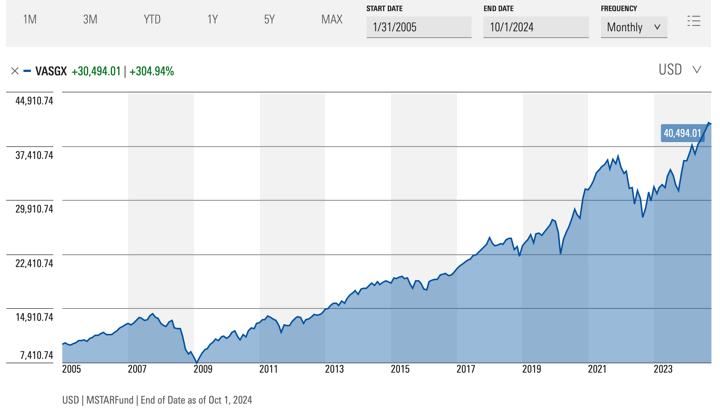
I didn’t make any significant buys, just some 401k contributions and reinvested dividends/interest. Peeled off some to pay quarterly taxes. No sell transactions. Owning stocks continues to reward long-term investors. Out of curiosity, I generated a Morningstar Growth of $10,000 Chart for the Vanguard LifeStrategy Growth Fund (VASGX) which holds a static 80% stocks and 20% bonds and most closed mimics my portfolio since 2005, roughly when I started investing more seriously and started this blog. A *very* rough approximation is to expect your money to double every decade (Rule of 72). The money that I invested 20 years ago has indeed roughly doubled twice (4X).

I’ll share about more about the income aspect in a separate post.

TradeUP ACAT Promo: 2% of Assets ($1,000 Bonus on $50k Transferred)

TradeUP is an app-first brokerage firm (though they do have a web interface) that is also competing for asset growth with a new ACAT Transfer Promotion. TradeUP offers $0 commission on trades like most competitors, and is a registered broker-dealer with SIPC insurance (FINRA Broker Check). Here’s how it breaks down, based on their full terms and conditions:

  • Base bonus is 2% of ACAT transfer size, with a limit of $1,000. You must maintain the assets for a 90 days. This works out to a $1,000 bonus on $50,000 transferred. Offer expires 12/31/24, or earlier if they pull it.
  • If you transfer $100,000+ and maintain assets for a full year, you will receive an additional 1% match (separate $1,000 cap). This again works out to a 2% bonus on $100,000 transferred ($1,000 + $1,000 = $2,000.)*
  • This promotion applies exclusively to an account’s first ACAT transfer that qualifies for this promotion. Subsequent ACAT transfers will not qualify for this promotion. (You can already have a funded Live Trading account, just no transfers yet; see below.)
  • Bonus will be distributed in quarterly installment payments. The maximum cashback amount per quarter is $350. So a $1,000 bonus will take three quarters to pay out.
  • As long as you make a full or partial ACATS transfer of at least $3,000, you can receive up to a $300 transfer fee rebate. You must email them a statement copy of the fee charged.

(* 2% + 1% = 3%, but I am a little mystified at how this could ever actually add up to a 3% cashback bonus, as advertised in their banner, given the different requirements and caps. Perhaps one of you clever readers can help me out…)

I already have an existing TradeUp account to take advantage of their new customer bonus (my referral link), which currently starts at 2 free stocks with $100 deposit, and moves up to 5 draws with $100,000 deposit. Each stock draw has a 1 in 500 chance of being worth $1,800, which is actually better than many other brokers’ odds. But mostly likely, it will only be worth the minimum guaranteed value of $10 each. Honestly, I’d just put in the $100 cash for the 2 free stock draws and hope you get lucky. I’d get the new customer deposit bonus first, and then go for the ACAT transfer second.

(Update: I mostly got shares of TU (~$16 a share) but did get one share of UBER (~$78 a share). Not bad, was expecting just the minimum $10 per share value.)

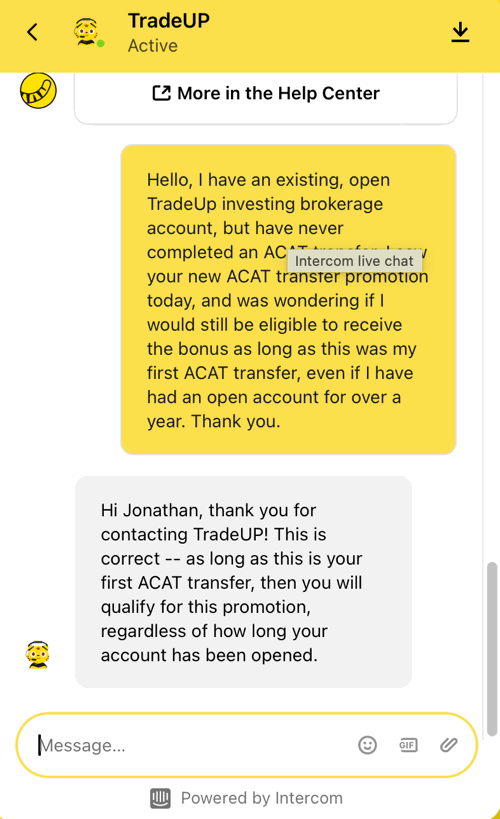
I confirmed with TradeUp customer service that this ACAT transfer bonus is open to existing TradeUp customers as long as this is your first ACAT transfer. See screenshots below. I also confirmed with them the terms are accurate since some of the landing pages don’t clearly show the $1,000 bonus option. Their Live Chat was refreshingly responsive. I am planning on transferred close to $50,000 of existing ETFs/BRKB in order to get the $1,000 bonus. Be sure to download a copy of your cost basis at your old broker before transferring, just in case. Note that TradeUP does have an outgoing ACAT transfer fee of $50, but hopefully that’ll be covered by the next broker if I decide to move out later.