A popular theory states that something is not worth doing if it makes you less that your hourly wage. For example, if you make $30 an hour and you can hire someone to mow your lawn for $20 an hour, you should go ahead and pay for the service. As someone who is earning more and yet trying to combat lifestyle inflation, I’ve been struggling with this idea. According to this rule, all of a sudden I can start paying people to do all kinds of stuff for me. Laundry. Cooking. Cleaning. Or can I?
Thought #1: What Is Your Real Hourly Wage?
- First, roughly estimate your hourly wage. If you work 40 hours per week, a quick way to estimate your hourly wage is to take your annual income, remove the trailing three zeros, and divide by two. For example, if you make $100,000 per year, then you make $50 per hour. A person earning $20,000 per year = $10 per hour. If you are using gross income then you’ll end up with gross hourly age.
- Take taxes into account. If you earn $50 per hour gross, that might be only $35 per hour net. Someone earning less at around $10 per hour gross will probably be earning more like $8 per hour net. Try this net paycheck estimator or look at your paystub.
- Be realistic with hours. Do you really only work 40 hours per week? If not, adjust accordingly. Now add in your commute time, the time it takes to get ready each morning, the time it takes to decompress after each day. Your job takes up a lot more hours than you might think.
Now, what is your final per-hour wage? If I made $50k per year, but worked 50 hours per week plus 1 hour total each day for commuting + getting ready, with filing single and taking standard deductions, I’d be down to around $13.50 an hour. Paying someone to do the lawn for $20 an hour is not longer a mathematically prudent idea.
Thought #2: Are you salaried?
The premise of the argument implies that you can simply work instead to cover certain expenses. Hire the maid for $20 a hour, the landscaper for $30 an hour, restaurant food at $20 per hour – hey you make $40 an hour so who cares? Work in your office, and make up the difference and then some. But many of us are salaried workers. If we work 40, 50, 80 hours a week, we won’t earn any more money.
In other words, this only works if you can at the same time make more money elsewhere. Someone who works in their own business or does consulting has much more freedom in this regard. I don’t know if I’m that good at time management to pull this off, though.
Thought #3: Will you always be making as much?
I’ve come to see regard frugality as a habit, which can take years to form. Getting used to paying for everything to be done for you is going to hurt if you want to retire early. If you get used to a higher cost of living, you’ll need a much larger nest egg to generate more income. Living a simple and frugal life now will help make the same life an enjoyable one down the road.
In addition, by doing things yourself you may be learning a skill that can also pay off when you can’t justify paying for it anymore. Gardening and growing your own food is a skill. Cooking is a skill. Performing your own car maintenance. Doing your own home repairs. And so on.
Not Just Math
Obviously, if there are activities which you prefer not doing, or can simply be done by someone else for a fraction of the cost, it can definitely be worth it to outsource. Childcare is a common example, although some do it for the socialization. Besides cost and skill development, I would also adjust for personal taste.
For one, we are considering putting in our own hardwood floors in our new place instead of paying for installation. It will probably take us a lot longer than professionals to put it in. Although we’d be saving at least $10,000 in labor costs, and we’d probably earn more in our regular jobs if calculated on an hourly basis. But I will be learning a lot about home remodeling during this project, it will be a nice respite from staring at a computer screen all day, and it will be personally satisfying.
On the other hand, I hate driving in traffic. I learn nothing from doing it more. If I had access to good public transportation, I would totally pay for it. Similarly, driving around for an hour to save $10 on an item is not going to be worth it to me. However, I love bargain shopping online, and I might research for hours on the best model and price on a $99 item. But I can do that while in my pajamas at odd hours.
Are there some frugal activities that you no longer do after your income increased?
 Walgreens is having a promotion on will refill one of your ink cartridges for free on April 2nd (April 7th in Hawaii). Just look in their 3/20 Sunday ad or print out this online coupon. It usually costs $10 for black & white, $15 for color. Here is a list of eligible brands and models (no Canon or Epson). Via
 Yesterday I was asked by a foreign news publication some questions about my reactions to the current financial problems in the US markets. As I wrote my responses, I thought to myself “this is so boring that there is no way that it will be published”. I have no juicy stories of hoarding gold, selling all my stocks, or fleeing to ultra-safe bonds. Instead, here are my Ambien-like responses:
 Now that we have our own home and backyard patio, we decided to buy our first propane grill and invite some people over. We had to schedule a convenient time to have my father-in-law come drive down with us since he has a truck, so we had pretty much decided to just buy whatever was cheap and in stock. No hours of research this time! Although some of our serious grilling friends told us to buy a high quality $400+ model, which is probably good advice, we really just wanted something simple to start out with. If we grilled often enough, then later we could upgrade to something that would last a long time.
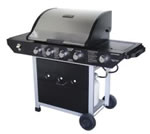 We had our eye on a $199 Brinkmann grill with some decent BTU, grill space, and also shelf space. But when we got there, they were cleaned out except for one last box that was definitely a previous return. The box was opened, slightly ripped, and had the words “Returned – Missing Parts, Send to Dept #18577” scrawled on the side with permanent marker. It had no special price tag.
 The Federal Reserve continues to slash short-term rates, so right now looks like a good time to take a second look at Series I Savings Bonds since they are not directly tied to such rates and also offer protection from inflation.
  The Best Credit Card Bonus Offers – 2026
 Big List of Free Stocks from Brokerage Apps
 Best Interest Rates on Cash - 2026
 Free Credit Scores x 3 + Free Credit Monitoring
 Best No Fee 0% APR Balance Transfer Offers
 Little-Known Cellular Data Plans That Can Save Big Money
 How To Haggle Your Cable or Direct TV Bill
 Big List of Free Consumer Data Reports (Credit, Rent, Work)