Archives for May 2020

Giving Tuesday Now – May 5th, 2020 #GivingTuesdayNow

On the Tuesday after each Thanksgiving and Black Friday, Giving Tuesday is an international day about giving support through charities and nonprofits by donating money and goods or volunteering your time. The same organization has created Giving Tuesday Now on Tuesday, May 5th, 2020 in response to the global threat of COVID-19.

On the last GivingTuesday, December 3, 2019, the global giving day generated $2 billion in giving, just in the United States, and inspired millions of people worldwide to volunteer, perform countless acts of kindness, and donate their voices, time, money, and goods. The additional giving day planned for May 5, 2020 is being deployed in response to needs expressed by communities and leaders around the world.

People can show their generosity in a variety of ways during #GivingTuesdayNow–whether it’s helping a neighbor, advocating for an issue, sharing a skill, or giving to causes, every act of generosity counts.

I looked over the various charity comparison websites to see if they had any COVID-19 updates. GiveWell recommends to keep giving to their same top charities as before. GreatNonProfits has updated their top-rated guide for 2020, but it’s not COVID-specific. CharityNavigator does have a section on “highly-rated nonprofits providing relief and recovery to communities impacted by the pandemic”. You can also donate directly to the COVID-19 Response Fund of Feeding America, or they also have a tool to find a local food bank near you. I ended up donating to this last one.

(We recently set up a Fidelity donor-advised fund for this, but the value dropped so we mostly gave from our usual funds until the balance came back up.)

Hopefully, your favorite nonprofit has a special donation page and maybe even a match going on that you are able to support. Alternatively, they might be organizing special activities where you can donate some of your time. Many people have already spending their time and energy giving back in various ways and it has been great to see.

2020 Berkshire Hathaway Annual Shareholder Meeting Video, Transcript, and Notes

The 2020 Berkshire Hathaway Annual Shareholder Meeting was on May 2nd, 2020 and is now available as a recorded video on Yahoo Finance and a handy Rev.com transcription. As usual, I recommend listening or reading on your own, as my notes always differ slightly from what the business media chooses to highlight.
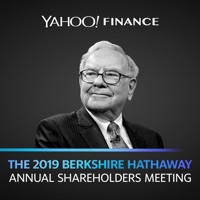
What makes Berkshire Hathaway (BRK) interesting to me is that it all started out as Buffett investing his own money alongside a few close family and friends. He’s always had nearly all of his own money in it. Even today, Berkshire is the main investment vehicle for many family members. People you run into at the store. People with whom you’ve shared a meal. This changes the types and amounts of risk you take.

And, now, I would never take real chances with money, of other people’s money under any circumstances. Both Charlie and I come from a background where we ran partnerships. I started mine in 1956 for really seven either actual family members or the equivalent. And Charlie did the same thing six years later. And we never, neither one of us, I think, I know I didn’t, and I’m virtually certain the same is true of Charlie, neither one of us ever had a single institution investment with us.

Buffett has stated that when he writes his annual letters, he imagines his sister reading them. That’s how I try to write as well, as an enthusiast making careful shares and recommendations to family. This overall sentiment helps you understand how BRK is run.

He started out with a familiar story of “betting on America”. This country has been though a lot, and it will recover again.

One of the scariest of scenarios, when you had a war with one group of States fighting another group of States, and it may have been tested again in the great depression, and it may be tested now to some degree, but in the end the answer is never bet against America, and that in my view is as true today as it was in 1789, and even was true during the civil war, and the depths of the depression.

In terms of investing, this means holding onto stocks for 20 or 30 years. But to survive the shocks during those times, you should never borrow money to invest in stocks, you need to have adequate reserves in 100% safe cash, and you need the proper psychological temperament.

The American tailwind is marvelous. American business represents, and it’s going to have interruptions, and you’re not going to foresee the interruption, and you don’t want to get yourself in a position where those interruptions can affect you either because you’re leveraged or because you’re psychologically unable to handle looking at a bunch of numbers.

You just don’t know what’s going to happen. You know, at least in my view, you know that America’s tailwind is not exhausted. You’re going to get a fine result if you own equities over a long period of time. And the idea that equities will not produce better results than the 30-year Treasury bond, which yields one and a quarter percent now, it’s taxable income. It’s the aim of the Federal Reserve to have 2% a year inflation. Equities are going to outperform that bond. They’re going to outperform Treasury bills. They’re going to outperform that money you’ve stuck under your mattress.

Simple, low-cost S&P 500 index fund for growth. Avoid the salespeople.

So find businesses. Get a cross section. And in my view, for most people, the best thing to do is to own the S&P 500 index fund. People will try and sell you other things because there’s more money in it for them if they do. And I’m not saying that that’s a conscious act on their part. Most good salespeople believe their own baloney. I mean, that’s part of being a good salesperson. And I’m sure I’ve done plenty of that in my life too, but it’s very human if you keep repeating something often enough.

100% backed-by-the-government cash for safety. For them, it means Treasury-backed bills. For individual investors, this extends to FDIC-insured savings accounts and certificates of deposit.

And that means we own nothing but treasury bills. I mean, we’ve never owned, we never buy commercial paper. We don’t count on bank lines and a few of our subsidiaries have them, but we basically want to be in a position to get through anything. And we hope that doesn’t happen but you can’t rule out the possibility anymore than in 1929 you could rule out the possibility that you know you would be waiting until 1955, or the end of 1954, to get even.

Ignore the two things above if you have credit card debt.

My general advice to people, I mean, we have an interest in credit cards. But I think people should avoid using credit cards as a piggy bank to be rated. I had a woman come to see me here not long ago, and she’d come on some money. Not very much, but it was a lot to her. She’s a friend of mine, and she said, “What should I do with it?” I said, “Well, what do you owe on your credit card?” She says, “Well, I owe X.” I said, “Well, what you should do…” I don’t know what interest rate she was paying, but I think I asked her and she knew. It was something like 18% or something. I said, “I don’t know how to make 18%.” I mean, if I, owed any money at 18% the first thing I do with any money I had would be to pay it off. It’s going to be way better than any investment idea I’ve got. That wasn’t what she wanted to hear.

Be safe with your finances at this time. You don’t sell your airline stocks at a multi-billion dollar loss if you think a V-shaped recovery is likely. Just because we are still recovering from one horrible event, doesn’t mean another might not happen.

I would say that there are things that I think are quite improbable. And I hope they don’t happen, but that doesn’t mean they won’t happen. I mean, for example, in our insurance business, we could have the world’s, or the country’s, number one hurricane that it’s ever had, but that doesn’t preclude the fact that could have the biggest earthquake a month later. So we don’t prepare ourselves for a single problem. We prepare ourselves for problems that sometimes create their own momentum. I mean 2008 and 9, you didn’t see all the problems the first day, when what really kicked it off was when the Freddie and Fannie, the GSEs went into conservatorship in early September. And then when money market funds broke the buck… There are things to trip other things, and we take a very much a worst case scenario into mind that probably is a considerably worse case than most people do.

After listening to this entire Buffett talk and reading this Munger interview, the overall takeaway is definitely that of safety. They have been safe and will stay safe, no matter who complains about their cash levels. The world has changed, and just because something has a lower price today than in January, doesn’t automatically mean it is a better deal than in January.

Here is a NYT Dealbook article by Andrew Ross Sorkin, who has attended many shareholder meetings in person and also sensed a different tone this year.

You can find links to previous years’ Berkshire Hathaway Shareholder Meeting Full Videos, Transcripts, and Podcasts here.

Berkshire Hathaway Shareholder Meeting Full Videos, Transcripts, and Podcasts

(2020 update. The 2020 Berkshire Hathaway Annual Shareholder Meeting took place virtually with a Q&A session with Warren Buffett and Greg Abel (the likely next CEO). Right now it is available on replay at Yahoo Finance with the full transcript linked below.)

Berkshire Hathaway’s Annual Shareholder Meetings are held in Omaha, Nebraska every May. Although most of my portfolio is in a diversified mix of index funds, I also own individual shares of Berkshire Hathaway and respect the rational and practical advice given out by Warren Buffett and Charlie Munger.

I also like getting the information directly! I missed the live event again in 2019, but I plan catch up by first reading the WSJ liveblog, and then listening to the entire Q&A session via Yahoo Finance podcast at my own pace. Here are the many ways that you can catch up on past shareholder meetings.

Full Videos

  • Yahoo Finance Livestream. Yahoo Finance is the exclusive online host of the Berkshire Hathaway 2020 Annual Shareholders Meeting that occurred May 2nd, 2020. View the entire Q&A session in its entirety on demand.
  • CNBC Warren Buffett Archive. Footage of shareholder meetings from 1994-2019 In 2018, Berkshire gave CNBC a box of old VHS tapes (!) which were converted to digital videos so that everyone can view them for free. Additional material from CNBC including interviews, highlights, and short-form videos is also available.

Transcripts

Liveblogs

Podcasts

  • Yahoo Finance also makes the BRK meeting available as a podcast, so you can listen in parts during your commute or chores. I listened to the entire 2018 meeting in the car while driving, and I liked it much better than sitting in front a computer. 2019 is already uploaded. iTunes. Player.fm.

Books

This post is about the live shareholder meeting, and is separate from the 2019 annual shareholder letter (which are also great).

Michael Burry Recommended Investing Books List

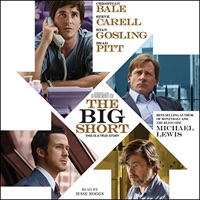
Michael Burry became famous (at least in investing circles) due to his bold bet against mortgage-backed securities in 2008 that was chronicled in The Big Short by Michael Lewis (later a movie). He’s been pretty quiet since but has resurfaced recently on Twitter due to his strong opinions on the pandemic lockdown.

Due to his reputation as an independent thinker, he was also asked to share his recommended book reading list by user @thesis_11. I like to collect book recommendations and add them to my Amazon wishlist, so here’s his response in case it gets deleted later (I added the links):

Intelligent Investor by Graham

Common Stocks and Uncommon Profits by Fisher

Why Stocks Go Up and Down by Pike

Buffettology by Buffett and Clark

If you read these books thoroughly and in that order and never touch another book, you’ll have all you need to know.

For big picture,

Liar’s Poker
Buffett: The Making of An American Capitalist
When Genius Failed,
All the Devils are Here.

At a point, stop with books and just start reading 10Ks and Qs and proxies. In the same industry, compare 10Ks – it’s an easy way to get the nuances quick

I’m usually happy if I discover any books that I am not familiar with, and that’s the case here.