Cooking at home can save a lot of money as opposed to eating out all the time. We all know that, right? If not, here’s a big green chart to drill it in, taken from How Much Money Do You Save by Cooking at Home? by Wellio:

Here’s what that means on a monthly basis:

Being a good home cook should be viewed as a valuable skill – one that takes an investment of time and effort, but can pay dividends forever. You may not eat at a restaurant or do meal prep every day, but I know that some of you dual-income high-earners are dropping around $1,500 a month on food. That’s closing in on $20,000 a year. Your grandparents probably spent a fraction of that. Converting even a couple of those meals a week can multiply into real money. (Not to mention that home-cooked meals have helped with my weight loss and health goals. Eating out a lot seems to always correlate with weight gain for me.)
The problem is that if you haven’t developed the skill, it’s just too painful. You work hard and are exhausted at the end of the day, why tackle another difficult project? For me, if I have to make an extra stop at the grocery store, I’d rather just stop at the korean BBQ place and buy it ready-to-eat.
If you are just starting out, you can’t expect to be able to whip up a nutritious and tasty meal with the ingredients in your pantry in 30 minutes. You need to set yourself up for success. You need to divide and conquer. On the weekend, you should pick out one or two “easy” recipes that look appetizing to you and buy all of the ingredients that you need. Don’t wait to “pick it up on the way home”. Buy it on the weekend, and carve out 30 minutes of prep time on two weekdays. Remind yourself that it takes time to prepare a meal prep kit too, or even drive somewhere to get take-out. (Okay, Uber Eats and Grubhub are pretty darn convenient. But those delivery fees and tips add up fast!)
This is summarized in my Cooking at Home Flowchart:

Once you have some “go-to” weekday meals, you can schedule them and rotate as desired. Once you get a lot of recipes into memory, then you can start to improvise. I’m sorry, but newbies can’t go straight into thinking of recipes as Salt, Fat, Acid, Heat. Maybe if you were the culinary equivalent of Beethoven. I’ve made hundreds of sheet-pan dinners (I like Melissa Clark recipes) and one-pot meals and I still get stuck if I don’t have things thought out ahead of time. If you learn to prep, then that one weekend grocery stop can equal 5 weeknight meals.
Wellio is a food prep company that offers to help you out with recipes and shopping lists. I haven’t used them, but I like that they are trying to attack the pain points in home cooking. I’ve mentioned them previously in Which Meals Offers The Most Nutrition Per Dollar?
 The
The 

 Individual Retirement Arrangements (IRAs) are way to save money towards retirement that also saves on taxes. For 2019, the annual contribution limit for either Traditional or Roth IRAs increased to $6,000 (it is roughly indexed to inflation). The additional catch-up contribution allowed for those age 50+ stays at $1,000 (for a total of $7,000). You can’t contribute more than your taxable compensation for the year, although a spouse can contribute with no income if the other person has enough income.
 Employer-based retirement plans like the 401(k), 403(b), and Thrift Savings Plan are not perfect, but they are often the best available option to save money in a tax-advantaged manner. For 2019, the employee elective deferral (contribution) limit for these plans increased to $19,000 (it is indexed to inflation). The additional catch-up contribution allowed for those age 50+ stays at $6,000 (for a total of $25,000).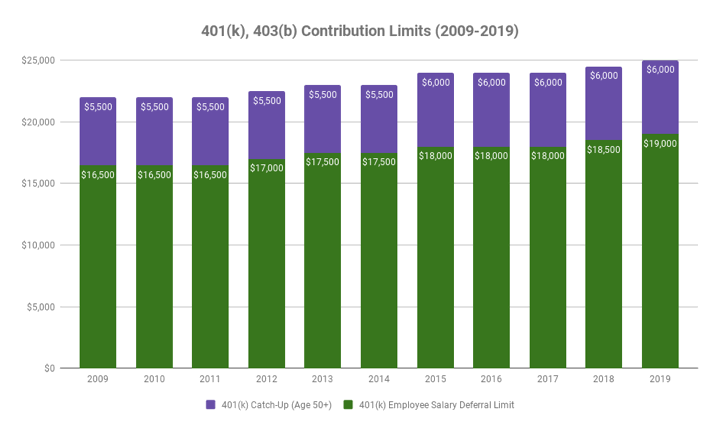
 Instead of just looking at one year of returns, I prefer taking a longer view. Most successful savers invest money each year over a long period of time, these days often into a target-date fund (TDF). Don’t get caught up in the daily news reporting the recent performance of the Dow or S&P 500.
 Vanguard


 If you invest in stocks, you know that they go up and down. Below is an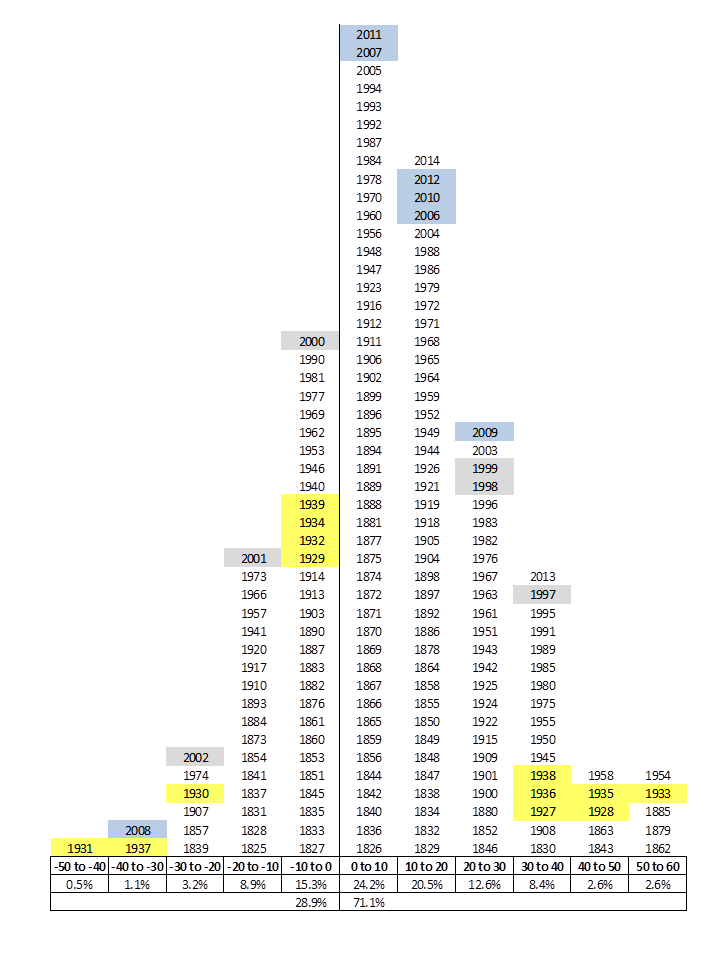

 Here’s my monthly roundup of the best interest rates on cash for January 2019, roughly sorted from shortest to longest maturities. Check out my
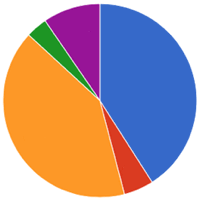

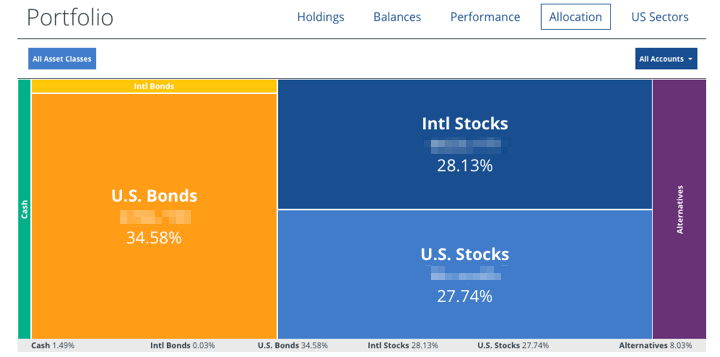
 Another one in the books! I don’t track the market daily as I think the discussion is full of noise and after-the-fact justifications. I check my portfolio quarterly to see where to reinvest dividends. At the end of the year, I like to record the annual returns for select asset classes as benchmarked by passive mutual funds and ETFs. Here is the 2018 data taken from Morningstar after market close 12/31/18.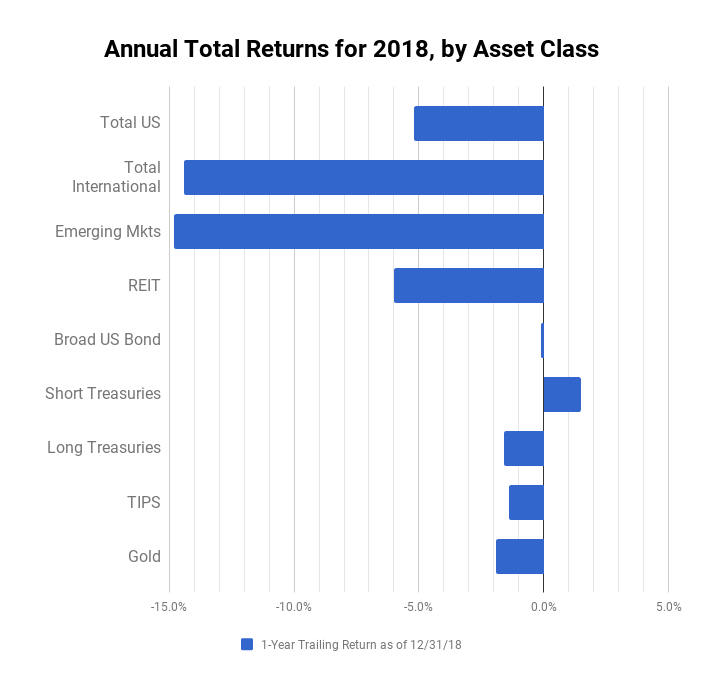

 The Best Credit Card Bonus Offers – 2026
 Big List of Free Stocks from Brokerage Apps
 Best Interest Rates on Cash - 2026
 Free Credit Scores x 3 + Free Credit Monitoring
 Best No Fee 0% APR Balance Transfer Offers
 Little-Known Cellular Data Plans That Can Save Big Money
 How To Haggle Your Cable or Direct TV Bill
 Big List of Free Consumer Data Reports (Credit, Rent, Work)