Archives for November 2018

Frugal Holiday Greeting Cards: Custom Etsy Design + Costco Printing

If you like to send out holiday greeting cards, I thought I’d throw out a quick tip that Mrs. MMB uses each year to save a bit of money.

First, you can buy a custom digital design off of Etsy. Search for some combination of “photo Christmas card” or “holiday card template” and look for a design that you like. The prices and inclusions can vary, so click around. Ideally, you’ll find a template where you can customize both sides to your liking. For example, a Minted or Shutterfly template might force you to put exactly 3 pictures on the back. On Etsy, you can put 4, 5, or 6 if you want. If you have Photoshop skills, those are usually the cheapest, sometimes less than $5. You can usually opt to pay a few bucks more and they will edit it for you and provide a ready-to-go file. All-in cost: under $20.

Second, upload the digital file to Costco Premium printing at $0.69 each. Costco used to only do the cheaper “Photo Greeting Cards” that are basically just one-sided photos with nothing on the back, but now they do “Premium Stationery Greeting Cards” on heavyweight 5×7″ stock. (Some of their other stuff looks identical to Snapfish, so maybe these are outsourced to Snapfish as well?) However, their template options are still relatively limited. Note that the following is included in the $34.50 for 50 cards price ($0.69 each).

  • Free rounded corners
  • Free envelopes pre-printed with return address

If you compare to a site like Minted.com, their basic 5×7 card costs $167 for 100 cards ($1.67 each). On top of that, you would get charged additional for the following:

  • Rounded corners +$35
  • Envelopes pre-printed with return address +$45

That makes the total cost $247 for 100 cards ($2.47 each). There are usually some coupons, for example the Cyber Monday deal was 25% off, which would bring the price down to $185 for $100 ($1.85 each). Compared to Etsy + Costco, that’s still roughly a $100 price difference for every 100 cards.

Obviously there are even cheaper options (like not sending out cards or handwritten cards) but these types of cards are rather popular. I like this option because it’s actually more customized at less cost.

* Remember that you can save a bit extra on your Etsy purchases (or Minted, or many other sites) with cashback shopping sites like TopCashBack, eBates ($10 new user bonus after any $25+ purchase, $5 mininum cash-out), Mr. Rebates ($5 new user bonus, $10 minimum cash-out), and BeFrugal.com ($5 new user bonus).

IHG Rewards Club Instagram / Twitter Promo: 5,000 IHG Points For Sharing

IHG Rewards Club is giving away 5,000 IHG points if you do the following:

  1. Tweet or Instagram a picture of yourself at home or at any IHG® property using the hashtags #HomeWithIHG #ad and #Rewardsoffer and including the handle @IHGRewardsClub.
  2. Visit IHGRewardsClub.com/ClaimMyPoints by December 31, 2018 and sign in with the social account you used for your post. They recommend to wait 15 minutes after your tweet before doing this.
  3. Register with your IHG® Rewards Club Number to claim your 5,000 points.

Here are the full rules. You must have public profile (they are looking for publicity here…) and be one of the first 10,000 participants to get your 5,000 points. Seems pretty low effort and low risk if you already use these social media apps.

IHG Rewards Club is the loyalty program for Intercontinental Hotels, Crowne Plaza, Holiday Inn, Holiday Inn Express, Staybridge Suites, Candlewood Suites, Hotel Indigo, and EVEN Hotels. 5,000 IHG points is estimated to be worth roughly $30 towards a hotel night. They also have a discounted award night list called PointBreaks. You can also earn a lot more points with the Chase IHG Rewards Club Premier Card.

Financial Freedom Is About Resilience to Outside Shocks

I found myself thinking a lot today about General Motors announcing layoffs for over 14,000 employees – 6,000 hourly and 8,000 salaried workers. This affected the factory workers making the cars, engineers designing the cars, managers, and executives. I know one of those workers.

When you talk about the pursuit of financial freedom, often you may have a vision of sunny beaches and European cruises. Younger folks may be thinking instead about a cross-country RV trip with the entire family or spending a year hiking across Southeast Asia.

But instead of being aspirational, I have to admit that my pursuit started with a basis in fear. I am afraid of being broke, bankrupt, or having to beg someone else for help. I hate, hate, hate not being control. Most households do not have the ability to withstand a few months of unemployment without major disruption. I can’t stand that feeling of vulnerability.

Financial freedom is not a black and white thing. It is a gradual process of increasing your resilience to things outside your control.

  • Once you save up $500, you can withstand a car breakdown or a broken appliance. You don’t pay for your rent in weekly increments. You can pay for minor things without starting a cycle of debt that eventually spins out of control.
  • Once you have a couple of months of expenses saved up, you can withstand a decent-sized medical bill or a series of bad luck that would otherwise send you into high-interest debt.
  • Once you have a year of expenses saved up, you can withstand a layoff and short-term unemployment. You have the ability to move to a better geographic location to pursue better opportunities. You have options. You are not stuck.
  • Once you have a few years of expenses saved up, you can withstand a layoff and longer-term unemployment. You can train yourself for something different, something better, something more aligned with your values. With or without a primary job, you can take some risks, perhaps start a new business venture.
  • Once you have more than 10 years of expenses saved up, honestly, you have more money saved up than most people ever will at any age. If you reach this point, you probably have a system in place where it is likely just a matter of time until your investments grow that amount ever higher.

GM says they are trying to save money while times are good. Individual workers may need to have the same idea. From the Reuters article Money disasters can derail retirement:

Contrary to popular retirement saving strategies that are based on the assumption that procrastination is the root of the problem, the Rand researchers think there should be more focus on the probability of money disasters, which are much more common than most people assume. That scare would get people to focus on saving more during good times.

Many of my friends are that mix of skilled and lucky that the last time they involuntarily ended their job, they quickly found another job that paid even more. Maybe you’re one of those people too. But in the next big recession, which may or may not arrive soon, things might not be so easy.

Karyn Golden’s income was approaching $200,000 as she lived a carefree single existence at the peak of her career in Chicago, 20 years ago. She brokered real estate deals, served on boards and lunched with political leaders. She never imagined she would be where she is now – 70 and down to her last $200 in savings.

Giving Tuesday 2018: Double Your Impact

givingtuesdayTuesday, November 27th is Giving Tuesday 2018. This time of year is huge for charities, with 40% of donations occurring in the last six weeks of the year. Here are some ways you can “double your impact” with a matching donation.

Facebook Match(good toward any charity that accepts donations via Facebook). Starting at 8am Eastern on 11/27, Facebook and PayPal will match $7 million in donations to U.S. nonprofits – up to $250,000 per nonprofit and $20,000 per donor. Donations will be matched dollar for dollar on a first-come, first-served basis.

For example, give directly with the donate button on the The Humane Society Facebook Page. You can also start your own fundraiser here or simply post up a donate button to support your favorite charity.

Check for an employer match. Try this lookup tool from DoubleTheDonation. Most of these programs don’t require you to actually give on a specific day, but you may want to start the process today so you don’t forget in the holiday rush.

PayPal (good toward any charity participates in the PayPal Giving Fund). “Make a donation using PayPal on Tuesday, November 27, 2018 (Giving Tuesday) and we’ll match every donation that you make to PayPal Giving Fund (“Offer”), for the benefit of your recommended nonprofit dollar for dollar, up to $500,000 in total matching funds.” You must use your PayPal account. As far as I can tell, you can link up any rewards credit card of your choice and use that as the funding source. Your donation will technically be given to the PayPal Giving Fund, an IRS-registered 501(c)(3) nonprofit organization, and then disbursed to your selected nonprofit. It will still be tax-deductible to the extent allowed by law.

Individual charities. The following large charities have organized their own matches in the past, but check to make sure.

Check with your favorite community nonprofit. Many local charities may also have matching grants today.

Having trouble deciding where to give? Here are some charity comparison sites that will help you pick where to send your help.

  • CharityNavigator – Largest and well-publicized charity rating site, provides a 4-star rating based primarily on financial criteria.
  • GiveWell – Tries to identify the best charities, not rate them all. Focused primarily on charities working internationally
  • GreatNonProfits – Allows clients, volunteers, and funders to post personal reviews based on their experiences.
  • GuideStar – Tries to be a one-stop shop for both financial data and personal reviews of charities. Must register to see a lot of things, and pay a subscription fee for premium in-depth data.
  • Philanthropedia – Ranks non-profits based on opinions of experts, and groups them to mutual fund-like portfolios.

Amazon Cyber Monday Week 2018: 20% Off Anything, $15 off $60, More New Deals

Updated with new deals. It is now “Cyber Week”, and you can view all Amazon Cyber Week Deals here. Here are the Amazon Device deals. Remember there is free shipping with no minimums for the holidays. Some of the highlights:

Amazon Echo

Amazon Fire Tablets

Amazon Fire TV

Ring

Vanguard Lowers Minimum for Index Fund Admiral Shares

Vanguard has announced that it is lowered the minimum required investment on the Admiral Shares of its index funds to $3,000, down from $10,000. Basically, if you owned the Investor Shares of one of their 38 index funds, you will own the cheaper Admiral Shares with no effort and no tax issues. You can perform this conversion manually if you don’t want to wait for them to do it for you. Good deal.

Alternatively, you may use this as an opportunity to spread your money across more funds due to this change. This would be bigger news, but a lot more people now own the ETF versions. I still remember in 2010 when Admiral Shares went from a $100,000 minimum investment down to $10,000. Note that this does not apply to Vanguard’s actively-managed funds, which are still at $50,000 for Admiral Shares.

In early November, Fidelity removed all investment minimums on their mutual funds. They also gave every investor in their funds the lowest expense ratio available in any share class, usually the ones for their institutional customers. For example, the Fidelity Inflation-Protected Bond Index Fund (FIPDX) now has an annual expense ratio of 0.05% with a $0 minimum investment, even lower than the Admiral Shares of Vanguard Inflation-Protected Securities Fund (VAIPX) at 0.10% which still requires a $50,000 minimum investment as it is an actively-managed fund.

I still have the majority of my investment portfolio held at Vanguard, but it appears that Fidelity has finally woken up from it’s “Let’s Pretend Index Funds Don’t Matter” slumber. (See Bloomberg interview.) Vanguard may deny it, but I think the current asset-chasing, expansion-minded Vanguard does respond to competition.

The trend continues. Anyone today can build a dirt-cheap index fund portfolio with Vanguard, Fidelity, Schwab, and iShares, and those portfolios keep getting cheaper and cheaper. The hard part will be sticking with your portfolio when you’re balances start shrinking.

IKEA In-Store Coupon Thanksgiving 2018: $25 off $100

ikea0IKEA has a new printable $25 off $100 coupon [pdf] that is valid November 22–26, 2018. The coupon states that you can also show it on your phone at checkout. Valid in US stores only. The fine print:

Offer valid November 22–26, 2018 (online only on Thanksgiving day). Valid US only. One coupon per purchase. Discount applied before tax. Offer not valid for delivery, assembly, kitchen planning or other services. Not valid in the IKEA Restaurant, Bistro, or Swedish Food Market. Not valid on previous purchases or the purchase of IKEA Gift Cards. No cash value. Cannot be combined with other IKEA offers or discounts, except IKEA FAMILY product offers. Other restrictions may apply.

IKEA coupons are pretty rare, other than their ongoing $25 off $250 moving coupon.

WSJ Miles Activity Promo: Buy $1 Subscription, Get 1,200 American Miles

Various airline miles shopping portals are offering extra bonus miles for a $1 trial subscription to the Wall Street Journal (2 months). This is a handy deal because the miles are worth more than $1, you skip the WSJ paywall for a while, and you also get some fresh activity to keep your miles from expiring. Valid through 12/2/18.

The only catch is that you need to keep the subscription active for 45 days to get the miles. So don’t cancel before the 45 days, but do cancel before the 2 months is up if you don’t want it to renew at a higher rate. I would set a Calendar/Outlook/Alexa/Siri/Google Home reminder with a couple of extra alerts.

The Best Baby Gear Guide: This Stuff Survived 3 Kids in 6 Years

Some close friends of ours are having their first baby at the same time that our third (and last!) kid is turning 2. That means we’ll be passing along a bunch of stuff and also recommendations. Sometimes I read these buying guides and wonder if the author actually tried it past a 5-minute trial run. We got a lot of items that sounded cool but ended up collecting dust. Other stuff we didn’t think would be useful but quickly became daily essentials through 3 babies over 6 years.

I am not a UL-listed lab and nobody sends me free stuff. These are the real things that we bought or got from our own baby registry that I would buy them again if I had to do it all over again. (I’ve even thrown in some Amazon screenshots which show our actual purchase dates.)

If you create an Amazon Baby Registry, they will offer you an extended 90-day return period as well as a 15% Completion Discount on eligible items for Prime members (Otherwise 10%). It’s a one-time coupon worth up to $300 (15% of $2,000) and valid up to 60 days after your expected arrival date, so use it wisely.
Out & About

Carriers – Beco Gemini Baby Carrier

We picked this carrier out after trying on several different types. We liked that it was convertible with snaps to accommodate both front and back facing positions. If this thing could talk, it would say “I’ve seen some stuff, man…” Poop, vomit, food, the floor of our minivan, and probably a hundred washing machine cycles. It has survived it all with a thick, beefy construction.

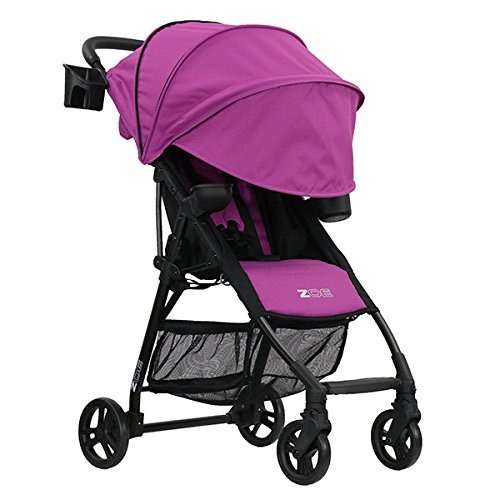
Strollers – ZOE XL1 (Single) and XL2 (Double) Lightweight Strollers

We’ve gone through a lot of strollers. New strollers, hand-me-down strollers, consignment store strollers. Once we started traveling with two kids, we did a ton of research trying to find something light yet useful. My pet peeve is “lightweight” single strollers that weigh 20+ pounds! The XL1 weighs 11 pounds. The XL2 is a double stroller that still weighs only 17 pounds. Not only that, but it retains important features that you won’t find on a barebones umbrella stroller – quick-fold, extended shade canopies, 135 degree recline, lower basket, and snack/cup holders. Add some saddle side bags and a handlebar organizer and you’ve got tons of on-demand storage.

If you click on the Amazon link, you can buy direct from ZOE as a third-party seller. The shipping breakdown is expensive, but it works out the about the same price as buying direct from their website. You might also find some open box returned items on their website.

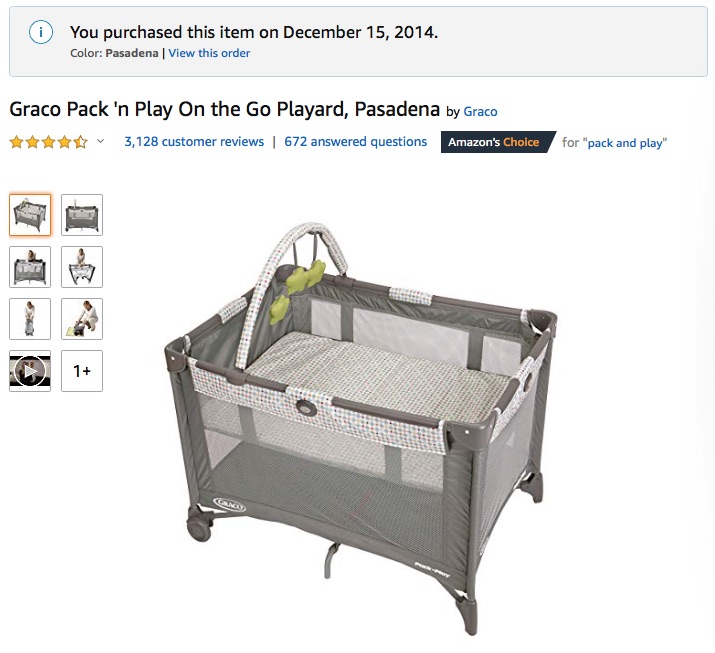
Playards – Graco Pack ‘n Play Playard

The “Pack N Play” has reached the status of Kleenex and Band-Aid where the brand names are used instead of the official term. Once you figure these things out, they are both sturdy and able to be setup/taken down in seconds. They just work, and can be found in hotels everywhere. If you add a custom-sized mattress, you could realistically use this as a permanent crib replacement (or at the grandparents house, etc). We just bought the most basic best-selling version, but there are tons of add-ons.

Car Seats – Chicco KeyFit 30 Infant Car Seat

The Chicco Keyfit 30 has housed all three children in comfort and safety. It has been rated #1 by Consumer Reports for who knows how many years. It’s lightweight, ergonomic, durable, and the cover washes easily. It’s been in airplanes, taxis, Ubers, rental cars. Our “Kee-koh” has finally earned a retirement full of leisure, while we have handed down the convenient car seat bases to someone else. We definitely maxed out the value on this one.

Travel Systems – Chicco KeyFit Caddy Frame Stroller

We don’t like all-in-one “travel systems”. They tend to be too bulky and heavy, I’ve seen some weigh over 40 pounds! Why push around parts that you’ll only need a year later? If your child is still small enough for the car seat, buy a bare frame and use that as your stroller. It’s lighter and you can still make easy transitions between car and stroller (especially if napping). When your child is older, just buy an independent lightweight stroller (see above).

Nursery

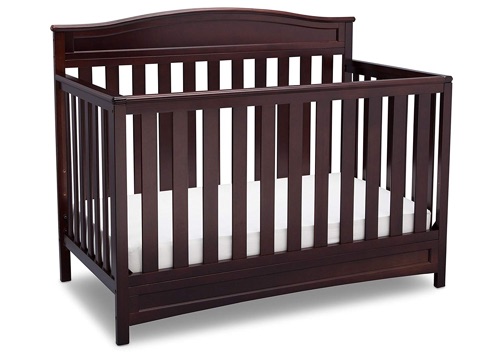
Cribs – Delta Children Emery 4-in-1 Convertible Baby Crib

We bought this crib because it has no moving parts (safe) and it had pictures of it being used as both a toddler bed and eventually a headboard. However, we keep having kids so it’s always been just a crib. It is simple, sturdy, and has lasted through all three kids (and is being slept in as I type this).

Gliders – Dutailier Sleigh Glider and Ottoman Combo

We didn’t buy a Dutalier for the first baby because we thought it was too expensive. However, those all-nighters with a colicky baby means you’re spending a lot of hours sitting on something. If that something makes both you more comfortable and the baby more likely to go back to bed, well… take my money!! When we found out we were having a second child, one of the first things we bought was this glider. We did not regret it. The good news is that it is high quality and still glides quietly and smoothly after 4 years of constant use. The bad news is that they are still pricey. *Cough* Put it on the baby registry and hope someone really likes you *Cough*

Mattresses – Colgate Classica III Crib Mattress

We picked this mattress because it had dual firmness and did not have any funny plastics or smells (supposedly certified by so and so, etc). Infants are supposed to have very firm mattresses for safety, and then you can switch it over to the softer side when they are older. It is of quality construction and well-sealed so that you can wipe off… whatever needs to be wiped off when the time comes.

Here is our favorite mattress sheet. No fancy design but it is super-soft cotton even after lots of washes.

Bathtime

Bath Tubs – PRIMO EuroBath

It’s simple, durable, and made of thick plastic. Would probably last for 100 babies. I didn’t want anything cloth or stretchy. You can just wash or even bleach this thing as needed. I hung it up to dry each night over the tub (use 3M bathtub hook or two).

Diapering

Diaper Bags – We got multiple diaper bags as gifts, but we never used them. Too heavy. We just used whatever bag felt right, often a smaller purse/messenger bag thing for her and a backpack for me. Once they are old enough, I use a reusable grocery bag. Mainly you need to remember snacks and the…

Changing Mats – Skip Hop Baby Pronto Portable Changing Station

Diapers, butt cream, wipes, poop bags. Check. Mat for really gross places. Check. Okay, I usually leave the mat at home now (it zips off). Have I mentioned I don’t like carrying extra weight?

Diapers – I know I should use cloth diapers, but we got a million diapers as gifts with the first kid and… that was that. We were so overwhelmed with everything else that the idea of dealing with cloth diapers was too much. Sorry. Although for some reason, kid #3 goes through about 1/3rd of the diapers that kid #1 did…

We like Huggies. and Pampers. and Luvs. I only look at the cost per diaper. If you wait for a sale + Amazon Family 20% off, you can get close to or at 10 cents a diaper.

Diaper Pails – We received and have used a Diaper Genie for all three kids, and it has worked for the most part, although I’m always appalled at how much the refills cost. I’ve tried the generics and also just using a trash bag, but somehow the smell gets out. Our main attempt at economizing is that we only put #2s in the diaper genie and the #1s go in the normal trash. This is more so we don’t have to keep emptying the darn thing than the cost. Otherwise we just buy the name brand refills.

Bottles – We used Medela bottles, primarily because we got a Medela breast pump from our health insurance. They worked fine and were of good quality in my opinion. The bottles lasted for multiple kids.

Bottle Sterilizers – We don’t use any bottle sterilizer gadgets. We just follow the CDC directions and use warm soap and water, clean hands, and the dishwasher.

Breast Pumps – We got a Medela breast pump from our health insurance. It kept working despite some pretty heavy usage. The battery life does start to go after a year or so.

Feeding Pillows – Mrs. MMB was not a fan of the Boppy. It moved around too much and was uncomfortable. She much preferred the questionably-named My Brest Friend, which is ergonomically better and has a strap for security. We even bought the inflatable travel version which also worked well. The cover is easy to remove, wash, and put back on.

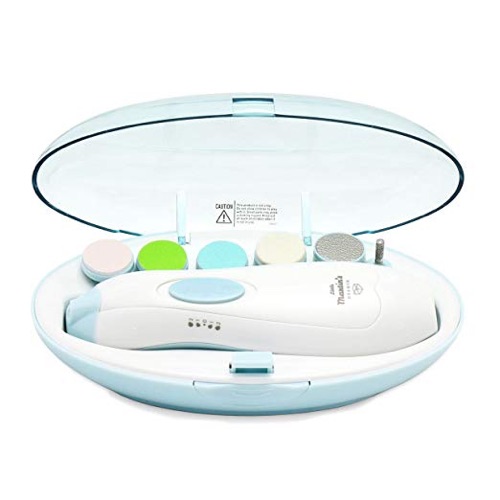
One Last Random Thing – Little Martin’s Baby Nail Trimmer

I know, you’re worried about what the baby is going to eat, how it’s going to sleep, and keeping it safe in the car. But one of the more stressful things for me was trimming the nails. If you don’t trim, their little claws can scratch their own face and even eyes. But using a traditional nail clipper is tough on a tiny wriggly hand, and I have drawn blood before. One of my favorite purchases was this little Dremel-like nail trimmer. No more blood, no more fighting, and I can still use it on my older kids.

Buy Audible Membership for $6.95, Get a Free Echo Dot ($39.99 Value) – 11/19 Only

Update: This deal appears to be expired.

Amazon has a great deal today only (11/19) if you’re interested in a free Echo Dot. Sign up for a discounted membership at $6.95/month, and you get can get a free Echo Dot ($39.99 value). Here’s how:

  1. Click here to see offer and buy the discounted Audible membership. Look for the green banner as shown below. After clicking “Get this deal”, you should also see “Receive a $39.99 credit for an Echo Dot (2nd gen) after checkout.”
  2. After buying the membership, add an Echo Dot (2nd Gen) to your cart and checkout. You should see the $39.99 discount, making it free. If you don’t want it linked automatically to your account, set it as a gift. You should get an e-mail immediately that says it might take up to 48 hours, but you should be able to buy it right away.
  3. You can still cancel your Audible membership at any time (easily online and with no hassles), even after a single month. You can even buy your audiobook immediately and cancel right after.

I was a former Audible member, but not a current one, and was able to get this deal. An audiobook that I’ll actually listen to (and get to keep forever) and a Echo Dot for seven bucks? Good deal.

You can see the deal terms when you click here and scroll down and click on “Terms and Conditions Apply”:

Offer available from November 19, 2018 6:00AM PT until November 19, 2018 at 11:59PM PT or while supplies last. To qualify for this offer, you must have an existing and active Amazon.com account (as evidenced by at least $1 in transactions in the 6 months prior to redemption of the offer). This offer is not available to existing Audible members. Offer applies only to an Audible monthly membership sold by audible.com. For the first 3 months of your Audible membership, you will be charged the discounted price of $6.95/mo. After the first 3 months, your Audible membership will continue at the then current full price (currently $14.95/mo.) until cancelled. Cancel anytime by visiting the Account Details page. After you sign up for your membership and your payment information is verified, you will receive a confirmation email and the Amazon.com account that you used to sign up for your membership will receive a $39.99 credit (within 48 hours after sign up) redeemable for an Echo Dot (2nd Generation) device.

Buy Amazon Music Membership for $0.99, Get Echo Dot For $1 ($49.99 Value)

Update: This deal appears to be expired.

Amazon has a another good deal for those interested in a dirt-cheap Echo Dot. Sign up for a 3-month Amazon Music membership for $0.99, and you get can get an Echo Dot (3rd gen) for only $1 ($49.99 value). Here’s how:

  1. Click here for the Amazon Music trial for $0.99. Enter your payment info and address. Before you click the big “Join Now”, look below that and enter the promo code DOT1. It should tell you that the promotion was applied successfully. Now you can click “Join Now”.
  2. After joining, add an Echo Dot (3rd Gen) – Charcoal ($49.99) to your cart and checkout. You should see the $48.99 discount, making it $1 net plus taxes if applicable. If you don’t want it linked automatically to your account, set it as a gift.
  3. You can cancel your Amazon Music trial before the 3 months is up, if you’d like.

Bonds For The Long Run? Long-Term Bonds vs. Stock Returns (1823-2013)

When it comes to news, the headline “man bites dog” will get people’s attention, not “dog bites man”. Similarly, a new research paper that questions the idea of “Stocks for the Long Run” will create headlines like the WSJ article Sometimes, It’s Bonds For the Long Run (paywall?) by Jason Zweig.

Prof. McQuarrie has compiled a new database of US bond prices dating all the way back to 1823, including longer-term federal, municipal, and corporate bonds. During this early period, he found that bond returns were much closer to stock returns than from 1900 onward. The WSJ included this chart of rolling 30-year average returns:

Assuming the data is accurate, the returns between US stocks and US bonds from 1823-1900 do look very similar, even somewhat correlated. I don’t know what it was like in the 1800s to buy a share of a company vs. buying a debt instrument. I imagine the environment was very different and that very few average households participated.

However, I also noticed how the 30-year average returns for stocks rarely dipped much below 4% real return over the past 200 years. If you’re telling me to look back at history, that’s also a crazy finding in my opinion. In contrast, holding onto bonds that averaged a negative real return over 30 years? Yikes.

The WSJ article also points out that 30-year Treasury bonds outperformed stocks as recently as from 1981 to 2011. But then I looked up this chart of historical 30-year Treasury yields:

The 30-year Treasury had a yield of about 14% back in 1981. Check out this 1981 NY Times article 30-YEAR U.S. BONDS HIT 15%. The decades-long bull run for bonds fueled by continuously dropping rates doesn’t have much room to go lower. The 30-year Treasury today is 3.35%.

Now, look at the first chart again and notice where the bond returns were negative from 1950 to 1980. The 30-year Treasury didn’t exist in 1950, but the 10-year Treasury equivalent yield in 1950 was about 2%. In 1950, corporate bonds yielded about 3%. Sound familiar? That’s about the same rates as today, so it’s hard to get too excited about long-term bond returns at this point.

It’s an interesting paper to read, but I don’t see anything that would change my portfolio outlook overall. I hold 2/3rd stocks and 1/3rd bonds, which is probably a lot more bonds than is usually recommended for someone my age, but I am also much closer to living off of my portfolio than most people my age. Bonds and cash are important components and everyone should probably own some. Still, if you made me pick, I’d bet on “Stocks for the Long Run”.