
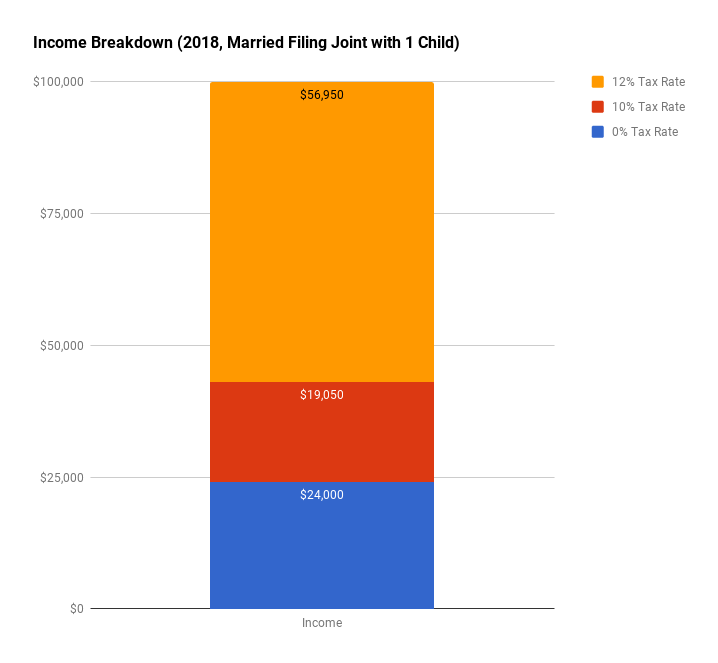
The Tax Cuts and Jobs Act (TCJA) changed up the personal income tax brackets, exemptions, and deductions. Here is an updated graphical breakdown of a simple scenario for a single filer with no dependents in Tax Year 2018. I’ll try to illustrate the relationship between gross income, taxable income, marginal tax rate, and effective tax rates. See also my previous post 2018 Income Tax Breakdown (Married w/ 1 Child).
2018 federal income tax rates for single filers. Taken from the official IRS tax tables (source):

The following changes also apply for Tax Year 2018:
- The personal exemption deduction is now gone ($0), from $4,050 in 2017.
- The standard deduction for single taxpayers and married taxpayers filing separately rises to $12,000 from $6,350.
- The standard deduction for married taxpayers filing joint returns rises to $24,000 from $12,700.
- The standard deduction for heads of household rises to $18,000 from $9,350.
- The Child Tax Credit was expanded with higher income phaseout limits and is now worth up to $2,000 per qualifying child.
Let’s say your individual gross income is $60,000 a year. You are single with no dependents, aged 64 and under. You are an employee that receives W-2 income only (i.e. you are not self-employed). You don’t have any additional income sources like interest, capital gains, rents, etc. You don’t have any extra deductions like IRA/401k contributions or mortgage interest. You live in a state with no state income tax. We will ignore any state or local income taxes.
Gross income. Let’s start with your annual $60,000 gross income. There are no personal exemptions anymore. You do get the larger standard deduction which is $12,000 for single filers in 2018. Since you don’t have a lot of itemized deductions, you fall back onto the standard deduction.

The first 12,000 of your gross income is not taxable. Without doing anything special at all, your $60,000 in gross income is now only $48,000 in taxable income after personal exemptions and the standard deductions.
The first $9,525 of taxable income is subject to a 10% tax rate. Shave off 10% of $9,525 and put that on your tax bill ($952.50). The remaining $38,475 of taxable income is moved onto the next tax bracket.
The next $29,175 in taxable income is subject to a 12% tax rate. So we take 12% of $29,175 ($3,501) and add that to the existing $952.50. The tax bill is now $4,453.50. The remaining $9,300 of taxable is moved onto the next tax bracket.
The next $43,800 in taxable income is subject to a 22% tax rate. However, we only have $9,300 left. So we take 22% of $9,300 ($2,046) and add that to the existing $4,454 (let’s round up that dollar). The total tax bill is now $6500.
In this example, this 22% is your marginal tax bracket. If you earned another $1, it would be taxed at this marginal rate of 22%.

Payroll taxes. These aren’t technically federal income taxes, but you must pay a Social Security tax (OASDI) of 6.2% and Medicare payroll tax (HI) of 1.45% of your gross income. That’s $3,720 a year for Social Security and $870 a year for Medicare. (Your employer pays the same amount.)
Overall effective tax rate. You paid $6,500 in federal income taxes on $60,000 of gross income, for an overall effective tax rate of 10.8%. You also paid 7.65% in payroll taxes.
The same single filer in 2017 would have paid $8,139 in federal income taxes on $60,000 of income, for an average or overall effective tax rate of 13.6%.
 Target is offering a mobile coupon for $20 off a $50+ purchase. Simply text LKWKGK to TARGET (827438) and a special link and promo code will be texted back to you. Coupon will expire 10/31/18. Valid both in-stores and online. Found via

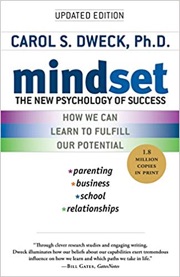 The power of mindset was popularized by psychology professor Carol Dweck in her book
 Here’s a big
  T. Rowe Price has a brochure The Benefit of Saving Regularly For Retirement [pdf] which has the common advice that you target saving at least 15% of your gross income each year to prepare for retirement. Of course, the earlier you start, the better. The added wrinkle here is that they offer an alternative route if you find 15% a stretch when you are young.


 Vanguard made a splash last week when it announced that it will offer commission-free trades on all ETFs in it brokerage accounts. Vanguard ETFs had been free to trade already. Starting in August, they will add nearly 1,800 ETFs from competitors including Blackrock (iShares), Schwab, State Street (SPDR), Powershares, WisdomTree, etc. Also see
  Here is my monthly roundup of the best safe rates available, roughly sorted from shortest to longest maturities. Check out my
  Update October 2018. Here is a
  The Best Credit Card Bonus Offers – 2026
 Big List of Free Stocks from Brokerage Apps
 Best Interest Rates on Cash - 2026
 Free Credit Scores x 3 + Free Credit Monitoring
 Best No Fee 0% APR Balance Transfer Offers
 Little-Known Cellular Data Plans That Can Save Big Money
 How To Haggle Your Cable or Direct TV Bill
 Big List of Free Consumer Data Reports (Credit, Rent, Work)