 As new parents-to-be, we have been exploring our options for paid and unpaid family leave from work. This is not meant to be an exhaustive list, but I was pretty surprised by all the possible permutations that you could do. I would add that while knowing your legal rights is important, I also support the idea of working with your employer and co-workers to make the process easier on everyone.
Your Work Contract
Most employers offer their full-time salaried worker’s some length of paid maternity leave, and it’s usually spelled out clearly in the lawyer-ese language of your work agreement. A few employers even offer paid paternity leave. Making an appointment to discuss all your options with Human Resources can be time well spent. Keep in mind that you are subject to the laws of the state where you work, not where the company is based.
In addition, you may be eligible for a longer unpaid leave-of-absence. For example, a big company may allow you up to one full year of leave and your same job (or comparable) will still be yours when you come back.
Short-Term Disability Insurance
Depending on your insurance plan and local laws, being pregnant or taking time off to bond with a new child may be covered under short-term disability insurance. This means you may be eligible for an additional period after your paid maternity leave where you will get a disability benefit that is somewhere around 50% of your normal pay (subject to caps).
Family and Medical Leave Act (FMLA)
The FMLA entitles an eligible employee to take up to 12 workweeks of job-protected unpaid leave for the birth or placement of a child, to bond with a newborn or newly placed son or daughter, or to care for a son or daughter with a serious health condition. You may or may not be required to use up your paid vacation days first. To be eligible for FMLA benefits, an employee must:
- work for a covered employer;
- have worked for the employer for a total of 12 months;
- have worked at least 1,250 hours over the previous 12 months (~24 hours per week average); and
- work at a location in the United States or in any territory or possession of the United States where at least 50 employees are employed by the employer within 75 miles.
Under some circumstances, employees may take FMLA leave intermittently – taking leave in separate blocks of time for a single qualifying reason – or on a reduced leave schedule – reducing the employee’s usual weekly or daily work schedule. If FMLA leave is for birth and care, or placement for adoption or foster care, intermittent leave is subject to the employer’s approval. To get that permission, you should approach your employer in a way that suggests that taking the leave in chunks would disrupt the office operations less than taking all 12-weeks at once. For example, you may propose a 4-day workweek over a period of several months to a year, as opposed to leaving entirely for three.
State-Specific Family Leave Laws
Each state can have their own separate family leave and/or disability laws that may grant you more time and/or pay. Running a Google search for “[Your State] Family Leave Act” or “[Your State] Family Leave Laws” should locate the appropriate information.
Let’s take the most populous state and the California Family Rights Act (CFRA). Under federal law, any leave taken for a pregnancy-related disability is part of your FMLA 12-week limit. However, in California, an eligible employee who is disabled on account of pregnancy, childbirth, or related medical conditions is entitled to take Pregnancy Disability Leave (PDL) for up to four months. In addition to that, an eligible employee could then take 12 weeks of family leave to care for and bond with a new child under FMLA/CFRA. That adds up to a total possible leave of 7 months.
Sources: U.S. Department of Labor, CA Dept. of General Services, CA Fair Employment and Housing Commission
 If you’re like me, you have a cabinet in your kitchen stuffed with a scratched and stained mess of Gladware, Ziploc, or Tupperware food containers and an even larger stack of lids that never seem to fit. I even remember telling myself to stick with one brand and three sizes, but after years of dinner parties, brown-bag lunches, and outdoor potlucks, entropy has kicked my butt. Add in the baby on the way, and I wanted to reset and replace with BPA-free (linked to cancer and hormonal disorders) containers and perhaps buy additional ones for storing baby food.

 Chase Exclusives is a program that encourages you to open a Chase checking account whenever you have any other relationship with Chase. I closed my Chase (formerly WaMu) account a while back after they slowly started making it harder to keep as a secondary account, but some of these perks actually seem pretty good. I remember hearing something about them, but never actually took a good look at the details until now.
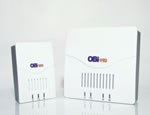 Are you still looking for a home phone solution that’s cheaper than a landline? A new startup called Obihai has started making ATA VoIP boxes that are actually easy to set up. You buy their box, add in Google Voice (GV) service, plug in a normal landline phone, and it will use GV to make and receive phone calls. No computer required.

 The Best Credit Card Bonus Offers – 2026
 Big List of Free Stocks from Brokerage Apps
 Best Interest Rates on Cash - 2026
 Free Credit Scores x 3 + Free Credit Monitoring
 Best No Fee 0% APR Balance Transfer Offers
 Little-Known Cellular Data Plans That Can Save Big Money
 How To Haggle Your Cable or Direct TV Bill
 Big List of Free Consumer Data Reports (Credit, Rent, Work)