 So I am trying to kick off one of my planned 2009 projects, which is to methodically go through each major expense area and explore ways to save money there. I started out last week with on housing costs (here and here), and still have a few ideas left. But while brainstorming an outline of future posts, I noticed that there seemed to be a divide in the types of strategies out there.
One set of ideas usually has to do with reducing the amount paid for a specific item or service. I call this external frugality, because you aren’t changing anything about yourself, just the price tag. For example, to save on what you pay for your house, you could look for a buyer’s agent rebate to save something like 1.5% of the purchase price, or carefully shop for mortgages with the lowest combination of closing costs and interest rate.
Another set of ideas usually involves either changing the type, amount, or quality of something. I call this internal frugality, because you are changing your consumption habits. An example of this would be realizing that you don’t necessarily need to same house as everyone else. You could look in more “up-and-coming” neighborhoods, or live in an older house with less square footage.
There are plenty of other examples out there:
External: Calling a cable company and asking for a lower rate.
Internal: You cancel cable completely. You could read more, watch episodes on your computer, or use a low-cost Netflix plan.
External: You find a cheaper long-distance plan, or switch to VoIP.
Internal: You get rid of your landline completely.
External: Learn ways to haggle down the price of a car.
Internal: Don’t own a car. Use public transportation.
I don’t think either or worse, but they are different. In general, it would seem like external frugality is at least initially easier to implement, as you don’t have to actually change your habits. However, I can also imagine that in many situations using internal frugality would lead to both greater absolute savings and also more enduring lifelong savings. But changing habits is really tough.
Next time you think you’re being frugal, examine if you’re doing it externally or internally.
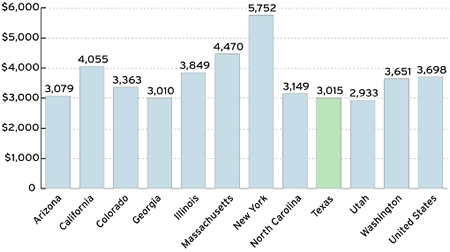
 In my experience, many people don’t like the idea of moving elsewhere because it involves something unknown and unfamiliar. However, if you ask people to think back to the places they have been, they’ll speak fondly of those places. Specifically, I think about moving back to a place that I spent several childhood years in – Austin, Texas.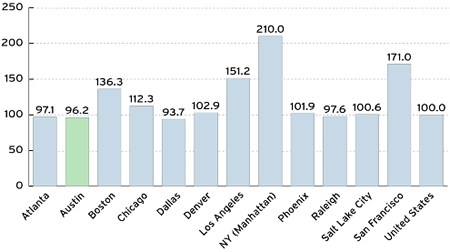
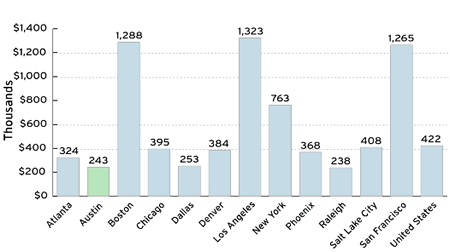 (For the chart, a “middle management house” is a single-family dwelling model with approximately 2,200 sq.ft., 4 bedrooms, 2 1/2 baths, family room, and 2-car garage.)







 The overall theme of this links roundup is dealing with unexpected events and the resulting expenses. If it can go wrong, it probably will, and most likely at an inconvenient time. Here are some fellow bloggers who have also had a not-so-great time recently.
 The Best Credit Card Bonus Offers – 2026
 Big List of Free Stocks from Brokerage Apps
 Best Interest Rates on Cash - 2026
 Free Credit Scores x 3 + Free Credit Monitoring
 Best No Fee 0% APR Balance Transfer Offers
 Little-Known Cellular Data Plans That Can Save Big Money
 How To Haggle Your Cable or Direct TV Bill
 Big List of Free Consumer Data Reports (Credit, Rent, Work)