Archives for February 2024

Save App Review: 9.07% APY Advertised vs. 0.00% APY Actual Return on Market Savings From 12/2022 to 12/2023

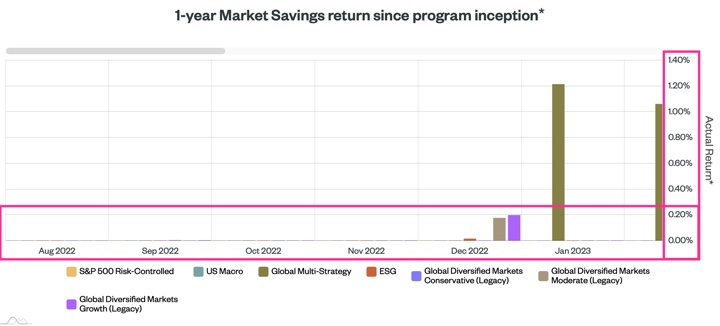
Update February 2024: Save now provides a link to their actual returns for their 1-year Market Savings across all portfolios. But be careful, as much of what is shown at first glance is for products that haven’t actually completed their entire terms. You need to scroll all the way left to find numbers for products that have reached maturity and actually paid out any returns. For example, starting December 2022 and ending December 2023, or January 2023 through January 2024. Screenshot taken 2/29/24.
Update January 2024: I have updated this review with my final return numbers, along with additional details from my bank and brokerage statements. I really wish it were different, but unfortunately my experience was not unique. I have gotten a lot of messages from people who are unhappy that they received a 0% actual return on their Market Savings investments. I hope it can help prospective users make a more educated decision.

Detailed, full review:

The Save app advertises a Market Savings Account that “combines the security of FDIC-insured bank deposits with the upside potential of market returns”. I took a glance at the advertised yields (see below) and quickly filed it under “probably too good to be true”, but still came back and took a shot due to the “free” 6X leverage offered where I could invest $1,000 and get the returns of $6,000 worth of investments.

Here is a screenshot of their advertised rates, taken 2/29/24:

A short theoretical story. Let’s say you have $1,000 and put it into a 1-year CD at an FDIC-insured bank that pays 5% APY. At the end of the year, you’d have $1,050 guaranteed. Now, imagine you went to Vegas and instead bet that $50 interest on red at the roulette table. Worst-case, you’d lose the $50 and still have $1,000. Best-case, you’d double the $50 and end up with $1,100. A 10% annual return! Now, you might charge a fee to others for this “service”. Nothing if they lose, but a little cut if they win. So $1,000 worst-case, and $1,096 if they win ($4 fee for the service).

This gives you a basic idea of what I imagined was going on here, except replace Vegas with some fancy derivatives to give you market exposure to a portfolio of stocks and bonds.

The longer Save version. Here it is, straight from Save:

Every Save® account is connected with a FDIC-insured bank account. Your deposits are never at risk. We only invest the interest on your deposits, so no matter what happens with the ups and downs of the markets, your initial deposit is never at risk for investment loss.

This app is a combination of an FDIC-insured bank account, an SIPC-insured brokerage account, and an SEC-registered investment advisor. Your money is placed into an FDIC-insured account at Webster Bank that doesn’t earn any interest. Instead of paying you interest, they will buy a portfolio of securities that offer exposure to market products like stocks and bonds. These securities are held in a brokerage account with Apex Clearing, the same firm used by brokers like Robinhood, WeBull, etc. As your financial advisor, they will charge you a fee of 0.35% annually for this service. Ex. 0.35% of $1,000 is $3.50 a year. 0.35% of $10,000 is $35 a year.

This is all taken from Save’s official documents: press release, terms and conditions, SEC Form ADV, deposit agreement, and Form CRS.

Upon opening Market Savings and initiating a deposit to the Deposit Account, Save will, on behalf of you:

– deposit your funds in full into the Deposit Account provided by Webster, member FDIC and,
– purchase a strategy–linked security selected based on your risk tolerances within a Client Account

The Market Savings Product is comprised of a Deposit Account with Webster Bank, N.A. and a Client Account with Apex Clearing Corporation.

SAVE Advisers is an investment adviser registered with the SEC. SAVE Advisers provides its clients with combined banking products and wealth management services through a web-based algorithmically driven wrap-fee investment advisory program (the “SAVE Market Savings Wrap Program”).

The SAVE Market Savings Wrap Program is designed for investors with a cash savings investment profile. The investment objective of the SAVE Market Savings Wrap Program is to enhance our clients’ cash savings investment profile by providing attractive returns on capital using Save’s core investment philosophy while preserving their initial investment.

On the Market Savings Wrap Program, Clients will pay a wrap fee at a rate of 35 basis points (0.35%) per annum (one basis point is 1/100 of 1%) on either 1.) the total notional amount of each strategy–linked security or 2.) the total notional value of the Client Deposit Account (whichever is greater).

Save products are intended for conservative investors who are mostly concerned about the protection of their principal investments.

This reminds me of the No Risk Portfolio with 100% Money Back Guarantee. Your market-linked investment may go up 10%, 100%, or whatever, but the worst thing that can happen is it goes to zero (and you still get back your initial investment). According to this WSJ article (paywall), the CEO says the chance of a zero return in any given year is about 15%. This suggests that they are using some sort of leverage. (They also say the returns will count as long-term capital gains, unlike ordinary bank interest.)

The investments in Save portfolios are held for over a year so they are taxed as long-term capital gains.

This reminds me of the structured investments and “equity-linked returns with no downside” offered by many insurance companies. The insurance companies have much more onerous early withdrawal penalties where you can lose more than your initial principal, so this seems like a much lower cost option (even if still not what I want for my primary portfolio).

Where do they get those high advertised returns? Those are back-tested numbers:

Average annual returns are based on hypothetical back-tested performance by Save of the Save Moderate Portfolio from 2006 to present.

What happens if I try to withdraw my investment before the end of my term? There is a early withdrawal fee (a slightly complicated formula), but you’ll always at least get back your initial principal.

I understand that if I terminate my account prior to the completion of an investment term I may forgo all gains and receive back only my initial deposit.

Update: My final results from December 2022 to December 2023. I deposited $1,000 in December 2022, and ended up with… $1,000 in December 2023. I got back my initial $1,000 and that was it. All of the other investments apparently matured at a value of zero. This is despite having been told that I had positive returns in the middle of my term.

After my initial sign-up and $1,000 investment of my own money in December 2022, I did later participate in Save’s referral program and that did later result in additional earnings (my earnings were the same as the referred earnings). If you count this money, then I received a positive return. However, I don’t feel that this is representative of what you (the reader) could necessarily achieve on your own, so I chose to focus only on what I would have gotten without the ability to refer other users. I simply count the $1,000 of my own money and the $5,000 equivalent balance invested due to using someone else’s referral. On that money, my return was the same as everyone else who invested in my portfolio from December 2022 to December 2023: zero.

Save’s referral program is structured in that I earn the same bonus as the reader that signed up. Thus, you can see the returns of every single reader that used me as their referral (thanks again if you did!). I have gone ahead and attached the screenshot of every single referral that I have made with a matured investment, as of the end of March 2024. These are real-world results from real readers. The return percentages are usually based on a $5,000 equivalent investment (i.e. 1% return on $5,000 is $50.)

People with different start times and end times have different returns. Some have had zero returns. Some have had positive returns. The more recent returns are higher, and I hope that they continue to rise. However, I don’t count my chickens until they have hatched (fully matured and paid back any principal and interest).

That was a lot, but now you have all my returns and all the matured returns from all referred readers, down to the penny.

Save did put my initial $1,000 in an FDIC-insured bank account and just kept it there – nice and safe – doing absolutely nothing. No interest was earned. Each month, I got a bank statement and a brokerage statement. Here is a screenshot of my final bank statement showing $1,000 being sent back to me at the end of December 2023, after 12 months.

Below is a screenshot from my Save Brokerage statement, which was indeed held at Apex Clearing (a popular clearing firm for many fintechs, used by Robinhood, etc). Inside, they bought some sort of non-transparent, thinly-traded securities that were classified as corporate bonds. Perhaps someone with more advanced market knowledge can tell me more about these things. Example CUSIPs were 05600HTU9 and 05600H2F1.
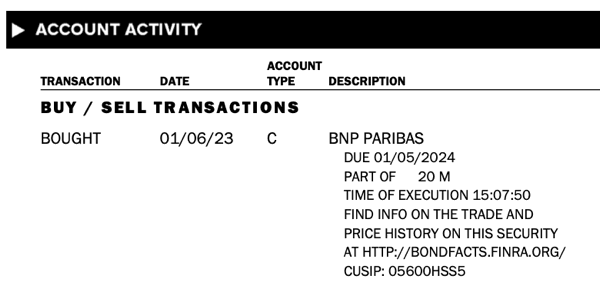
Here is a tiny of bit info from FINRA:
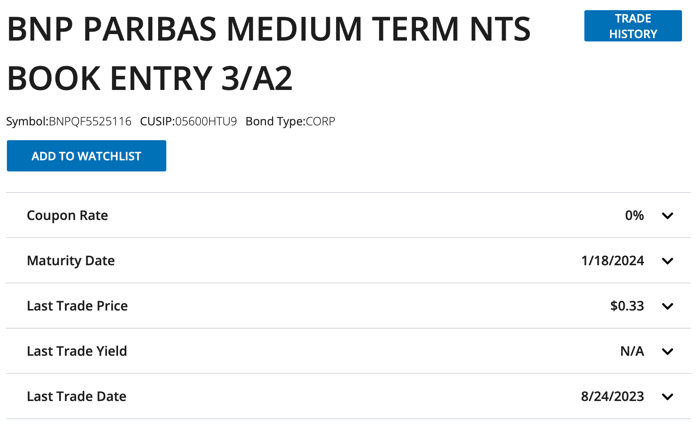
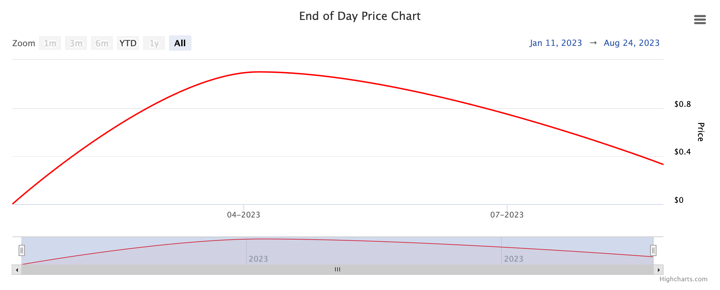
The value of this security varied wildly through the year, from zero to $1 and all the way back to apparently zero?
How much of this security did they buy? In my case, it was about $15 worth per $1,000 invested. In comparison, earning 4% APY from a 1-year $1,000 traditional bank CD would equal $40.

I did sign up using a referral link and deposited $1,000 to qualify for the bonus $5,000 (at the time, lower now) for a total equivalent balance of $6,000. I thought this would be a good value bet, effectively leveraging any returns. Unfortunately, zero times anything is still… zero. I just got back my $1,000. Again, this excludes any referral bonus income.

Now, I knew that a zero return was possible. A screenshot of the portfolio strategy that I picked initially is shown below. However, nearly every major asset class had solid positive returns for 2023. Yet, according to Save’s own historical returns page (see top of post), the highest return for any of their multiple portfolios that were held from both (December 2022 to December 2023) or (January 2023 to January 2024) was 1.20%, with the median return being zero. I’m afraid that I simply don’t understand what is inside the securities that they chose to buy, so I will not be investing anything further.
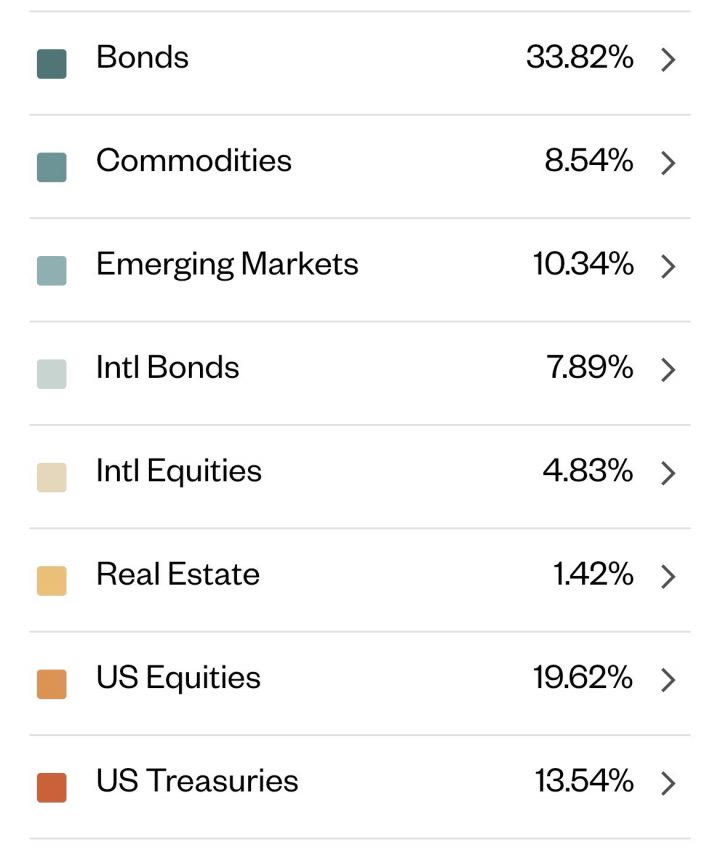
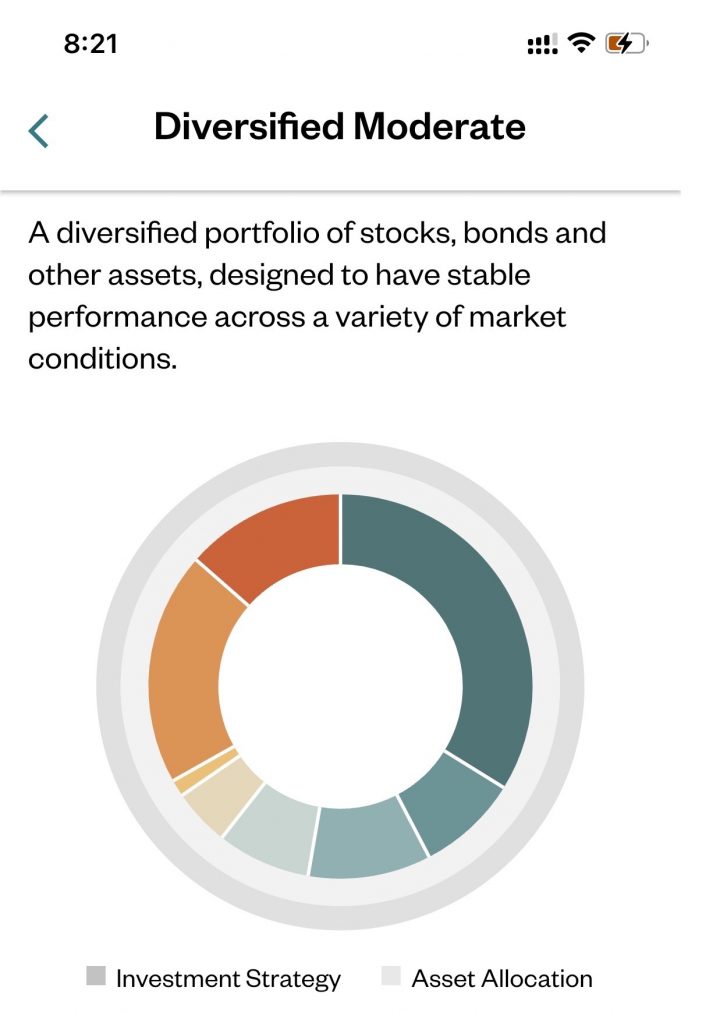
Honestly, I had high hopes for this product. It had potential and it didn’t even have to be that complicated. Again, look at this simple DIY principal-guaranteed investment linked to market returns.

Bottom line. The Save app advertises to folks “higher returns on their savings without the risks of the stock market.” They do appear to keep your principal safe in an FDIC-insured account, so indeed you can’t technically lose money. But it is unclear to me how they invest the rest. Despite their advertised 1-year return numbers, my personal experience was zero return (0.00%) on my 1-year term Market Savings investment that ran from December 2022 to December 2023. This matches their published actual returns for all investors during this time frame. This numbers excludes subsequent income from referral bonuses, which if you did include, would have resulted in a positive return. Other maturities may have experienced different returns, as shown in the screenshots above. I did receive my initial principal back as promised.

Note: Save Advisers pays a Referral Bonus up to $5000/$10,000 [product specific] as more specifically described in the current Referral Program as outlined by the Advisor here: https://joinsave.com/referrals, for each successful client referral. This amount is subject to change at any time.

Upgrade Premier Savings: Up to $200 Deposit Bonus + 5.21% APY

(Update July 2024: The top deposit bonus level is now back to $200.)

Original, outdated post with expired details from when the top tier was worth $500:

Upgrade is offering up to a $500 deposit bonus via referral link when you open their standalone Premier Savings account and make a deposit of at least $15,000 in the first 30 days and leave it there for at least an additional 60 days. No credit check for me. FDIC insurance through Cross River Bank.

Note: This is a separate bonus from the ongoing $200 Upgrade Rewards Checking bonus, which had a direct deposit requirement. You can add on a “Performance Savings” account onto a Rewards Checking account, while this offer is for a different “Premier Savings” account.

Per the fine print, you should be able to get this bonus as long as this is your first “Premier Savings” account. It doesn’t matter if you already got the Rewards Checking bonus (as I did). You just need to make sure you use a referral link with the promotion attached.

If you have never had a Premier Savings account through Upgrade (a “New Customer”), you can receive a Welcome Bonus (defined below) if you (1) use an Existing Customer’s unique referral link to open a new Premier Savings account, subject to account approval, by the Offer Period, (2) make a deposit within 30 days of opening the new account, and (3) after the initial 30-day period, maintain at all times during an additional 60 days the minimum account balance presented to you (a “Qualified Registration”).

The account opening process for my first Upgrade account was very quick and easy, literally under 5 minutes. I did not have to upload any extra documentation and I did not experience any hard credit checks. The account was open and ready the day after application. If you are an existing customer (as I was this time), it was even faster. All my details were pre-filled and so it just took a few clicks. (Update: Some users report having much higher ID verification requirements. So YMMV.)

All of my previously-linked external bank account details were also available to make a transfer. Upgrade uses Finicity (owned by Mastercard) for linking external bank accounts.

Here are the highlights of the Premier Savings account:

  • 5.21% APY as of 2/27/24 with $1,000 minimum balance required to earn interest.
  • No direct deposit requirement (unlike the Performance Savings).
  • No monthly fees.

Napkin math (Effective APY). If you deposit towards the end of the 30-day funding period, your technical minimal holding period is 60 days.

For the $15,000, $30,000, and $100,000 deposit tiers, earning 0.50% on your funds with a 60 day holding period works out to an additional 3.00% annualized yield. If you assume the current 5.21% APY, that adds up to a total effective interest of roughly 8.21% APY annualized for 2 months.

For the $50,000 deposit tier, earning 0.60% on your funds with a 60 day holding period works out to an additional 3.60% annualized yield. If you assume the current 5.21% APY, that adds up to a total effective interest of roughly 8.81% APY annualized for 2 months.

A straightforward deposit promotion with a smooth application and short hold period that doesn’t incur a hard credit check. The savings account also has a high base APY to keep around long-term. Finallly, it also stacks with another $200 checking account promotion from the same place. This is my Upgrade Premier Savings up to $500 referral link. Thanks if you use it.

Wells Fargo $325 Checking + $225 Savings Account Bonuses

(Update: This offer is expired.)

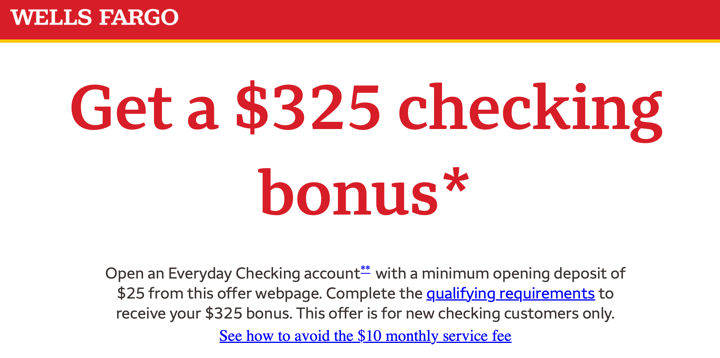
Wells Fargo has brought back a few larger bonuses for both new checking and savings account customers. The checking bonus requires direct deposit and the savings bonus requires a $10,000 new money deposit for at least 90 days. You must live in an eligible zip code, but their footprint is pretty big. Found via DoC. Currently, the offers end on April 9th, 2024.

  • $325 bonus for a new Everyday Checking account. You are not eligible for this offer if you currently have Wells Fargo consumer checking account or if you have received a bonus for opening a Wells Fargo consumer checking account within the past 12 months.
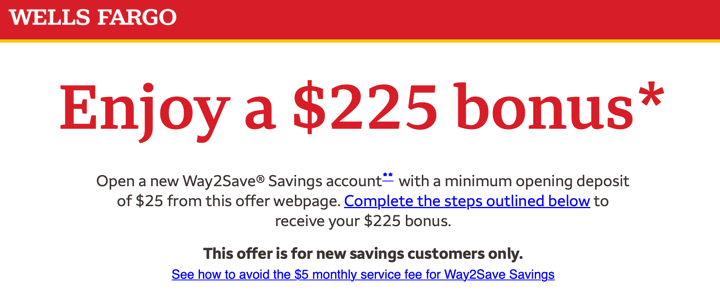
  • $225 bonus for a new Way2Save® Savings account. You are not eligible for this offer if you currently have Wells Fargo consumer savings account or if you have received a bonus for opening a Wells Fargo consumer savings account within the past 12 months.

$325 Everyday Checking account bonus details.

  • Open a new Everyday Checking account with a minimum opening deposit of $25 by April 9, 2024 online via the link above. If you open in-branch, you must first generate a bonus offer code via the link above.
  • Within 90 calendar days of account opening (the “qualification period”), receive a total of $1,000 or more in qualifying direct deposits to your new checking account. “A qualifying direct deposit is an ACH (Automated Clearing House) automatic electronic deposit of your salary, pension, Social Security, or other regular income into your bank account.”
  • Once the 90-day qualification period has elapsed, they will deposit any earned bonus into your new checking account within 30 days.

In the past, Wells Fargo has not done a “hard credit check” upon a new account opening, while also being pretty flexible with what qualifies as a direct deposit.

The Wells Fargo Everyday Checking account monthly service fee is $10, but it is waived with one of the following each fee period:

  • $500 minimum daily balance
  • $500 or more in total qualifying “electronic” deposits

$225 Way2Save Savings account bonus details.

  • Open a new new Way2Save Savings account with a minimum opening deposit of $25 by April 9, 2024 online via the link above. If you open in-branch, you must first generate a bonus offer code via the link above.
  • Within 30 calendar days of account opening (the “qualification period”), deposit $10,000 or more in new money to your new savings account and maintain at least a $10,000 balance for 90 days after account opening. New money is money that is new to the customer or new to Wells Fargo (deposited into the customer’s new savings account from outside of Wells Fargo and Company and all affiliates, or from a Wells Fargo account not owned by the customer).
  • Bonus will be deposited into your new savings account within 30 days after you have met all offer requirements.

The Way2Save interest rate is a horrible 0.01% APY. However, receiving the $225 bonus for holding $10,000 for 90 days works out to roughly a 9% annualized rate of return over those 90 days.

The Way2Save® Savings $5 monthly service fee can be avoided with one of the following each fee period:

  • $300 minimum daily balance
  • 1 automatic transfer each fee period of $25 or more from a linked Wells Fargo checking account
  • 1 automatic transfer each business day within the fee period of $1 or more from a linked Wells Fargo checking account.
  • 1 or more Save As You Go® transfers from a linked Wells Fargo checking account.
  • Primary account owner is 24 years old or under. (When the primary account owner reaches the age of 25, age can no longer be used to avoid the monthly service fee.) Customers 12 and under must have an adult co-owner.

IKEA Family Discount: $15 off $150, $30 off $300, $50 off $500 (Ends 3/3/24)

New discount up to 10% off, ends 3/3/24. IKEA has a limited-time “Spend and Get” promotion offering $15 off $150+, $30 off $300+, and $50 off $500+ purchases (all amounts are before sales tax and other taxes). U.S. only. Valid in-store and online. IKEA Family member number or IKEA Business Network account number required. IKEA Family is their loyalty program and is free to join.

There are some exclusions, including gift cards:

IKEA Family – Spend and Get Offer – Get $15 Off Your Purchase of $150 or more (pre-tax); Get $30 Off Your Purchase of $300 or more (pre-tax); Get $50 Off Your Purchase of $500 or more (pre-tax)*

Must scan or sign-in with IKEA Family member number or IKEA Business Network account number in order to receive offer. Minimum purchase amount must be met in a single transaction before taxes. Discount applied before tax, shipping, and handling. Offer will apply automatically at check-out if purchase qualifies. Not valid on IKEA Gift Cards or payment of your IKEA credit card. Offer excludes Click & Collect, Kitchen Planning and other services. Not valid in IKEA Swedish Restaurant or Bistro. Limit: one redemption per IKEA Family member number or IKEA Business Network account number. Offer tiers cannot be stacked and offer cannot be combined with other IKEA offers or coupons. Not valid on previous purchases. Discount applied proportionally across items purchased, as shown on receipt. On returns, only the net purchase price as shown on receipt is refunded. Other restrictions may apply. See store or IKEA-USA.com for more details. ©Inter IKEA Systems B.V. 2024.

IKEA coupons are pretty rare, other than their ongoing $25 off $250 moving coupon.

Right now, some people are also being targeted with a Chase Offer that offers 10% off at IKEA. It may be worth logging into your Chase account online and look for it in the “Chase Offers” box. Unfortunately, I did not see it under any of my cards.

Study: 100% Stocks The Best Portfolio For Both Accumulation and Retirement Income?

The academic paper Beyond the Status Quo: A Critical Assessment of Lifecycle Investment Advice by Anarkulova, Cederburg and O’Doherty had a conclusion that caught my eye. From the abstract:

We challenge two central tenets of lifecycle investing: (i) investors should diversify across stocks and bonds and (ii) the young should hold more stocks than the old. An even mix of 50% domestic stocks and 50% international stocks held throughout one’s lifetime vastly outperforms age-based, stock-bond strategies in building wealth, supporting retirement consumption, preserving capital, and generating bequests.

Now, the actual paper was not written for non-academics and there was very slim pickins’ in the “easy-to-understand graphic that summarizes our results” department, but I’ll try my best. They studied 8 different portfolios, summarized below. (They also picked the names.)

  • TDF. Follows the asset allocation of the most popular target-date funds, which use a glide path that starts at 90% equities but reduces equity percentage over time.
  • Balanced. 60% US stocks, 40% bonds.
  • Balanced/I. 30% US stocks, 30% International stocks, 40% bonds.
  • Age. (120-Age)% US stocks, (Age-20)% bonds.
  • Age/I. (60-Age/2)% US stocks, (60-Age/2)% International stocks, (Age-20)% bonds.
  • Bills. Invests only in Treasury bills.
  • Stocks. 100% US stocks.
  • Stocks/I. 50% US stocks, 50% International stocks.

In the chart below, the authors show the equivalent savings rate that would have been required to reach the same level of “expected utility of retirement consumption” (retirement income provided + leftover money at death) throughout the entire lifecycle of a 10% savings rate during the working years and then spending it down at a 4% withdrawal rate in retirement.

Let’s look at the highlighted pink box. This is the line for the best performing portfolio of 50% US stocks, 50% International stocks (“Stocks/I”). In order to have gotten the same amount of retirement income + bequest as a 10% savings rate with Stocks/I, you would have had to save 14.1% with a TDF, 16.9% with the Balanced portfolio, and so on. Note that staying in cash “bills”, you would need to ratchet up to 47% savings rate!

In another chart, we see that 50% US stocks, 50% International stocks (“Stocks/I”) also creates the highest income replacement rate in retirement, based on a 10% savings rate. This is true on average (50% percentile) and even in the worst-case scenarios (5th percentile), as long as you stayed with the plan. The drawdowns would have been temporarily more severe over certain periods of time, however.

My takeaways are:

  • You might consider a 100% stock portfolio with international exposure, if you really have the stomach for it. I’d probably recommend waiting until after you have survived a 50% crash first. Optimally, your portfolio would grow so much that by retirement, you may not even need a 4% withdrawal rate.
  • All of the other portfolios that contains some bonds (TDF, Balanced, Balanced/I, Age, Age/I) had very similar results over the entire lifecycle of accumulation and spending down. They still did pretty well.
  • Everyone should definitely own a good chunk of stocks, as trying to accumulate enough money with just safe “cash” in the form of Treasury bills or bank accounts is going to require in the neighborhood of five times the savings rate.

Self-Paced CFP: The 7-Step Financial Planning Process (Course Notes #1)

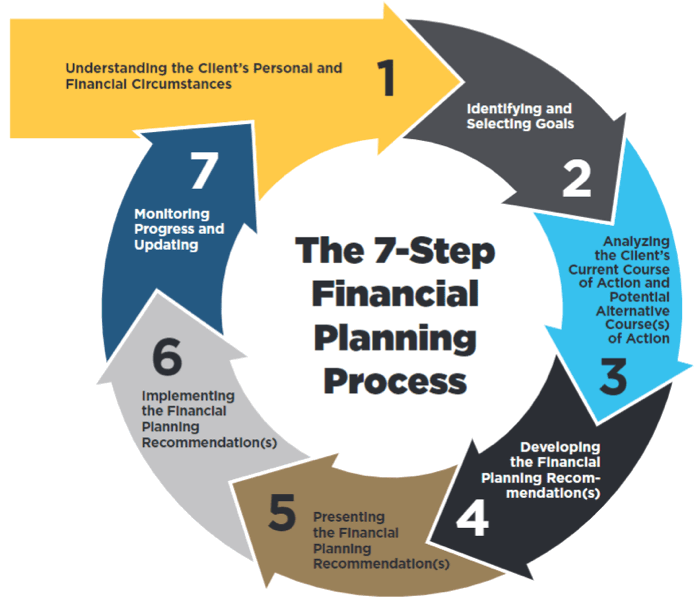
Whew! 😅 I just passed my first mid-term test in about 20 years. The first half of Fundamentals of Financial Planning, the first course from my self-paced CFP program, included coverage of the official 7-Step “Financial Planning Process”. The image above was found in my course materials, but the text (and I believe the graphic itself) is from the CFB Board’s Financial Planning Practice Standards.

Below are my completely non-official notes and takeaways. Remember, this is from the perspective of the financial planner.

Step 1: Understanding the Client’s Personal and Financial Circumstances

  • You must explain, obtain, and analyze all of the qualitative and quantitative information needed to fulfill the scope of your engagement.
  • Qualitative topics include (but are not limited to) health, family, goals, risk-tolerance, and priorities.
  • Quantitive topics include (but are not limited to) income, expenses, cashflow, savings, investments, assets, liabilities (debts), estate plans, and retirement/work benefits.
  • If the client is unwilling or unable to provide sufficient and accurate information (both personal and financial), you must terminate the engagement.

Step 2: Identifying and Selecting Goals

  • Identify potential goals for the client, using the information gathered in Step 1.
  • This means that in addition to the goals the clients brings up themselves, you may find other ones like adequate life insurance or a clear estate plan.
  • After developing this list of potential goals, work with the client to select and prioritize amongst these goals.

Step 3: Analyzing the Client’s Current Course of Action and Potential Alternative Courses of Action

  • Analyze the client’s current course of action. What are they doing now? Will their goals be met this way?
  • Analyze potential alternative courses of action. Find at least one alternative for any goal that won’t be met with current action.

Step 4: Developing the Financial Planning Recommendations

  • Develop a specific recommendation of action for each selected goal. It’s possible that the recommendation is to “stay the course” for one or more goals.
  • If an alternative is presented, work out why it is better than the current action. Include any assumptions and estimates used in your calculations.
  • Consider if each specific recommendation is independent or must be implemented along with another recommendation.

Step 5: Presenting the Financial Planning Recommendations

  • Present your recommendations to the clients. Your goal is to have the client understand all of the factors that were considered and why the recommendation presented is the best recommendation.

Step 6: Implementing the Financial Planning Recommendations

  • Now that the recommended actions have been agreed upon, who is responsible for implementation? Might be you (the financial planner), might be the client.
  • What products, actions, or services are the most appropriate for the job?
  • Select and implement!

Step 7: Monitoring Progress and Updating

  • Who is responsible for monitoring and updating? Might be you (the financial planner), might be the client.
  • If you (the financial planner) is responsible for monitoring and updating, then you must regularly monitor the client’s progress and keep the process going. Update with current client information, update goals, update recommendations, etc.

Other random thoughts:

The CFP Board makes a big deal about the difference between “Financial Advice” and “Financial Planning”. Financial Advice is the more limited act of making a recommendation to act or not to act, often focused on a specific niche topic. On the other end, the most encompassing (and expensive) term is Financial Planning, which requires you to follow all their Standards and obtain a deep understanding of the client’s personal and financial situation. Accordingly, CFPs will ask you to sign an Engagement Letter that clearly outlines the services and products being provided (and how you’ll pay for them).

I also spent a good deal of time learning how to use the HP-12C financial calculator to solve for internal rates of return, time value of money, cash flow analysis, amortization, and other financial scenarios. I have an engineering background, but had never used this calculator before, so I had to order a new one online. In the meantime, I used an HP-12C emulator to do the coursework. It’s definitely handy for finance.

Taking a Self-Paced CFP Education Course For Fun and… Personal Knowledge

While pondering potential goals for the New Year, I ended up poking around Certified Financial Planner (CFP) Certification Education Programs. I have been toying with the idea of taking one of these courses off and on for years, which helps you fulfill the first two requirements of obtaining the CFP certification:

  • Education. Completion of CFP Board-approved coursework, and a bachelor’s degree in any discipline from an accredited college or university.
  • Exam. Pass the CFP® Exam, which is 6 hours long and consists of 170 multiple-choice questions covering a variety of topics.
  • Experience. Complete 6,000 hours of professional experience related to the financial planning process, or 4,000 hours of apprenticeship experience that meets additional requirements.
  • Ethics. Pass the Candidate Fitness and Standards Background Check.

I have no plans to pursue a career as a financial planner, as even helping my parents with their portfolio is stressful enough on it own. Accordingly, I don’t plan on completing the Experience requirement and thus won’t be able to obtain the actual CFP certification. So why bother spending thousands of dollars and hundreds of hours of time?

  • I do plan on managing my own portfolio and financial situation (and portfolio of my parents) for the next few decades and beyond.
  • I know that I enjoy financial topics in general and am curious to fill any knowledge gaps that I have.
  • I’m curious about what the CFP board thinks is important and “correct”.
  • Hopefully I will find some useful information to share with you readers.
  • Even at a robo-advisor-like annual management fee of 0.30%, a $1 million portfolio would still cost $3,000 in fees each year. For someone who has accumulated a significant portfolio, it doesn’t seem completely reckless to spend $3,000 learning this stuff instead.

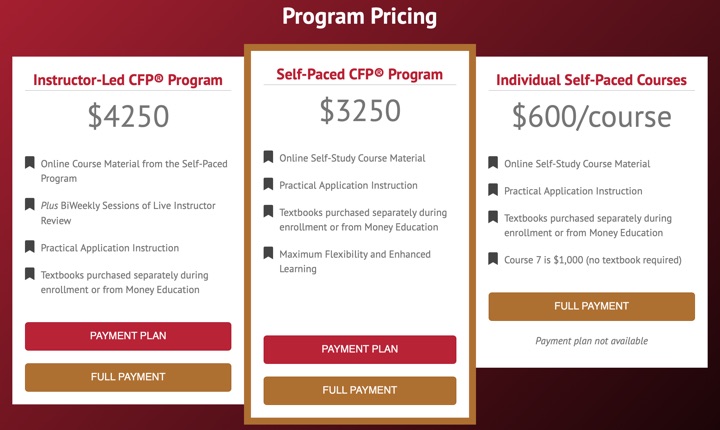
I read some reviews and comparisons, and somehow ended up on the website for the University of Georgia Self-Paced Online CFP® Program. This wasn’t the most well-known program, or the oldest program, but it seemed like a decent CFP Board-registered program and covered all the required topics at a relatively affordable cost of $3,250 (+$750 for optional textbooks). There are six courses and a capstone course where you develop an actual financial plan:

  • Fundamentals of Financial Planning
  • Insurance Planning
  • Investment Planning
  • Income Tax Planning
  • Retirement Planning
  • Estate Planning
  • Developing the Financial Plan

I filled out the form for a “free Demo”, and shortly thereafter received an e-mail offer for $700 off the “sticker” price. This offer has since expired, but I share this story for those seriously interested as you might also decide to express interest and see if you get an offer. The course itself appears to be run by a third-party called Greene Consulting, which runs the CFP courses for five different universities including UGA. (Yes, I checked them all, and they all list the same prices.)

Get instant access! Test drive the platform and learn why thousands of people have selected this Online CFP® Certification Education Program over the competition.

Complete the form below and get instant access to our online platform. View sample courses and interactive content.

Note: I have no affiliation with this program besides being a paying customer. Oh yes, I forgot, I impulsively bought the program after receiving the discount offer. I had already “anchored” myself to paying the $3,250 and felt it was a good deal… I fell for the old infomercial trick! Still, if you compare prices for CFP courses (full core content, excluding textbooks), this was definitely the cheapest net price that I’ve found.

This self-paced program allows you up to 21 months to complete all of the courses. My plan is to complete one course per month starting this month (February), and so right now I’m only about halfway through the first course “Fundamentals of Financial Planning”. I did go ahead and purchase physical textbooks (I’m old-fashioned… and old), but I haven’t had to open them yet. They use the financial textbooks from Money Education, and I paid $750 through UGA for the complete set.

Note that many financial professionals decide to take an additional “exam cram course” with lots of practice questions that is solely focused on passing the CFP Exam. This adds roughly another $1,000 on top of the ~$925 to actually take the CFP Exam itself! I don’t know if all that extra cost will be worth being able to say “I passed the CFP Exam!” when I don’t need the CFP certification for career advancement purposes.

TurboTax Online Walkthrough: How To Enter US Treasury Interest from Money Market and Bond Funds/ETFs For State Tax Exemption

If you earned interest from a money market fund or bond mutual fund/ETF last year, a significant portion of this interest may have come from US Treasury bills and bonds, which are generally exempt from state and local income taxes. (California, Connecticut, and New York have special rules.) However, in order to claim this exemption, you’ll probably have to manually enter it on your tax return (or be sure to notify your accountant) after digging up a few extra details. The details are almost never included on your 1099-DIV form.

Here’s how to do it in at TurboTax.com, the online version of TurboTax tax software. (I received some requests for a more detailed walkthrough after my H&R Block version.) I found the following information from the TurboTax FAQ:

What about dividends from U.S. government bonds?

The federal government taxes income you receive from its own bonds. Although your state doesn’t tax income generated by U.S. government bonds, each state defines government bonds differently.

To find out if these dividends are taxable in your state, review your 1099-B along with the supplemental pages from your consolidated tax statement. If you can’t find the info, you might be able to get it from your brokerage or mutual fund company website.

Once you have found the info in your documents, just follow the screens here and we’ll help you enter an adjustment for the nontaxable amount in your state. When you get to your state taxes, we’ll subtract the adjustment from the income reported to your state.

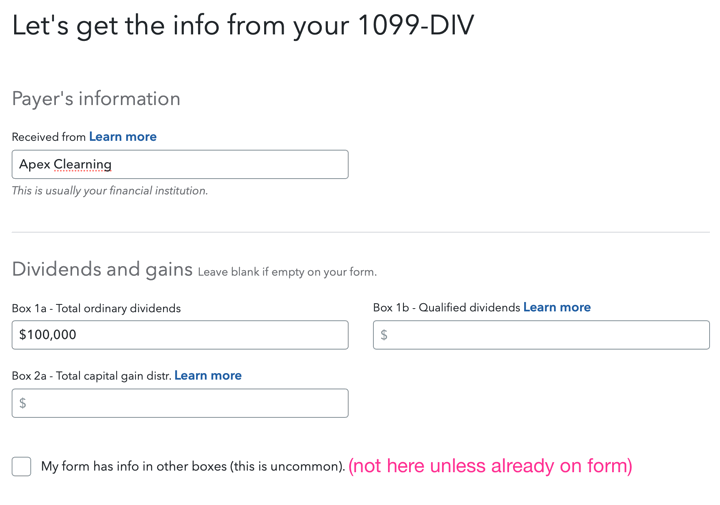
I did not find “just follow the screens” especially helpful, so I started up a dummy return at TurboTax.com for 2023 and manually created a 1099-DIV form from “Apex Clearning” (sic) with $100,000 of total dividends. This is in the Federal return section. You may choose to import this form and then review it afterward.

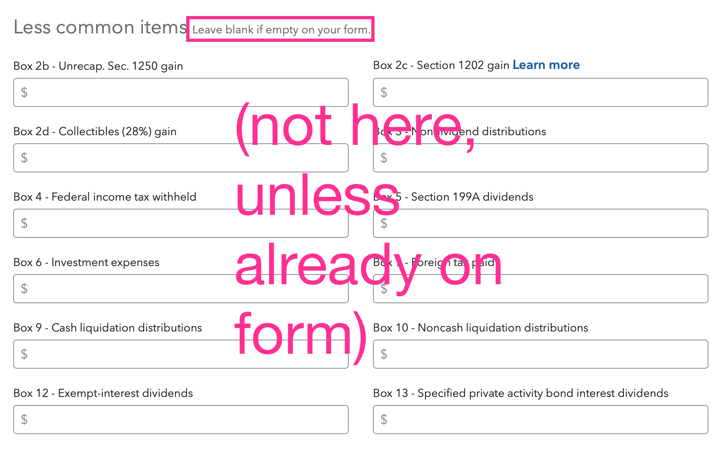
This part should just be exactly the same as the 1099-DIV form that was sent to you. Don’t add any extra entries and just continue.

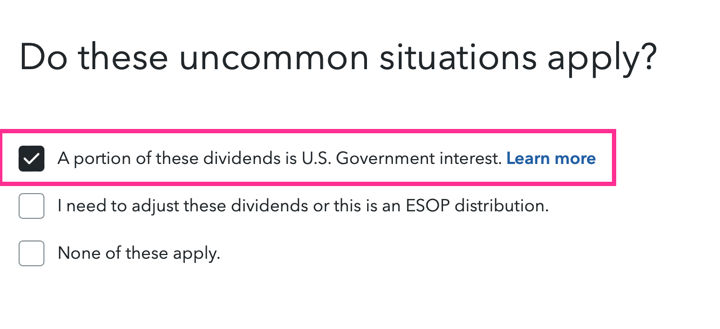
On the next screen, you should click on the box for “A portion of these dividends is U.S. Government interest.”

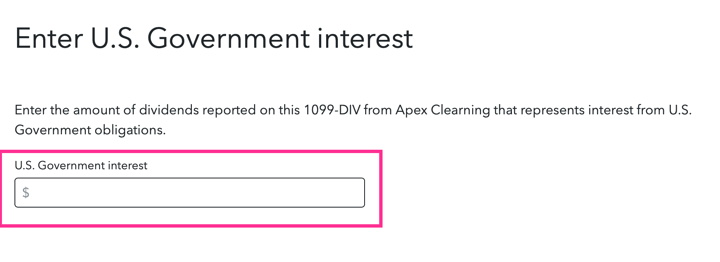
Here, you will enter the amount of interest (out of the amount in line 1a of your 1099-DIV) that represents interest from US government obligations. For example, if you received $100,000 in total dividends from the Vanguard Treasury Money Market Fund (VUSXX) in 2023, you will find it does meet the threshold requirements for California, Connecticut, and New York and it had a US government obligation percentage of 80.06% in 2023. In this example, $80,060 of the $100,000 in dividends would be excludable. I would enter $80,060 in the form below.

This information should carry through to your state tax return, reducing your state taxable income.

Here are some links to find the percentage of ordinary dividends that come from obligations of the U.S. government. You should be able to find this data for any mutual fund or ETF by searching for something like “[fund company] us government obligations 2023”. If you do not see the fund listed within the fund company documentation, it may be because it is 0%.

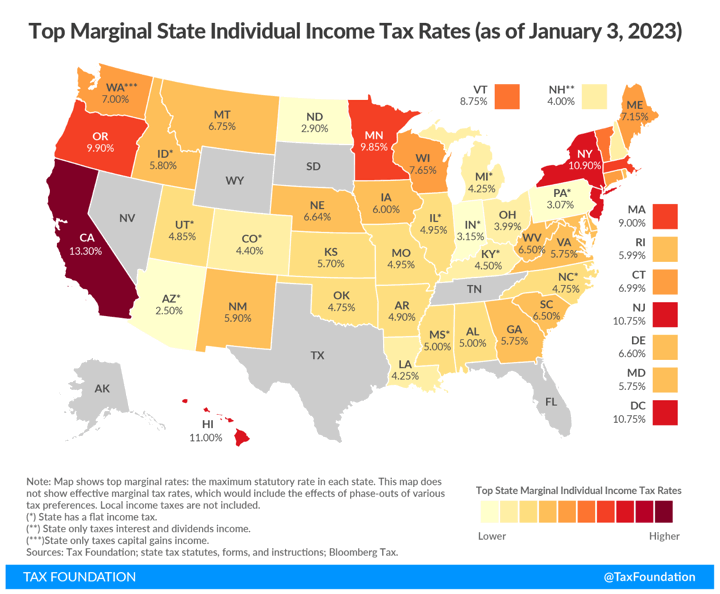
[Image credit – Tax Foundation]

Best Interest Rates on Cash – February 2024

Here’s my monthly roundup of the best interest rates on cash as of February 2024, roughly sorted from shortest to longest maturities. There are often lesser-known opportunities available to individual investors, where you could earn a lot more money while keeping the same level of safety by moving to another FDIC-insured bank or NCUA-insured credit union. Check out my Ultimate Rate-Chaser Calculator to see how much extra interest you could earn from switching. Rates listed are available to everyone nationwide. Rates checked as of 2/5/2024.

TL;DR: Mostly minor movements. Still 5%+ savings accounts and short-term CDs, but no more 5-year CDs at 5% APY. Compare against Treasury bills and bonds at every maturity, taking into account state tax exemption.

Fintech accounts
Available only to individual investors, fintech companies often pay higher-than-market rates in order to achieve fast short-term growth (often using venture capital). “Fintech” is usually a software layer on top of a partner bank’s FDIC insurance.

  • 5.32% APY ($1 minimum). Raisin lets you switch between different FDIC-insured banks and NCUA-insured credit unions easily without opening a new account every time, and their liquid savings rates currently top out at 5.32% APY. See my Raisin review for details. Raisin does not charge depositors a fee for the service.
  • 5.36% APY (before fees). MaxMyInterest is another service that allows you to access and switch between different FDIC-insured banks. You can view their current banks and APYs here. As of 12/6/23, the highest rate is from Customers Bank at 5.36% APY. However, note that they charge a membership fee of 0.04% per quarter, or 0.16% per year (subject to $20 minimum per quarter, or $80 per year). That means if you have a $10,000 balance, then $80 a year = 0.80% per year. This service is meant for those with larger balances. You are allowed to cancel the service and keep the bank accounts, but then you may lose their specially-negotiated rates and cannot switch between banks anymore.

High-yield savings accounts
Since the huge megabanks STILL pay essentially no interest, everyone should have a separate, no-fee online savings account to piggy-back onto your existing checking account. The interest rates on savings accounts can drop at any time, so I list the top rates as well as competitive rates from banks with a history of competitive rates and solid user experience. Some banks will bait you with a temporary top rate and then lower the rates in the hopes that you are too lazy to leave.

  • The top rate at the moment is at Milli (app only) at 5.50% APY. BrioDirect at 5.35% APY. CIT Platinum Savings at 5.05% APY with $5,000+ balance.
  • SoFi Bank is now up to 4.60% APY + up to $325 new account bonus with direct deposit. You must maintain a direct deposit of any amount each month for the higher APY. SoFi has historically competitive rates and full banking features. See details at $25 + $300 SoFi Money new account and deposit bonus.
  • Here is a limited survey of high-yield savings accounts. They aren’t the highest current rate, but historically have kept it relatively competitive and I like to track their history.

Short-term guaranteed rates (1 year and under)
A common question is what to do with a big pile of cash that you’re waiting to deploy shortly (plan to buy a house soon, just sold your house, just sold your business, legal settlement, inheritance). My usual advice is to keep things simple and take your time. If not a savings account, then put it in a flexible short-term CD under the FDIC limits until you have a plan.

  • No Penalty CDs offer a fixed interest rate that can never go down, but you can still take out your money (once) without any fees if you want to use it elsewhere. Raisin has a 5-month No Penalty CD at 5.36% APY with $1 minimum deposit and 30-day minimum hold time. CIT Bank has a 11-month No Penalty CD at 4.90% APY with a $1,000 minimum deposit. Ally Bank has a 11-month No Penalty CD at 4.25% APY for all balance tiers. Marcus has a 13-month No Penalty CD at 4.70% APY with a $500 minimum deposit. Consider opening multiple CDs in smaller increments for more flexibility.
  • Lafayette Federal Credit Union has a 1-year certificate at 5.56% APY ($500 min). They also have jumbo certificates with $100,000 minimums at even higher rates, but a harsh 180-day penalty if you withdraw your CD funds before maturity. Anyone can join this credit union via partner organization ($10 one-time fee).
  • CIBC Agility Online has a 12-month CD at 5.51% APY. Reasonable 30-day penalty if you withdraw your CD funds before maturity.

Money market mutual funds + Ultra-short bond ETFs
Many brokerage firms that pay out very little interest on their default cash sweep funds (and keep the difference for themselves). Note: Money market mutual funds are highly-regulated, but ultimately not FDIC-insured, so I would still stick with highly reputable firms. I am including a few ultra-short bond ETFs as they may be your best cash alternative in a brokerage account, but they may experience losses.

  • Vanguard Federal Money Market Fund is the default sweep option for Vanguard brokerage accounts, which has an SEC yield of 5.28% (changes daily, but also works out to a compound yield of 5.41%, which is better for comparing against APY). Odds are this is much higher than your own broker’s default cash sweep interest rate.
  • The PIMCO Enhanced Short Maturity Active Bond ETF (MINT) has a 5.39% SEC yield and the iShares Short Maturity Bond ETF (NEAR) has a 5.15% SEC yield while holding a portfolio of investment-grade bonds with an average duration of ~6 months.

Treasury Bills and Ultra-short Treasury ETFs
Another option is to buy individual Treasury bills which come in a variety of maturities from 4-weeks to 52-weeks and are fully backed by the US government. You can also invest in ETFs that hold a rotating basket of short-term Treasury Bills for you, while charging a small management fee for doing so. T-bill interest is exempt from state and local income taxes, which can make a significant difference in your effective yield.

  • You can build your own T-Bill ladder at TreasuryDirect.gov or via a brokerage account with a bond desk like Vanguard and Fidelity. Here are the current Treasury Bill rates. As of 2/5/24, a new 4-week T-Bill had the equivalent of 5.39% annualized interest and a 52-week T-Bill had the equivalent of 4.64% annualized interest.
  • The iShares 0-3 Month Treasury Bond ETF (SGOV) has a 5.17% SEC yield and effective duration of 0.10 years. SPDR Bloomberg Barclays 1-3 Month T-Bill ETF (BIL) has a 5.24% SEC yield and effective duration of 0.08 years.

US Savings Bonds
Series I Savings Bonds offer rates that are linked to inflation and backed by the US government. You must hold them for at least a year. If you redeem them within 5 years there is a penalty of the last 3 months of interest. The annual purchase limit for electronic I bonds is $10,000 per Social Security Number, available online at TreasuryDirect.gov. You can also buy an additional $5,000 in paper I bonds using your tax refund with IRS Form 8888.

  • “I Bonds” bought between November 2023 and April 2024 will earn a 5.27% rate for the first six months. The rate of the subsequent 6-month period will be based on inflation again. More on Savings Bonds here.
  • In mid-April 2023, the CPI will be announced and you will have a short period where you will have a very close estimate of the rate for the next 12 months. I will have another post up at that time.

Rewards checking accounts
These unique checking accounts pay above-average interest rates, but with unique risks. You have to jump through certain hoops which usually involve 10+ debit card purchases each cycle, a certain number of ACH/direct deposits, and/or a certain number of logins per month. If you make a mistake (or they judge that you did) you risk earning zero interest for that month. Some folks don’t mind the extra work and attention required, while others would rather not bother. Rates can also drop suddenly, leaving a “bait-and-switch” feeling.

  • OnPath Federal Credit Union pays 7.00% APY on up to $10,000 if you make 15 debit card purchases, opt into online statements, and login to online or mobile banking once per statement cycle. Anyone can join this credit union via $5 membership fee to join partner organization. You can also get a $100 Visa Reward card when you open a new account and make qualifying transactions.
  • Credit Union of New Jersey pays 6.00% APY on up to $25,000 if you make 15 debit card purchases, opt into online statements, and make at least 1 direct deposit, online bill payment, or automatic payment (ACH) per statement cycle. Anyone can join this credit union via $5 membership fee to join partner organization.
  • Pelican State Credit Union pays 6.05% APY on up to $20,000 if you make 15 debit card purchases, opt into online statements, log into your account at least once, and make at least 1 direct deposit, online bill payment, or automatic payment (ACH) per statement cycle. Anyone can join this credit union via partner organization membership.
  • Orion Federal Credit Union pays 6.00% APY on up to $10,000 if you make electronic deposits of $500+ each month (ACH transfers count) and spend $500+ on your Orion debit or credit card each month. Anyone can join this credit union via $10 membership fee to partner organization membership.
  • All America/Redneck Bank pays 5.30% APY on up to $15,000 if you make 10 debit card purchases each monthly cycle with online statements.
  • Find a locally-restricted rewards checking account at DepositAccounts.

Certificates of deposit (greater than 1 year)
CDs offer higher rates, but come with an early withdrawal penalty. By finding a bank CD with a reasonable early withdrawal penalty, you can enjoy higher rates but maintain access in a true emergency. Alternatively, consider building a CD ladder of different maturity lengths (ex. 1/2/3/4/5-years) such that you have access to part of the ladder each year, but your blended interest rate is higher than a savings account. When one CD matures, use that money to buy another 5-year CD to keep the ladder going. Some CDs also offer “add-ons” where you can deposit more funds if rates drop.

  • Library Of Congress Federal Credit Union has a 60-month CD at 4.84% APY with $500 minimum. Shorter terms are pretty competitive as well: 4-year at 4.89% APY. 3-year at 5.25% APY. 2-year at 5.20% APY. 1-year at 5.35% APY. The early withdrawal penalty for the 5-year is 180 days of interest. Anyone can join this credit union via partner organization.
  • BMO Alto has a 5-year CD at 4.60% APY. 4-year at 4.60% APY. 3-year at 4.60% APY. 2-year at 4.75% APY. 1-year at 5.30% APY. No minimum. The early withdrawal penalty (EWP) for CD maturities of 1 year or more is 180 days of interest. For CD maturities of 11 months or less, the EWP is 90 days of interest. Note that they reserve the right to prohibit early withdrawals entirely. Online-only subsidiary of BMO Bank.
  • You can buy certificates of deposit via the bond desks of Vanguard and Fidelity. You may need an account to see the rates. These “brokered CDs” offer FDIC insurance and easy laddering, but they don’t come with predictable early withdrawal penalties. Right now, I see a 5-year non-callable CD at 4.10% APY (callable: no, call protection: yes). Be warned that now both Vanguard and Fidelity will list higher rates from callable CDs, which importantly means they can call back your CD if rates drop later.

Longer-term Instruments
I’d use these with caution due to increased interest rate risk, but I still track them to see the rest of the current yield curve.

  • Willing to lock up your money for 10 years? You can buy long-term certificates of deposit via the bond desks of Vanguard and Fidelity. These “brokered CDs” offer FDIC insurance, but they don’t come with predictable early withdrawal penalties. You might find something that pays more than your other brokerage cash and Treasury options. Right now, I see a 10-year CDs at [n/a] (callable: no, call protection: yes) vs. 4.16% for a 10-year Treasury. Watch out for higher rates from callable CDs where they can call your CD back if interest rates drop.

All rates were checked as of 2/5/2023.

Photo by micheile henderson on Unsplash

Alaska Airlines Visa Credit Card: 60,000 Miles + $122 Companion Fare ($95 Annual Fee)

The Alaska Airlines Visa credit card is issued by Bank of America and offers several unique cardholder perks, and currently has an increased limited-time offer. The business card version currently also has a limited-time offer.

Alaska Airlines Visa Signature Card

  • 60,000 Alaska miles + Companion Fare from $122 after $3,000 or more in purchases within the first 90 days after account opening. Companion fare voucher is “Buy one ticket, get one for $122” ($99 fare plus taxes and fees from just $23).
  • Free checked bag + Priority boarding. Any cardholder who purchases airfare with their card, and up to 6 additional guests traveling on the same reservation, may check their first bag free. This is worth $60 roundtrip per person.
  • 3X miles for every $1 spent on eligible Alaska Airlines purchases. 2X miles for every $1 spent on eligible gas, cable, streaming services and local transit including ride share purchases. 1X mile per $1 spent on all other purchases.
  • 10% rewards bonus w/ BofA on all miles earned from card purchases if you have an eligible Bank of America® account.
  • Ability to earn another Alaska’s Famous Companion Fare ($6k spend requirement). Get another Companion Fare from $122 ($99 fare plus taxes and fees from $23) each account anniversary after you spend $6,000 or more on purchases within the prior anniversary year. Valid on all Alaska Airlines flights booked on alaskaair.com.
  • No foreign transaction fees.
  • $95 annual fee.

I will be adding this offer to the Top 10 Best Credit Card Bonus Offers.

Alaska Airlines Visa Business Card

  • 50,000 Alaska miles + Companion Fare Voucher after $3,000 in purchase within 90 days. Companion fare voucher is “Buy one ticket, get one for $122” ($99 fare plus taxes and fees from just $23).
  • Free checked bag + Priority boarding. Any cardholder who purchases airfare with their card, and up to 6 additional guests traveling on the same reservation, may check their first bag free. This is worth $60 roundtrip per person.
  • Ability to earn another Alaska’s Famous Companion Fare ($6k spend requirement). Get another Companion Fare from $122 ($99 fare plus taxes and fees from $23) each account anniversary after you spend $6,000 or more on purchases within the prior anniversary year. Valid on all Alaska Airlines flights booked on alaskaair.com.
  • 10% rewards bonus w/ BofA on all miles earned from card purchases if you have an eligible Bank of America® small business account.
  • $70 annual fee for company, plus $25 per card.

I will be adding this offer to the Top 10 Best Small Business Credit Card Bonus Offers.

H&R Block Online Walkthrough: How To Enter US Treasury Interest from Money Market and Bond Funds/ETFs For State Tax Exemption

If you earned interest from a money market fund or bond mutual fund/ETF last year, a significant portion of this interest may have come from US Treasury bills and bonds, which are generally exempt from state and local income taxes. (California, Connecticut, and New York have special rules.) However, in order to claim this exemption, you’ll probably have to manually enter it on your tax return after digging up a few extra details.

Here’s how to do it in at HRBlock.com, the online version of H&R Block tax software. I found the two following quotes from the H&R Block FAQ:

How do I enter interest from U.S. Treasury obligations?
This information doesn’t appear on the form, but we’ll need it to calculate the tax-exempt interest on your state return. This information won’t affect your federal return.

Where do I report U.S. Treasury obligations from Form 1099-DIV?
Report them in the Income section on the Interest topic. Enter them as U.S. Savings Bond and Treasury obligation income.

These two answers somewhat conflict with each other, so I just started a new dummy return as a California resident to look around. If you don’t find a box to enter the interest during the 1099-DIV entry process in your Federal return interview (I did not see this), you should be able to enter the information in the State return portion of the interview.

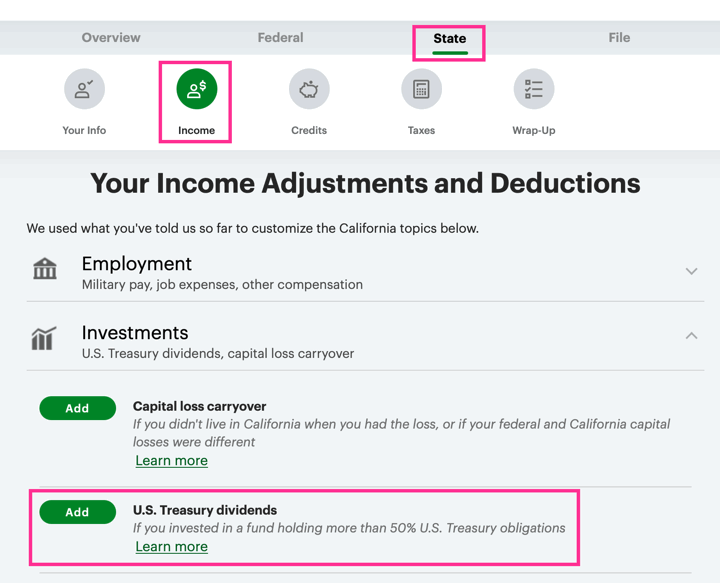
Under the “Income” section of the State Return, there will a screen called “Your Income Adjustments and Deductions”. Here there should be a place to report US Treasury dividends.

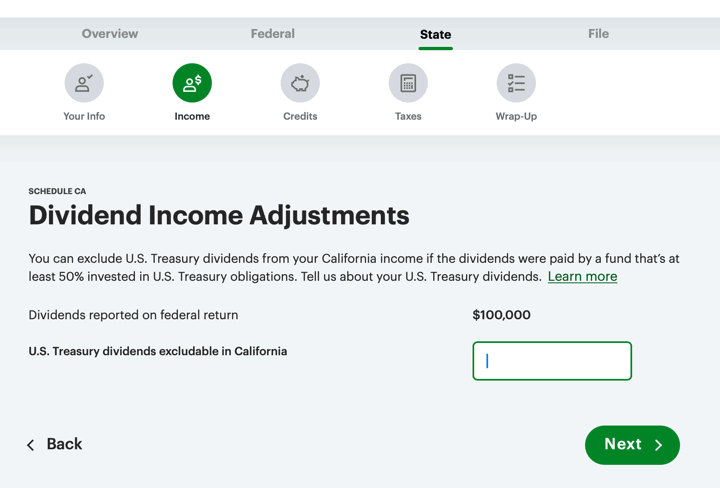
Click on “Add” and you will be asked to enter the “US Treasury dividends excludable in [Your State]”. For example, if you received $100,000 in total dividends from the Vanguard Treasury Money Market Fund (VUSXX) in 2023, you will find it does meet the threshold requirements for California, Connecticut, and New York and it had a US government obligation percentage of 80.06% in 2023. In this example, $80,060 of the $100,000 in dividends would be excludable.

Here are some links to find the percentage of ordinary dividends that come from obligations of the U.S. government. You should be able to find this data for any mutual fund or ETF by searching for something like “[fund company] us government obligations 2023”]. If you do not see the fund listed within the fund company, it may be assumed to be 0%.

[Image credit – Tax Foundation]