Archives for July 2020

Bask Bank Review: Earn American Airlines Miles As Interest (5,000 Mile Referral Bonus)

Updated with my own experience and new referral bonus. Bask Bank is a FDIC-insured savings account that pays you American Airlines (AA) miles instead of cash interest. Every $1 earns 1 mile a year. For example, $1,000 kept for a year would earn 1,000 AA miles at the end of the year. If you kept $50,000 there for a year, you would earn 50,000 AA miles at the end of a year. There is no minimum balance and no monthly fees. I’ve updated this review after opening an account.

Bask Bank is part of Texas Capital Bank (FDIC Certificate #34383), which also runs BankDirect. BankDirect has been giving out American Airlines miles for many years on their checking account, but with different requirements and a steep monthly fee. Note that they are all the same bank in regards to the $250,000 FDIC insurance limits per depositor type. Bask Bank routing number is 111026177.

Account opening process. Opening an account was done all online with no issues, with no physical paperwork to send in. They state there is no hard credit check upon opening, and there was none upon my own opening. I received all my promised points (past bonus and monthly interest) on time and without issue. Note: They do not currently offer joint accounts.

Value calculations. If you valued American Airlines miles at 1 cent per mile, then this account would earn you the equivalent of 1% APY. ($10,000 a year = 10,000 AA miles = $100 value.) Given that other online savings accounts also earn about 1% APY nowadays, this has become a closer call after you consider the tax consequences…

1099-INT details. If you get miles instead of cash, what happens at tax time? Bask Bank and BankDirect has stated that they plan to issue 1099-INT for 2020 interest earned based on a valuation of 0.42 cents per mile. This can be found deep in their disclosures:

Since you are Awarded Miles based on the average collected balance in your Account each month instead of interest, Bask Bank calculates an interest equivalent based on a good faith estimate of the value of the miles. Your interest rate and annual percentage yield may change based on a change in either the Miles Award Rate or the estimated value. Miles are currently valued at 0.42 cents per mile, the equivalent of 0.42% annual percentage yield.

So if you held $10,000 for all of 2020 and earned $10,000 miles, current your 1099-INT will show $42 in interest paid. However, this is subject to change and I don’t really like that sort of uncertainty. It is unlikely but still possible that they could change this number and it would be a hassle to dispute such a valuation.

Useful for keeping your AA miles active. Airline miles are useful, but also subject to rampant inflation. Since AA miles are worth less every year, I do not plan on using this as my main savings account. However, the ability to keep about $15 in there and earn at least 1 mile per month to prevent my existing American miles from expiring, that could be useful. If I need a certain amount of American Airlines to reach an award, this may be a backup option as well. I have a large amount of AA miles, so this account gives me peace of mind that they won’t suddenly expire when I’m not paying attention.

New account referral bonus. Bask Bank now runs a refer-a-friend program where if the person referred opens an account by 9/30/2020, deposits at least $10,000, and keeps it there for 90 days, they will earn 5,000 AAdvantage® bonus miles on top of the usual interest. The referrer will also then receive 5,000 miles. Here is my Bask Bank referral link, thanks if you use it. After you open the account, you can also refer up to 5 friends yourself:
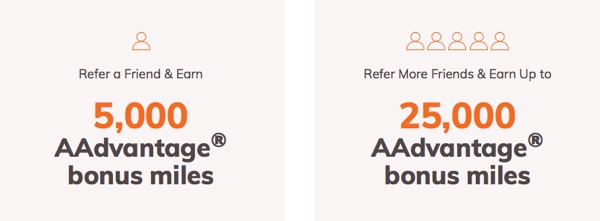
If you again value an AA mile at 1 cent a mile, then the bonus is worth $50. Earning $50 for keeping $10,000 there for 90 days is the equivalent of a bonus APY of 2% for those 90 days. So in total, you might get the cash equivalent of 3% APY over those initial 90 days with the referral bonus if you use that 1 cent per mile valuation.

Bottom line. Bask Bank is an online savings account that pays you American Airlines (AA) miles instead of cash interest. It won’t be a great fit for everyone, but may be interesting to those that can maximize the value of an American Airlines mile. You may also like the ability to keep all your AA miles from expiring by keeping a small amount of cash at the bank.

Best Interest Rates on Cash – July 2020

The Fed rate is still at zero, which has bought us back to the time when anything above 2% APY is newsworthy (and there ain’t much news). The only reason to pay attention is that being willing to switch bank accounts can still beat out Treasury bonds and/or brokerage cash sweep options that also pay nearly zero.

Here’s my monthly roundup of the best interest rates on cash for July 2020, roughly sorted from shortest to longest maturities. I track these rates because I keep 12 months of expenses as a cash cushion and also invest in longer-term CDs (often at lesser-known credit unions) when they yield more than bonds. Check out my Ultimate Rate-Chaser Calculator to see how much extra interest you’d earn by moving money between accounts. Rates listed are available to everyone nationwide. Rates checked as of 7/5/2020.

High-yield savings accounts
While the huge megabanks make huge profits while paying you 0.01% APY, it’s easy to open a new “piggy-back” savings account and simply move some funds over from your existing checking account. The interest rates on savings accounts can drop at any time, so I list the top rates as well as competitive rates from banks with a history of competitive rates. Some banks will bait you with a temporary top rate and then lower the rates in the hopes that you are too lazy to leave.

  • Patriot Bank has the top rate at the moment at 1.40% APY guaranteed until 8/31/2020 (last month it was 1.75% APY guaranteed until 7/31/20). I wouldn’t count on anything after the guarantee, as nearly every place else is below that with most likely headed back to the ~1% APY range. There are several other established high-yield savings accounts at above 1% APY for now.

Short-term guaranteed rates (1 year and under)
A common question is what to do with a big pile of cash that you’re waiting to deploy shortly (just sold your house, just sold your business, legal settlement, inheritance). My usual advice is to keep things simple and take your time. If not a savings account, then put it in a flexible short-term CD under the FDIC limits until you have a plan.

  • No Penalty CDs offer a fixed interest rate that can never go down, but you can still take out your money (once) without any fees if you want to use it elsewhere. Marcus has a 7-month No Penalty CD at 1.00% APY with a $500 minimum deposit. Ally Bank has a 11-month No Penalty CD at 0.95% APY for all balance tiers. CIT Bank has a 11-month No Penalty CD at 0.75% APY with a $1,000 minimum deposit. You may wish to open multiple CDs in smaller increments for more flexibility.
  • Pen Air Federal Credit Union has a 12-month CD at 1.25% APY ($500 min). Early withdrawal penalty is 180 days of interest. Anyone can join this credit union via partner organization ($3 one-time fee).

Money market mutual funds + Ultra-short bond ETFs
If you like to keep cash in a brokerage account, beware that many brokers pay out very little interest on their default cash sweep funds (and keep the difference for themselves). The following money market and ultra-short bond funds are NOT FDIC-insured and thus come with a possibility of principal loss, but may be a good option if you have idle cash and cheap/free commissions.

  • Vanguard Prime Money Market Fund currently pays an 0.18% SEC yield. The default sweep option is the Vanguard Federal Money Market Fund which has an SEC yield of 0.12%. You can manually move the money over to Prime if you meet the $3,000 minimum investment.
  • Vanguard Ultra-Short-Term Bond Fund currently pays 1.18% SEC yield ($3,000 min) and 1.28% SEC Yield ($50,000 min). The average duration is ~1 year, so there is more interest rate risk.
  • The PIMCO Enhanced Short Maturity Active Bond ETF (MINT) has a 1.10% SEC yield and the iShares Short Maturity Bond ETF (NEAR) has a 1.19% SEC yield while holding a portfolio of investment-grade bonds with an average duration of ~6 months. Note that there was a sudden, temporary drop in net asset value during the recent market stress.

Treasury Bills and Ultra-short Treasury ETFs
Another option is to buy individual Treasury bills which come in a variety of maturities from 4-weeks to 52-weeks. You can also invest in ETFs that hold a rotating basket of short-term Treasury Bills for you, while charging a small management fee for doing so. T-bill interest is exempt from state and local income taxes. Right now, this section probably isn’t very interesting as T-Bills are yielding close to zero!

  • You can build your own T-Bill ladder at TreasuryDirect.gov or via a brokerage account with a bond desk like Vanguard and Fidelity. Here are the current Treasury Bill rates. As of 7/2/2020, a new 4-week T-Bill had the equivalent of 0.13% annualized interest and a 52-week T-Bill had the equivalent of 0.16% annualized interest.
  • The Goldman Sachs Access Treasury 0-1 Year ETF (GBIL) has a 0.09% SEC yield and the SPDR Bloomberg Barclays 1-3 Month T-Bill ETF (BIL) has a -.02% (!) SEC yield. GBIL appears to have a slightly longer average maturity than BIL.

US Savings Bonds
Series I Savings Bonds offer rates that are linked to inflation and backed by the US government. You must hold them for at least a year. There are annual purchase limits. If you redeem them within 5 years there is a penalty of the last 3 months of interest.

  • “I Bonds” bought between May 2020 and October 2020 will earn a 1.06% rate for the first six months. The rate of the subsequent 6-month period will be based on inflation again. More info here.
  • In mid-October 2020, the CPI will be announced and you will have a short period where you will have a very close estimate of the rate for the next 12 months. I will have another post up at that time.

Prepaid Cards with Attached Savings Accounts
A small subset of prepaid debit cards have an “attached” FDIC-insured savings account with exceptionally high interest rates. The negatives are that balances are capped, and there are many fees that you must be careful to avoid (lest they eat up your interest). Some folks don’t mind the extra work and attention required, while others do. There is a long list of previous offers that have already disappeared with little notice. I don’t personally recommend nor use any of these anymore.

  • The only notable card left in this category is Mango Money at 6% APY on up to $2,500, along with several hoops to jump through. Requirements include $1,500+ in “signature” purchases and a minimum balance of $25.00 at the end of the month.

Rewards checking accounts
These unique checking accounts pay above-average interest rates, but with unique risks. You have to jump through certain hoops, and if you make a mistake you won’t earn any interest for that month. Some folks don’t mind the extra work and attention required, while others do. Rates can also drop to near-zero quickly, leaving a “bait-and-switch” feeling. If you want rates above 2% APY, this is close to the only game in town.

  • Consumers Credit Union Free Rewards Checking (my review) still offers up to 4.09% APY on balances up to $10,000 if you make $500+ in ACH deposits, 12 debit card “signature” purchases, and spend $1,000 on their credit card each month. The Bank of Denver has a Free Kasasa Cash Checking offering 3% APY on balances up to $25,000 if you make 12 (temporarily 6 due to COVID-19) debit card purchases and at least 1 ACH credit or debit transaction per statement cycle. If you meet those qualifications, you can also link a savings account that pays 2% APY on up to $50k. Thanks to reader Bill for the tip. Find a locally-restricted rewards checking account at DepositAccounts.

Certificates of deposit (greater than 1 year)
CDs offer higher rates, but come with an early withdrawal penalty. By finding a bank CD with a reasonable early withdrawal penalty, you can enjoy higher rates but maintain access in a true emergency. Alternatively, consider building a CD ladder of different maturity lengths (ex. 1/2/3/4/5-years) such that you have access to part of the ladder each year, but your blended interest rate is higher than a savings account. When one CD matures, use that money to buy another 5-year CD to keep the ladder going. Some CDs also offer “add-ons” where you can deposit more funds if rates drop.

  • Georgia’s Own Credit Union has a 5-year certificate at 1.70% APY ($500 min), 4-year at 1.50% APY, 3-year at 1.45% APY, and 2-year at 1.25% APY. Beware that the early withdrawal penalty for the 5-year is 450 days of interest. Anyone can join via partner organization for one-time $10 fee.
  • You can buy certificates of deposit via the bond desks of Vanguard and Fidelity. You may need an account to see the rates. These “brokered CDs” offer FDIC insurance and easy laddering, but they don’t come with predictable early withdrawal penalties. Vanguard has a 5-year at 0.80% APY right now. Be wary of higher rates from callable CDs listed by Fidelity.

Longer-term Instruments
I’d use these with caution due to increased interest rate risk, but I still track them to see the rest of the current yield curve.

  • Willing to lock up your money for 10 years? You can buy long-term certificates of deposit via the bond desks of Vanguard and Fidelity. These “brokered CDs” offer FDIC insurance, but they don’t come with predictable early withdrawal penalties. Vanguard has a 5-year at 0.95% APY right now. Watch out for higher rates from callable CDs from Fidelity.
  • How about two decades? Series EE Savings Bonds are not indexed to inflation, but they have a unique guarantee that the value will double in value in 20 years, which equals a guaranteed return of 3.5% a year. However, if you don’t hold for that long, you’ll be stuck with the normal rate which is quite low (currently a sad 0.10% rate). I view this as a huge early withdrawal penalty. But if holding for 20 years isn’t an issue, it can also serve as a hedge against prolonged deflation during that time. As of 7/2/2020, the 20-year Treasury Bond rate was 1.20%.

All rates were checked as of 7/5/2020.

The Money Hamster Wheel, Part 2: Multiple Solutions, Not Just More Money

In Part 1: Identifying the Problem, I shared Lawrence Yeo’s unique take on money and the hamster wheel metaphor, where we just keep spinning and can’t get off. Since then, I have thought more about how best to slow things down by instead attacking each step of the cycle. To be honest, I don’t know if I can properly explain Yeo’s concepts, so I came up with my own version of the hamster wheel. Here it is, rather hastily-drawn:

A common criticism of seeking financial freedom is that it’s all about money. Make more money. Spend less money. However, if you take a step back, money is just part of the flow between how you spend the time in your life. How are you making that money? Why do you want more money? Why are you spending the money?

Accordingly, here various ways that someone could lessen the impact of each part of the cycle.

  • Find better-paying work that is equally fulfilling and stimulating. Try to save the excess. Don’t make yourself more unsatisfied for more money.
  • Find more fulfilling and stimulating work, even if it pays less. Be happier, and thus need to spend less to replace that happiness.
  • Engage in non-work activities that provide meaning and stimulation. If you need a better job, work on a new skill. If you need more stimulation, start a side business and keep your current job. Or just find a new hobby/sport/language. Taking action is the key, as the right activities will energize you.
  • Reduce your intake of low-quality media. Stop consuming things that make you feel worse about yourself. The wrong activities will drain you, which encourages more spending.
  • Exercise more (try outdoors or with other people) and eat better food. This gives you more energy all day long.
  • Spend less money on the things that don’t matter, so you need less money. Cut out the mindless and unhelpful spending.
  • Spend more money on the things that truly matter to you. Now that you cut the mindless, you can spend more on improving interpersonal relationships, or energizing activities (see above).
  • The more you learn to control this cycle, the more you can use the concept of “Enough” to widen the gap between money in and money out. Decouple earning and spending. Invest in enough productive assets so that your required income is less and less.

Addressing the problem from one angle, helps free you up to attack it from another angle later. For example, if you eat and exercise better, you might have enough energy to take corrective action, and not just fantasize about that side business when you really just turn on the TV after a long day at work.

The Money Hamster Wheel, Part 1: Identifying The Problem

I started looking into financial independence because I simply couldn’t imagine doing what I was doing every weekday at that time for another 30 or 40 years. Some people know exactly what they want to spend their life doing, and it also pays the bills and then some. I was always envious of those folks. Strangely, I never really felt that making more money was the final answer. I saved diligently in order to quit my job and go back to school and explore alternate paths.

This week, I’ve been pondering a longread by Lawrence Yeo about his philosophy of money at How Money Forever Changed Us. It’s a very high-level exploration of how money both solves and causes various conflicts in our lives. This culminates into what he calls the Money Hamster Wheel:

The questions posed are slightly different than you may have seen elsewhere. Does working a job that doesn’t fulfill our need for purpose and meaning really take something away from our identity? Is that identity loss what we are really trying to replace by spending money? Why is it so rare to find people that are truly happy and aligned with their work and the rest of their lives?

You’ll have to read the entire article to understand all the spokes of his wheel (although I’m still not sure I do completely), and while Yeo admits that it is not possible to fully “get off the wheel”, you can do something:

When I look at each spoke on the wheel, I view them as potential opportunities to slow the whole thing down. If we are aware of each mechanism, we can notice when we’re operating under them, and lessen their impact in turn.

The hamster wheel is a great metaphor. Over time, I’ve accepted that financial independence will always be rare. I used to think that higher income = more wealth = more stability. But then I noticed that certain things don’t change when people make $75k vs. $150k vs. $300k a year. The neighborhood changes. The car changes. Yes, even average net worth changes (but rarely enough to 33x expenses before age 65). Unless they hit a huge windfall in the multi-millions, most of them will work until they are 65 or older. Most will say they like their job okay, but they would never do it for a 25% pay cut. Most will never be able to handle an extended period of unemployment. Earn more, spend more. Still spinning on the wheel. Maybe that’s just how it’s meant to be? Yeo presents a solution:

But if we take the time to look closer, we’ll see that a middle-ground exists. A place where our fears could be calmed, and our desires could be curtailed. A place where the quest for money falls only to what is essential.

In a world where neither scarcity nor abundance will do, perhaps the closest solution to the great paradox comes down to one principle:

The ability to recognize when we have enough.

Sounds easy, but shockingly hard. “Enough” is not encouraged in our culture. I still struggle with it as well, or at least I’m afraid I won’t be able to keep up the fight forever.