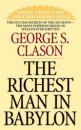
 I’ve heard a lot of people recommending this book, so I picked up a copy of The Richest Man in Babylon by George S. Clason at the library. It’s been out a while, so chances are there is a copy out there, or try getting a copy used. The book is compact, and my edition was only 144 pages long.
Overall, the book was more inspirational than educational, much in the same vein as Rich Dad, Poor Dad. It is told as a set of Babylonian short stories, with Old English writing style including phrases like “Which desirest thou the most?”. Truth be told, it got a bit annoying after a while. However, there were some good rules set out in the book, which include “start thy purse to fattening”, “control thy expenditures”, “make thy gold multiply”, and “make thy dwelling a profitable investment”.
In my opinion, the most powerful idea that the book presents is that you should live on 90% of your income. That is, for every dollar that you take home, automatically 10 cents should go into savings. If you can save more, great, but 10% is the minimum. This is the only way to stop living from paycheck to paycheck. The situation is slightly different if you are in debt. The book then advises that you live on 70% of your income. 20% would go to pay down the debt, and 10% would still go to savings. Once the debt is gone, you can go back to living on 90%.
Living on 70% would be difficult for many people, but I think the 90% rule is a good goal for most. Most of us have the tendency to spend more once we get more. But putting away 10% somewhere where it can grow is the first step to financial freedom. And then you can feel good about spending the rest of the 90% as you see fit. I’m personally trying to do better than 10%, but I am part of a DINK (dual-income, no kids) family and so I think I should be.
Overall, I think this book would be a great idea for people just starting out or those want to a basic foundation to handling their finances. If you are already saving 10+%, there’s not much to be gained here. No clear solutions are set out in the book (investing advice is limited to “Don’t give your money to people who don’t know how to handle it”). But you have to start somewhere, and this book is a good start.
 The Best Credit Card Bonus Offers – May 2024
 Big List of Free Stocks from Brokerage Apps
 Best Interest Rates on Cash - May 2024
 Free Credit Scores x 3 + Free Credit Monitoring
 Best No Fee 0% APR Balance Transfer Offers
 Little-Known Cellular Data Plans That Can Save Big Money
 How To Haggle Your Cable or Direct TV Bill
 Big List of Free Consumer Data Reports (Credit, Rent, Work)
Maybe this is an obvious question, but are they talking about 10% of your pre-tax or post-tax income? You say “for every dollar that you take home, automatically 10 cents should go into savings,” so it seems like we’re talking post-tax, but just wanted to be sure.
Nope, that’s actually a good question, Rachel. The book doesn’t really specify (as far as I can remember), I guess the tax structure in Babylon was a bit confusing :). I would think 10% post-tax would be a better idea. However, if it goes straight to 401k or Traditional IRA, I would say that would be close enough.
My impression from reading the book — and it’s been a while — was that the 10 percent was to come from your gross (pretax) earnings.
But, as I said, it’s been a while since I’ve read the book.
If you have access to a 401K or an IRA, I would recommend putting 10% of pretax dollars in. You’ll lower your overall tax burden and get more money in your account to compound. The younger you are, the better it is.
I read the book and reviewed it on my weblog:
Book Review
The book was more inspirational than practical, but it had a lot of good advice. I would prefer The Wealthy Barber to the Babylon book.
I agree with the Wealthy barber on the fact that:
1) You maximize your 401k
AND
ON TOP OF THAT
2) You also save 10% of pre-tax OUTSIDE all of your retirement accounts (which are maximized to the brim).
I agree with hazzardjk. Maxing out your 401k is just common sense if you plan to retire (with the benifit of giving you less taxable income). Invest 10% of whats left over.
This gives you retirement funds and other investements which can be liquidated in the case of an emergency, to buy a car, put a downpayment on a home, or to simply grow your wealth.
10% is an idea, not an absolute number. for example if i were 50 with no pension plan or financial protection and wished to remain living in the west i’d argue you’d need to increase that number a great deal. if u are 16 and plan on retiring to asia in 10 years you could probably do it easily with 10%. it’s an idea, a formula. u need to make up your own calculator and build into an equation that takes into account inflation, compounding factors, degree of lifestyle, health, dependents, etc. glad to be of service
I definitely believe that the book is speaking on 10 percent pre tax because biblically speaking the bible also gives great advice in financial stability except it mentions placing 10 percent of your assets towards tithes! Meaning, take 10 percent off of the overall amount to ensure your giving the most! “Your money will treat you how you treat it” when your stingy and greedy with it your less likely to prosper in life, that’s just my opinion! “Live each day like its your last”
i have a idea that can revolutionize the boot industry but i have no money no connections can some one help
I don’t really know what else I can say, other than I BASE MY ENTIRE FINANCIAL PLANNING ON THIS GENIUS LITTLE BOOK. It’s so dead easy, and so FUN. I actually heard the audio version of this and it is delightful. Couldn’t recommend this book more. Ancient Genius or not (Clason was a brilliant sales man from the States). This book is fun and brilliant. Enjoy!
I found this book to be a good read. The information is basic and I would definately recommend it to anyone trying to find a way to manage their personal or business finances in a straightforward and easy to follow manner.
This is a great starting item for someone who is pressed for time and doesn’t want to read a ton of financial books. While some of the ideas are archaically written, they remain timeless. An obvious one: as a person’s wealth rises, so do their expenses.