Archives for November 2024

Halfmore App: Turn Your Kids’ Chores into a Roth IRA

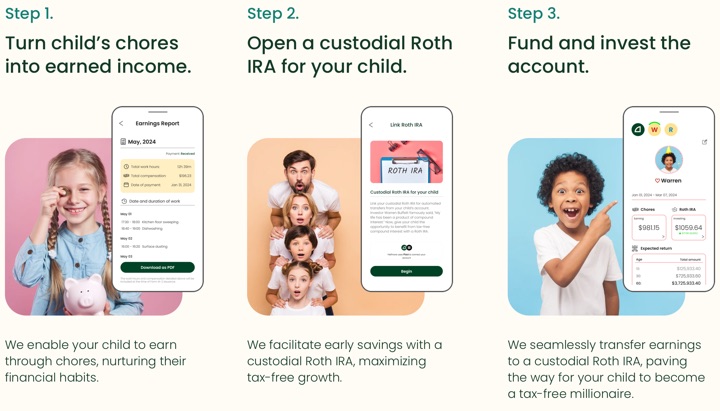
Roth IRAs are popular and powerful, and while they have an earned income requirement, they don’t have a minimum age requirement. As long as a child has “official” earned income, they can contribute that into a Roth IRA (technically a Custodial Roth IRA as a minor, with full rights when they turn 18).

There have been various tips floating around on how parents can help “support” the creation of earned income for their child. There was even a now-defunct website called 1417power.com that would “hire” your kids to take surveys online (of course, the parent had to “hire” 1417power.com first…).

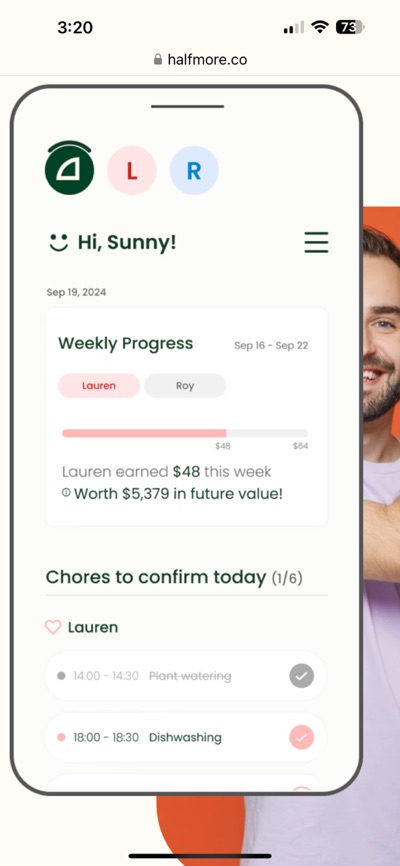
A new app called Halfmore can now facilitate the creation of a nice paper trail between parents as employers and children as workers. They promise to turn chores into a Roth IRA balance. Based on their screenshots, examples of such chores include floor sweeping, washing the dishes, surface dusting, and plant watering. The screenshots also suggest a pay rate of $15 to $16 an hour.

For chores to be recognized as legitimate sources of income, your kids should be paid for tasks you would typically hire another neighborhood kid or a nanny to do (rather than for regular family chores). They should also be appropriate for your child’s age and abilities. Examples include cleaning the garage, mowing the lawn (without a machine), and babysitting. The work must be real, and the wages should be fair.
From what I can gather through the limited information on their website (I had to register to get more details), this is what they offer:

  • They will help you file for an EIN from the government, so you are registered as an official household employer. This is basically the type of thing you should do if you hired a full-time nanny.
  • Through the app, you can track the completion of chores and manage payroll for your children. For example, the washing of dishes can be marked down as 30 minutes of work.
  • They will prepare work documentation for IRS income tax filing and record-keeping requirements.
  • They will help you navigate Federal and State employment taxes.
  • They will help open a custodial Roth IRA for you at Fidelity or Schwab, and transfer money into that account.
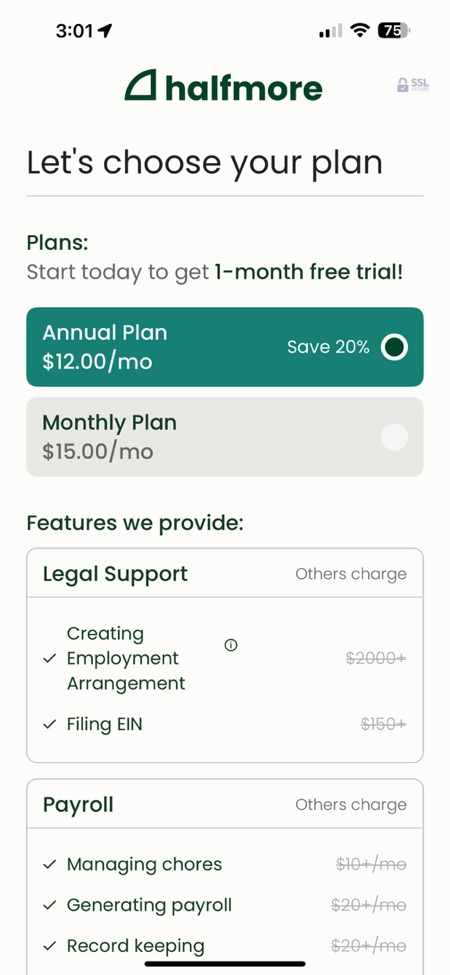
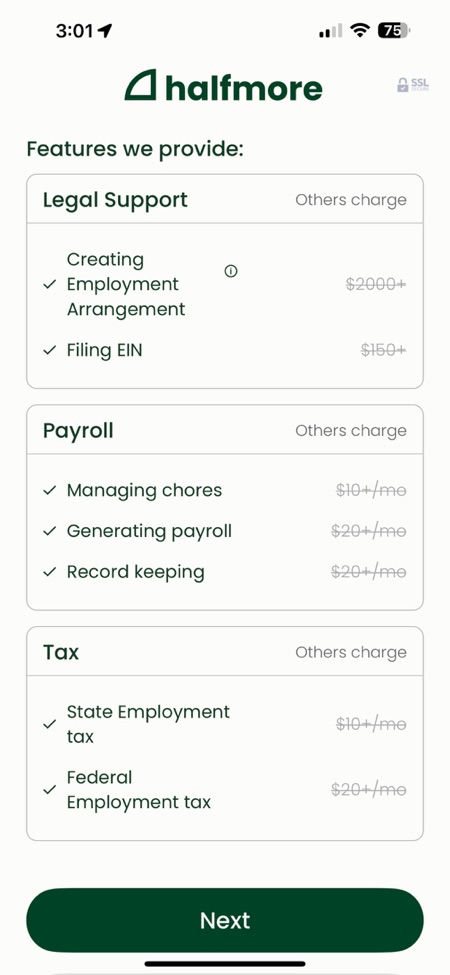
The cost is $15 per month or ($144 per year). Their FAQ says this covers up to three children (another place on the website says up to five children). You could file for an EIN, track chores, and open up a custodial Roth yourself for “free”. You are essentially following the same steps as if you were hiring a full-time nanny as a household worker. But if you make enough money such that you are considering this scheme for your kids, then your hourly rate is probably high enough that the convenience factor makes this a reasonable fee.

If you need more chore ideas, here is the Montessori Chart of Age-Appropriate Chores For Kids that keeps floating around like a meme:

spoiledchores

Looking through my archives, I realized that I have already written about “Roth IRA for Kids” in 2007, 2012, and 2019. My eldest child is in middle school now, and I’m still working on how to best teach them about money. I can see a matching program later on in life when they have a real job from an outside employer. But right now, I don’t pay them anything to do their chores. Chores are not a job, they are a responsibility to their family. They can’t decline their chores by declining the money. Maybe I’ll pay for extra jobs around the house, but I think it’s gonna be a stretch for that to add up to thousands of dollars a year.

If you already plan on gifting your child money anyway, this might be a more efficient method. For me, I already tell them that we spend a lot of money on their education right now, and that is our “gift”. I am already paying plenty for tutoring, swim lessons, tennis lessons, STEM camps, etc. Not to mention who knows how much college will cost! I suppose I just feel like this is too far down the list. Maybe my attitude will change later. Maybe I’ll just let them have the sense of accomplishment from funding their own retirement accounts. 😁

Best Interest Rates Survey: Savings Accounts, Money Markets, Treasuries, CDs, ETFs – November 2024

Here’s my monthly roundup of the best interest rates on cash as of November 2024, roughly sorted from shortest to longest maturities. There are lesser-known opportunities available to individual investors, often earning more money while keeping the same level of safety by moving to another FDIC-insured bank or NCUA-insured credit union. Check out my Ultimate Rate-Chaser Calculator to see how much extra interest you could earn from switching. Rates listed are available to everyone nationwide. Rates checked as of 11/12/2024.

TL;DR: Fed lowered rates again; slight drops are continuing on average. Still some 5%+ savings accounts. Still some 4%+ APY 5-year CDs. Compare against Treasury bills and bonds at every maturity, taking into account state tax exemption. I no longer recommend fintech companies due to the possibility of loss due to poor recordkeeping and/or fraud.

High-yield savings accounts
Since the huge megabanks still pay essentially no interest, everyone should at least have a separate, no-fee online savings account to piggy-back onto your existing checking account. The interest rates on savings accounts can drop at any time, so I list the top rates as well as competitive rates from banks with a history of competitive rates and solid user experience. Some banks will bait you with a temporary top rate and then lower the rates in the hopes that you are too lazy to leave.

  • The top rates at the moment are from newcomers Pibank at 5.50% APY and TIMBR at 5.25% APY. I have no personal experience with either, but they are the top rates at the moment. Most others have dropped at least a little. For example, CIT Platinum Savings is now at 4.55% APY with $5,000+ balance.
  • SoFi Bank is at 4.20% APY + up to $325 new account bonus with direct deposit. You must maintain a direct deposit of any amount (even $1) each month for the higher APY. SoFi has historically competitive rates and full banking features. See details at $25 + $300 SoFi Money new account and deposit bonus.
  • Here is a limited survey of high-yield savings accounts. They aren’t the top rates, but a group that have historically kept it relatively competitive such that I like to track their history. Kind of an index like the Dow or S&P 500.

Short-term guaranteed rates (1 year and under)
A common question is what to do with a big pile of cash that you’re waiting to deploy shortly (plan to buy a house soon, just sold your house, just sold your business, legal settlement, inheritance). My usual advice is to keep things simple and take your time. If not a savings account, then put it in a flexible short-term CD under the FDIC limits until you have a plan.

  • No Penalty CDs offer a fixed interest rate that can never go down, but you can still take out your money (once) without any fees if you want to use it elsewhere. Marcus has a 7mo/9mo/11mo No Penalty CD at 3.90% APY with a $500 minimum deposit. Farmer’s Insurance FCU has 9-month No Penalty CD at 4.50% APY with a $1,000 minimum deposit. Consider opening multiple CDs in smaller increments for more flexibility.
  • Langley Federal Credit Union has a 10-month certificate special at 5.25% APY ($500 min, $50,000 max). This is a promo for new members only. Anyone can join this credit union nationwide; you must maintain $5 in their share savings account. Early withdrawal penalty is 90 days of interest.

Money market mutual funds
Many brokerage firms that pay out very little interest on their default cash sweep funds (and keep the difference for themselves). Note: Money market mutual funds are highly-regulated, but ultimately not FDIC-insured, so I would still stick with highly reputable firms.

  • Vanguard Federal Money Market Fund (VMFXX) is the default sweep option for Vanguard brokerage accounts, which has an SEC yield of 4.67% (changes daily, but also works out to a compound yield of 4.77%, which is better for comparing against APY). Odds are this is much higher than your own broker’s default cash sweep interest rate.
  • Vanguard Treasury Money Market Fund (VUSXX) is an alternative money market fund which you must manually purchase, but the interest will be mostly (80% for 2023 tax year) exempt from state and local income taxes because it comes from qualifying US government obligations. Current SEC yield of 4.63% (compound yield of 4.73%).

Treasury Bills and Ultra-short Treasury ETFs
Another option is to buy individual Treasury bills which come in a variety of maturities from 4-weeks to 52-weeks and are fully backed by the US government. You can also invest in ETFs that hold a rotating basket of short-term Treasury Bills for you, while charging a small management fee for doing so. T-bill interest is exempt from state and local income taxes, which can make a significant difference in your effective yield.

  • You can build your own T-Bill ladder at TreasuryDirect.gov or via a brokerage account with a bond desk like Vanguard and Fidelity. Here are the current Treasury Bill rates. As of 11/12/24, a new 4-week T-Bill had the equivalent of 4.60% annualized interest and a 52-week T-Bill had the equivalent of 4.38% annualized interest.
  • The iShares 0-3 Month Treasury Bond ETF (SGOV) has a 4.88% SEC yield and effective duration of 0.10 years. SPDR Bloomberg Barclays 1-3 Month T-Bill ETF (BIL) has a 4.57% SEC yield and effective duration of 0.08 years.

US Savings Bonds
Series I Savings Bonds offer rates that are linked to inflation and backed by the US government. You must hold them for at least a year. If you redeem them within 5 years there is a penalty of the last 3 months of interest. The annual purchase limit for electronic I bonds is $10,000 per Social Security Number, available online at TreasuryDirect.gov.

  • “I Bonds” bought between November 2024 and April 2025 will earn a 3.11% rate for the first six months. The rate of the subsequent 6-month period will be based on inflation again. More on Savings Bonds here.
  • In mid-April 2025, the CPI will be announced and you will have a short period where you will have a very close estimate of the rate for the next 12 months. I will have another post up at that time.

Rewards checking accounts
These unique checking accounts pay above-average interest rates, but with unique risks. You have to jump through certain hoops which usually involve 10+ debit card purchases each cycle, a certain number of ACH/direct deposits, and/or a certain number of logins per month. If you make a mistake (or they judge that you did) you risk earning zero interest for that month. Some folks don’t mind the extra work and attention required, while others would rather not bother. Rates can also drop suddenly, leaving a “bait-and-switch” feeling.

  • OnPath Federal Credit Union (my review) pays 7.00% APY on up to $10,000 if you make 15 debit card purchases, opt into online statements, and login to online or mobile banking once per statement cycle. Anyone can join this credit union via $5 membership fee to join partner organization. You can also get a $100 Visa Reward card when you open a new account and make qualifying transactions.
  • Genisys Credit Union pays 6.75% APY on up to $7,500 if you make 10 debit card purchases of $5+ each per statement cycle, and opt into online statements. Anyone can join this credit union via $5 membership fee to join partner organization.
  • La Capitol Federal Credit Union pays 6.25% APY on up to $10,000 if you make 15 debit card purchases of at least $5 each per statement cycle. Anyone can join this credit union via partner organization, Louisiana Association for Personal Financial Achievement ($20).
  • Credit Union of New Jersey pays 6.00% APY on up to $25,000 if you make 12 debit card purchases, opt into online statements, and make at least 1 direct deposit, online bill payment, or automatic payment (ACH) per statement cycle. Anyone can join this credit union via $5 membership fee to join partner organization.
  • Andrews Federal Credit Union pays 6.00% APY on up to $25,000 if you make 15 debit card purchases, opt into online statements, and make at least 1 direct deposit or ACH transaction per statement cycle. Anyone can join this credit union via partner organization.
  • Orion Federal Credit Union pays 6.00% APY on up to $10,000 if you make electronic deposits of $500+ each month (ACH transfers count) and spend $500+ on your Orion debit or credit card each month. Anyone can join this credit union via $10 membership fee to partner organization membership.
  • All America/Redneck Bank pays 4.65% APY on up to $15,000 if you make 10 debit card purchases each monthly cycle with online statements.
  • Find a locally-restricted rewards checking account at DepositAccounts.

Certificates of deposit (greater than 1 year)
CDs offer higher rates, but come with an early withdrawal penalty. By finding a bank CD with a reasonable early withdrawal penalty, you can enjoy higher rates but maintain access in a true emergency. Alternatively, consider building a CD ladder of different maturity lengths (ex. 1/2/3/4/5-years) such that you have access to part of the ladder each year, but your blended interest rate is higher than a savings account. When one CD matures, use that money to buy another 5-year CD to keep the ladder going. Some CDs also offer “add-ons” where you can deposit more funds if rates drop.

  • Synchrony Bank has a 5-year certificate at 4.00% APY (no minimum), 4-year at 3.90% APY, 3-year at 3.90% APY, 2-year at 3.90% APY, and 1-year at 4.20% APY. Early withdrawal penalty for the 4-year and 5-year is 365 days of interest.
  • BMO Alto has a 5-year CD at 4.00% APY. 4-year at 3.90% APY. 3-year at 3.90% APY. 2-year at 3.90% APY. 1-year at 4.30% APY. No minimum. The early withdrawal penalty (EWP) for CD maturities of 1 year or more is 180 days of interest. For CD maturities of 11 months or less, the EWP is 90 days of interest. However, note that they reserve the right to prohibit early withdrawals entirely (!). Online-only subsidiary of BMO Bank.
  • You can buy certificates of deposit via the bond desks of Vanguard and Fidelity. You may need an account to see the rates. These “brokered CDs” offer FDIC insurance and easy laddering, but they don’t come with predictable early withdrawal penalties. Right now, I see a 5-year non-callable CD at 3.85% APY (callable: no, call protection: yes). Be warned that both Vanguard and Fidelity will list higher rates from callable CDs, which importantly means they can call back your CD if rates drop later. (Issuers have indeed started calling some of their old 5%+ CDs as of Fall 2024.)

Longer-term Instruments
I’d use these with caution due to increased interest rate risk (tbh, I don’t use them at all), but I still track them to see the rest of the current yield curve.

  • Willing to lock up your money for 10 years? You can buy long-term certificates of deposit via the bond desks of Vanguard and Fidelity. These “brokered CDs” offer FDIC insurance, but they don’t come with predictable early withdrawal penalties. You might find something that pays more than your other brokerage cash and Treasury options. Right now, I see a 10-year CDs at [n/a] (non-callable) vs. 4.43% for a 10-year Treasury. Watch out for higher rates from callable CDs where they can call your CD back if interest rates drop.

All rates were checked as of 11/12/2024.

Photo by Giorgio Trovato on Unsplash

Class Action Settlement Roundup – Breyers, Clif Bars, Cash App, Earth Rated, MLS Realtor Fees

Time to clean up some browser tabs! Here are some class action settlements that may apply to you as of November 2024. The trick is to take action and file now before you forget… and then forget! I say this because they could take several months or longer to finally pay out. When they do show up, it’ll be a nice surprise. Many times they end up more than the initially indicated amount.

2025 401(k) Contribution Limits Announced; New Super Catch-Up for Ages 60-63

The IRS officially announced the new 401(k) contribution limits for 2025 (full news release), which also included a new “super catch-up” allowance for people who are ages 60-63 at year-end 2025. Strangely, it goes back down once you are age 64. I hadn’t heard of this before now. As usual, by “401(k)” I mean that it applies to 401(k), 403(b), governmental 457 plans, and the federal government’s Thrift Savings Plan.

The 2025 base 401(k) contribution limit is increased to $23,500, up from $23,000. This WSJ article (paywall) has a handy chart for reference.

The 2025 base IRA contribution limit remains at $7,000 (subject to income limits). Taken together, “maxing out” your IRA and 401(k) now takes more than $30,000 a year even ignoring any catch-ups. That’s a lot, but whatever you can cram in there may get roughly a 30% boost towards your final retirement balance.

Fidelity Rewards Visa Credit Card Review: 2% Flat Cash Back, No Annual Fee ($150 Sign-Up Bonus, $100 TSA PreCheck Credit)

(Update November 2024: This card has added a Global Entry/TSA PreCheck credit worth up to $100 every four years. Might be handy for existing cardholders that have this as an idle card. Currently a $150 sign-up bonus for new customers as well. Updated full review below.)

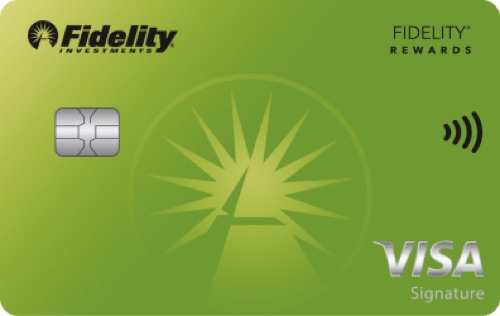
Back in 2019, Fidelity condensed their rewards credit card line-up to a single card, the Fidelity® Rewards Visa Signature Card issued by Elan Financial Services (subsidiary of US Bank). There is currently a $150 bonus if you spend $1,000 in the first 90 days. It earns a flat 2% cash back when directed to an eligible Fidelity Investments account. Here are the highlights:

  • Unlimited 2% cash back, when redeemed into an eligible Fidelity account. You could pick a brokerage account, IRA, or 529 plan.
  • No annual fee.
  • No foreign transaction fees.
  • NEW: $100 credit towards Global Entry/TSA PreCheck application fees. Valid once every four years.
  • BACK: Secondary Auto Rental Collision Damage Waiver. As with many other cards, this is secondary to your personal auto insurance, but will help cover the deductible if applicable.

Details on the sign-up bonus:

Receive 15,000 Bonus Points – which equals $150 cash back, when deposited into an eligible Fidelity account – after you make at least $1,000 in eligible net purchases withing the first 90 days of account opening.2 Existing or previous Fidelity Visa Signature cardmembers are not eligible for this offer if you have received a new account bonus for this product in the last five years.

Details on the Global Entry/TSA PreCheck benefit:

Receive up to 10,000 Reward Points every four years when you apply for either Global Entry® or TSA PreCheck®. That’s worth up to $100 when deposited into an eligible Fidelity® account,¹ once every four years. Be sure to pay the application fee using your card to be eligible.

Eligible Fidelity accounts. The 2% rewards value applies only to points redeemed for a deposit into the following active Fidelity accounts:

  • Fidelity Cash Management Account
  • Fidelity Brokerage account
  • Fidelity-managed 529 account
  • Fidelity Retirement account (IRA, Roth IRA, SEP-IRA, Rollover IRA)
  • Fidelity Go account (robo-advisor)
  • Fidelity Charitable Giving Account (donor-advised fund)
  • Fidelity HSA

My favorite option is actually the 529 plan option if you have kids, because it is the perfect way to quietly grow a little college stash and not just spend your rewards away on a dinner or gadget. Contributions get to grow tax-free with minimal paperwork towards your future college expenses. The IRA option is okay, but you have to be careful to not exceed the annual contribution limits and track your rewards against your other contributions.

I also like that there is an auto-redemption option. You can enable a feature to automatically cash in your points each time it reaches $25 worth and auto-deposit into your 529 plan (or brokerage account, etc). Since the 529 plan will also auto-invest your contribution, it’s all on auto-pilot. No redemptions, no investment decisions, no wasted frequent flier miles, etc.

(Side tip: Grandparents can also set it up to direct their own credit card rewards to automatically redeem into your child’s 529 plan account as well…)

Let’s say you spend $2,000 a month on this card. 2% cash back means earning $40 a month in cash back. Let’s also say you put this into a 529 that earns 6% a year. If you started when your kid was born and waited 20 years until their senior year of college, that would amount to $18,574! I plugged it into this savings calculator.

Concerns? The only main drawback with this card is that it is actually run by Elan Financial, and whenever Fidelity partners with these third-parties, it’s not a perfect match. Elan doesn’t have the same level of customer service as Fidelity, or American Express for that matter. They will give you a harder time with merchant disputes and fraud refunds, for example. I’ve always gotten them worked out in the end, but it took more effort in my experience. I personally wouldn’t want to deal with them on any type of insurance claim.

Bottom line. I think everyone who can handle a cash back credit card (i.e. you carry no high interest credit debt) should have a 2% flat cash back card that applies to all purchases. The Fidelity® Rewards Visa Signature Card can make sense for Fidelity customers because you can set aside your rewards automatically and save money towards a Fidelity 529 college savings or retirement account. I would try to apply when there is a sign-up bonus.

Visualizing Asset Allocation Choices: Risk vs. Return vs. Probability

Howard Marks published another Oaktree Capital memo recently, Ruminating on Asset Allocation, which included several insights about asset classes and how to create a portfolio. I recommend reading the entire thing, but here are a few highlights about how to better understand the balancing act that is asset allocation. (I know many people follow them, but I ignore all the memos that lean toward macroeconomic forecasts.)

Here are the top-level takeaways, which set the table:

  • Fundamentally speaking, the only asset classes are ownership and debt.
  • They differ enormously in terms of their fundamental nature.
  • Ownership assets and debt assets should be combined to get your portfolio to the position on the risk/return continuum that’s right for you. This is the most important decision in portfolio management or asset allocation.

How do you pick the right relative amounts of equities (ownership of a business) and bonds (debt)? The top chart above adds a new dimension of probability to just “risk increases with return”, and is actually from a previous Howard Marks memo:

…we see that as the thing called “risk” increases (that is, as we move from left to right on the graph), not only does the expected return increase, but the range of possible outcomes becomes wider and the bad outcomes become worse. That’s risk! (I hope this way of presenting risk will be considered a lasting contribution to the investment industry when I’m gone.)

Below is a new chart that keeps with the theme of considering probability vs. return, but for different asset class mixes (I edited the chart to explain the colors directly).

Ownership assets typically have a higher expected return, greater upside potential, and greater downside risk. Everything else being equal, the expected returns from debt are lower but likely to fall within a much tighter range.

Again, as we move from left to right (more ownership assets, less debt), the expected return increases and the expected risk increases (that is, just as in Figure 6 [the first chart above], the range of possible outcomes grows wider and the left-hand tail stretches further into undesirable territory). This way of presenting the options might be more intuitively clear.

Someone who believes in “more risk, more return” as portrayed in Figure 5 should logically adopt a high-risk posture. But if they understand the real implications of increased risk, as suggested by Figures 6 and 7, then they might opt for something more moderate.

Hopefully, this visualization can help us investors understand the value in a “balanced” portfolio holding both stocks and bonds. I would point out this is based on a diversified portfolio of stocks and/or bonds. Single companies can of course fail, but so many people have also gotten burned with “safe” investments that ended up with a -100% return (complete loss).

[Side note: The Yotta/Synapse/Evolve drama continues… I actually found my lost pennies in the “anonymized” ledger (legal?!?), but you can also see that so many others lost really significant amounts of money on what was supposedly FDIC-insured deposits.]