Search Results for: feed

Chart: Will Your Kids Earn a Higher Income Than You?

Parents want their children to have a better life than their own. We want our kids to eat more healthily, accumulate more knowledge, enjoy closer relationships, live longer, and – if we’re honest – make more money. However, the academic paper The Fading American Dream: Trends in Absolute Income Mobility Since 1940 by Chetty et al. shows us that earning more money than your parents has gone from nearly a sure thing to no better than a 50/50 coin flip. Via WSJ Daily Shot.

Here is a chart where each line shows the percentage of children born in the indicated year that earned more than their parents, as a function of their parent’s income percentile.
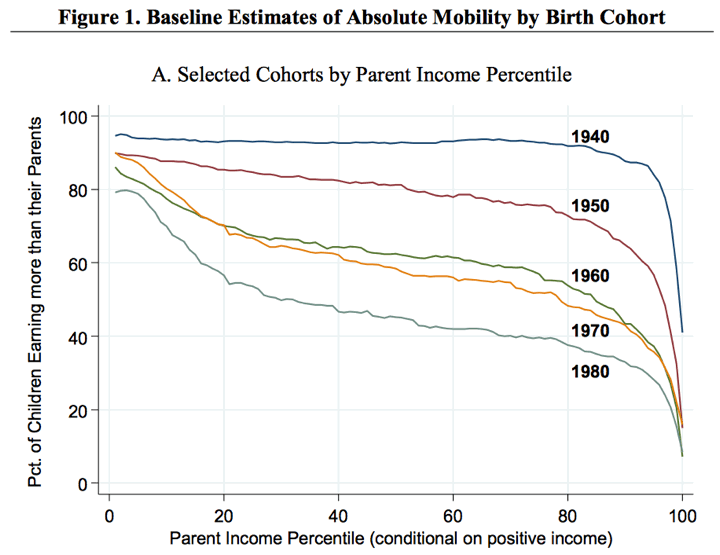
Every decade, the numbers get consistently worse. In terms of overall percentages:

  • For children born in 1940, over 90% grew up to earn more than their parents.
  • For children born in 1980, only 50% grew up to earn more than their parents.

What does that mean? Even if you as parents today earn an above-average income, there is no guarantee that your kids will grow up to earn more than you on an inflation-adjusted basis. In fact, if the trend holds, the odds are that they will end up earning less.

Very few parents have the kind of wealth that guarantees financial security for their offspring. This creates increasing stress about gifted programs, private schools, magnet schools, sports teams, test prep, and any other opportunities that can give them an edge.

We took our kids to a local pumpkin patch this weekend, and in between choosing your own pumpkin and feeding farm animals, our oldest started complaining about not having $5 lemonade. This reminded me of a simple rule:

Happiness equals reality minus expectations.

My kids should not expect to have a certain lifestyle. I hope (!) to teach them gratitude for the many advantages that they have been given, a strong work ethic for obtaining what they want to achieve, and tempered expectations of what makes a good life (not just money). Now, how do I pull that off?

NetNewsWire 5.0: Free RSS Reader for Mac

If you like things old-school and still follow blogs and news sites using RSS feeds, you may be interested to know that the NetNewsWire RSS reader name has gone back to its original creator and there is a new version now available as a free, open source download for Mac OS X 10.14.4 or newer. Since the demise of Google Reader, I know that many people have switched to Feedly, but I have been a paying user of NetNewsWire for a long time.

By the way, here is the raw My Money Blog RSS feed URL.

The Toddler IRA: Should My 3-Year-Old Have a Tax Shelter?

I love my Roth IRAs. They just keep on growing tax-free and never send me any annoying tax documents. Vanguard has a post about Working teens and Roth IRAs. I like the idea of a teenager putting some hours in at Jamba Juice and having the discipline to tuck some away for the future. However, the article suggests that you gift your teenager money in order to fund the Roth IRA (with the teen keeping their earnings).

Why wait until they are teenagers? You could take this further into what I call the Toddler IRA. Basically, you find a way to have your 3-year-old (or 6-year-old, etc.) have some earned income, usually via your small business. Maybe they “model” in an advertising spot. Maybe they did “administrative work” and helped organize some business papers for you. Can they weed or dig? Time to pay them for their lawn maintenance skills. Now that your kid has earned income, they (you) can contribute the same amount into a Roth IRA.

At first glance, it’s a little weird. Can I really justify these payments? I’m inclined to pay them more (so I can stuff more contributions into the Roth IRA), but would I really pay that much money if they weren’t my kid? Some parents go as far as making arrangements with other parents where they pay each other’s kids. In fact, there used to be a website (I forget the name) where your kid did some sort of simple online “work” and they would send your kid a check. (The parents would pay for this passthrough employment service.) Yet another example of government incentives working in unexpected ways.

The math sounds pretty impressive when you compound returns tax-free for 60+ years. $1,000 at 6% annual return times 60 years = $33,000. $1,000 at 8% annual return times 60 years = $100,000! Here’s a simple chart from Vanguard that shows the possibility of your kid getting a $100,000 head start on retirement:

I would add that the effect is exaggerated because doesn’t take inflation into account, but even a 4% real return will make $1,000 into $10,000 after 60 years. You put in $1,000 times 12 years, they end up with close to $100,000 inflation-adjusted after 60 years.

Why my kids don’t have a Toddler IRA. I have a small business. See that cute picture on the top right? I could easily pay them to model for a new photo shoot every month. (Trust me, it’s hard work to get them to all smile at the same time… for me.) I’ve thought about it. In the end, it doesn’t fit in with my personal philosophy about teaching them to fish:

Give a man a fish, and you feed him for a day. Teach a man to fish, and you feed him for a lifetime.

This act is giving them a big pile of fish. It’s a tax-advantaged gift, but still a gift that they’ll know about at a young age. I don’t like the idea of them turning 18 and finding out they have $XX,000 waiting for them without doing any work.

What about “teaching” them to save? If they don’t feel the pain of earning the money and the separate pain of not spending it either, then I don’t really see the educational benefit. When they start to really earn money as teenagers by waiting tables or bagging groceries, then I will consider doing some sort of 401k-like matching program as a “carrot” to letting me teach them about investing and IRAs.

When they are kids, I will instead contribute any money towards college tuition via a 529 plan. I doubt that I’ll be able to cover full tuition and housing for three kids anyhow. Most parents can’t. Above that, I’d still rather give them $500 to start a food stand at the local farmer’s market than stick it into their IRA.

I feel this is a topic where opinions will vary widely. What do you think?

Can You Teach Your Kid To Be Rich?

There is an ongoing debate about personal finance education in school. It sounds like a good idea, but multiple studies have found that financial literacy classes don’t really improve future behavior. It may be too much to expect an easy fix to such a complex problem.

As a parent, how do you best set up your kids for financial success? In the end, how can you really tell if you made a difference anyway? You can only try your best. My personal philosophy boils down to this famous proverb:

Give a man a fish, and you feed him for a day. Teach a man to fish, and you feed him for a lifetime.

Some parents plan on giving their kids a big pile of fish. An inheritance. Real estate. A business to take over and run. That’s out of love, and I am not judging that choice. I might leave them something, but I’m going to tell them to expect nothing. Instead, I hope they will see that I put in a lot of effort to help them develop the tools to go out and “fish”, and that as adults it’s up to them to make money for themselves.

To be clear, this is not the only thing that I am teaching them. Good relationships with family and friends are more important than an early retirement. However, I have observed several specific traits useful in navigating the financial world. As a result, I want to help them:

  • Develop good character traits like self-discipline, gratitude, and perseverance. If they can control their emotions, have empathy for others, and endure hard work, it helps everything else.
  • Obtain quality formal education. If they are going to solve the world’s problems, they need a strong, wide base of knowledge. A solid education and good teachers can really inspire and change a child’s life.
  • Experience entry-level hourly work in the retail, construction, and/or food service industries. They should understand how hard it is to make a living without specialized skills.
  • Create their own business ventures. I plan on helping them start any kind of micro-business that they want. It might be even better as a non-profit, donating the proceeds to the community. Through this, they will learn basic accounting, marketing, and interpersonal skills.
  • Improve interpersonal skills. Across all of their activities, from school projects to extracurriculars (sports/arts/music) to starting their own business, learning how to work with others is key.
  • Feel encouraged to take calculated risks. There are many ways to take asymmetrical risks where the upside is huge and the downside is small. This especially true when you are young and without dependents. I want them to take such risks.

None of the factors above require a ton of money, although private schools can be quite expensive. The best option may be maximizing the public school options available. My parents rented a small apartment in a good school district, as they couldn’t afford buying an expensive house with high property taxes. I only realized this recently when I visited our old duplex and found a house down the street listed for nearly $2,000,000 (median price in this city is $370,000).

I do plan to contribute to a 529 plan and minimize student loan debt. Maybe college tuition will be more sane in 15 years, but I think this is the best use of cash right now – keeping them from having to fight the power of compound interest in reverse. (I also classify paying for education as “teaching them to fish”.) I want to show them that we value education and also strive to avoid debt whenever possible.

Bottom line. How does anyone get rich? Most people who got rich quickly had equity in a business venture. This takes a combination of specialized skill, interpersonal skills, risk-taking, and luck. Most people who got rich over decades got there with a steady career, work ethic, patience, self-discipline when it comes to spending, and investing the difference repeatedly. I’d be happy with my kids taking either path, and tried to think up a list of ways to help promote these traits.

Giving Tuesday 2018: Double Your Impact

givingtuesdayTuesday, November 27th is Giving Tuesday 2018. This time of year is huge for charities, with 40% of donations occurring in the last six weeks of the year. Here are some ways you can “double your impact” with a matching donation.

Facebook Match(good toward any charity that accepts donations via Facebook). Starting at 8am Eastern on 11/27, Facebook and PayPal will match $7 million in donations to U.S. nonprofits – up to $250,000 per nonprofit and $20,000 per donor. Donations will be matched dollar for dollar on a first-come, first-served basis.

For example, give directly with the donate button on the The Humane Society Facebook Page. You can also start your own fundraiser here or simply post up a donate button to support your favorite charity.

Check for an employer match. Try this lookup tool from DoubleTheDonation. Most of these programs don’t require you to actually give on a specific day, but you may want to start the process today so you don’t forget in the holiday rush.

PayPal (good toward any charity participates in the PayPal Giving Fund). “Make a donation using PayPal on Tuesday, November 27, 2018 (Giving Tuesday) and we’ll match every donation that you make to PayPal Giving Fund (“Offer”), for the benefit of your recommended nonprofit dollar for dollar, up to $500,000 in total matching funds.” You must use your PayPal account. As far as I can tell, you can link up any rewards credit card of your choice and use that as the funding source. Your donation will technically be given to the PayPal Giving Fund, an IRS-registered 501(c)(3) nonprofit organization, and then disbursed to your selected nonprofit. It will still be tax-deductible to the extent allowed by law.

Individual charities. The following large charities have organized their own matches in the past, but check to make sure.

Check with your favorite community nonprofit. Many local charities may also have matching grants today.

Having trouble deciding where to give? Here are some charity comparison sites that will help you pick where to send your help.

  • CharityNavigator – Largest and well-publicized charity rating site, provides a 4-star rating based primarily on financial criteria.
  • GiveWell – Tries to identify the best charities, not rate them all. Focused primarily on charities working internationally
  • GreatNonProfits – Allows clients, volunteers, and funders to post personal reviews based on their experiences.
  • GuideStar – Tries to be a one-stop shop for both financial data and personal reviews of charities. Must register to see a lot of things, and pay a subscription fee for premium in-depth data.
  • Philanthropedia – Ranks non-profits based on opinions of experts, and groups them to mutual fund-like portfolios.

The Best Baby Gear Guide: This Stuff Survived 3 Kids in 6 Years

Some close friends of ours are having their first baby at the same time that our third (and last!) kid is turning 2. That means we’ll be passing along a bunch of stuff and also recommendations. Sometimes I read these buying guides and wonder if the author actually tried it past a 5-minute trial run. We got a lot of items that sounded cool but ended up collecting dust. Other stuff we didn’t think would be useful but quickly became daily essentials through 3 babies over 6 years.

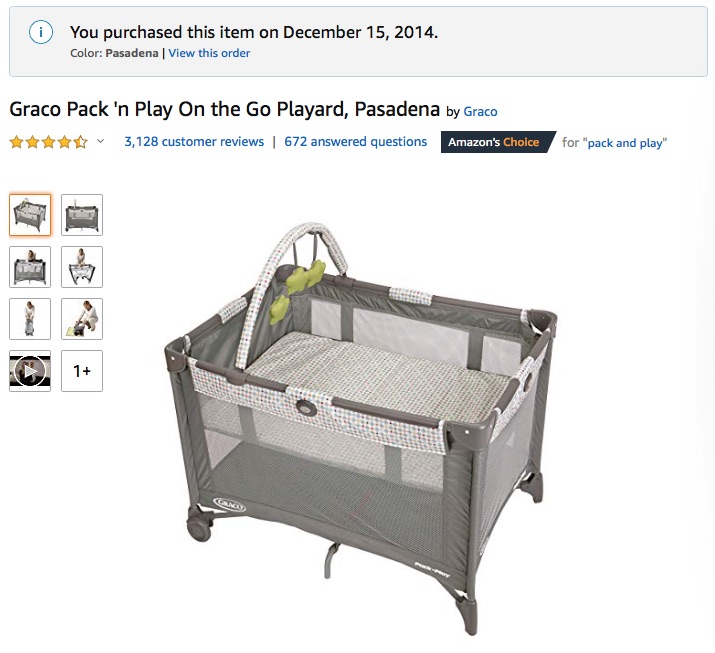
I am not a UL-listed lab and nobody sends me free stuff. These are the real things that we bought or got from our own baby registry that I would buy them again if I had to do it all over again. (I’ve even thrown in some Amazon screenshots which show our actual purchase dates.)

If you create an Amazon Baby Registry, they will offer you an extended 90-day return period as well as a 15% Completion Discount on eligible items for Prime members (Otherwise 10%). It’s a one-time coupon worth up to $300 (15% of $2,000) and valid up to 60 days after your expected arrival date, so use it wisely.
Out & About

Carriers – Beco Gemini Baby Carrier

We picked this carrier out after trying on several different types. We liked that it was convertible with snaps to accommodate both front and back facing positions. If this thing could talk, it would say “I’ve seen some stuff, man…” Poop, vomit, food, the floor of our minivan, and probably a hundred washing machine cycles. It has survived it all with a thick, beefy construction.

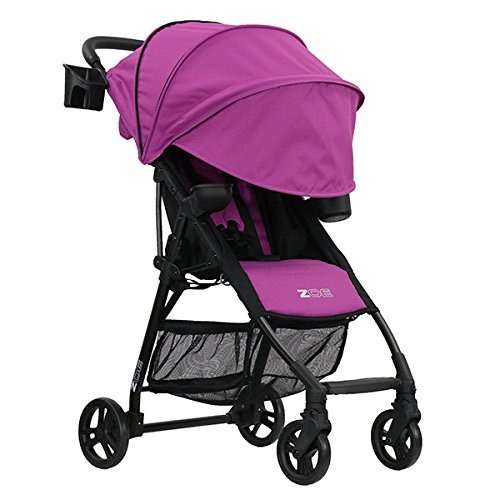
Strollers – ZOE XL1 (Single) and XL2 (Double) Lightweight Strollers

We’ve gone through a lot of strollers. New strollers, hand-me-down strollers, consignment store strollers. Once we started traveling with two kids, we did a ton of research trying to find something light yet useful. My pet peeve is “lightweight” single strollers that weigh 20+ pounds! The XL1 weighs 11 pounds. The XL2 is a double stroller that still weighs only 17 pounds. Not only that, but it retains important features that you won’t find on a barebones umbrella stroller – quick-fold, extended shade canopies, 135 degree recline, lower basket, and snack/cup holders. Add some saddle side bags and a handlebar organizer and you’ve got tons of on-demand storage.

If you click on the Amazon link, you can buy direct from ZOE as a third-party seller. The shipping breakdown is expensive, but it works out the about the same price as buying direct from their website. You might also find some open box returned items on their website.

Playards – Graco Pack ‘n Play Playard

The “Pack N Play” has reached the status of Kleenex and Band-Aid where the brand names are used instead of the official term. Once you figure these things out, they are both sturdy and able to be setup/taken down in seconds. They just work, and can be found in hotels everywhere. If you add a custom-sized mattress, you could realistically use this as a permanent crib replacement (or at the grandparents house, etc). We just bought the most basic best-selling version, but there are tons of add-ons.

Car Seats – Chicco KeyFit 30 Infant Car Seat

The Chicco Keyfit 30 has housed all three children in comfort and safety. It has been rated #1 by Consumer Reports for who knows how many years. It’s lightweight, ergonomic, durable, and the cover washes easily. It’s been in airplanes, taxis, Ubers, rental cars. Our “Kee-koh” has finally earned a retirement full of leisure, while we have handed down the convenient car seat bases to someone else. We definitely maxed out the value on this one.

Travel Systems – Chicco KeyFit Caddy Frame Stroller

We don’t like all-in-one “travel systems”. They tend to be too bulky and heavy, I’ve seen some weigh over 40 pounds! Why push around parts that you’ll only need a year later? If your child is still small enough for the car seat, buy a bare frame and use that as your stroller. It’s lighter and you can still make easy transitions between car and stroller (especially if napping). When your child is older, just buy an independent lightweight stroller (see above).

Nursery

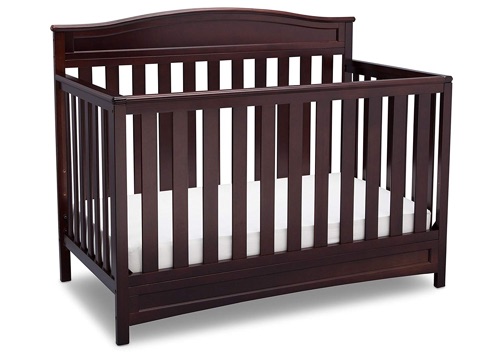
Cribs – Delta Children Emery 4-in-1 Convertible Baby Crib

We bought this crib because it has no moving parts (safe) and it had pictures of it being used as both a toddler bed and eventually a headboard. However, we keep having kids so it’s always been just a crib. It is simple, sturdy, and has lasted through all three kids (and is being slept in as I type this).

Gliders – Dutailier Sleigh Glider and Ottoman Combo

We didn’t buy a Dutalier for the first baby because we thought it was too expensive. However, those all-nighters with a colicky baby means you’re spending a lot of hours sitting on something. If that something makes both you more comfortable and the baby more likely to go back to bed, well… take my money!! When we found out we were having a second child, one of the first things we bought was this glider. We did not regret it. The good news is that it is high quality and still glides quietly and smoothly after 4 years of constant use. The bad news is that they are still pricey. *Cough* Put it on the baby registry and hope someone really likes you *Cough*

Mattresses – Colgate Classica III Crib Mattress

We picked this mattress because it had dual firmness and did not have any funny plastics or smells (supposedly certified by so and so, etc). Infants are supposed to have very firm mattresses for safety, and then you can switch it over to the softer side when they are older. It is of quality construction and well-sealed so that you can wipe off… whatever needs to be wiped off when the time comes.

Here is our favorite mattress sheet. No fancy design but it is super-soft cotton even after lots of washes.

Bathtime

Bath Tubs – PRIMO EuroBath

It’s simple, durable, and made of thick plastic. Would probably last for 100 babies. I didn’t want anything cloth or stretchy. You can just wash or even bleach this thing as needed. I hung it up to dry each night over the tub (use 3M bathtub hook or two).

Diapering

Diaper Bags – We got multiple diaper bags as gifts, but we never used them. Too heavy. We just used whatever bag felt right, often a smaller purse/messenger bag thing for her and a backpack for me. Once they are old enough, I use a reusable grocery bag. Mainly you need to remember snacks and the…

Changing Mats – Skip Hop Baby Pronto Portable Changing Station

Diapers, butt cream, wipes, poop bags. Check. Mat for really gross places. Check. Okay, I usually leave the mat at home now (it zips off). Have I mentioned I don’t like carrying extra weight?

Diapers – I know I should use cloth diapers, but we got a million diapers as gifts with the first kid and… that was that. We were so overwhelmed with everything else that the idea of dealing with cloth diapers was too much. Sorry. Although for some reason, kid #3 goes through about 1/3rd of the diapers that kid #1 did…

We like Huggies. and Pampers. and Luvs. I only look at the cost per diaper. If you wait for a sale + Amazon Family 20% off, you can get close to or at 10 cents a diaper.

Diaper Pails – We received and have used a Diaper Genie for all three kids, and it has worked for the most part, although I’m always appalled at how much the refills cost. I’ve tried the generics and also just using a trash bag, but somehow the smell gets out. Our main attempt at economizing is that we only put #2s in the diaper genie and the #1s go in the normal trash. This is more so we don’t have to keep emptying the darn thing than the cost. Otherwise we just buy the name brand refills.

Bottles – We used Medela bottles, primarily because we got a Medela breast pump from our health insurance. They worked fine and were of good quality in my opinion. The bottles lasted for multiple kids.

Bottle Sterilizers – We don’t use any bottle sterilizer gadgets. We just follow the CDC directions and use warm soap and water, clean hands, and the dishwasher.

Breast Pumps – We got a Medela breast pump from our health insurance. It kept working despite some pretty heavy usage. The battery life does start to go after a year or so.

Feeding Pillows – Mrs. MMB was not a fan of the Boppy. It moved around too much and was uncomfortable. She much preferred the questionably-named My Brest Friend, which is ergonomically better and has a strap for security. We even bought the inflatable travel version which also worked well. The cover is easy to remove, wash, and put back on.

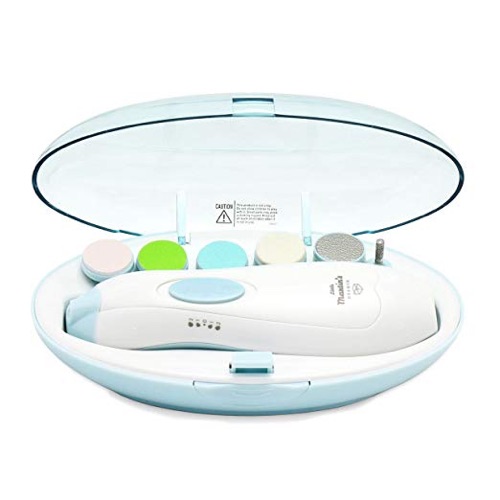
One Last Random Thing – Little Martin’s Baby Nail Trimmer

I know, you’re worried about what the baby is going to eat, how it’s going to sleep, and keeping it safe in the car. But one of the more stressful things for me was trimming the nails. If you don’t trim, their little claws can scratch their own face and even eyes. But using a traditional nail clipper is tough on a tiny wriggly hand, and I have drawn blood before. One of my favorite purchases was this little Dremel-like nail trimmer. No more blood, no more fighting, and I can still use it on my older kids.

AirBnB Free Temporary Housing for California Wildfire Evacuees

airbnbThis is a reminder that AirBnB has a special disaster relief program that helps connect those in need of temporary housing with generous hosts that are willing to open their homes free of charge to evacuees or relief workers. You can open your current Airbnb listing or sign up as a new host with a spare bedroom. I believe Airbnb is waiving all fees through at least November 29th for those affected by both the Northern and Southern California wildfires.

All new Airbnb users can get $40 off their first stay of $75+ via referral link.

Buzzfeed News has some other ways that you can help.

Motivation: Take Advantage Of Being 29, 39, 49, or 59 Years Old

40greatI’m turning 40 years old this summer. This number has always been a psychological marker for me. I’ve always wanted to be financially secure and have started a family by age 40. According to this Atlantic article by Daniel Pink*, I’m far from the only one. Consider marathons:

Four people in four different professions living in four different parts of the world, all united by the common quest to run 26.2 miles. But something else links these runners and legions of other first-time marathoners. Red Hong Yi ran her first marathon when she was 29 years old. Jeremy Medding ran his when he was 39. Cindy Bishop ran her first marathon at age 49, Andy Morozovsky at age 59.

All four of them were what the social psychologists Adam Alter and Hal Hershfield call “nine-enders,” people in the last year of a life decade. They each pushed themselves to do something at ages 29, 39, 49, and 59 that they didn’t do, didn’t even consider, at ages 28, 38, 48, and 58—and didn’t do again when they turned 30, 40, 50, or 60.

The article contains several other insights that definitely applied to me. According to Alter and Hershfield:

“People are more apt to evaluate their lives as a chronological decade ends than they are at other times,” Alter and Hershfield explain. “Nine-enders are particularly preoccupied with aging and meaningfulness, which is linked to a rise in behaviors that suggest a search for or crisis of meaning.”

According to psychologist Clark Hull:

At the beginning of a pursuit, we’re generally more motivated by how far we’ve progressed; at the end, we’re generally more energized by trying to close the small gap that remains.

You could tell yourself that being 29 is no different than being 28 or 30, or you can just use this behavioral quirk to reach your goals. I’ve been working on “closing the gap” in terms of getting all my financial affairs in order. Here are all the things that I’ve been working on as a 39-year-old:

  • Created a system to simulate a monthly “paycheck” so that things run smoothly and the bill gets paid even if I am not around to micromanage things (like I usually do). Dividends and interest flow to the emergency fund/cash buffer (savings account), which then automatically transfers a set amount each month to our day-to-day checking account.
  • Beefed up our cash buffer. As part of the above-mentioned system, I increased our cash hoard to two years of expenses in FDIC-insured savings accounts and CDs. The idea is that this buffer “bucket” feeds the checking account, but also gets replenished by income and interest from our portfolio. As larger upfront expenses like a home repair or used car purchase comes up, the buffer can take a hit. The dividends come in quarterly spurts. The buffer allows us to handle shocks without disruption.
  • Re-examined term life insurance. We are currently 10 years into a 30-year term policy with a level premium. We technically don’t need to replace any lost income anymore, so we considered canceling this policy. However, we decided that if something were to happen to one of us, we would still need to pay someone to replace childcare duties for three children. I don’t know how other single parents do it, but I know that I’d need help!
  • Moved some missing assets into revocable living trusts for estate planning purposes. When we created this trust, we were mostly concerned about having a plan in place to take care of the children in case something happened to both of us. After you create a trust, you must manually move/retitle all your various brokerage accounts into it, and the paperwork can be a pain.
  • Consolidated accounts. I still have a penchant for collecting new financial accounts, but I’ve also closed a bunch this year. Our grandparents used to hide money in jars around the house. I like to buy shares of Berkshire (BRK) and put them in brokerage accounts (often involving a bonus, and BRK gives off no dividends to worry about at tax time). I started over a decade ago with Sharebuilder (now Capital One Investing) and most recently got $5 worth from Stash.
  • Bought a used 2015 Toyota minivan so that we have a reliable family vehicle for the next 10 years. I love sliding doors. I hate the inconvenience of a car breakdown.
  • Started and put some money into a 529 plan for each kid. The amount isn’t enough to cover four years of college, we’ll just have to see how much it can grow as compared to tuition. I read somewhere that you should plan to save 1/3rd, fund 1/3rd from annual income, and leave the last 1/3rd for scholarships, grants, or student loans.

Everything on this list was being putting off because it was unpleasant. Most either dealt with the prospect of early death/severe disability, or annoying paperwork. The prospect of turning 40 got me over the hump. Next decade: Marathon at age 49?

* The article is actually an excerpt from his new book When: The Scientific Secrets of Perfect Timing.

PSA: Check Your Facebook Privacy Settings and Third-Party Apps

fb_privacy

If you use Facebook regularly, you should read this Buzzfeed article about how to check your third-party app settings. It’s completely separate from your privacy settings. Even though I use Facebook very sparingly, I was surprised to find that I had linked 54 different third-party apps and shared varying levels of personal information with them. You get distracted by a giveaway (free miles!) or trivia game and quickly forget that they can keep collecting (and selling) your data forever. Here’s how to find them:

[Visit this link, or] on the desktop interface, click the downward arrow in the top-right corner and select Settings. Then select Apps from the menu. On the apps page, you’ll see all the apps where you’ve logged into Facebook. On mobile, tap the menu bar (bottom-right for iOS, top-right for Android), and select Settings > Account Settings > Apps > Logged in with Facebook.

I just deleted them all; I figured I can always add them back later. You can also contact the apps and request your existing data to be removed. The same author Nicole Nguyen also wrote about other ways to limit your Facebook data gathering. I decided to remove the Facebook app itself and only use their website when needed. I suppose I’ll have to do something similar with other social media sites, but Facebook and Google seem like the scariest by far in the amount and types of information they can analyze together.

Related: Beware Recurring Preapproved Payments on PayPal – Skype Account Hacked

About Me

reindeer

Hi! My name is Jonathan Ping and that’s me feeding free-ranging reindeer. Welcome to MyMoneyBlog.com, the place where I have learned and shared about money since 2004. Here is some additonal backstory for the curious.

As with many others, I started out with a negative net worth, accumulating $30,000 in student loans during my undergraduate years. By 2004, I had finished grad school and landed a solid 9-6 job, making good money but some life events created a nagging feeling that I didn’t want work for a big corporation for another 45 years. How long would I have to stare at the grey fabric walls of this cubicle? Is early retirement even possible without a fat inheritance or hitting the IPO jackpot?

Money is taboo. Nobody wants to tell other people what they make, and even worse is that most people don’t even know how much they spend. Everyone around me just seemed resigned to working until 65. So, I started MyMoneyBlog.com and started sharing all my finances anonymously. Here is my first net worth update. My bank account size, my credit card balances, my 401(k) contributions, all of it. It was great to learn and share with other like-minded folks that aren’t afraid to question the status quo and pursue financial freedom.

I was interviewed in Bloomberg Businessweek magazine and had my 15 seconds of fame. Then came CNBC, US News & World Report, and National Public Radio. That was fun, but not so good for my anonymity. As our careers progressed, I eventually decided that it was time to stop disclosing everything down to the dollar.

Over the next decade plus, we’ve had our share of personal struggles and triumphs. We adopted two dogs, although one (my first) dog recently went to the rainbow bridge. We’ve welcomed three beautiful girls into our family.

With the arrival of our first child in 2012, we took the leap and transitioned to half-time employment for both of us. You could call this semi-retirement, but really it just adds up to one full-time worker and one full-time caregiver. I like to think of it as the traditional “stay-at-home parent” arrangement, but modernized. 😉 I have transitioned from an engineering background to solely digital publishing. No fruity cocktails on the beach just yet.

As of 2019, our investment portfolio has grown to the point where it can cover our household expenses (3% SWR). We both still choose to work part-time, and I still enjoy sharing our financial decision-making processes and comparing notes with readers. I still don’t consider myself an expert. My philosophy is that I am always learning and taking in things, and keeping what works for me. Hopefully some of it will work for you as well.

After 14+ years, this blog continues to be owned and written by the same person who published the very first post after buying a domain name at 3am for 8 bucks. MyMoneyBlog.com is 100% independent and not owned by a private equity firm or large corporation.

If you’d like to follow along, I encourage you to bookmark this site or get regular updates via RSS or e-mail.

Thanks for reading!

Giving Tuesday 2017: Matching Donations

givingtuesdayTuesday, November 28th is Giving Tuesday 2017. Black Friday, Cyber Monday… don’t forget that this time of the year is also huge for charities. I’ve saw a stat that 40% of donations occur in the last six weeks of the year. Here are some ways you can make your donation go farther with a match.

Facebook/Gates Foundation match (good toward any charity that accepts donations via Facebook). Starting at 8am Eastern on 11/28, Facebook and the Bill & Melinda Gates Foundation will match $2 million in donations to U.S. nonprofits – up to $50,000 per nonprofit and $1,000 per fundraiser or donate button on Facebook. In addition, all transaction and processing fees with be waived for this day – usually Facebook charges a 5% fee. The donation must be made through a fundraiser for a nonprofit, a donate button on a post, a donate button on a Page or a donate button on a live video.

For example, give directly with the donate button on the The Humane Society Facebook Page. You can also start your own fundraiser here or simply post up a donate button to support your favorite charity.

Check for an employer match. Try this lookup tool from DoubleTheDonation. Most of these programs don’t require you to actually give on a specific day, but you may want to start the process today so you don’t forget in the holiday rush.

Individual charities. The following large charities have organized their own matches.

  • American Red Cross – “Match up to $100,000”
  • Heifer International – “Every gift is matched on Giving Tuesday”
  • Best Friends Animal Society – “All donations matched until midnight”
  • UNICEF USA – Triple your donation. “All gifts up to a maximum of $5,000 made before midnight, November 28th, 2017, will be matched $3 for $1, up to a maximum of $250,000.”
  • Feeding America – “Double your impact”
  • Michael J Fox Foundation – “All donations will be matched on Giving Tuesday, between 12:00 AM EST on November 28 and 3:00 AM EST on November 29, as we raise $1 million in one day for Parkinson’s research.”

Many local charities may also have matching grants today.

PayPal +1%. A dollar-for-dollar match is +100%. From 11/28 through 12/31/17, PayPal will add 1% to donations that you make through the PayPal Giving Fund. In addition, PayPal will not charge any transaction fees to the charity. That makes this offer not so good on Giving Tuesday perhaps, but afterward it is still something.

You must use your PayPal account. The minimum donation is $10. As far as I can tell, you can link up any rewards credit card of your choice and use that as the funding source. Your donation will technically be given to the PayPal Giving Fund, an IRS-registered 501(c)(3) nonprofit organization, and then disbursed to your selected nonprofit. It will still be tax-deductible to the extent allowed by law. One catch is that the charity has to participate in their PayPal Giving Fund in order to get the money.

Having trouble deciding where to give? Here are some charity comparison sites that will help you pick where to send your help.

  • CharityNavigator – Largest and well-publicized charity rating site, provides a 4-star rating based primarily on financial criteria.
  • GiveWell – Tries to identify the best charities, not rate them all. Focused primarily on charities working internationally
  • GreatNonProfits – Allows clients, volunteers, and funders to post personal reviews based on their experiences.
  • GuideStar – Tries to be a one-stop shop for both financial data and personal reviews of charities. Must register to see a lot of things, and pay a subscription fee for premium in-depth data.
  • Philanthropedia – Ranks non-profits based on opinions of experts, and groups them to mutual fund-like portfolios.

Barking Up The Wrong Tree: The Benefits of Being Mostly Optimistic

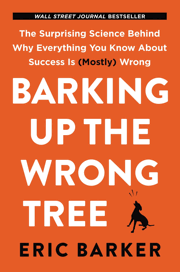
barkingEric Barker writes at Bakadesuyo.com and his talent/skill is synthesizing hundreds of different sources of academic research and historical anecdotes into actionable ways to improve your life. That’s kind of a crowded field these days, but I enjoyed reading his book which combines a lot of his past work: Barking Up the Wrong Tree: The Surprising Science Behind Why Everything You Know About Success Is (Mostly) Wrong.

If I had to sum up this book in one word, it would be “nuanced”. Be nice but not too nice. Work hard but not too hard, especially on one single area of your life. Grit is good, but time is finite. Thus, quitting and working on a better thing instead can also be good. Is it better to be an extrovert or introvert? It depends. (The book details why.) With so many tips and examples, this was one those books that kept my attention when reading it, but after I finish I had trouble remembering something specific to carry with me.

After looking back on my notes, I decided to make this my takeaway: Be mostly optimistic. For the most part, being optimistic opens you up to more opportunities that more than offset any failures. If I had to use a number, be 80% trusting, 80% optimistic. However, don’t be 100% trusting as that opens you up to abuse. Here are some examples.

Your great weakness may also be your greatest advantage. Consider what makes you unique, and look at it optimistically. You might not make a lucrative career out of your quirks, but it’s still your best shot. You have to align your life and environment to maximize your differences. If you love working within structure, use that. If you need to blaze your own path and can’t stand structure, use that. If you happen to love one thing 1,000x more than anything else, well you better get on that.

Prisoner’s dilemma. This game theory experiment involves two individuals faced with the decision of whether to trust or betray the other person (from Wikipedia):

Two members of a criminal gang are arrested and imprisoned. Each prisoner is in solitary confinement with no means of communicating with the other. The prosecutors lack sufficient evidence to convict the pair on the principal charge. They hope to get both sentenced to a year in prison on a lesser charge. Simultaneously, the prosecutors offer each prisoner a bargain. Each prisoner is given the opportunity either to: betray the other by testifying that the other committed the crime, or to cooperate with the other by remaining silent. The offer is:

If A and B each betray the other, each of them serves 2 years in prison
If A betrays B but B remains silent, A will be set free and B will serve 3 years in prison (and vice versa)
If A and B both remain silent, both of them will only serve 1 year in prison (on the lesser charge)

As one of these prisoners, what would you do? What if you had to do it 20 times in a row? You could always trust. You could always betray. You could do something in between. It turns out that a really simple algorithm does nearly best overall: tit-for-tat. The strategy is simply to cooperate on the first iteration of the game; after that, do what your opponent did on the previous move. If they trust, then you trust. If they betray, then you betray.

You know what is a even a little bit better? Tit-for-tat plus occasional forgiveness. Once in a while, you should trust again even if they betrayed last time. This stops a negative feedback loop of repeated betrayals.

The lessons: Start out nice (be optimistic!) and hope to stay nice, but don’t be a doormat if abused in return. Be consistent. Forgive once in a while.

Optimist vs. Pessimist explanatory style. The book includes an interesting contrast as to how each would react to a setback. Pessimists tell themselves that bad events:

  • will last a long time (I’ll never get this done)
  • are universal (I can’t trust any of these people)
  • are their own fault (I’m terrible at this)

Meanwhile, optimists tell themselves that bad events:

  • are temporary (This happens occasionally, tomorrow will be better)
  • have a specific cause (It is just because the weather is bad today)
  • are not their own fault (I’m good at this, but today wasn’t my lucky day)

It is suggested that you can indeed change your natural optimism/pessimism levels by altering your explanatory style.

This is not to say that you should be only optimistic. Here’s a good post exploring the pros and cons of both sides. The overall conclusion:

The majority of the time, think positive. Happiness and health trump pretty much everything else. There are situations where negativity can help, like when we’re making high-stakes plans or trying to improve skills.

Be optimistic socially. Even if you aren’t a natural extrovert, you can still build your network in a positive way without being sleazy. Meet new people by finding shared interests and/or shared challenges. Help others first when you can, without expecting anything in return. Most people are good and will look to reciprocate. Join groups. Try to maintain contact.

Luck school = try new things. Dr. Richard Wiseman studied “lucky” people and found that the most important characteristic of lucky people is that they are much more likely to just try new stuff, which opens them up to opportunity. In other words, luck wasn’t random; it was due to choices. So he started a “Luck School”, teaching a group of people to act more like lucky people. It worked. Yes, trying more being failing more too, but people tend to regret a failure to act, while the failures didn’t really do any damage. You can often learn from failure, anyway. Finally, we tend to remember the good things and forget the bad. (This selective memory is probably why I have three kids.)

Bottom line. Being mostly optimistic appears to be the best available strategy for many things in life. Try a lot of new things. Meet new people. Optimists are more likely to create opportunities for career success and personal happiness. You will also fail more, but those failures don’t tend to cause permanent damage. Optimism is even associated with better health and longer lifespans. Don’t go overboard. Don’t be a overly-trusting doormat, and don’t be dangerously overconfident. Think 8/10 optimistic. (I’m not naturally this optimistic, so I’ll have to consciously try and change my attitude and explanatory style.)