Search Results for: feed

Feedburner E-mail Newsletter Service Ending: Working on Replacement

Hi everyone, some quick blog maintenance stuff: My current provider (Feedburner) is shutting down as of July 2021.

Free Updates via E-mail
If you’d like to be automatically sent an e-mail when a new post is published (roughly every weekday), please enter your e-mail address in the form below. I’ll never use your email address for any other purpose, and you can unsubscribe at any time.

Baby Gear Reviews: Car Seats, Strollers, and Feeding Pillows (Part 2)

Here is Part 2 of my series on baby gear, organized in the order of Amazon’s Baby Registry. Here is Part 1. The entire series can be found with the Baby Gear tag here. This week is car seats, strollers, and feeding pillows.

babystuff2

Car Seats

babystuff_carseatI’ll start with car seats, as we decided that first before picking a stroller. We chose the Chicco Keyfit 30 Infant Car Seat with Base (plus an extra base for the other car). It was #1 rated by Consumer Reports, well-rated by various other sources including the popular Baby Bargains book, and was recommended by all our friends who had it. You don’t want to go used with a car seat.

After owning it through two different infants, we found it is easy to use, relatively lightweight, durable, easy to take apart, and easy to clean. It’s rated up to 30 lbs, which is more than you’ll probably need. We like that if the baby is sleeping, we can just take the entire seat in and out of the car without waking her up. Our kid often napped in the car seat at home. This also meant we only needed one car seat (and two bases) for two cars.

I haven’t used any other infant car seat so I am unable to provide a good comparison test, but we really have no complaints. A good friend generously bought us ours, and I bought my sister one. The only catch is that it is not the cheapest option. I have seen the Britax B-Safe and it looks similar and is slightly cheaper.

After our first kiddo outgrew the car seat, we bought a pair of Britax Marathon G4 Convertible car seats. Britax seemed to have a good safety history and the chair itself felt very over-engineered and beefy. Honestly, I don’t know the differences between the 26 different Britax models. Ours was on sale. The basic model runs $130 and seems fine to me, it lacks a few conveniences and maybe some comfort padding. The new Chicco Nextfit convertible seat is also highly rated but is closer to $300.

  • Verdict: Buy new. We highly recommend the Chicco Keyfit 30 and have nothing negative to say about it. It currently costs ~$190 but will last through two kids and probably another if we have temporary insanity and try for a third kid. When you outgrow that, we like our beefy Britax convertible seats. Just keep moving up the price range (starts at ~$125) until your budget protests.

Strollers

babystuff_strollerBuying a stroller is like buying a car. There is basic transportation, and then there a million luxury and fashion features for the “outdoorsy” and the “hip urban” set. Strollers can also be bought used in barely-used condition at a significant discount.

Since we picked the Chicco Keyfit, our first thought was to buy the Chicco Cortina, which is basically a regular toddler stroller that can also hold your car seat. Sounds smart right? One stroller, two uses. But at 26 lbs for just the stroller, it was heavy. We ended up just buying a lightweight 14 lb universal frame stroller for $50 which just has one purpose: to hold an infant car seat. 12 lbs difference is a big deal when it comes to both pushing and repeatedly lugging it in and out of a car. If you want your seat to “click in” rather than use a strap, then you have to buy the Chicco-branded one for $100.

For strollers after that, my frugal advice is to find a used baby gear shop and try out their strollers in person. There is so much variation, you just never know until you actually try it. Plus they cost half as much as new. The height could be wrong, you might kick the back wheels when you push, your kid might be too big/small/wide/narrow, etc. The main factors for me are (1) is it lightweight, (2) is the kid comfortable, and (3) are the wheels compatible with the terrain you’ll be one. We often take walks on uneven, thick grass so small wheels get stuck very easily. We have a small, lightweight “mall” stroller (Combi Cosmo) and a heavier “SUV” stroller (Baby Jogger City Mini). I’m not absolutely in love with either one, but they are good enough. The City Mini is fashionable yet has sturdy construction. I think the one-handed collapse feature is rather overrated.

  • Verdict: If you buy a removable infant car seat, just buy a lightweight stroller frame starting at $50 new (or find one used for half). You’ll be good for the first year or so. Always try out a stroller in person. If putting on a baby registry, at least test the usability (fold up, put in car, take out of car, unfold, several times in a row). If buying yourself, just wait until the kid is old enough and buy one used. A good stroller can cost safely under $200 and last a long time.

Feeding Pillows

babystuff_pillowWhen we had our first baby, I think Boppys were trendy or something because we got a few of them as gifts. We used both and liked the Boppy but preferred the My Brest Friend feeding pillow even though we’d never heard of it before (still not a fan of the name). I just noticed that the Brest Friend is the #1 best-selling feeding pillow on Amazon right now, so I guess we were not alone. Allows a comfortable position both for breastfeeding directly and bottle-feeding.
  • Verdict: We preferred the My Brest Friend over the Boppy. Used daily for feeding, totally worth it at ~$40 if you breastfeed. If formula-fed, it is nice but not essential as you have other options like a bed, chair, or car seat.

5% Cash Back Cards: Restaurants, Home Improvement, Amazon – April through June 2026

Activation reminder for 2026 2nd Quarter. The credit cards below offer 5% cash back and up on specific categories, some fixed and some that rotate each quarter. It takes a little extra attention to which card you’re using, but it can add up to hundreds of dollars in additional rewards per year without changing your spending habits. I just load them into my Google/Apple Wallet and swipe through them. You can also buy gift cards for other retailers at places like Grocery Stores and Home Improvement stores with 5% back now but spend the gift cards later. New cardmembers may also get an upfront sign-up bonus.

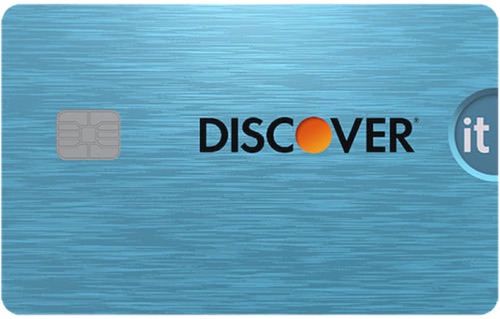
Discover it Card

From April 1st through June 30th, 2026, you can earn 5% cash back on up to $1,500 spent in the following categories:

  • Restaurants
  • Home Improvement Stores

Enroll after logging into your online account. 5% rewards won’t apply until after you activate your rewards, so it is best to activate now before you forget. No annual fee.

Discover it $100 bonus + Double Cashback Match details. If you are a new applicant and sign up via Discover Card referral link, you will get a $50 improved $100 Cashback Bonus after your first purchase within 3 months of being account opening. On top of that, you will also get Cashback Match for an entire year – a dollar-for-dollar match of all the cash back you’ve earned at the end of your first year, automatically. During those 12 months, your 5% cash back rewards becomes 10% cash back, and your 1% cash back rewards become 2% cash back. You can verify this on the application by looking under “Terms and Conditions” or searching for “cashback match” and “statement credit offer”:

Refer a Friend: You will receive a $100 statement credit after making a purchase within three months of account opening. If the Referral Program is offered, we reserve the right to alter, change or terminate the Referral Program at any time. A Balance Transfer or Cash Advance does not qualify as a purchase. You must apply online through your friend’s digital referral link and be approved by 11:59pm ET, December 31, 2026 in order to be eligible for the $100 statement credit offer. Phone, mail-in, and other digital applications are not eligible for referral rewards. Offer may not be combined with any other introductory offer. Promotional award will be applied within 1-2 billing periods. Statement credits you receive may be taxable to you. Please contact your tax advisor.

Cashback Match: We’ll match all the cash back you’ve earned on your credit card from the day your new account is approved through your first 12 consecutive billing periods or 365 days, whichever is longer, and add it to your rewards account within two billing periods. You earn cash back only when they’re processed, which may be after the transaction date. We will not match: rewards that are processed after your match period ends; statement credits; or rewards transfers from Discover checking or other deposit accounts. Your account must be open and in good standing to receive your Cashback Match. This offer may not be available in the future and is exclusively for new cardmembers. No purchase minimums.

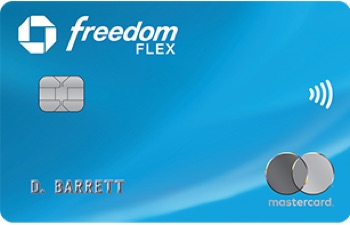
Chase Freedom Flex Card

From April 1st through June 30th, 2026, you can earn 5% cash back (or 5X Ultimate Rewards points) on up to $1,500 spent in the following categories:

  • Amazon
  • Chase Travel portal
  • donations to Feeding America®

(The categories are also the same for the old Chase Freedom card, which is no longer available to new applicants.)

Enroll each quarter online in your Chase account or at ChaseBonus.com. As long as you activate by the 14th of the last month in each quarter, the rewards are retroactive. Technically, you earn Ultimate Rewards points which may be worth even more when converted to airline miles or hotel points instead of cash if you have a Chase Sapphire Preferred or Chase Sapphire Reserve card. You could also use the Pay Yourself Back tool to additional value. Currently, the Chase Freedom Flex card is offering new applicants a $200 bonus if you sign up and make $500 in purchases in your first three months. No annual fee.

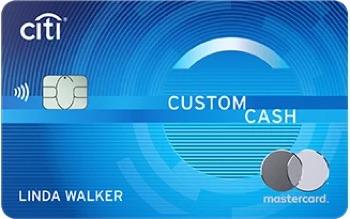
Citi Custom Cash Card

This card offers 5% cash back on your *single* top eligible spending category up to $500 each month (which effectively adds up to $1,500 a quarter). Eligible categories include broad ones like restaurants, gas stations, grocery stores, or select travel, but you only get 5% for the top category that month and 1% on everything else. To simplify things you could, for example, elect to only use this card for 5% cash back on gas all year long (up to $500 per month).

Currently, the Citi Custom Cash card is offering new applicants a $200 bonus after you spend $1,500 on purchases in the first 6 months of account opening. You’ll actually get 20,000 ThankYou® Points, which can be redeemed for $200 cash back. No annual fee.

Blue Cash Preferred® Card from American Express

  • 6% cash back at US supermarkets all year long (on up to $6,000 per year)
  • 6% cash back at select US streaming subscriptions (includes Disney+, Hulu, ESPN+, Netflix, Sling, Vudu, Fubo TV, Apple Music, SiriusXM, Pandora, Spotify, YouTube TV, and more).
  • $120 Disney Streaming Credit ($10 per month with no minimum or bundle required). You can now earn up to $10 back per month as a statement credit when you use your enrolled Blue Cash Preferred® Card to purchase a subscription, or bundle subscription, on DisneyPlus.com, Hulu.com, or Plus.espn.com U.S. websites, now with no minimum purchase requirement. Subscription is subject to auto-renewal.
  • 3% cash back at US gas stations and transit (taxis/rideshare, parking, tolls, trains, buses and more).
  • $0 intro annual fee for the first year, then $95.

This card got even better for me with the new $10 a month Disney+ credit that is valid on any plan. I use this card all year long for 6% cash back on groceries up to the limit, get my $120 in Disney+ credit to more than offset the $95 annual fee, and then in December use up the $6k annual limit on gift cards bought in the supermarket aisle. New cardholders are also eligible for a $300 welcome offer after $3,000 in purchases within the first 6 months. See details in link.

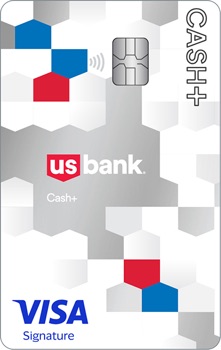
U.S. Bank Cash+ Visa Signature Card

You must choose the two 5% cash back categories every quarter, out of a preset selection of specific categories:

  • Fast Food
  • Cell Phone Providers
  • Home Utilities
  • Ground Transportation
  • Select Clothing Stores
  • Electronics Stores
  • Car Rentals
  • Gyms/Fitness Centers
  • Sporting Goods Stores
  • Department Stores
  • Furniture Stores
  • Movie Theaters
  • TV, Internet, and Streaming Services

Unfortunately, you can’t pick a broad category like gas stations, restaurants, or grocery stores. Make sure to choose your categories each and every quarter, even if you want them to stay the same. If you do not choose your categories, all purchases revert to only earning 1% cash back for that quarter. No annual fee. Currently, new applicants are offered a $200 bonus after you spend $1,000 in eligible purchases within the first 120 days of account opening.


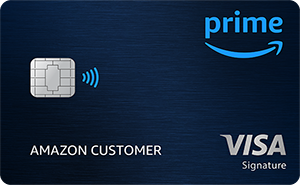
Amazon Prime Rewards Card

Earn 5% back at Amazon.com and Whole Foods all year long. Up to 10% cash back on select items during special promos. Prime membership required. New cardholder bonus of $150 instant Amazon gift card (no spending requirement). No annual fee.

Citi Dividend Card. This card has not been available to new applicants for years now, but if you still have the grandfathered card you can view and activate your quarterly 5% category here. Limit of $300 cash back for the calendar year.

inKind Dining App: New $25 off $25 Promo

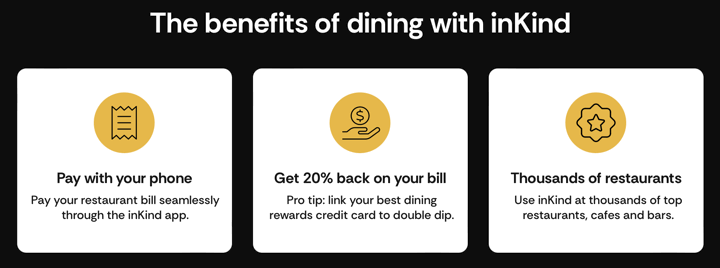
Added new $25 off $25 link (may be targeted). inKind is a startup that provides restaurants financing in exchange for “food and beverage credit”. Retail customers can use inKind to pay their food bill at participating restaurants through the app and get 20% back in “inKind Cash” credit on their bills. They say over 4,000 restaurants are in their network, mostly nicer local spots, but some chains like California Pizza Kitchen are also included (which is a favorite for our family).

The good thing is that you don’t have to let the server know ahead of time, or do anything awkward like using a coupon. You just get the check and then use the inKind app to pay. All the restaurants use the same backend Toast software, so you just need a number from the top of the paper bill. Within the inKind app, you can link your existing rewards credit card and also earn those rewards on your net cost (will still code as dining). inKind works primarily for dine-in, but some restaurants do specifically allow take-out. You are supposed to order the takeout from within the inKind app, but as long as you get the bill with the code, you should be able to pay using the app.

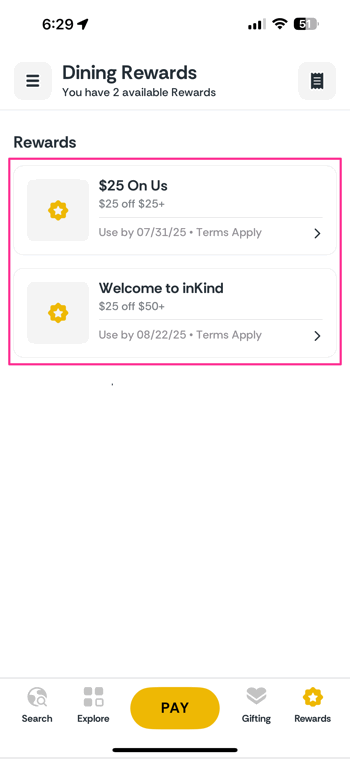
Current promos:

If you have a big bill, know that you can “split the check” within the app, so that two separate people can use a $25 off $50 discount in their respective inKind apps.

You should see your multiple offers in the app:

California Pizza Kitchen is part of the inKind network, and they are a reliable way to use these offers. They usually have some sort of promo going, like right now they have $10 Pizzas on Monday and Tuesday that you can stack.

Now, I can’t guarantee this will work for you, but this may work with CPK take-out and not just dine-in. (Be sure order directly from CPK.com or over the phone, not another app like Doordash or Grubhub.) The place we go to just has a separate take-out counter and the default check that comes from them should work with inKind. If not, tell them you want to pay with inKind and they should be able to generate the right check with the number on top. Make sure you meet the minimum purchase amount.

Utah My529 Plan Lowers Fees Again: A Consistent History of Fee Drops

Updated July 2025. My personal choice amongst all the 529 plans is the My529 (Utah) college savings plan for all three of my children. Formerly known as the Utah Educational Savings Plan (UESP). The Utah My529 plan feels like it has the highest quality of administrative ease/customer service, the widest options for DIY investors (create a custom glide path or use solid prefab options), and long-term commitment to keeping their fees low. Accordingly, they are consistently top-rated by Morningstar and other ratings systems. (I don’t live in Utah; I live in a state with no special tax benefits for 529 contributions.)

As of 2025, I have finishing consolidating all my other 529 plan balances from all my other accounts. I’ve had 529 plans with Ohio CollegeAdvantage, California Scholarshare, Nevada (“Official” Vanguard 529 College Savings Plan), Virginia (Invest529), and maybe some others I’ve since forgotten by now (I have a problem…). Those are all solid plans as well, but over time I found the time to fill out the required forms to perform a direct rollover to Utah. (It was all free but a decent amount of paperwork; I wouldn’t recommend it. Just pick a good one and focus on the contributions.)

Nearly every year, I get some announcement in their newsletter that Utah is lowering their fees. Every 529 plan charges an administrative fee on top of the expense ratios of the underlying investments like mutual funds. For example, an asset fee of 0.10% is the same as charging $10 a year for every $10,000 in assets invested.

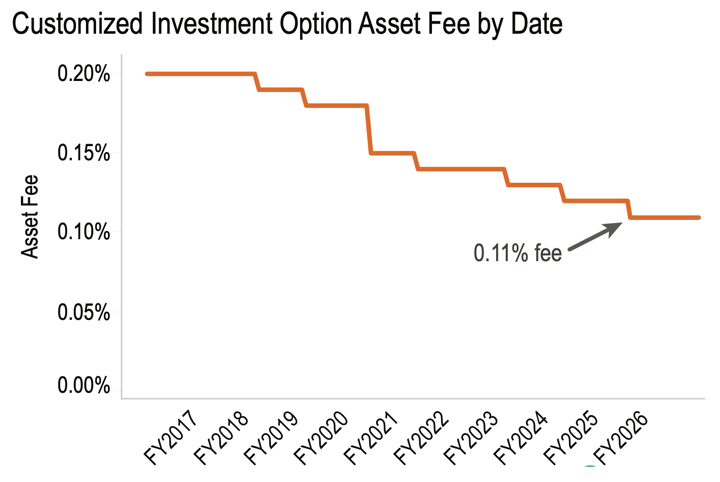
Although Utah may not be the lowest in every option, they consistently are amongst the lowest and keep going lower. Here is a partial history, although I couldn’t dig up every historical change date.

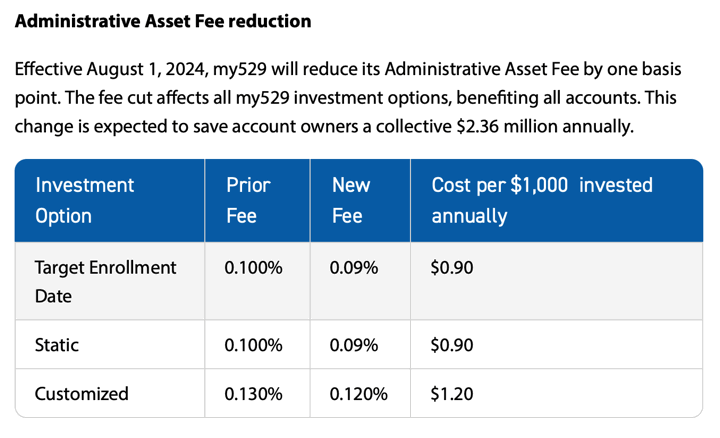
  • July 2025: Administrative Asset Fee for Customized investment options lowered from 0.12% to 0.11% annually.
  • August 2024: Administrative Asset Fee for Target Enrollment Date and Static investment options lowered from 0.10% to 0.09%.
    Customized investment options lowered from 0.13% to 0.12%.
  • July 2023: Administrative Asset Fee for Target Enrollment Date and Static investment options lowered to 0.10%. Customized investment options lowered to 0.13%. (source)
  • […]
  • October 2020: Administrative Asset Fee for Age-Based and Static investment options lowered from 0.13% to 0.12%.
    Customized investment options lowered from 0.18% to 0.15%.
  • February 2018. Utah Educational Savings Plan (UESP) changed its name to my529, effective February 5, 2018.
  • […]
  • July 2017: Administrative Asset Fee for Age-Based and Static investment options lowered from 0.17% to 0.16%.
  • […]
  • June 2013: UESP fees dropped an average of 10% overall. Administrative asset fee was 0.15% to 0.20%, now lowered to between 0.14% and 0.18% most Age-Based and Static investment options. Customized investment option at 0.20% (make your own glide path).

Note: At some point, they changed from the “Age-Based” label to “Target Enrollment Date” but it’s basically the same idea of a glide path that changes as the student ages, in preparation for their college enrollment date.

Each individual annual change may only amount to $1 to $20 a year in savings, but I do think it shows an ongoing commitment to passing on savings as their assets under management grow.

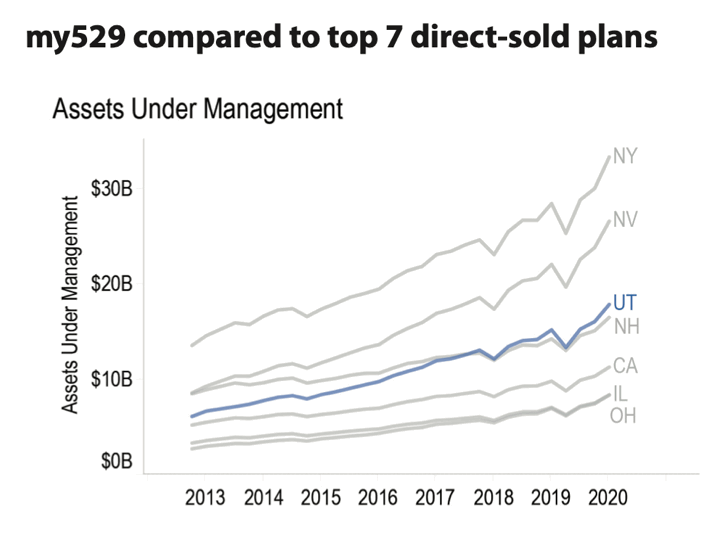
I believe the Utah plan is now the 3rd largest direct-sold plan in the nation. This is especially impressive considering the New York plan at #1 has the benefit of a large in-state tax break (and large population) to help it grow, the Nevada plan is co-branded with Vanguard and their trillions of assets, and New Hampshire is co-branded with Fidelity and their trillions of assets. The Utah plan includes a lot of low-cost Vanguard investments, but remains independent and also includes options from other providers like DFA and PIMCO. I enjoy being able to set up my own glide path with a large menu of investment options.

PeerStreet Bankruptcy Update (March 2025): Why I Avoid Fractional Real Estate Now

My last update on the PeerStreet bankruptcy was about a year and a half ago. PeerStreet marketed high-interest investment loans backed by real estate in $1,000 fractional increments. A few days ago, I received a big, thick envelope with lots of legalese. It appears that actual humans are manually going through each claim and verifying them against their database.

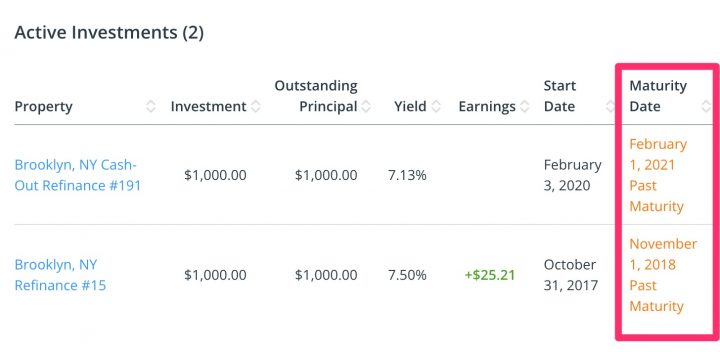
For my part, I have two $1,000 notes that are still outstanding and have been in default for a while, well before PeerStreet declared Chapter 11 bankruptcy in 2023. The bankruptcy administrators mostly agreed, but needed to point out that my notes are not “secured” claims, but instead are “Mortgage Dependent Promissory Notes” (MPDNs). Here are notes specifically responding to my claims:

The Claimant asserted a secured claim for $1,000.00, but attached a copy of a MPDN supporting a MPDN Claim in that amount.

The Debtors’ books and records reflect that the Claimant is entitled to Investment Claims in the amount of $1,000.00, as reflected in the Modified Filed Claim column.

Reclassification Adjustment: The Debtors’ books and records and the MPDN support Investment Claims and reflect that the Claimant is entitled to MPDN Claims, not secured claims. The Claimant asserts that the secured claim is secured by real estate, but provides no support for the assertion. Accordingly, the Plan Administrator requests reclassification of the asserted claim to a MPDN Claim (Class 10, 11) (to the particular MPDN reflected in the Debtors’ books and records) in the amounts reflected in the Debtors’ books and records, as detailed in the Modified Amounts column.

With this adjustment, the Plan Administrator seeks allowance of the Investment Claims in the amount of $1,000.00 against Peer Street Funding LLC, as reflected in the Modified Filed Claim column, which matches the amount of the Investment Claims in the Debtors’ books and records.

The Claimant filed two claims for two distinct MPDNs. The other claim, Claim No. [redacted], is also addressed below.

Now, this is what PeerStreet used to say about their “Mortgage Dependent Promissory Notes” (MPDNs) on their FAQ:

A mortgage-dependent promissory note, or “MDPN,” is a note in which an investor receives stated interest and principal, provided the borrower makes payment on the underlying loans. PeerStreet issues an MDPN to investors, meaning they have a direct interest in the underlying loan and indirect interest in the underlying property.

The following is a partial excerpt of what the bankruptcy documents state about MDPNs:

For avoidance of doubt, although MPDN, RWN 1-Mo., RWN 3-Mo. and PDN Claims are all unsecured, holders of those claims are entitled to their pro rata share of the relevant Underlying Loans. All amounts paid with respect to those Underlying Loans are made available pursuant to the Waterfall in section 2.6 of the Plan even if those payments result in holders receiving recoveries in excess of the principal amount of their notes and accrued interest as of the Petition Date. See McLaren Declaration I 10. Notwithstanding this entitlement, however, the Plan provides that distributions on account of MPDN, RWN 1-Mo., RWN 3-Mo. and PDN Claims are made on a pro rata basis for the claimants’ proportional share of the asset or pool of assets tied to such Investment Claims. See Plan § 4.3. In order to properly calculate each holder’s fractional, pro rata share of a particular class of Investment Claim, each Investment Claims’ pro rata interest in the underlying asset or pool of assets tied to such Investment Claims must be measured as of the same date. As a result, postpetition interest needs to be removed from all Investment Claims.

Back in 2018, this all sounded fine. Andreessen Horowitz and other VC firms invested in over $121.9 million. Famous investor Michael Burry put in $600,000 of his own money. Actual, smart lawyers were saying that this was the only practical way to create these fractional investments for real estate loans. We all were comforted by the creation of “bankruptcy remote entities”.

Even if it was really an unsecured note backed that was contractually linked to another loan to a specific property, we’d still only get that money if it was collected by what was basically a small, risky start-up fintech business that may have nobody around to well, collect anything.

My current opinion is that even if the contracts technically still might be the best workaround available, I feel the practical execution and mismatch in the alignment of interests made everything fall apart. PeerStreet was no good at servicing the loans and getting the deadbeats to pay up. They also didn’t have enough skin in the game to care. They didn’t actually hold any loans themselves, they just took a small commission off the top. They were also incentivized to loosen their underwriting standards to feed the voracious demand for new loans given their early success.

I strongly feel that if every PeerStreet executive had to hold a certain slice of every single PeerStreet loan themselves, then things would have turned out differently. Their own net worth would be at risk. They would underwrite better. They would work harder at debt recovery. Just like a certain sub-prime mortgage crisis…

In the end, I put some experimental money into multiple real-estate loans, and thought that PeerStreet was best-in-class. I am fortunate that my overall return is positive, even assuming a complete write-off of my remaining two notes, but I know that many fellow customers were not that lucky. Given these new bankruptcy documents, it seems that there are still people working on the situation and there is a possibility that I will recover some money on my last two loans.

Even today, I still get e-mail pitches for new fractional real estate start-ups. I pass on them all. In the end, the most important promises of fractional real estate are broken:

Your investments are NOT secured by real estate. In every case that I’ve seen, you invest in “notes” that are “linked” to a real mortgage on a real piece of property. The problem is that your name is not on the property, not on the mortgage, and you don’t have any control over the servicing of that mortgage. The legal gymnastics that they did to be able to use the words “direct interest” do not change the fact that you are really just lending money to a tiny, risky start-up to handle everything.

Even if these notes were secured by real estate, I have seen no evidence that PeerStreet had any skill as a servicer able to recover funds from a foreclosure. Let’s take my two Brooklyn loans from 2018 and 2021. I don’t see any possible scenario where if you sold off those properties today in 2025, even in a fire sale, even if the initial appraisal was off, that you would not be able to recover the full value of the notes. It’s not like we had a crash – real estate values have risen so far up since then!

Even if PeerStreet was still fully in business, I wonder if it would have made a difference to my situation. It has been nearly 7 years since my earliest loan was due! Now that they are bankrupt and those same smiling executives have trotted off to their next shiny business, the alignment of interests is even worse. Maybe I’ll eventually get some of this money back, but after waiting for years, my faith in the ability of these real estate fintech companies is shot.

These facts change the risk/return balance on these debt instruments. The upside is maxed out at the interest rate you charge, maybe 7% to 10%. The downside was supposed to be very, very limited because you had a physical piece of real estate to back it up. If that doesn’t hold, then there is no point.

Donor-Advised Funds Allow Private, Anonymous Donations

My favorite feature of donor-advised funds is the ability to easily donate appreciated stock to maximize tax-efficiency. My second-favorite feature has become the ability to donate anonymously.

When I was starting out and figuring out how and where I wanted to give back, I used to donate smaller amounts to a lot of different places. Schools, hospitals, food banks, clean water access, humane societies, libraries, malaria nets, public radio/television, and so on. Little did I know that these places would keep sending me snail mail for years and years, even well after I stopped donating to them. So much junk mail. I grew so frustrated watching them waste a huge portion of my donation on all these repeated mailings (and I’m pretty sure they sold my name to other charities). I couldn’t find any easy way to opt out.

With my Fidelity Charitable DAF, you can choose to provide:

  • Full name and address.
  • Giving Account name only. Be careful, if you name it “Keanu Reeves Giving Fund”, that won’t exactly be fully anonymous.
  • Anonymously. No personal information will be given, not even the Giving Account name. They will only know it came from Fidelity Charitable.

Other DAFs will have different specific settings, but every one that I’ve seen does have a fully anonymous option. While I’ve seen the “no recognition” option while giving directly, you usually have to provide a name and credit card information with billing address.

I can confirm that after giving to multiple new charities using the “anonymous” option, I have received no additional solicitations for more money.

Upon further research, this anonymous option is apparently not that popular. According to Fidelity Charitable and Philanthropy Roundtable, over 90% of donors do choose to include some level of information about themselves along with the donation. In some cases, I suppose receiving some level of recognition is nice, but it’s not like I’m donating enough to get my name on a building.

Well, at least there are some others like myself, who aren’t donating anonymously to hide something nefarious, but I’m guessing they also just want some peace and less paper waste.

The top five grant-receiving organizations of anonymous gifts were Doctors Without Borders, Salvation Army, Feeding America, American Red Cross and St. Jude Children’s Research Hospital. Most Americans would hardly find any of these groups–which feed the poor, provide emergency help following natural disasters and heal the sick both here and abroad–particularly partisan or extreme.

Fun fact: Although your donor-advised fund is not a Foundation or Trust for legal and/or tax purposes, they are pretty flexible on how you can name it. Fidelity will allow you to name it “My Money Blog Foundation” or “The My Money Blog Philanthropic Trust”, and that’s what the receiving charity will see if you choose.

Giving Tuesday 2022: Matching Donations and Finding the Right Charity

givingtuesdayTuesday, November 29th is Giving Tuesday 2022, an international day about giving support through charities and nonprofits by donating money or volunteering your time. In case you aren’t inundated with mailings already, this time of year is a big deal for charities, with 40% of donations occurring in the last six weeks of the year. Here are some ways you can “double your impact” with a matching donation.

Facebook/Meta Match. Facebook has again committed $7 million towards matching donations, but they have changed up their criteria this year. The match is only good for a recurring donation. You must sign up for a recurring donation at a charity via their Facebook page between November 15, 2022 and December 31, 2022. Then, after you make your second donation, Meta will match it up to $100.

Double Up Drive (delayed until 12/6/22). Check out the vetted, spotlighted charities at Double Up Drive where your donation up to $10,000 can be matched dollar-for-dollar:

At Double Up Drive, we believe that public giving influences greater generosity and that resulting donations carry more impact. We raise money and awareness for highly effective charities by hosting matching drives that collect up-front pledges from large donors, to provide 1:1 matches for smaller contributors.

Note that this year the drive has been delayed until Tuesday, December 6th:

Due to an unexpected last-minute and critical bug, we have decided to delay our 2022 Match Drive until Tuesday the 6th of December.

Check for an employer match. Try this lookup tool from DoubleTheDonation. Most of these programs don’t require you to actually give on a specific day, but you may want to start the process today so you don’t forget in the holiday rush.

Individual charities. Many charities are organizing their own matching program for #GivingTuesday. Here are some large charities have organized their own matches in the past, but I would check to make sure.

* Side note: If you are an economics geek, check out this paper on how Feeding America used markets to allocate donated food:

Feeding America allocates about 300 million pounds of food a year to over two hundred food banks across the United States. It does so in an unusual way: in 2005, it switched from a centralized queuing system, where food banks would wait their turn, to a market-based mechanism where they bid daily on truckloads of food using a “fake” currency called shares.

Of course, this is a great time to check in with your favorite local community nonprofits. GivingTuesday.org has some additional ideas.

Having trouble deciding where to give? Here are some charity comparison sites that will help you pick where to send your help.

  • CharityNavigator – Largest and well-publicized charity rating site, provides a 4-star rating based primarily on financial criteria.
  • GiveWell – Tries to identify the best charities, not rate them all. Focused primarily on charities working internationally that “save or improve lives the most per dollar”. Examples are treating malaria and parasitic infections in developing countries.
  • GreatNonProfits – Allows clients, volunteers, and funders to post personal reviews based on their experiences. Lots of reviews of smaller, local charities.
  • GuideStar – Tries to be a one-stop shop for both financial data and in-depth analysis of charities. Must register (free) to see a lot of things, and pay a subscription fee for premium data (aimed at industry insiders).

Looking to volunteer your time? Check out Feeding America and VolunteerMatch to find a volunteer opportunity near you.

The Real Cost of Zero Commission Stock Brokers + Why Are Some Cheaper Than Others?

In a recent study, the authors opened accounts at six different brokerages with their own money and executed 85,000 market orders. They discovered some interesting details about the actual costs of making trades using “zero commission” stock brokers. Here is the research paper The ‘Actual Retail Price’ of Equity Trades as well as coverage by WSJ and Matt Levine. A few takeaways:

“Zero-commission” does not mean “free” trading. There is always a cost due to the gap between buying and selling prices (bid-ask spread). If you bought and sold the exact same share of stock again immediately, you will almost always end up with less money than before. For example, you might buy a share for $100 but only be able to sell it for $99.95.

How much? The study found the average round trip trade cost ranged from –0.07% to –0.46%; the average price improvement varied from $0.03 to $0.08 per share (~$100 value). If you are an individual buying a low-cost index ETF and holding onto it indefinitely, this remains a small concern.

Heavy traders still face an uphill battle. However, if you are repeatedly trading for an extended period of time, the transaction costs of your “free” trades are still going to add up rather quickly and your odds of profit will diminish significantly. Here’s what happened when they repeated kept trading $100 back and forth on Interactive Brokers Pro and TD Ameritrade.

In fact, the authors of the paper had to reduce their standard trade size from $1,000 to $100 because they knew they were going to lose too much (of their own) money. (They first confirmed that the trading costs in terms of percentages was basically the same for $100, $1,000 and $5,000 trade sizes.)

The difference between the “best” and “worst” broker was 5 cents per $100 roundtrip trade. Will the average individual trader switch brokers over this amount? I would value things like customer service over this small cost. Yet, if you add up all the trades that happen during a year, it is billions of dollars going somewhere. Here are the six brokers ranked (graphic via WSJ article).

The study found almost no relationship between the amount of Payment for Order Flow (PFoF) accepted and lower execution prices. In fact, IBKR Lite is the arm of Interactive Brokers that accepts payment for order flow (PFoF), while IBKR Pro does not accept any PFoF. Yet, IBKR Pro had the worst execution for the authors’ $100 trades.

The strangest finding was that the market makers are giving different prices to different brokers for the exact same trades. This is the “industry secret” they uncovered. One implication is that each broker is negotiating “when” the market maker overcharges you or undercharges you based on their customer base. For example, Interactive Brokers implies that their “Pro” customers have larger average trade amounts, and thus they may offer those types of customers better execution (while giving worse pricing to the small trades, thus their poor showing in this study).

Bottom line. PFOF may not be huge deal for any individual investor, but there are still billions to be made skimming off pennies on every trade, and thus weird shenanigans arise. However, if you are an active trader, there is still a steady transaction cost to every stock trade which may not be readily apparent. You think you can trade in and out for “free”, but don’t see that the real cost is that you are pursuing the wrong way to invest.

How many people do you know that got rich by buying and selling stocks hours, days, or weeks later? I certainly don’t know of any. Meanwhile, I noticed the following in my Public app stock feed (see transfer bonus) for Berkshire Hathaway. I’m sure there may be good reasons in some instances, but it’s concerning to see how short these holding times are for a stock like Berkshire which is built for long-term, patient ownership.

2022 Berkshire Hathaway Annual Shareholder Meeting Video, Transcript, and Notes

Here are my notes on the 2022 Berkshire Hathaway Annual Shareholder Meeting. This year, CNBC has the rights to record and host the full video and transcripts (morning session, afternoon session) and they did a nice job with syncing the text and sound. I enjoyed listening to it like a podcast first and then reading through the text a second time around. There are many financial media articles with highlights, but here are my personal takeaways and notes.

Berkshire Hathaway is their life’s work and legacy. It’s fascinating to see how they have tried their best to build it to last forever. I recently listened to an outdoor podcast called Dirtbag Diaries where a 78-year-old man suffering from late-stage Parkinson’s disease still completed a 10-day whitewater rafting trip in the Canadian wilderness. Some folks just have more life energy than life time left, and wring out every last bit. Inspiring.

Warren Buffett is 91 and Charlie Munger is 98. These guys could be relaxing. They know the end is near, but they still have energy and are doing what they love. They built Berkshire bit by bit and the shareholders that they will leave behind are close family and friends that trust them. BRK is their legacy, and they have carefully crafted it to keep growing for those shareholders long past their lifetimes.

But most — a great many of them just say, you know, “We’ve saved this money. And we trust you and Charlie.” And that’s a great motivator, this trust.

“And, you know, take care of it and I’m not going to learn accounting and try to read all those statements or anything of the sort.”

You know, if I went broke, it wouldn’t really make any difference. It’d keep doing what I do. I’d figure out a way to read a paper and watch a little TV (Laughter) and think about things and talk to Charlie.

But the idea of losing, permanently, other people’s money — people who trust us — really, really — that’s just a future I don’t want to have.

So, the one thing I can tell you about Berkshire — although I can’t predict what our earnings will be, and I can’t predict what the stock will do, and I can’t — we don’t know. We don’t know what the economy will do and all of that sort of thing.

But we do know that we wake up every morning and we want to be safer, in terms of your eventual investment.

Now, whether you make the most money or anything, we do not want you to get a terrible result because you’ve decided to become our partner. And that’s a pledge you can live by.

They aren’t done yet, either. As long as they are able, they will keep adding pieces. They spent $40 billion is just three weeks, and are probably still buying stuff as I type this. The media usually only focuses their attention on certain purchases, but you can track their 13F filings to see exactly they bought and sold. Sites like Dataroma parse them for you, but if you plan on copycat investing be warned that the data is delayed and also Buffett is not always buy and hold forever. He’s not always right, and when Buffett realizes this, he can also sell quickly. Being late after he buys and late after he sells can be a very bad combo.

Berkshire Hathaway share repurchase timing gives some hints. They also bought back a few more BRK shares in January to March 2022 ($3 billion), but none in April 2022 once the price rose. This should give you a hint as to what Buffett thinks is a “good deal” on BRK shares. He wouldn’t buy back shares unless they were safely below his estimate of intrinsic value. You may see those 2021 and early 2022 prices again…

Cash is like oxygen. We should all keep adequate cash reserves in 100% liquid and safe places. Home equity lines of credit can (and have been) frozen quickly. Credit card limits can be reduced. We should know by now that crazy stuff happens quickly.

When 2008 and 2009 — the national panic came along — we didn’t own anybody’s commercial paper. You know, we didn’t have money market funds. We have Treasury bills. And, as I may get into it a little later, I’ll explain to you why.

We would — we believe in having cash.

And there have been a few times in history, and there will be more times in history, where if you don’t have it, you know, you don’t get to play the next day. I mean, it’s just —

It’s like oxygen, you know? It’s there all the time. But if it disappears for a few minutes, it’s all over.

Gambling and investing are getting mixed up yet again. Sports gambling is growing. Short-dated options trading is growing. Crypto has many shady pockets. Remember that casino owners make reliable profits while feeding the gamblers with hope. Which side do you want to be on? Buffett noticed this as a 21-year-old newlywed visitor to Las Vegas:

They’d gone to great lengths to come out to do something that was mathematically unintelligent, and they knew it was unintelligent.

And, I mean, they couldn’t do it fast enough, in terms of rolling the dice, you know, and trying to determine whether they were hot or whatever they may be.

And I looked around at that group. And everybody there knew that they were doing something that was mathematically dumb, and they’d come thousands of miles to do it, and they were —

And I said to my wife, I said, you know, I’m going to get rich.

How to beat inflation? Invest in your own human capital.

But the best thing you can do is to be exceptionally good at something. If you’re the best doctor in town, if you’re the best lawyer in town, if you’re the best whatever it may be, no matter whether people are paying you with a zillion dollars or paying with — they’re going to give you some of what they produce in exchange for what you deliver.

And if you’re the one they pick out to do any particular activity, sing, or play baseball, or be their lawyer, whatever it may be, whatever abilities you have can’t be taken away from you, they can’t actually be inflated away from you.

Somebody else will give you some of the wheat they produce, or the cotton, or whatever it may be, and they will trade you for the skill you have.

So, the best investment by far is anything that develops yourself. And, again, it’s not taxed. (Applause) So that’s what I would do.

Find the intersection of something that interests you, something you have a talent for, and something that pays the bills.

CHARLIE MUNGER: Well — if you stop to think about it, there are two things that neither one of us has ever succeeded at: One, we’ve never succeeded at anything that didn’t interest us, right?

WARREN BUFFETT: Right.

CHARLIE MUNGER: And we’ve never succeeded at anything that was really hard where we didn’t have much aptitude for it.

WARREN BUFFETT: Yeah. And we’ve been doing whatever we pleased for 60 years.

CHARLIE MUNGER: Yeah, we did.

Giving Tuesday 2021: Matching Donations and Finding The Right Charity

givingtuesdayTuesday, November 30th is Giving Tuesday 2021, an international day about giving support through charities and nonprofits by donating money or volunteering your time. In case you aren’t inundated with mailings already, this time of year is a big deal for charities, with 40% of donations occurring in the last six weeks of the year. Here are some ways you can “double your impact” with a matching donation.

Facebook Match (good toward any charity that accepts donations via Facebook). Starting at 8am Eastern on 11/30, Facebook will match $8 million in donations to U.S. nonprofits – up to $100,000 per nonprofit and $20,000 per donor. Donations will be matched for the first $2M, 10% for the next $6M.

For example, give directly with the donate button on the The Humane Society Facebook Page. You can also start your own fundraiser here or simply post up a donate button to support your favorite charity.

Double Up Drive. Check out the high-quality, spotlighted charities at Double Up Drive where your donation up to $10,000 can be matched dollar-for-dollar:

At Double Up Drive, we believe that public giving influences greater generosity and that resulting donations carry more impact. We raise money and awareness for highly effective charities by hosting matching drives that collect up-front pledges from large donors, to provide 1:1 matches for smaller contributors.

Check for an employer match. Try this lookup tool from DoubleTheDonation. Most of these programs don’t require you to actually give on a specific day, but you may want to start the process today so you don’t forget in the holiday rush.

Individual charities. Many charities are organizing their own matching program for #GivingTuesday. Here are some large charities have organized their own matches in the past, but I would check to make sure.

Also check with your favorite local community nonprofit. GivingTuesday.org has some additional ideas.

Having trouble deciding where to give? Here are some charity comparison sites that will help you pick where to send your help.

  • CharityNavigator – Largest and well-publicized charity rating site, provides a 4-star rating based primarily on financial criteria.
  • GiveWell – Tries to identify the best charities, not rate them all. Focused primarily on charities working internationally that “save or improve lives the most per dollar”. Examples are treating malaria and parasitic infections in developing countries.
  • GreatNonProfits – Allows clients, volunteers, and funders to post personal reviews based on their experiences. Lots of reviews of smaller, local charities.
  • GuideStar – Tries to be a one-stop shop for both financial data and in-depth analysis of charities. Must register (free) to see a lot of things, and pay a subscription fee for premium data (aimed at industry insiders).

Looking to volunteer your time? Check out Feeding America and VolunteerMatch to find a volunteer opportunity near you.

Don’t Die With Zero: Money Still Buys Better Experiences When You’re Old

The idea of “consumption smoothing” tries to balance how our income changes over time with our spending needs. In theory, it may be ideal to go into debt when you are really young, save heavily when you are middle-aged, and spend it down when you are old (source):

The book Die With Zero (my review) reminds us that when we are young, we tend to have little money but lots of health. When we are old, we tend to have lots of time and much less health. So we should spend most of our money during our younger “best years” instead of when we are old. Here is a graphic from the book:

I enthusiastically support the idea of creating a specific bucket list of items designed for each stage of your life. However, I don’t like the title “Die with Zero” because it suggests that your time at the end is not valuable. A young, healthy person might think – why bother saving too much when you’re too old to enjoy it? Well, I would say that you start to appreciate the bottom layers of Maslow’s Hierarchy of Needs when you see them missing in someone’s life. (image credit)

We help take care of an older relative, and she has recently gotten to the stage where she can no longer safely live independently. According to the Katz Index of Independence, here are the basic activities of daily living (ADLs):

  • Bathing and showering: the ability to bathe self and maintain dental, hair, and nail hygiene.
  • Continence: having complete control of bowels and bladder.
  • Dressing: the ability to select appropriate clothes and outerwear, and to dress self independently
  • Mobility: being able to walk or transfer from one place to another, specifically in and out of a bed or chair.
  • Feeding (excluding meal preparation): the ability to get food from plate to mouth, and to chew and swallow.
  • Toileting: the ability to get on and off the toilet and clean self without assistance.

You may be 100% there mentally and only be struggling with one of these things, but that’s enough that you can’t live independently. The next level of “instrumental” activities of daily living includes things like cleaning, laundry, paying the bills, managing medication, cooking, shopping, communicating via telephone/computer, or transportation.

According to AARP, nearly 80% of adults age 65 and older want to remain in their current residence as long as possible. Seniors vastly prefer “aging in place” to facility care, and why wouldn’t they? The standard of care in an average nursing home is simply not that great. You live on their schedule, ignored most of the time. They are only required to give two baths a week. There are no national laws or regulations for staff to resident ratios. You may face a ratio of 15 residents to 1 nurse aid or worse. Medicaid pays for 6 in 10 nursing home residents. In 2021, a single Medicaid user must have under $2,382 per month in income and less than $2,000 in countable assets to qualify financially. Truly having “zero” near the end is not fun.

However, if you have the financial means, you can hire your own personal home health aide. This 1:1 ratio gives you your freedom back. You get to live in your own house. You wake up and live on your own schedule. You get to choose the food that you eat. You bath every day. You have someone to drive you wherever you want. You can still do your own shopping. You can have lunch with your friends. You can go to social events (memories! experiences!). This can get expensive at $15 to $30 an hour (often less overnight), but I’ve discovered that 1-on-1 help is the “luxury good” that the wealthy buy at this stage of their lives.

One of the findings of behavioral psychology is that above a certain level of income (maybe $80k a year in 2021?), you don’t get that much happier. At a certain point, you have your needs met and you feel safe and relatively comfortable. Above that, it’s mostly a nicer house, fancier car, more expensive restaurants, etc. Earning more doesn’t give you a more loving family and group of friends. When you get older, I’ve now seen how extra money can get you back to that level of satisfied comfort if you have health issues. The difference that I see in happiness levels was surprising to me. It just reminds me that the freedom to spend our time how we wish is the true goal.

Upgrading from the “economy” to “business class” lifestyle in your 40s is nice, but so is upgrading from a nursing home to 1-on-1 personal attention in your 70s and 80s. The very wealthy can afford both. But for the rest of us, it’s something to think about. Maximize pleasure when you are younger, or minimize suffering when you are older?