Archive for the 'Frugal Living' Category
Tuesday, July 27th, 2010
Not exactly a hard-hitting topic, but still applicable to those trying to live efficiently. This NY Times article talks about how most people use way too much soap in their washing machines and dishwashers, which is both wasteful and can shorten the lifespan of the appliances. How do you tell if you’re using too much soap?
Take four to six clean bath towels, put them in your front-loading washing machine (one towel for a top loader). Don’t add any detergent or fabric softener. Switch to the hot water setting and medium wash and run it for about five minutes.
Check for soap suds. If you don’t see any suds right away, turn off the machine and see if there is any soapy residue. If you see suds or residue, it is soap coming out of your clothes from the last wash.
“I’ve had customers that had to run their towels through as many as eight times to get the soap out,” Mr. Schmidt said, who lives in Indiana
I’m pretty sure I’m guilty of this. I would imagine too much soap also makes clothes more irritating to the skin.
Posted in Frugal Living | 16 Comments »
Friday, July 2nd, 2010
Amazon has dropped the price on the Ooma Core (Hub+Scout) VoIP phone system to $199 from $249. This is the older Ooma system, which still has unlimited long distance but also does not have any monthly regulatory fees/taxes charged each month, for a completely fee-free experience. They don’t make these anymore, and are increasingly hard to find. (The new Ooma Telo has higher fees of about $3/month – check them here with your zip code.)
Frys.com also has the Ooma Hub refurbished for only $129. There are differing reports online as to whether these are subject to the monthly fees, so I’d only buy it if you have a Fry’s nearby to return.
I’m still happy with mine after 9 months and counting – read about my Ooma experiences here.
Posted in Deals & Offers, Frugal Living | 7 Comments »
Friday, July 2nd, 2010
You may be familiar with Predictably Irrational, a best-selling book by a professor in behavorial economics that challenges the idea that humans behave rationally. In fact, says author Dan Ariely, humans are predictably irrational in many ways that may surprise you. I recently learned about his new book, The Upside of Irrationality, in this Yahoo article by Laura Rowley, which according to the description “exposes the surprising negative and positive effects irrationality can have on our lives.”
One of the more intriguing topics Ariely explores is the idea of hedonic adaption, also known as the hedonic treadmill. From Wikipedia:
Humans rapidly adapt to their current situation, becoming habituated to the good or the bad. We are more sensitive to our relative status: both that which we recently have and that which we perceive others to enjoy.
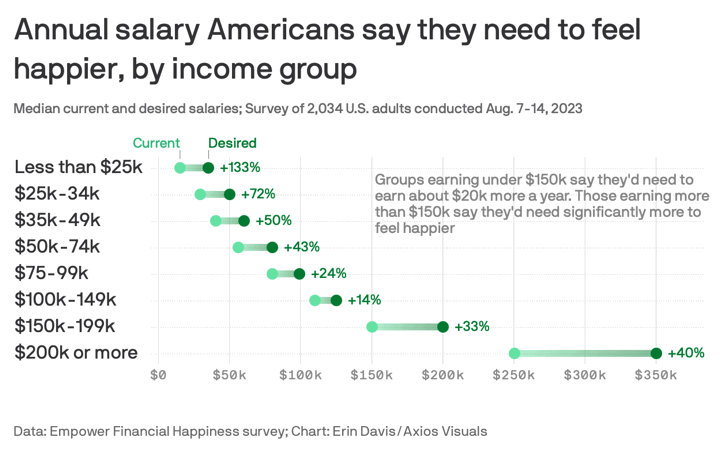
When things are awesome, we eventually get used to it (celebrities, lottery winners). When things are really awful, we get used to that as well (severely injured). This is why it’s hard for people to achieve a constantly higher level of happiness. We get a nicer car/house/toy, we get used it, and then soon we just want an even nicer car/house/toy, never getting anywhere as if we are walking on a treadmill.
So how does this relate to money and personal finance?
Stay Happy By Slowing Down Pleasure
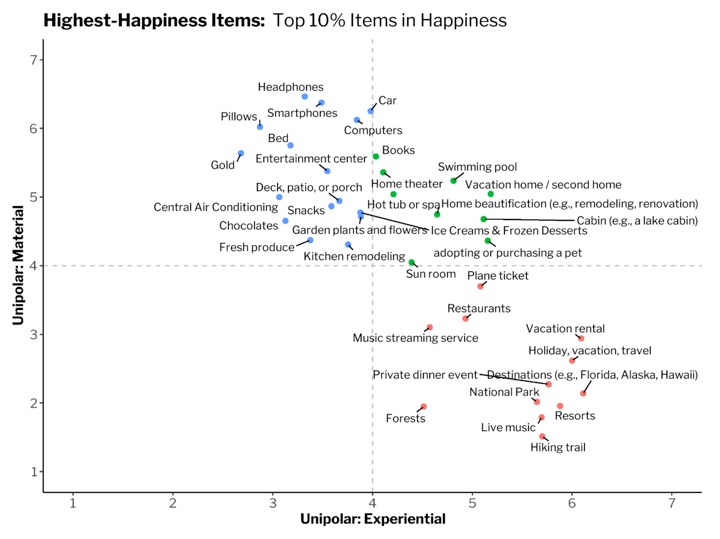
Considering that we only experience transient pleasure with many improvements in our lives, we should take care and indulge very gradually. Savor each slight improvement! A good quote from Ariely:
Imagine a new college graduate, finally earning an income and eagerly anticipating a beautifully furnished apartment after years of dorm living. “The lesson here is to slow down pleasure,” Ariely writes. “A new couch may please you for a couple of months, but don’t buy your new television until the thrill of the couch has worn off.”
When Slashing Expenses, Make Big Cuts
On the other hand, we should take full advantage of our adaptability by cutting back as much as possible all at once when we have to. Don’t slow down the pain and drag it out with constant reminders.
“It will be really painful for a few months but you’ll get used to it,” says Ariely. “It might be good to cut down too much — and then increase back.” By contrast, making small lifestyle adjustments every month requires readapting over and over and prolongs the pain. (By the same token, it may be better to reduce a major expense in one fell swoop, such as moving to a smaller apartment, than to face the daily downer of skipping your favorite gourmet coffee, Ariely suggests.)
I think the apartment idea is very good application of this theory, and look forward to reading the rest of this book.
Posted in Book Reviews, Budgeting, Frugal Living | 7 Comments »
Tuesday, June 29th, 2010
While flipping through old magazines at the Doc’s office, I read about a site called Blippy.com in a Time article. It’s yet another social media site, except this time you link up your credit card data so it can automatically share all your purchases with others (amount, store, and in limited cases actual items). You can add more details, and users can comment and discuss each others purchases.
The writer initially thought that such exposure would help control her spending (I call this the “shame” theory). Perhaps you really do eat out too much. However, many users of the site have found that instead people start actually buying items just so they could show up on Blippy. Want to look outdoorsy? Better buy some camping gear at Sports Authority.
Which made me wonder… Are you what you buy? My gut reaction is that the idea just sounds horrible. Does this really paint anywhere near a complete picture of yourself? Maybe it’s actually more objectively accurate than I think. I then thought maybe you are what you don’t buy… but that probably won’t work either. I wonder what people would think of my purchases. I can’t see myself signing up for this.
Still… Twitter is huge, and I’ve only just started trying to use @mymoneyblog regularly. Blippy has been called the “Twitter of Personal Finance”, and one of the co-founders of Twitter is a major investor. What do you think?

Loading ...
Posted in Budgeting, Frugal Living | 11 Comments »
Tuesday, June 22nd, 2010
Google Voice announced today that it is now available to everyone in the US, with no need to track down an invite. Here’s a nice, quick intro video for the service for the unfamiliar:
For more tips, see my previous post on how to save money with Google Voice. Did you know you can use it to get free long distance anywhere in the US with your landline? Or, you can give your out-of-state parents a local number they can now call to reach you without paying long distance charges either. GV has expanded their available area codes recently, although many areas are still unavailable for now.
I currently use Google Voice as an additional freelance work number to give out, as opposed to my “one number to rule them all”. I also have it set up to handle my voicemail for my cell phone, in which GV transcribes them and sends it to me as a text message. The overall transcription isn’t the best, but enough to get the general idea and it manages to excel at recognizing phone numbers. I do enjoy the convenience of just reading messages as texts, and being able to listen to messages online while traveling internationally.
Any Gizmo5 experts want to write a guest post on how to build your own VoIP phone service with Google Voice on the cheap? Update: Gizmo5 is closed to new accounts. Lifehacker has a post about using Sipgate to make free calls (a bit clumsily). Since I’m happy with my Ooma, I don’t think I’m willing to put in the research time.
Posted in Deals & Offers, Frugal Living | 10 Comments »
Monday, June 21st, 2010
Tired of hearing about latte factors? Perhaps it’s time to stop worrying about the small things like coffee and cable bills, and focus on the BIG expenses? Well, a major expense is housing, and although it may be a pain, moving could improve your financial outlook drastically.
A recent Forbes article analyzed address data from IRS tax filings, and found that many households and their money are moving to warmer climates with lower taxes and property values. The majority of the top ten counties are in Texas and Florida, where there is no state income tax.
After accounting for property taxes, Shrum’s analysis shows that Texas has the fourth-lowest personal tax burden in the country, and Florida has the eighth lowest.
They also compiled an interactive map which shows relative inflows and outflows for each county. It’s pretty fun to click around to where you live, and where you might consider moving to. Below is the map for Travis County, TX, where Austin is the major population center. Hat tip to NantucketSunrise of FW.
More than 10 million Americans moved from one county to another during 2008. The map below visualizes those moves. Click on any county to see comings and goings: black lines indicate net inward movement, red lines net outward movement.
Where are people leaving?
Shrum also points to eight states that have targeted wealthy households with extra-high tax brackets: California, New Jersey, New York, Maryland, Hawaii, Oregon, Connecticut and Wisconsin. Six of the top 10 counties the rich are fleeing are located in those states.
Posted in Frugal Living, Taxes | 22 Comments »
Wednesday, June 9th, 2010
Do you know what your household’s savings rate is? Most of us probably have a rough guess, but I wanted to use some more reliable data. Here’s the definition again for my purposes:
Current Spending
There are plenty of ways of tracking your expenditures, as anyone who has tried to follow a monthly budget has found out:
- Handwritten expense lists
- Excel or other spreadsheets
- Online budgeting tools
- PDA/Smartphone input tools
- Automated account aggregation tools
I’ve tried various methods to track my expenses manually, but never had the commitment to follow through for more than a month or two at a time. I track all of my numerous financial accounts using account aggregation site Yodlee, but since August 2009 I have linked my primary checking accounts and the few often-used credit cards at the similar-but-nicer Mint.com.
It took a lot of manually categorizing individual transactions, but now it takes less than 10 minutes every couple of weeks at Mint to correct the few new stores I visit (mostly small restaurants). This means I almost have an entire year of spending data from August 2009 to May 2010:
As you can see, there was a general trend, but a few months had major spikes. December had holiday gifts, some travel, and end-of-year charitable giving. In April, we bought a new high-efficiency washer/dryer and had some home electrical-repair bills. In May, we bought our plane tickets and hotel accommodations for a trip to Peru. The lesson here is that there are always going to be these spikes, and it’s best to be prepared and account for them. Our actual average spending ended up being higher than I would have guessed. The monthly fluctuations ranged from 20% below average in October to 30% above average in December.
Current Income
We are a dual-income couple with no kids currently. Our “big-picture budget” is to be able to live off the lesser of our two incomes. We each make relatively good money, so we have been lucky to be able to do this for a few years now. On a practical basis, we do this by having one primary joint checking account in which we only direct deposit that one paycheck. All bills are paid out of this account. This way it psychologically easier to “live within the means” of that single paycheck as the balance goes up and down.
Current Savings Rate
I don’t reveal actual income numbers, so it’s easier to share the savings rate. I am using after-tax income because I feel it is more applicable. According to the above data, on average we spend 84% of the single after-tax paycheck each year, giving us a saving rate of 16%. This is helpful to know we have a buffer if one of us were to lose our jobs. (We also max out the pre-tax 401k plan employee contributions at our jobs, so the single paycheck is already reduce a bit.) When both of our incomes are included, our saving rate is over 60%.
You may consider this low or high, but in terms of early retirement for most people you’ll need to put away a lot more than the 10 to 15% recommended by some experts. I like the idea of both spending a year’s worth of income and saving a year’s worth of income, although this will not be realistic for everyone.
Posted in Budgeting, Frugal Living, Retirement | 25 Comments »
Wednesday, June 9th, 2010
In looking up some stats for personal savings rates, I found that the Bureau of Economic Analysis (BEA) provides a chart of two separate calculations that track the personal savings rates of US taxpayers:
- The National Income and Product Accounts (NIPAs) method, and
- The Flow of Funds Accounts (FFAs) method
You may find either of these quoted in mainstream media articles whenever there is a big shift or one goes negative temporarily. Both methods have been criticized for the accuracy, in which I won’t go into detail here. The main differences between the NIPA and FoFA methods are outlined in this chart from the AARP paper [pdf] “The Declining Personal Saving Rate: Is There Cause for Alarm?”:
A few things to note:
- When I read “disposable income”, I normally think of what’s left over after paying for food and shelter. In this case, disposable income is just personal income minus “personal contributions to social insurance and personal taxes”.
- Both NIPA and FoFA exclude capital gains on investments, which some say contributes to a “wealth effect” where people will spend more because they feel richer due to growth of investments. (not as much recently…)
- From the chart, FoFA includes the purchase of new assets and investments as personal savings. NIPA includes employee 401(k) and pension contributions as wage income.
- FoFA treats the purchase of consumer durables (cars, major appliances) as a form of savings, while NIPA treats it as consumption.
- NIPA says that paying your mortgage (owner-occupied housing) is savings as imputed rent, while FoFA counts your added home equity as an asset, but your mortgage payment as a liability.
Confused yet? Well, I hope at least you came away with something. The AARP paper goes on to explore various theories for the long-term decline of the personal savings rate. If you’re looking for more, here’s another paper that explores the differences.
Posted in Budgeting, Frugal Living, Retirement | No Comments »
Friday, May 28th, 2010
What types of folks tend to own luxury cars? At the end of a BusinessWeek article about the struggling Lincoln brand, I ran across this chart detailing the median income and age of the respective owners of each major luxury brand:
Age
Overall, this a bit older than I would have guessed for a median age. But since wealth tends to increase with age, I suppose it makes sense. BMW and Audi has the youngest crowd, with Lincoln and Cadillac with the oldest.
Income
I wonder if the JD Power survey asked for individual or household income. According to the 2005 Census, a household income over $100,000 puts you in the top 15% of the country. A household income over $150,000 puts you in the top 5%.
According the the chart above, the median luxury car owner is easily in the top 10% of income. Is it just me, or does it seems like a lot of people who drive such luxury cars aren’t making six figures? You can lease a BMW 3-series or Audi A4 for $400 a month. That makes for a lot of very high-income folks on the other end of the curve.
Education vs. Income?
Digging into the education numbers tells a different side of the story. About 25% of the overall US population has a 4-year degree or higher, which is actually about the same as the median luxury car owner. Meanwhile, the overall median household income is $45,000, and only rises to $73,446 if you have a Bachelor’s degree or higher (2003 census).
Therefore, while the median luxury car owner is about as (formally) educated as the overall population, they make triple the income versus the overall population, and still double the average of people with 4-year degrees or higher. I find that interesting.
After running some numbers, simply owning a luxury brand don’t necessarily mean that much. A person who leases a Toyota SUV every three years spends more money in the long run than a person who buy a Lexus and drives it for 10 years. Another example… let’s say an Acura costs $15k more than the Honda counterpart. Over 10 years, that’s a premium of $1,500 per year or $125 per month (plus slightly higher maintenance and insurance costs). An iPhone family plan costs more than that.
Posted in Frugal Living | 34 Comments »
Friday, May 14th, 2010
I noticed that Amazon.com has started up their own Textbook Buyback Program
as the school year comes to an end. I should have also tried Amazon back when I was getting rid of some old textbooks earlier this year. I just ended up selling to whomever offered me the most dough. Check out my SellBackYourTextBook.com review and ValoreBooks.com review. If you end up using Chegg.com, you can get an additional $5 back with the promotional code CC125998.
Just type in your ISBN numbers into the BigWords.com comparison engine and see what they’ll offer you. Amazon seems to have the same buyback system, where you print out a pre-paid mailing label, send it back, and get paid. The main differences are that they offer free UPS shipping (some places only offer USPS Media Mail), and they only pay you back in Amazon.com gift certificates and not cash.
Oh, and you can also sell back video games and movies. I see that they will actually offer me $1.50 for my copy of Deuce Bigalow: Male Gigolo! Suckers…
Posted in Frugal Living | 5 Comments »
Thursday, May 13th, 2010
This only helps a few people so far, but I know there are a lot of Sprint SERO users like myself who are still using Windows Mobile phones. Microsoft’s Bing Mobile application now offers free turn-by-turn navigation on WinMo 6.x OS, similar to Google Maps on Android OS. If you don’t have GPS, it uses cell phone triangulation. Sprint, AT&T, and T-mobile look to be covered, but on Verizon phones it is disabled due to VZ Navigator. See the full list of compatible phones here.
The second feature is turn-by-turn navigation for Windows 6.x phones, powered by Bing Maps. We took advantage of the Microsoft Tellme team’s expertise in voice applications to deliver an amazingly lifelike voice experience for the turn-by-turn navigation. If you have a Windows phones on Sprint, T-Mobile, or AT&T you can use the voice guided navigation.
I took it for a test run today on my Sprint Touch Pro2, and it worked well overall. The phone tells you to turn shortly before reaching an intersection. Bing did seem to have more trouble locating my position initially than Google Maps. Also, I have a screensaver-like app that shuts off the navigation sounds after 30 seconds of inactivity, which I need to figure out how to disable.
Still, can’t complain about free! It appears to only be a matter of time before similar navigation is free to anyone with a data plan.
Posted in Deals & Offers, Frugal Living | 9 Comments »
Thursday, April 22nd, 2010
The car buying strategy that I hear recommended most often is to
- decide on which car you want, down to all the options
- e-mail (or previously fax) the fleet managers of 3-5 local dealers, and ask for their best deal
- pit each of them against each other until you have the “best” best deal
- go in, sign paperwork, drive away happy
Sounds easy, but in practice seems like it might be tedious and time-consuming, not to mention uncomfortable for those that don’t like to haggle. However, I keep hearing mentions of CarBargains, run by a non-profit, will do all the negotiating for you if you pay them $200 ($175 if you are a subscriber to Consumer CHECKBOOK magazine).
Seems like it might just be worth it, but I haven’t heard any in-depth testimonials that aren’t on their site. Their press section includes several positive reviews from such magazines as Money and Kiplinger’s Personal Finance. They also offer a money-back guarantee if you can beat their price “without using their information”, although that would be hard to prove…
Has a reader out there actually used CarBargains recently? If you’d be willing to share your experience in detail, please contact me directly. I’d like to write a post with detailed price quotes and model information. If you participate and agree to having me interview you, I have some ideas for compensation.
Posted in Frugal Living | 18 Comments »
Wednesday, April 21st, 2010
A couple of folks asked me for an update about my Ooma VoIP Telephone system, which I bought for $158 to replace my POTS landline in early December and provides me with unlimited free local and long distance “forever”.
Well, it’s been working great for the last 4.5 months. The best compliment I can give about it is that I never think about it, just like with my old landline. I’ve never experienced an outage yet; The dial tone is always there. (I hope I didn’t just jinx myself. You can follow Ooma on Twitter for status updates.)
Caller ID and all that jazz works fine. I can send and receive faxes. I check my voicemail online from work or when traveling. I have read complaints about dealing with Ooma customer service, but I wouldn’t know because I’ve never had any problems. I already shared my number porting experience.
I don’t have the new Ooma Telo nor do I pay for $10/month Ooma Premier service, which offers things like a second line, better PureVoice clarity, enhanced Voicemail, and other stuff I don’t need. I’m happy for the 25% of customers that reportedly do pay for Premier, because it helps ensure that my service stays free.
At $158 spread over the last 4.5 months, I’m now down to $35 a month for Ooma and always dropping. As for current pricing, Amazon has it at $245, back up close to full retail. Right now, Radio Shack has it $180 before a $15 off $125 plus free shipping link and plus another 2.4% back, both available from BigCrumbs, for a total net price of $161.
Update: Sold out at Radio Shack… CompUSA.com has it for $200, and you can get 10% back via Bing Cashback for a net price of $180.
Posted in Budgeting, Frugal Living | 45 Comments »
Friday, April 9th, 2010
From the 1630s tulip mania to the Roaring 1920s to the Dot-com Bust to Real Estate, I thought I had read about all the bubbles. But it seems that I forgot that I was right in the middle another one – the baseball card craze of the late 1980s and early 1990s.
I was about 10-14 during these years, in which I had just the right combination of a little bit of spending money, a love of sports, and greed. All my friends collected cards, and we traded them daily. Baseball cards were our form of currency. You could buy homework answers, protection from bullies, or even temporary popularity. I would secretly only spend half of my lunch money and go hungry for a few hours before running home to buy another pack of cards.
In the new book Mint Condition: How Baseball Cards Became an American Obsession, James Davieson tells the story of how this bubble formed and subsequently popped. This Slate article The Great Baseball Card Bubble includes a few excerpts. This one hit especially close to home:
American boys growing up in the 1980s approached Beckett Baseball Card Monthly with something like religious reverence. For many of us, it was the first magazine we bought and the only one we leafed through regularly. The magazine’s circulation eventually reached about 1 million, with many of those issues no doubt destined for the book bags of young boys. We walked the school hallways in the ’80s with our Becketts sandwiched between our textbooks, and we followed the price fluctuations of our favorite players with slavish devotion. Beckett’s valuations served as the foundation for all card trades.
To this day, I have about 3 years of worn out Becketts stacked up in my parent’s house. Looking back it was basically the stock market for kids, except instead of real-time quotes we only had monthly updates. Quality downgrades, riding momentum, pure speculation, it was all there. And just like mortgage-backed securities, when the mass media starts calling something a legitimate investment, a crash is soon to follow.
By the ’80s, baseball card values were rising beyond the average hobbyist’s means. As prices continued to climb, baseball cards were touted as a legitimate investment alternative to stocks, with the Wall Street Journal referring to them as sound “inflation hedges” and “nostalgia futures.” Newspapers started running feature stories with headlines such as “Turning Cardboard Into Cash” (the Washington Post), “A Grand Slam Profit May Be in the Cards” (the New York Times), and “Cards Put Gold, Stocks to Shame as Investment” (the Orange County Register). A hobby bulletin called the Ball Street Journal, claiming entrée to a network of scouts and coaches, promised collectors “insider scouting information” that would help them invest in the cards of rising big-league prospects. Collectors bought bundles of rookie cards as a way to gamble legally on a player’s future.
Of course I had to idea what inflation hedges were back then, but I did view them as an investment. Baseball cards were a store of value, and were sure to only increase as time went on, right? Even now, I still have a few unopened packs of 1989 Upper Deck, the first “premium” baseball card. I used to fight the urge to open them, balancing the curiosity of whether I had a Ken Griffey, Jr. rookie card, or whether it was better to keep it an unopened mystery.
I suppose I did learn a few things about personal finance in those days. But after reading all this, I figure I can complete my Nolan Ryan 1968-1993 Topps collection on the cheap.
Posted in Frugal Living, Insurance, Investing | 36 Comments »
Monday, April 5th, 2010
Sprint recently press release“>announced an improved 30 day ‘money back guarantee’ on new activations. You basically get virtually all fees associated with your phone returned to you, if you return your new phone within 30 days. You don’t pay activation fees, taxes, restocking fees, etc. Via Engadget.
If a customer isn’t completely satisfied, they can get reimbursed for the device purchase and activation fee, get the early termination fee waived, get a full refund for service plan monthly recurring charges incurred and get all associated taxes and Sprint surcharges associated with these charges waived. In addition, Sprint will waive the restocking fee for new customer exchanges as part of this policy.
They also provided a chart comparison the money back guarantees of the major cell carriers, which is informational even if it is obviously skewed in Sprint’s favor.
If you are thinking of adding a new line, don’t forget to see if you qualify for a corporate or student discount, often just using an e-mail address. Read the comments for more reader-submitted tips as well.
Posted in Deals & Offers, Frugal Living | No Comments »