Archive for the 'Credit Cards' Category


Completely Use Up Prepaid Credit Cards With Split Tender Transactions

Tuesday, July 17th, 2012

Here’s a quick tip for using up those last few dollars of a prepaid Visa, Mastercard, or American Express cards with bonuses. When you use up the last bit of an store-specific gift card, the register zeroes out the card automatically and tells you the remaining amount owed. However, if you try this with a prepaid debit or credit card and the amount charged exceeds the amount on the card, you’ll usually just get a flat rejection. This does not necessarily mean there is anything wrong with the card!

The solution? The way to use up the remaining balance on a prepaid-style credit card is to ask for a “split tender” transaction. First, you’ll need to find out the remaining balance on the card using the phone number on the back or by checking the appropriate website. Let’s say it’s $2.57.

Next, go to a store and make a purchase exceeding that number, let’s say $10. Now, ask the cashier for a split tender transaction. You must ask them to charge exactly $2.57 to the prepaid card, and then you can charge the rest on another credit card or pay it with cash. This way, the system won’t be asking for more charging limit than your card actually has.

Smaller retailers might either not know how to do a split tender transaction, or their (point-of-sale) POS system may simply be outdated and not be able to perform one. However, I’ve never had a problem with asking for a split tender transaction at Target or Wal-mart, and I would suspect similar results at other large retailers as they will have modern POS systems. At the very least, you’d just need to switch to a more experienced cashier.

“Disclaimer: This content is not provided or commissioned by the issuer. Opinions expressed here are author’s alone, not those of the issuer, and have not been reviewed, approved or otherwise endorsed by the issuer. This site may be compensated through the issuer’s Affiliate Program.”

My Credit Card Rewards Maximization Strategy

Friday, July 13th, 2012

Speaking of credit card rewards optimization, I was thinking about how the algorithm might work for me. I’m curious if others have a similar system. Man, I have a lot of cards…

Tier 1 – Special Rotating or Temporary Promotions (5%+ back)

First up, you’d want to check for cards that offer an exceptional bonus cash back. Chase Freedom and Citi Dividend both offer 5% cash back on rotating categories on up to $1,500 in spending each quarter. That’s a possible $75 extra each quarter for each card. Other cards may offer a temporary bonus as well.

Since I don’t buy that much gas, I would only charge restaurants on the Chase Freedom (but not gas) and airline purchases on the Citi Dividend.

Tier – Permanent Category Bonuses (3%+ back)

Some credit cards offer a year-round bonus on things like restaurants, travel, gas, groceries, and more. Here are a few that I have:

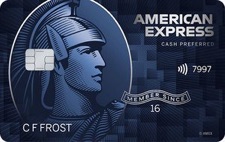
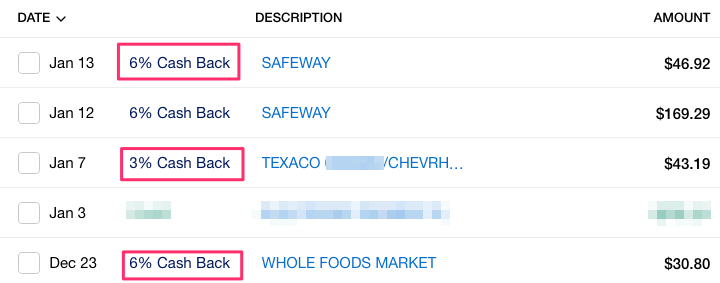
  • Blue Cash Preferred® Card from American Express6% cash back at U.S. stand-alone supermarkets (up to $6,000), 3% cash back on gasoline at U.S. stand-alone gas stations and select major department stores, and 1% cash back on other purchases.  The Blue Cash Preferred from American Express does have a $75 annual fee, but keep in mind that spending $25 a week on groceries, that 6% back will earn enough cash ($78) to pay for the annual fee by itself. So all groceries (and ahem… gift cards to many stores sold in grocery stores…) go on that card. Amazon.com is also one of my top places to shop, but I just keep the Citi Forward card linked up online as my default credit card while it actually sits in a drawer. I don’t actually have the PenFed card anymore, but it’s still great for those that buy a lot of gas.

Tier 3 – Everything Else (2%+ back)

Here’s your backup catch-all card. Don’t settle for 1% back here, you can do better. :)

If you like airline miles or hotel points, here’s where your personal spending habits may also factor in. I value Starwood points at 2 cents or more per point due to their ability to convert to miles and primarily their value in hotel stays (including Sheraton, Westin, W Hotels) so I actually switch between a 2% cash back card and the Starwood depending on my point balance as I like to keep enough to pay for upcoming hotel stays. My Fidelity cash ends up in a 529 so that’s not as much fun. ;)

American Express cards also offer extended warranty protection that I like for larger purchases as their customer service is always the easiest to deal with when you actually need to file a claim. However, American Express cards aren’t accepted in certain cases (like my auto insurance), so you should have a Visa/Mastercard as a final backup.

All in all, it’s not as crazy as it seems. If the Chase/Citi 5% categories aren’t daily-use categories but things like airfare then I don’t keep them in the wallet (0-3 cards). Out of Tier 2, I only keep the Blue Cash AmEx with me (1 card). Out of Tier 3, I actually have a similar-but-grandfathered Fidelity 2% Mastercard and the Starwood AmEx (2 cards). So the total is really about an average of around 4. I’m thinking of switching to an All-Ett “world’s thinnest wallet” which should cut the thickness in half.

“Disclaimer: This content is not provided or commissioned by the issuer. Opinions expressed here are author’s alone, not those of the issuer, and have not been reviewed, approved or otherwise endorsed by the issuer. This site may be compensated through the issuer’s Affiliate Program.”

Wallaby Card – One Card To Rule Them All?

Friday, July 13th, 2012

If you’re like me, you use multiple credit cards to maximize their rewards in different situations. Gas on one card, groceries on another, and maybe yet another one for restaurants. What if you could just charge everything on one dummy card, and have it automatically route the purchase on the optimal card? That’s what Wallaby Financial is trying to do. Thanks to reader JC for the tip.

I just signed up for their beta, but it doesn’t appear that anyone actually has an actual card yet. Founder Matthew Goldman answered some questions in Mashable, TechCrunch, and also this FW forum post. The card is not actually a new line of credit, so you won’t get a credit check although they will want your Social Security number and other personal info (and all your credit card numbers). After a six-month free period for beta users, the service costs $50 a year. Wallaby says that they’ll save you that much and more via the extra cashback they generate. Well, that depends on how badly you optimize your cards now. :)

Although the idea appears simple, the implementation will be very difficult. Here are a few examples… On cards with rotating categories, they say you’ll still have to activate them yourself each quarter. If you don’t, will they know? Next, all your purchases are technically charged on the Wallaby card number, and then re-routed to your actual card with the actual retailer name augmented with a prefix. For that reason, Wallaby currently can’t guarantee that you’ll keep your other card-specific features like extended warranty or price protection. They also don’t know how other add-on programs like Dining Rewards or UPromise will work with the program. Lots of questions, but yet another startup to keep an eye on.

Paying Estimated Taxes With Chase Ink Bold Card + PayUSATax.com

Thursday, June 28th, 2012

After getting the Chase Sapphire Preferred card $500 in airfare bonus, I developed a taste for Ultimate Rewards (UR) points. Chase’s answer to American Express Membership Rewards (MR) points, UR points provide some features that MR points don’t (and vice versa). You can cash out UR points at a flat 10,000 points = $100. You can also use them towards travel at an Expedia-like portal for 10,000 points = $125 toward airfare, hotel, and car rentals. The prices are not marked up at all and you can combine cash and points however you like, so I use 1.25 cents per point as a baseline value. Finally, you can transfer them to United Airlines, Southwest, British Airways, Korean, Hyatt, and Marriott rewards at a 1:1 ratio. If you use United and British Airways for international and/or business-class flights, you can get closer to 2 cents per point in value.

Example of combining cash and points:

Therefore, in my last round of application I decided to apply for the Ink Bold® Business Card which was a small business card offering 50,000 bonus points – after spending $5,000 in the first 3 months your account is open. I wouldn’t mind only earning 1 UR point per dollar on most of my business spend, although they do offer 5X points per dollar in select business categories. (More details on the Chase Ink Bold Business Card here.)

Spending $10,000 on a card over three months is not something I usually do and I didn’t have any large business expenses coming up, so I was considering just settling for the “easy” 25,000 points after first purchase (still a nice $312.50 value at 1.25 cents a point). However, I do have to pay quarterly estimated taxes to Uncle Sam. As a result, I found PayUSATax.com (accepts Visa, Mastercard, and Discover) which had the lowest fee for making tax payments with a credit card at 1.89%. You can verify them as an authorized payment provider here at IRS.gov.

The IRS deadline for quarterly payment was coming up, so I decided to make a $5,000 payment for one quarter now and another $5,000 payment on the next billing statement for the next quarter. This meant I could charge $10,000 ($5,000 x 2) which would earn me 10,000 Ultimate Rewards points ($125 value) and I would be charged a $189 fee ($94.50 x 2). However, this would satisfy the spending requirement and would get me another 25,000 UR points ($312.50 value). Still a nice net win even after taking the fee into account.

As you can see from my statement scans below, the first $5,000 tax payment and $94.50 fee went through separately with no cash advance charges or other issues.

I also received my first 25,000 points on my very first statement:

Another useful perk of Ultimate Rewards points is that you can transfer them over to any other person’s account with no fee. This is handy to transfer between family or household members for pooling points and miles. My small business Chase Ink Bold Business Card UR points are in a different account than my personal Sapphire Preferred points, so I just transferred them over and it showed up instantly.

“Disclaimer: This content is not provided or commissioned by the issuer. Opinions expressed here are author’s alone, not those of the issuer, and have not been reviewed, approved or otherwise endorsed by the issuer. This site may be compensated through the issuer’s Affiliate Program.”

Opt Out of Citibank Balance Transfer Checks By Mail

Tuesday, June 5th, 2012

Maybe it’s just me, but Citibank has been sending me more and more snail mail with balance transfer checks inside. I can recognize the envelopes without even opening them. Even though in the past there may have been a good no-fee 0% APR balance transfer offer, I’ve just kept getting 0% with a 3%-5% fee for the past few years so I decided to stop them for both me and my wife due to the sheer volume.

Stopping these balance transfer checks from piling up in your mailbox is actually quite simple; you just have to ask them. Calling in is one option, but the easiest way is to log into your online account and send them a secure online message. Here’s my simple script that you can copy and paste:

Subject: Balance Transfer Checks in Mail

Hello,

I would like to officially request that I no longer be sent promotional balance transfer checks in the mail. I don’t want checks sitting in my mail box. Thank you.

This is the standard Citibank copy/paste reply:

We appreciate the opportunity to assist you and apologize for any inconvenience you may have experienced. As you requested, we have processed your privacy choices. Please allow 30 days for these choices to become effective. If there is any way we can be of further assistance, please feel free to contact us.

Done! This works for all the card issuers as far as I’m aware of, not just Citibank, and you can keep getting your paper statements. If you don’t want any unsolicited offers of credit or insurance sent to you, you can also enroll at OptOutPrescreen.com. This is not the same situation as these Citibank checks, because if you already have a relationship with them they can send you junk until you opt out.

Five Ways To Get a Free Credit Score (No Trials!)

Monday, May 28th, 2012

It’s now mid-2012, time for another financial checkup. I took the time this weekend to re-check all my credit scores from all 3 bureaus for free. You probably know about AnnualCreditReport.com for free credit reports. But what about your credit score? If you want some relative comparison of your creditworthiness, here is a compilation of five different ways to grab a free credit score without the hassle of annoying trial offers or a credit card. I repeat: No free trial membership required, no credit card number required, nothing to cancel.

Remember, everyone has three credit scores, one from each of the three major credit bureaus: Experian, Equifax, TransUnion.

Credit Sesame

Every month, Credit Sesame can offer you a credit score based on your Experian credit report. They also offer tips to improve your score and qualify for a mortgage. Here’s a screenshot of my current credit score.

CreditKarma

CreditKarma.com is an ad-supported site that offers you the ability to check your credit score daily, called a Transrisk score, based on your TransUnion credit report. The score range is the same as FICO, from 300-850. You don’t get your credit report details, but you do get a few tips on what recent changes to your credit report have impacted your score.

Equifax Credit Score Card

There are currently no known methods to get a free credit score with no trials based on your Equifax credit report.

However, if you sign up for a free 10-day trial at MyFICO.com, you’ll get a free Equifax credit report and Equifax FICO credit score. You’ll need a credit card. You must call 1.888.577.5978 to cancel, although you may be able to do it online as well. My recommendation is to get your credit report and credit score, print or save to PDF, and then cancel immediately afterward on the same day so that you won’t forget later. Hours (PDT) M-F 6am-6pm, Sat 7am-4pm, Sun Closed.

Prosper Person-to-Person Lending

Prosper Lending provides a free credit grade for prospective borrowers, based on your Experian credit data. If you don’t actually finalize the application for the loan, they will not check your credit. They do offer some good rates on personal loans, if you are looking to consolidate credit card debts. Here’s a partial screenshot of my profile:

altext

LendingClub Person-to-Person Lending

Similar to Prosper, if you start an application to become a borrower at LendingClub.com they will check your credit on your behalf (again, this means it doesn’t hurt your credit score) to find out what rate they will charge you. Instead of a numerical score, you will get a grade like “A2″ or “B3″. Then you can use the table below to determine your credit score range. For example, A2 would indicate a score range of 747-769. It is also based on your TransUnion credit report.

altext

You will need to provide your personal information and Social Security number to these companies, naturally, so be comfortable with that. None of these methods by themselves will affect your credit score as you are requesting them for yourself.

Miles by Discover Card Promotion: Up to 20,000 Bonus Miles

Wednesday, May 23rd, 2012

Here’s a promo that would work great together with the the ChargeSmart fee waiver for utilities purchases. The Discover® Miles Card has upped their sign-up bonus so that you can get 1,000 Bonus miles every month you make a purchase for the first year – up to $120 in travel rewards. To confirm, look for the following in the Terms & Conditions on the application:

TERMS OF 20,000 BONUS MILES OFFER: Earn 10,000 Bonus Miles for every $2,000 you spend, up to 20,000 Bonus Miles. Purchases must be made within 6 months from the date your account is opened. We are not responsible for merchant delays in processing transactions. This promotional offer is in addition to the Standard Miles earned on purchases. Promotional Miles will be applied within 8 weeks of reaching $2,000 and $4,000 spend amounts. (This promotion is now over)

The $2000 spending requirement over six months works out to $333 per month. What you’d be looking for is $350 per month in utilities (electric, gas, sewer, water) that previously didn’t accept credit cards for payment (at least without a big fee), which now you can pay Discover via ChargeSmart.com with no fees. If you don’t reach that, I would even prepay some utilities and let it apply to future bills. There is also double miles (2 miles/$ spent) on the first $3,000 spent combined on restaurant and travel purchases. If you can charge $4,000 in 6 months, you’d get the max 20,000 bonus miles.

In addition, you’ll still get the standard 1 mile per $1 spent on the utilities charges. 10,000 miles can be redeemed for $100 towards any travel from any vendor. You just have to put a travel purchase (airfare, hotel, car rental) on the card and then go online and redeem your “miles” for a travel credit. So buy any $150 airfare from any website on the Miles card and redeem 10,000 miles for a $100 statement credit.

No annual fee. Rewards do not expire as long as your account is in good standing and the card is not inactive for 18 consecutive months.

Pay Your Mortgage With a Credit Card Via ChargeSmart

Tuesday, May 22nd, 2012

ChargeSmart is a bill payment service that allows you to pay many bills with a credit card that usually don’t accept such payments, including mortgages, auto loan, student loans, and utilities. Only participating vendors are eligible, but they seem to have signed up several large companies including Bank of America/Chase/Wells Fargo mortgages, Sallie Mae student loans, and Ally Financial auto loans. In general, it works with all Visa, MasterCard, and Discover branded cards.

Benefits

If you have a rewards credit card, this service gives you the ability earn cashback or frequent flier miles on more purchases. You’ll also be able to take advantage of your card’s grace period since you won’t have to pay up until your credit card bill is due (up to 45 days later depending on when you charge in the statement cycle). If you have a card with a introductory 0% APR on purchases, you could extend the interest-free period even longer.

Another side perk would be for $500+ credit card bonuses, where you use this service to meet the minimum spending requirements. For example, the Chase Sapphire Preferred(SM) Card with get you $500 in airfare after you spend $3,000 in purchases within the first 3 months. If you’re a little short, paying a 2-3% fee to reach that requirement is worth it since a $500 bonus on spending $3,000 is effectively 16.7% back. (You’ll also get 1.25% back on your purchases toward travel as rewards.)

Costs

In most cases, there is a fee involved that depends on the vendor. This may or may not be worth it to you, depending on how much you value your credit card points or miles. Here are a few special cases to consider.

Discover Utility Bill Fee Rebate (Expired)
Previously, if you used a Discover card to pay a participating utility vendor, Discover would have provided an instant rebate your Chargesmart fees. Paying my water bill would have otherwise cost me $16.40 for a $500 payment (3.28%), or $6.10 for $50 payment (12.2%). You’ll even earn all the usual rewards that your Discover card offers. I like the Discover More card for their 5% back on rotating categories feature.

Hidden “Large Payment Security Fee”
You should be aware that their initial fee calculator can be somewhat misleading. I was trying to pay a test payment to a mortgage lender for $2,000, and was given a fee quote in Step 1 for $21.95, which was 1.1% of $2,000. Not bad, I thought, you can get 1.5% cash with something like the Capital One Cash Mastercard.

Step 2 is your address information, and Step 3 is your credit card information. So far so good. But in Step 4, they tacked on a “large payment security fee” which added another $25.71 to make the total fee amount $47.66, working out to 2.4% of $2,000. Trying out some different lenders, the final fee amount seems to always work out to about 2.4% for payments over $1,000 or so.

One last wrinkle… there’s a little box that tells me if I sign up to make this payment every month, I’ll get $10 off this first month’s payment. (You can cancel later.) That would make it $37.66 out of $2,000 or 1.88%. That makes it a little better, but not a screaming deal. But for meeting bonus requirements, a mortgage/auto loan/student loan payment is an easy way to charge something you need to pay anyway.

Prosper vs. LendingClub: Credit Card Debt Consolidation Loan Comparison

Thursday, May 17th, 2012

What is the best place to lower your interest rates and consolidate credit card debt in order to pay it all off? The first thing to try is to call up your credit card company and negotiate your existing rate down. If that isn’t satisfactory, you could switch issuers and do a balance transfer to a new card with a low introductory rate. If you have qualifying credit, you can take advantage of no fee 0% APR balance transfer offers for up to 15 months.

I would say the next option to consider is P2P lending, which in my experience has lower rates than personal unsecured loans from banks. P2P is gradually becoming an accepted source of loans as shown by announcements of new institutional money coming in from hedge funds. Prosper has been around since 2006 and has done over $300 million in loan volume since inception, and LendingClub has been around since 2007 with over $500 million in loans. Both are now registered with the SEC.

Prosper vs. LendingClub Similarities

  1. Unsecured loans. Such loans are backed only by the borrower’s promise. If there is a default, the lender can’t repossess any property or garnish wages. The primary deterrent to defaults is a poor credit score that will increase future borrowing costs and potentially other side effects including affecting employment.

    Alternatively, you may be considering paying off your credit card debt with a home equity loan. This would change your unsecured debt into a secured debt. The danger is now if you don’t pay off that loan, you could lose your house. If that added risk doesn’t make a difference to you, then a home equity loan or line of credit will probably offer you a lower rate.

  2. Flexible amounts. You can borrow more or less than your actual outstanding credit card balance, and you’re usually given a choice of amounts for the same interest rate. But remember, the purpose of consolidation is to help speed up the process of getting rid of that debt.
  3. Fixed rates over the entire term. The problem with credit cards is that the rates are often unpredictable. “Variable” rates are linked to a benchmark rate, but even “fixed” rates that aren’t guaranteed for X months can just mean they’re fixed until you get a notice that they are now “fixed” at a new, higher number. Given the current low interest rate environment, you should be wary of rising rates.
  4. No prepayment penalties. You can pay off your loan early at any time, with no fees.
  5. No application fee. There is no fee to apply for a loan. If your loan successfully funds and you get the cash, then you will be subject to an origination fee that is rolled into your monthly payments.

Prosper vs. LendingClub Differences

  1. Minimum credit scores. Prosper minimum stated credit score is 640, LendingClub minimum FICO score is 660.
  2. Maximum loan amounts. Prosper maximum loan amount is $25,000, LendingClub maximum loan amount is now $35,000. Both lower the limits depending on credit profile.
  3. Slightly different fee structures. Both companies charge an origination (closing) fee once you successfully get your loan. If you don’t get the loan, no fees. They have slightly different fee schedules, but both have origination fees ranging from about 1% to 5% for the majority of loans. Both charge $15 fees for late payments or failed payments.
  4. Different loan term lengths. Depending on your requested loan amount and other factors, each lender may offer different terms. For example, LendingClub told me that loan amounts from $1,000 to $15,975 are only available with a 36-month term, even though they do offer 1-year and 5-year loans in other cases. However, with a $10,000 loan at Prosper I was given the choice of 1, 3, or 5-year terms. In general, the longer the term, the higher the interest rate at both places.
  5. Check processing fees. LendingClub charges a $15 processing fee per payment made by check. Prosper does not. Both companies allow you to make payments via automatic ACH withdrawal from a checking account with no fees.

Prosper vs. LendingClub Interest Rates?

Their full criteria for determining what rate you’ll pay is not disclosed but is based on a number of factors. Really, the best way to see which one will give you the best deal is to ask each one for a free quote. In both cases, getting a rate quote will involve looking at your credit report, but it will not result in a credit inquiry and will not hurt your credit score. If you do decide to move forward and get the loan, only then it will show up on your credit report.

My experience. I applied for a $10,000 debt consolidation loan at both places. I was offered a 1-year loan at 8.17%, a 3-year loan at 7.49%, or a 5-year loan at 10.85% annual interest rates at Prosper. I was offered a 3-year loan at LendingClub at 6.62% interest rate. For a $10,000 loan over 3-years and including all fees, my LendingClub payment was $307 per month and Prosper payment was $311 per month. So even though the interest rates seem rather different, the final monthly payments ended up closer than expected (though still a $150 difference in total payments over the whole 3 years).

Citi ThankYou Preferred Card Review

Friday, May 11th, 2012

Citi Thank You Preferred CardThe Citi ThankYou® Preferred Rewards Card is here, and is offering a $250 gift card when you redeem the 25,000 bonus ThankYou® Points received after $2,000 in purchases within 4 months of account opening. How it works though, is that instead of straight cash back, they pay you in ThankYou points. Here’s a look at how they stack up.

How much is a ThankYou point worth?
Since this is the currency we’re dealing with, let’s see what we can get for it. Although they run promotions from time to time, in general it takes 6,000 points to redeem for a $50 gift to retailers like Gap, Banana Republic, Bed Bath & Beyond, CVS Pharmacy, Land’s End. At 10,000 points, you can get a $100 gift card. This gives a value of 0.83 to 1 cent per point in gift cards.

Want something closer to cash? For a check mailed to you, it costs 8,000 points for $50. For a statement credit, it’s 7,500 points for $50. For a prepaid Visa card, it’s also 7,500 points for $50. For a check mailed towards your mortgage payment or student loan (made out to your lender), is costs 6,400 points for $50. This works out to between 0.63 to 0.78 cents per point.

The card has other smaller perks, like 100 bonus points for signing up for online account access, 100 points for paperless statements, and a 1-3% bonus on your existing point balance on your annual card anniversary. More importantly, it has no annual fee.

Chase Exclusives: 10% Extra Cash Back on Chase Freedom, 1% Cash Back on Chase Mortgage Payments

Wednesday, May 2nd, 2012

Chase Exclusives is a program that encourages you to open a Chase checking account whenever you have any other relationship with Chase. I closed my Chase (formerly WaMu) account a while back after they slowly started making it harder to keep as a secondary account, but some of these perks actually seem pretty good. I remember hearing something about them, but never actually took a good look at the details until now.

10% Extra Cash Back + 10 cents per purchase on Chase Freedom
The Chase Freedom Visa card is a popular cash back card that features 5% cash back on rotating categories and 1% back on everything else. This quarter you’ll get 5% back on all purchases at grocery stores (up to $75 cash back a quarter based on $1,500 in purchases). Check out my page on 5% cash back credit cards for more info.

However, if you have a Chase checking account, they will add an additional 10 points + 1 extra point for every $10 in purchases. Since 100 points is worth $1, that’s basically saying every purchase on the Chase Freedom earns 10 cents plus 1.10% cash back and every 5% category purchase earns 10 cents plus 5.1% cash back. For someone like me that puts everything on their credit card for easy expense tracking, that can add up especially with smaller purchases.

Currently, the Chase Freedom has a promotion offering $100 bonus cashback if you sign up and make just $500 in purchases in your first three months.

1% Mortgage Cash Back program
If you have both a Chase checking account and a Chase mortgage, you can earn 1% cash back on your mortgage payments (principal + interest). You have to have the checking account open before the mortgage closing, and enroll in automatic payments from said account within 60 days of closing. If you take the option of having your 1% cash back applied towards your loan principal, that works out to shortening a 30-year fixed mortgage by 9 months if you stick with it. (They really should make this an option on other mortgages, paying just 1% extra instead.)

I don’t know how good Chase mortgage rates are, but I’d probably get a quote now from Chase just to see if they are competitive. Overall though, it would probably be better to just get a better interest rate and pay extra towards your principal as if you had a higher mortgage (takes discipline).

$150 New account opening bonus
Thinking about opening a new account? You can also get a $150 bonus through this link if you open a Chase Total Checking account with $100 and set up direct deposit (new customers only). To avoid monthly service fees, you must do any one of the following each statement period:

  1. Have monthly direct deposits totaling $500 or more made to this account, or
  2. Keep the daily balance in your checking account at or above $1,500, or
  3. Keep an average balance of $5,000 or more in your checking and other types of qualifying Chase accounts.

American Express Extended Payment Option = 5,000 Membership Rewards Bonus

Tuesday, April 10th, 2012

The following promotion is for holders of American Express “charge” cards that have Membership Rewards Points, including the Green, Gold, and Platinum cards. (Basically, it should look like one of the cards above.) This would work perfectly for those that signed up for the American Express Premier Rewards Gold Card that currently gives 25,000 Membership Rewards points after spending $2,000 within 3 months and are still in the fee-free first year.

Usually these cards require you to pay the bill in full after each month, but if you enroll in their “pay over time” feature they’ll give you 5,000 Membership Rewards points. (Platinum card holders can get an extra 10,000 points.) Now you can pay exorbitant rates like everyone else. :) But wait! The good news for you responsible consumers is that there is no fee for enrollment, and also no requirement to actually pay any interest. So why not enroll and grab an extra 5,000 points? Fine print from the 5k offer quoted below.

Read the rest of this entry…

early retirement status indicator